Daily Digest
UPSC · Civil Services Examination
Current Affairs · Wednesday, 20 May 2026
Current affairs curated and edited by Anantam IAS faculty — pulled from The Hindu, PIB, IDSA, Foreign Affairs and the ministries. Read, annotate, revise.
Old Rajinder Nagar · Delhi 110005 · anantamias.com
Chandrayaan-3 Hop Experiment reveals Regolith Heterogeneity at Moon’s South Pole
Why in News?
Scientists from the Physical Research Laboratory, using data from the Indian Space Research Organisation’s Chandrayaan-3 mission, have reported that the Moon’s surface near the south polar region is not uniform.
Data from the Vikram lander’s “Hop Experiment” revealed that the lunar regolith has a distinct two-layer structure, with a loose upper layer and a denser compact layer beneath it.
| UPSC Relevance: GS-3 Science and Technology: Space Technology Prelims: Chandrayaan-3, Lunar Regolith, ChaSTE, ISRO, Moon’s South Pole, Lunar Mission. |
Brief Overview of the Chandrayaan-3 Mission:
- The third lunar mission was launched in 2023. The spacecraft consisted of the Vikram lander and the Pragyan rover.
- Launch vehicle: Launch Vehicle Mark-3
- Vikram lander touched down on the Moon on August 23, 2023. It made one of the closest approaches to the moon’s South Pole. The landing site is located about 600 kilometres from the Moon’s South Pole, on the near side of the Moon.
- Pragyaan rover operated for one lunar day (approximately 14 Earth days). It aimed to collect lunar samples, conduct in-situ experiments and send data to the Vikram lander to transmit it back to Earth.
- The Virtual Launch Control Centre at the Vikram Sarabhai Space Centre played a vital role in continuous real-time monitoring of the launch activities from SHAR.
- India became the fourth country to land a spacecraft on the Moon after the US, Russia, and China.
What is the Chandrayaan-3 Hop Experiment?
- After the successful soft landing of the Vikram lander on the Moon on 23 August 2023, some propellant remained unused in the lander. ISRO decided to utilise this remaining fuel to conduct an experimental manoeuvre known as the “hop experiment”.
- During the experiment:
- The Vikram lander reignited its engines.
- It lifted nearly 40 cm above the lunar surface.
- It moved laterally and landed approximately 50 cm away from the original landing site (named Statio Shiv Shakti).
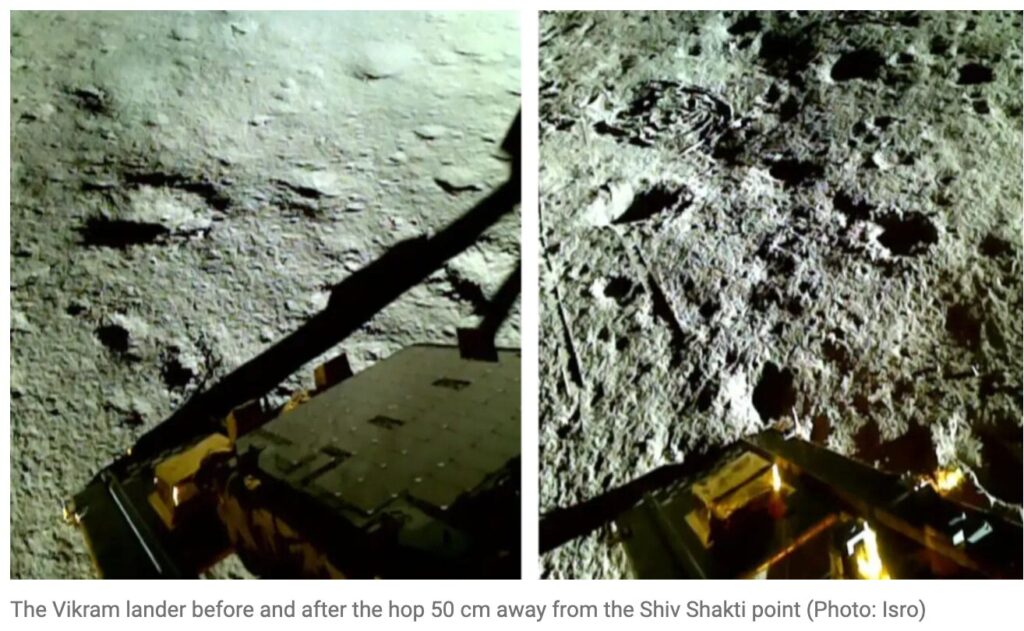
Initially, the experiment was viewed primarily as a demonstration of India’s capability to restart engines and generate lift from the lunar surface.
However, scientists later realised that the rocket plume generated during the hop disturbed the lunar soil and exposed deeper layers of regolith. This allowed the ChaSTE instrument to analyse newly exposed material underneath the surface.
What is Lunar Regolith?
- Lunar regolith refers to the loose, fragmented material covering the Moon’s surface. It consists of: Dust particles, Broken rocks, Fine soil-like material created by meteorite impacts over billions of years.
- Unlike Earth’s soil, lunar regolith contains no organic matter or moisture and experiences extreme temperature variations.
Key Findings from the Study:
- Moon’s Surface has a Two-Layer Structure: The study revealed that the lunar surface near the Chandrayaan-3 landing site resembles a “layered cake”.
- Upper Layer: Extremely loose and porous. Thickness of around 2-6 cm.
- Lower Layer: Denser and more compact. Possesses different thermal and physical properties.
The findings indicate significant heterogeneity in the Moon’s upper surface even within a few centimetres of depth.
- Thermal Properties change rapidly with Depth: The ChaSTE instrument recorded a sharp drop in temperature beneath the lunar surface. At depths of nearly 8-10 cm, the temperatures were found to be around 60°C lower than the surface temperature. This suggests:
- Lunar regolith is a poor conductor of heat.
- Subsurface regions may provide more stable thermal conditions.
Such findings are important for designing Lunar habitats, Storage systems, Astronaut shelters, and Long-duration moon bases.
- Presence of Water-Ice: Earlier studies based on ChaSTE data had suggested that water ice may exist beyond permanently shadowed polar craters. The newly identified thermal characteristics strengthen the possibility that:
- Certain subsurface regions may preserve volatile compounds
- Water ice may survive in cooler subsurface pockets.
This has implications for Future human settlement, In-situ resource utilisation (ISRU), Production of oxygen and rocket fuel on the Moon.
What is ChaSTE?
Chandra’s Surface Thermophysical Experiment (ChaSTE) was one of the scientific payloads onboard the Vikram lander.
Objective: To study thermal conductivity, temperature variation, and thermophysical behaviour of lunar soil.
Working Mechanism: ChaSTE used a rod-shaped probe fitted with temperature sensors. The probe penetrated the lunar surface and measured temperature at different depths.
Significance: It produced the first in-situ thermal profile near the Moon’s south polar region.
SHANTI Act’s Liability Absurdly Low: Plea in SC
Why in News?
The Supreme Court recently heard a Public Interest Litigation (PIL) challenging provisions of the SHANTI Act, 2025. The petition argues that the law caps liability for nuclear accidents at an absurdly low level of around ₹3,000 crore. This potentially undermines the citizens’ right to life and adequate compensation in case of a nuclear disaster.
| UPSC Relevance: GS-3 Science and Technology: Nuclear Technology Prelims: SHANTI Act 2025, CLNDA 2010 |
What is the SHANTI Act, 2025?
- The Sustainable Harnessing and Advancement of Nuclear Energy for Transforming India (SHANTI) Act, 2025, is a landmark legislation that replaced the Civil Liability for Nuclear Damage (CLND) Act, 2010.
- It marks a significant policy shift by allowing private-sector and foreign corporations to set up and operate civil nuclear power plants in India, a sector that was dominated exclusively by NPCIL (public sector entity) earlier.
The Act is part of India’s broader energy transition strategy, aiming to scale up nuclear power capacity to achieve 500 GW of non-fossil fuel capacity by 2030.
The Legal Challenge:
A Public Interest Litigation (PIL) was filed in the Supreme Court, which challenges several provisions of the SHANTI Act as unconstitutional, with the primary grievance being the allegedly inadequate capping of nuclear liability.
Key Provisions of the SHANTI Act under challenge:
- Liability Cap: The SHANTI Act caps the liability of the largest plant operator in India at ₹3,000 crore (less than ₹4,000 crore as referenced in some provisions). The petitioner contends this is “absurdly low” compared to actual damages witnessed in global nuclear disasters. The Act also caps the residual liability of the government, limiting even sovereign accountability.
- Supplier Exemption: Unlike the repealed CLND Act, 2010, which expressly provided for the operator’s right of recourse against the supplier, the SHANTI Act allegedly dilutes or removes this provision. This, the petitioner argues, incentivises foreign suppliers to cut corners on safety, knowing they face no financial consequences for defects in equipment or technology.
- Private Sector Entry: For the first time, private and foreign corporations are permitted to own and operate nuclear plants in India. The petitioner argues that extending such rights while simultaneously capping liability creates an asymmetric and dangerous risk environment for Indian citizens.
Arguments Before the Supreme Court:
- Inadequacy of cap: Nuclear accident damages run into hundreds of times ₹3,000 crore, as seen in Chornobyl (1986) and Fukushima (2011), both of which caused damages exceeding ₹10 lakh crore.
- Article 21 violation: The right to life cannot be sacrificed on the altar of economic policy.
- Absolute liability doctrine. The Supreme Court’s own judgment in the Shriram Oleum Gas Leakage case (1986) held that enterprises engaged in hazardous activities are strictly and absolutely liable for damages, regardless of fault.
Key Constitutional and Legal Dimensions:
1. Absolute Liability Doctrine (M.C. Mehta v. Union of India, 1987: Oleum Gas Leak Case)
- The Supreme Court, in this landmark judgment, evolved the doctrine of absolute liability (as distinct from strict liability under Rylands v. Fletcher).
- It held that enterprises engaged in inherently dangerous or hazardous activities are absolutely liable for any harm caused, with no exceptions such as act of God or third-party fault.
- Crucially, the court held that the larger and more prosperous an enterprise, the greater must be the compensation.
- The petitioner argues that capping liability under the SHANTI Act directly contradicts this settled constitutional principle.
2. Article 21: Right to Life
- Article 21 has been interpreted by the Supreme Court to include the right to a clean environment, the right to livelihood, and the right to live with dignity.
- The petitioner contends that allowing hazardous nuclear installations to operate with a low liability ceiling effectively subordinates the right to life to investor interests.
3. Article 12: Definition of State
- The 1986 Oleum gas case extended Article 12 to include private corporations engaged in hazardous activity, bringing them within the purview of fundamental rights enforcement under Article 21.
- This becomes relevant since private entities operating nuclear plants could now be held accountable under constitutional provisions.
4. Separation of Powers and Judicial Review:
- The bench raised the classic tension between judicial review of legislative policy and the constitutional principle of separation of powers.
- Courts are generally reluctant to strike down economic legislation unless it is manifestly arbitrary or violates fundamental rights.
- The Supreme Court’s framing of the issue as one requiring a “robust compensatory mechanism” rather than a challenge to the cap per se suggests it may be exploring a middle path.
5. Comparative International Framework:
- The liability cap in the United States is approximately ₹1.54 lakh crore, more than 100 times India’s cap.
- Countries like Japan and Germany have moved away from nuclear energy and impose no cap on liability.
- The international benchmark, especially the Vienna Convention on Civil Liability for Nuclear Damage (1997) and the Paris Convention, generally require higher minimum liability thresholds and channel liability primarily to operators, but also preserve state backstop responsibilities.
Supreme Court’s Observations:
- The bench described the matter as a “very sensitive legislative policy issue” touching upon economic policy, in which courts should be cautious about second-guessing Parliament.
- The court acknowledged that higher caps may discourage foreign investors, and questioned who would bring nuclear technology to India if liability were uncapped.
- The bench emphasised that the State retains residual compensatory responsibility. The courts and tribunals still retain the power to award compensation to victims beyond the capped liability.
Significance for India’s Nuclear and Energy Policy:
- India currently has 22 operational nuclear reactors with an installed capacity of approximately 7,480 MW (as of 2024), contributing around 3% of total electricity generation.
- The government has announced plans to expand nuclear capacity to 100 GW by 2047 under its Viksit Bharat vision.
- The SHANTI Act is seen as a critical enabler of this vision by attracting foreign technology partners such as Westinghouse (USA), EDF (France), and Rosatom (Russia).
Also Read: https://anantamias.com/current-affairs/transforming-indias-nuclear-energy-landscape/
India’s civilian nuclear programme operates under the framework of the India-US Civil Nuclear Agreement (2008) and the India-specific safeguards agreement with the IAEA.
Capping liability was long seen by foreign suppliers as a precondition for participation, as the CLND Act’s right-of-recourse provision had deterred Western companies from entering the Indian market.
Source: https://anantamias.com/current-affairs/shanti-acts-liability-absurdly-low-plea-in-sc/
Sixth tiger dies of suspected CDV in Madhya Pradesh’s Kanha Reserve
Sixth Tiger Death in Kanha Raises Concern over Canine Distemper Virus (CDV)
Why in News?
A six-year-old male tiger was found dead in Kanha Tiger Reserve, with authorities suspecting infection by Canine Distemper (CDV). This is suspected to be the sixth tiger death within a month linked to the virus, after a tigress and four cubs had earlier died in the reserve.
UPSC Relevance
Prelims:
Canine Distemper Virus (CDV), Tiger Reserves, National Tiger Conservation Authority (NTCA), Wildlife Protection Act 1972, zoonotic diseases.
Mains:
GS III (Environment and biodiversity conservation, wildlife protection, human–wildlife interface, disease management in wildlife populations).
Background/Context
India hosts the world’s largest tiger population and has made significant progress in tiger conservation through initiatives such as National Tiger Conservation Authority and Project Tiger.
However, conservation challenges have evolved beyond poaching and habitat loss. Infectious diseases increasingly threaten wildlife populations, particularly where domestic animals interact with protected ecosystems.
The recent deaths in Kanha indicate the possibility of disease transmission from domestic dogs to wild carnivores.
What is Canine Distemper Virus (CDV)?
CDV is a highly contagious viral disease affecting carnivorous mammals. It belongs to the Morbillivirus group, which also includes viruses affecting humans and livestock.
Characteristics of CDV
CDV primarily affects:
- Respiratory system
- Nervous system
- Gastrointestinal system
- Immune system
The disease can infect several species including: Dogs, Tigers, Lions, Leopards, Foxes, Wolves, Other wild carnivores
Transmission generally occurs through:
- Direct contact with infected animals
- Body fluids and secretions
- Contaminated surroundings
Why is CDV Dangerous for Tigers?
High Transmission Potential
Domestic and stray dogs in buffer and surrounding forest areas can act as reservoirs for the virus. Frequent interaction with wildlife increases transmission risks.
Reduced Immunity
CDV weakens the immune system, making infected animals vulnerable to secondary infections.
Threat to Small or Isolated Populations
Disease outbreaks can become serious where wildlife populations are geographically restricted, potentially affecting breeding populations and genetic diversity.
Difficulty of Detection
Wild animals often show symptoms only after the disease has significantly progressed, limiting opportunities for intervention.
Factors Contributing to Disease Spread in Kanha
Growing Stray Dog Population
Increasing stray dog populations in buffer regions raise the likelihood of contact between domestic and wild animals.
Human Activities Around Protected Areas
Movement of local communities and domestic animals near reserve boundaries can facilitate disease transmission pathways.
Wildlife Mobility
Tigers and other carnivores frequently move across habitats and ranges, increasing the possibility of wider spread.
Measures Taken by Authorities
Containment and Sanitation Measures
Authorities have:
- Isolated and disinfected affected sites using bleach and lime.
- Burnt scat and food remains to prevent contact by other animals.
Sample Testing and Monitoring
Forensic and biological samples have been sent for laboratory confirmation and disease surveillance.
Vaccination Drive
Officials have initiated vaccination campaigns for domestic dogs in affected buffer and surrounding regions against rabies and CDV.
Challenges
Human–Wildlife–Livestock Interface
Growing interaction between wildlife and domestic animals near protected areas creates pathways for disease transmission.
Limited Wildlife Disease Surveillance
India’s wildlife conservation systems have historically focused more on habitat and anti-poaching measures than disease monitoring.
Difficulty in Vaccinating Wildlife
Direct vaccination of free-ranging wild carnivores remains operationally difficult.
Ecological Consequences
Disease outbreaks can undermine long-term conservation gains achieved through decades of tiger protection efforts.
Way Forward
Strengthen Wildlife Health Surveillance
Regular disease monitoring systems should be integrated into wildlife conservation programmes.
Vaccinate Domestic Animal Populations
Systematic vaccination and sterilisation of stray dogs around protected areas can reduce transmission risks.
Adopt One Health Approach
Coordination among veterinary services, forest departments, public health agencies and local communities is necessary because human, animal and environmental health are interconnected.
Improve Buffer Zone Management
Managing human activities and reducing domestic animal intrusion around reserves can minimise contact with wildlife.
Expand Research and Monitoring
Scientific studies on disease transmission patterns and wildlife epidemiology should be strengthened.
Conclusion
The suspected CDV-linked tiger deaths in Kanha highlight an emerging dimension of wildlife conservation in India. Protecting endangered species now requires not only preserving habitats and preventing poaching, but also strengthening disease surveillance and managing the interface between wildlife, domestic animals and human populations.
Practice Questions
1. With reference to Canine Distemper Virus (CDV), consider the following statements:
- It primarily affects respiratory, nervous and immune systems.
- It affects only domestic dogs.
- It can spread through direct contact and body secretions.
Which of the statements given above is/are correct?
(a) 1 and 2 only
(b) 1 and 3 only
(c) 2 and 3 only
(d) 1, 2 and 3
Correct Answer: (b)
Explanation: CDV affects several carnivorous animals including tigers and other wild species. It primarily attacks respiratory, nervous and immune systems and spreads through contact and secretions.
2. Consider the following statements regarding tiger conservation in India:
- Project Tiger is implemented under the National Tiger Conservation Authority.
- Tiger reserves are notified under the Wildlife Protection Act, 1972.
Which of the statements given above is/are correct?
(a) 1 only
(b) 2 only
(c) Both 1 and 2
(d) Neither 1 nor 2
Correct Answer: (c)
Explanation: Project Tiger functions through NTCA and tiger reserves derive legal backing under provisions of the Wildlife Protection Act.
Mains Questions
- Discuss the significance of adopting a “One Health” approach in biodiversity conservation and wildlife management.
- Emerging infectious diseases are becoming a major challenge for wildlife conservation in India. Examine.
Modi and Meloni outline road map for India-Italy strategic partnership
Why in News?
Prime Minister Narendra Modi and Giorgia Meloni outlined an expanded roadmap for India–Italy relations in a joint op-ed, emphasising trade, technology, energy, space and security cooperation. The leaders highlighted the emergence of an “Indo-Mediterranean” corridor and strengthened commitment toward the India–Middle East–Europe Economic Corridor (IMEC).
UPSC Relevance
Prelims:
IMEC, International Solar Alliance (ISA), Coalition for Disaster Resilient Infrastructure (CDRI), Global Biofuels Alliance, G7, Mediterranean region.
Mains:
GS II (India and bilateral relations, international groupings and agreements),
GS III (infrastructure, energy security, technology, artificial intelligence, economic development).
Background/Context
India and Italy have witnessed growing engagement in recent years, transforming bilateral relations from traditional diplomatic cooperation into a broader strategic partnership.
The changing geopolitical environment, supply-chain diversification, technological competition, and emerging connectivity initiatives have increased the importance of partnerships between the Indo-Pacific and Europe.
The recent roadmap reflects efforts to create stronger economic and strategic linkages between these interconnected regions.
India–Italy Strategic Partnership
Expanding Bilateral Cooperation
The roadmap seeks to strengthen cooperation across multiple sectors:
- Trade and investment
- Technology and innovation
- Energy transition
- Space cooperation
- Defence and security
- Digital infrastructure
- Artificial intelligence
The partnership aims to combine India’s scale and technological capacity with Italy’s industrial and manufacturing strengths.
Indo-Mediterranean Concept
Meaning of the Indo-Mediterranean Corridor
The “Indo-Mediterranean” idea refers to growing connectivity between:
- The Indo-Pacific region
- Middle Eastern economies
- Mediterranean and European regions
The concept recognises that trade routes, technology networks, energy flows and supply chains increasingly operate across interconnected regions rather than isolated geographic spaces.
Strategic Importance
The emerging corridor may contribute to:
- Diversification of global supply chains
- Improved connectivity between Asia and Europe
- Strengthened energy security
- Increased strategic cooperation
- Reduced dependence on vulnerable routes
India–Middle East–Europe Economic Corridor (IMEC)
About IMEC
India-Middle East-Europe Economic Corridor was announced during the G20 New Delhi Summit 2023.
The initiative seeks to connect participating regions through:
- Railway and transport networks, Ports and logistics infrastructure, Energy systems, Digital connectivity, Supply chains
Importance for India
IMEC may:
- Strengthen India’s role in global trade networks
- Improve connectivity with Europe
- Support export growth
- Enhance strategic presence in West Asia
- Contribute to resilient supply chains
Major Areas of Cooperation
Trade and Economic Cooperation
India and Italy seek to achieve and exceed bilateral trade targets through stronger economic engagement.
Important sectors include: Defence and aerospace, Pharmaceuticals, Textiles, Chemicals, Machinery, Automotive components, Tourism, Agriculture
Technology and Artificial Intelligence
Both countries emphasised responsible and human-centred AI development.
Areas of cooperation include: Digital Public Infrastructure (DPI), Artificial intelligence, Cybersecurity, Supercomputing, Capacity building
Energy and Climate Cooperation
Partnership areas include: Renewable energy, Hydrogen technologies, Smart grids, Energy security, Resilient infrastructure
Space and Security Cooperation
The roadmap also highlights cooperation in:
- Space technologies
- Strategic technologies
- Maritime security
- Defence collaboration
Significance for India
Strengthening Strategic Diversification
The partnership contributes to India’s policy of diversifying international partnerships beyond traditional alliances.
Supporting Supply Chain Resilience
India seeks to emerge as an alternative manufacturing and investment destination amid changing global supply chains.
Boosting Technology Transfers and Investments
Greater collaboration with technologically advanced countries may support domestic innovation and industrial growth.
Enhancing Global South Cooperation
India’s Digital Public Infrastructure and inclusive technology approach may strengthen India’s engagement with developing countries.
Challenges
Geopolitical Uncertainty: Conflicts in regions such as West Asia and Europe can affect connectivity initiatives and trade routes.
Implementation Challenges: Large infrastructure and connectivity projects often face delays arising from financing, coordination and political factors.
Balancing Strategic Interests: India must maintain strategic autonomy while expanding partnerships with multiple powers.
Regulatory and Economic Differences: Trade negotiations and differing standards between India and European countries may create challenges.
Way Forward
Accelerate Connectivity Projects
Implementation of projects such as IMEC should be prioritised through coordinated investments and infrastructure planning.
Deepen Technology Partnerships
Joint research and innovation initiatives in AI, cybersecurity and digital infrastructure should be expanded.
Strengthen Energy Cooperation
Collaboration in renewable energy and hydrogen technologies can support long-term sustainability goals.
Expand People-to-People Ties
Educational exchanges, cultural cooperation and tourism can strengthen the social foundation of strategic relations.
Ensure Inclusive Digital Development
Technology partnerships should focus on accessibility, transparency and ethical use.
Conclusion
The India–Italy strategic partnership reflects the growing interconnection between economic, technological and geopolitical priorities in the twenty-first century. By combining strengths in technology, connectivity and sustainable development, both countries seek to shape an emerging Indo-Mediterranean framework with wider implications for global cooperation.
Practice Questions
1. With reference to the India–Middle East–Europe Economic Corridor (IMEC), consider the following statements:
- It seeks to improve transport and connectivity infrastructure between India and Europe.
- It includes energy and digital connectivity components.
- It was announced during the G20 Summit held in New Delhi.
Which of the statements given above is/are correct?
(a) 1 and 2 only
(b) 2 and 3 only
(c) 1 and 3 only
(d) 1, 2 and 3
Correct Answer: (d)
Explanation: IMEC was announced during the G20 New Delhi Summit and includes transport, digital connectivity and energy infrastructure components.
2. Consider the following initiatives:
- International Solar Alliance
- Coalition for Disaster Resilient Infrastructure
- Global Biofuels Alliance
Which of the above are India-led initiatives?
(a) 1 only
(b) 1 and 2 only
(c) 2 and 3 only
(d) 1, 2 and 3
Correct Answer: (d)
Explanation: All three initiatives are India-led global platforms promoting renewable energy, resilient infrastructure and biofuel cooperation.
Mains Questions
- Examine the strategic importance of the India–Middle East–Europe Economic Corridor (IMEC) for India’s geopolitical and economic interests.
- Discuss the significance of the India–Italy Strategic Partnership in the context of emerging global connectivity initiatives and supply-chain diversification.
Supreme Court allows for euthanasia of ‘rabid dogs’, refuses to recall directives to remove strays from public spaces
Why in News?
The Supreme Court of India refused to modify its earlier directions requiring States and Union Territories to remove stray dogs from high-footfall public institutions. The Court also clarified that rabid, incurably ill, or demonstrably dangerous dogs may be euthanised under legally permissible conditions and directed States to strengthen sterilisation and vaccination infrastructure.
UPSC Relevance
Prelims:
Animal Birth Control (ABC) Rules 2023, Prevention of Cruelty to Animals Act 1960, Article 21, rabies, animal welfare framework.
Mains:
GS II (Judiciary, governance, public health, constitutional rights, urban governance),
GS III (animal welfare, human–animal conflict).
Background/Context
India has witnessed increasing concern over stray dog populations and rising dog-bite incidents in urban and semi-urban areas. The issue involves balancing two competing concerns:
- Public safety and public health.
- Animal welfare and protection.
The judiciary has increasingly intervened due to rising dog-bite cases and implementation gaps in sterilisation and vaccination programmes.
Supreme Court Observations
Right to Life and Public Safety
The Court observed that the right to life with dignity under Article 21 includes the right of citizens to freely access public spaces without fear of physical harm.
The Court stated that the State cannot remain passive when preventable threats to human life continue despite available statutory mechanisms.
No Absolute Right of Stray Dogs to Occupy Public Spaces
The Court clarified that a combined reading of the Animal Birth Control Rules and the parent legislation does not create an absolute right for stray dogs to remain in every category of public space.
Even after sterilisation and vaccination, dogs removed from high-footfall institutions such as hospitals and schools cannot automatically be re-released into those spaces.
Major Directions Issued by the Court
ABC Centres in Every District
Infrastructure Expansion
States and Union Territories were directed to establish at least one fully functional Animal Birth Control (ABC) centre in every district with:
- Veterinary facilities
- Trained personnel
- Sterilisation infrastructure
- Vaccination facilities
The Court also directed expansion based on population and local requirements.
Public Health Measures
Authorities were directed to:
- Ensure adequate anti-rabies vaccines.
- Maintain immunoglobulin availability.
- Develop rapid response systems for dog-bite incidents.
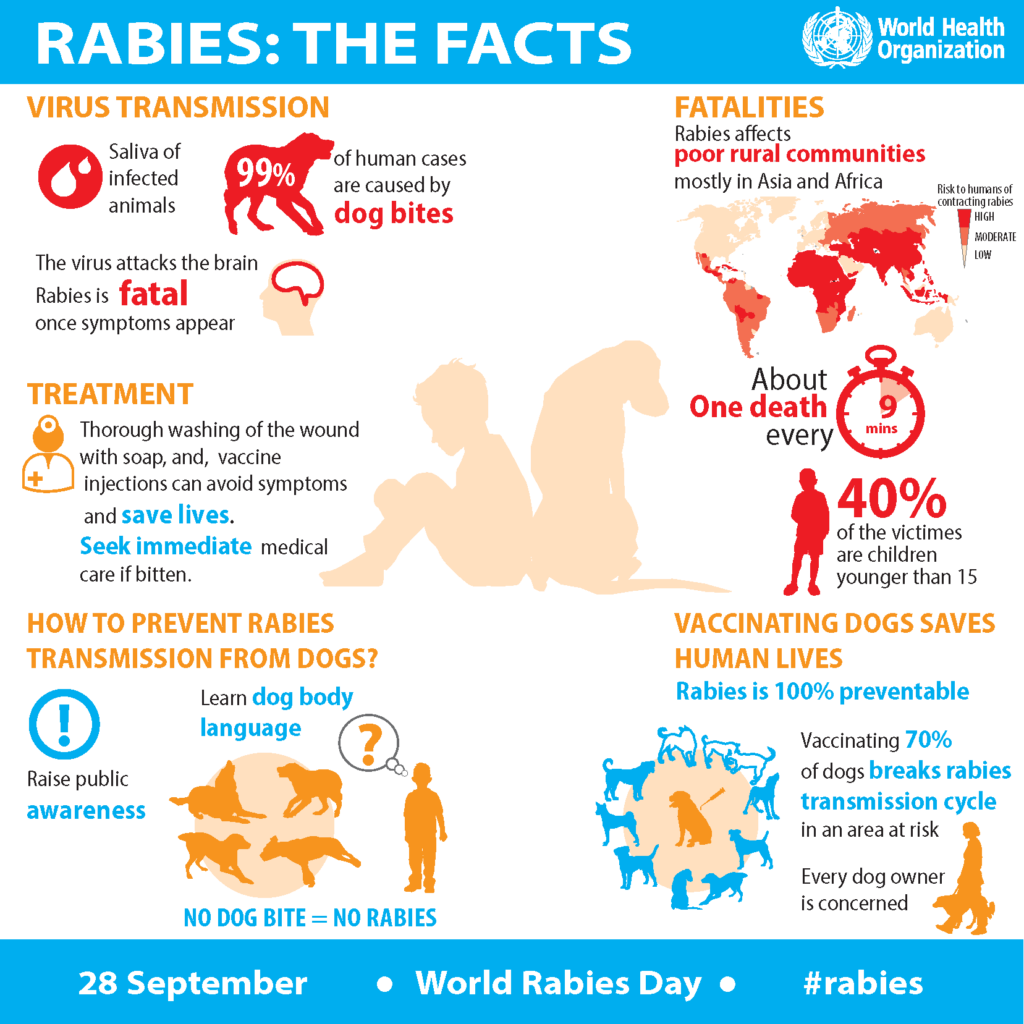
About Rabies:
Rabies is a viral zoonotic disease that causes progressive and fatal inflammation of the brain and spinal cord. Clinically, it has two forms:
- Furious rabies – characterized by hyperactivity and hallucinations.
- Paralytic rabies – characterized by paralysis and coma.
Although fatal once clinical signs appear, rabies is entirely avoidable; vaccines, medicines and technologies have long been available to prevent death from rabies. Nevertheless, rabies still kills tens of thousands of people each year. Of these cases, approximately 99% are acquired from the bite of an infected dog.
Dog-mediated human rabies can be eliminated by tackling the disease at its source: infected dogs. Making people aware of how to avoid the bites of rabid dogs, to seek treatment when bitten and to vaccinate animals can successfully disrupt the rabies transmission cycle.
Euthanasia for Specific Cases
Conditions for Euthanasia
The Court permitted legally permissible euthanasia only for:
- Rabid dogs
- Incurably ill dogs
- Demonstrably dangerous or aggressive dogs
The decision requires assessment by qualified veterinary experts.
Liability of Animal Welfare Groups
The Court directed that organisations or groups feeding and maintaining stray dogs in educational institutions must file affidavits accepting liability.
Failure to do so would prohibit such activities within institutional premises.
Legal Framework
Animal Birth Control Rules 2023
The Rules aim to regulate:
- Sterilisation of stray dogs
- Vaccination programmes
- Population control measures
- Humane management practices
Prevention of Cruelty to Animals Act 1960
The Act provides legal safeguards against unnecessary cruelty to animals while enabling regulation of animal management.
Article 21 of the Constitution
The Court interpreted Article 21 to include:
- Right to life
- Personal security
- Freedom of movement in public spaces
Challenges
Rising Stray Dog Population
Population growth of stray dogs in many urban areas has outpaced sterilisation and vaccination efforts.
Weak Implementation of ABC Programmes
Despite the policy framework existing for years, implementation has often remained inadequate due to limited infrastructure and funding.
Public Health Concerns
Rising dog-bite incidents create serious concerns regarding rabies and public safety.
Human–Animal Conflict
Balancing animal rights with public safety continues to generate social and legal debate.
Way Forward
Strengthen Sterilisation and Vaccination Programmes
Large-scale implementation of sterilisation and vaccination initiatives is necessary for sustainable population control.
Improve Municipal Capacity
Local bodies require adequate funding, veterinary facilities and trained personnel.
Adopt a One Health Approach
Human health, animal health and environmental health should be addressed through integrated planning.
Promote Responsible Pet Ownership
Abandonment of pets and poor regulation of breeding practices contribute significantly to stray populations.
Increase Public Awareness
Community awareness programmes on animal behaviour, rabies prevention and responsible interaction with animals should be expanded.
Conclusion
The Supreme Court judgment attempts to strike a balance between public safety and animal welfare by recognising that constitutional rights of citizens and humane treatment of animals must coexist. Long-term solutions, however, require systematic implementation of sterilisation, vaccination and public health measures rather than relying solely on judicial interventions.
Practice Questions
1. With reference to the Animal Birth Control (ABC) Rules, consider the following statements:
- They aim to regulate sterilisation and vaccination of stray dogs.
- They are framed under the Prevention of Cruelty to Animals Act, 1960.
- They exclusively focus on euthanasia of stray animals.
Which of the statements given above is/are correct?
(a) 1 and 2 only
(b) 2 only
(c) 1 and 3 only
(d) 1, 2 and 3
Correct Answer: (a)
Explanation: ABC Rules focus on sterilisation and humane management of stray animals and are framed under the Prevention of Cruelty to Animals Act. They do not exclusively deal with euthanasia.
2. Consider the following statements regarding rabies:
- Rabies is a viral disease affecting the nervous system.
- Vaccination after exposure can help prevent the disease.
- Rabies affects only animals and not humans.
Which of the statements given above is/are correct?
(a) 1 only
(b) 1 and 2 only
(c) 2 and 3 only
(d) 1, 2 and 3
Correct Answer: (b)
Explanation: Rabies is a viral disease affecting the nervous system and post-exposure vaccination is effective. Humans can also be infected.
Mains Questions
- Examine the role of judicial intervention in addressing public health concerns related to stray animal management in India.
- Discuss the challenges associated with balancing public safety and animal welfare in India’s urban governance framework.
How empowering India’s local governments can kickstart innovation and growth
Why in News?
A recent debate on India’s federal structure has highlighted the weak position of local governments, particularly Urban Local Bodies (ULBs), despite constitutional recognition under the 73rd and 74th Constitutional Amendments. Concerns include inadequate finances, weak administrative powers, dependence on State governments, and their impact on urban development and economic growth.
UPSC Relevance
Prelims:
73rd and 74th Constitutional Amendments, Local Self-Government, Finance Commission, JNNURM, AMRUT. Mains:
GS I: Urbanisation and issues associated with urban areas;
GS II: Local governance, devolution of powers, federalism.
Background
India follows a three-tier governance system consisting of the Union government, State governments, and local governments. While Centre–State relations occupy significant attention in debates on federalism, local governments often remain neglected despite their constitutional status.
The 73rd Constitutional Amendment and 74th Constitutional Amendment aimed to strengthen grassroots democracy through constitutional recognition of Panchayats and municipalities.
However, despite these reforms, local governments continue to depend heavily on State governments for personnel, finances, and decision-making authority.
Present Status of India’s Local Governments
Limited administrative capacity
India’s local governments possess a relatively small administrative workforce. While countries such as the United States and China have a large proportion of public employees working at the local level, India has only a limited share.
This weak institutional capacity reduces efficiency in delivering public services and increases dependence on State administrations.
Weak fiscal autonomy
Urban Local Bodies generate very limited revenue independently. Their own tax revenue has remained around 0.3% of GDP for decades, leading to dependence on grants and transfers.
As a result, local expenditure remains low, restricting investments in infrastructure and public services.
High dependence on States
Most functions formally transferred to local governments continue to remain under State control because personnel and administrative mechanisms remain accountable to State authorities rather than elected local bodies.
Factors Responsible for Weakness of Local Governments
Historical centralisation of power
Administrative structures inherited from the colonial period favoured centralised control and bureaucracy rather than local autonomy.
Limited fiscal powers
Local governments possess limited authority to raise revenues through taxation or user charges, resulting in inadequate resource mobilisation.
State government dominance
State governments often control appointments, transfers, promotions and disciplinary authority over officials working in local bodies.
Weak institutional and technical capacity
Many municipalities lack professional expertise in urban planning, project implementation, and financial management.
Distortions in land administration
Policies such as the Urban Land Ceiling Act, 1976 fragmented urban land markets and reduced opportunities for productive land monetisation.
Land and Urban Financing: A Major Constraint
Land represents a major source of public revenue in rapidly urbanising economies. Rising economic activity generally increases land values, creating opportunities for governments to mobilise revenue.
China effectively monetised increasing land values through land transactions and urban development policies, significantly enhancing local government finances.
India, however, could not utilise land resources similarly because of policy distortions, fragmented ownership patterns and governance inefficiencies.
Consequently:
- Urban revenues remained stagnant.
- Real estate markets developed distortions.
- Black money generation expanded significantly.
- Urban Local Bodies remained financially weak.
Importance of Empowering Local Governments
Better service delivery
Empowered local institutions can improve delivery of essential services such as water supply, sanitation, transport and waste management because they operate closest to citizens.
Promoting innovation
Competitive local governance can encourage innovative solutions tailored to local conditions.
Supporting urbanisation
Rapid urbanisation requires efficient city administrations capable of handling increasing population pressures.
Economic growth and employment generation
Cities serve as major engines of economic activity, entrepreneurship, industrialisation and job creation.
Strengthening democracy
Local governments improve participatory governance and increase citizen engagement in policy-making.
Government Initiatives
Jawaharlal Nehru National Urban Renewal Mission (JNNURM)
The mission sought to improve urban infrastructure and governance through financial support linked to reforms.
Atal Mission for Rejuvenation and Urban Transformation (AMRUT)
Atal Mission for Rejuvenation and Urban Transformation (AMRUT) focuses on water supply, sewage systems and urban infrastructure development.
Finance Commission support
Recent Finance Commissions have increased grants and transfers for local governments.
Challenges
Fiscal dependence
Local governments continue to rely heavily on external financial assistance rather than generating sufficient internal revenue.
Administrative constraints
Even where powers are formally transferred, personnel and implementation mechanisms remain under State government influence.
Weak capacity
Insufficient technical expertise and managerial capacity hinder efficient implementation of development projects.
Limited accountability
Dependence on higher authorities reduces responsiveness toward citizens.
Urban governance challenges
Rapid urbanisation has generated concerns such as pollution, congestion and infrastructure stress, while local institutions remain inadequately prepared.
Way Forward
Strengthening fiscal autonomy
Local governments should receive greater authority to generate revenues through property taxation, user charges and innovative financing mechanisms while improving collection efficiency.
Administrative decentralisation
States should transfer personnel powers and allow greater autonomy in appointments, promotions and disciplinary matters to improve accountability.
Capacity building
Training programmes and professional expertise in urban planning, financial management and technology should be strengthened.
Land monetisation reforms
Unused public land assets can be productively utilised through transparent mechanisms while ensuring balanced urban development.
Encouraging competitive sub-federalism
Competition among cities for investment, innovation and better governance can create stronger incentives for improved performance.
Conclusion
India’s demographic and economic transformation is increasingly linked to the success of its cities and local institutions. While constitutional recognition created a framework for decentralisation, meaningful empowerment remains incomplete. Strengthening local governments through fiscal autonomy, administrative reforms and institutional capacity-building can transform them into engines of innovation, growth and inclusive development.
Practice Questions
1. Consider the following statements regarding Urban Local Bodies in India:
- The 74th Constitutional Amendment provided constitutional status to Urban Local Bodies.
- Urban Local Bodies in India generate a high proportion of their own revenues.
- State governments often exercise significant control over local administration.
Which of the statements given above is/are correct?
(a) 1 and 3 only
(b) 2 and 3 only
(c) 1 and 2 only
(d) 1, 2 and 3
Correct Answer: (a)
Explanation: Statement 1 and Statement 3 are correct. Urban Local Bodies generate relatively low own-source revenue and remain financially dependent.
2. With reference to local governance in India, consider the following statements:
- The 73rd Constitutional Amendment relates to Panchayati Raj institutions.
- Finance Commissions can recommend grants for local bodies.
- Municipal Commissioners are directly elected by citizens.
Which of the statements given above is/are correct?
(a) 1 only
(b) 1 and 2 only
(c) 2 and 3 only
(d) 1, 2 and 3
Correct Answer: (b)
Explanation: Municipal Commissioners are generally appointed officials and not directly elected.
Mains Questions
- “Competitive sub-federalism can become an important driver of urban growth and innovation in India.” Discuss.
- Examine the challenges faced by Urban Local Bodies in India despite constitutional recognition under the 74th Constitutional Amendment.
NHRC asks Centre to review laws to ensure Gender Inclusivity
Why in News?
The National Human Rights Commission of India (NHRC) has asked the Union government to review laws to ensure gender inclusivity, including the most recent amendments to the Transgender Persons (Protection of Rights) Act.
| UPSC Relevance: GS-2 Social Justice: Welfare schemes for vulnerable sections, Human Rights Prelims: National Human Rights Commission of India Mains: Gender Inclusivity: Associated Challenges and Welfare Provisions. |
Recommendations of NHRC:
Reconsider Medical Procedures for Gender Certification:
- The NHRC expressed concern over the removal of the principle of self-perceived gender identity in the Transgender Persons (Protection of Rights) Amendment Act, 2026. It recommended reconsideration of provisions that require medical procedures for gender certification.
Also Read: https://anantamias.com/current-affairs/transgender-persons-protection-of-rights-amendment-act-2026/
Gender-Inclusive Census Enumeration:
- The NHRC recommended that the ongoing Census 2027 exercise should separately enumerate: Intersex persons, Transmen and Transwomen. It would enable accurate disaggregated data collection and help evidence-based policymaking.
Admission in Educational Institutions based on Self-Identification:
- The NHRC advised that transgender and gender-diverse students should be admitted based on self-identified gender without requiring medical proof.
Review of Existing Laws:
The NHRC recommended reviewing multiple laws to make them gender-inclusive.
- The Registration of Births and Deaths Act should be amended to incorporate gender-inclusive procedures and recognition of self-identified gender.
- Juvenile Justice (Care and Protection of Children) Act to explicitly include gender non-conforming children, and provide for gender-affirming placements.
- Succession and Property Laws: NHRC called for equal inheritance and housing rights for transgender and intersex persons.
Sensitisation and Institutional Reforms:
The NHRC recommended:
- Gender-sensitisation training for police, teachers, healthcare workers, and judicial officers
- Dedicated legal aid cells
- Independent grievance redressal systems
- Standard Operating Procedures (SOPs) for prisons and correctional institutions.
About the National Human Rights Commission of India:
- The National Human Rights Commission (NHRC) is a statutory body established in 1993 under the Protection of Human Rights Act, 1993 (PHRA).
- It functions as India’s apex human rights institution and is responsible for the protection and promotion of human rights in the country. The Act defines human rights as rights relating to Life, Liberty, Equality and Dignity of the individual.
- These rights are guaranteed by the Constitution of India, or the International Covenants enforceable by Indian courts. NHRC is often described as the “watchdog of human rights” in India.
India’s NHRC has also been accredited with “A-status” by the Global Alliance of National Human Rights Institutions (GANHRI), which signifies compliance with the Paris Principles relating to independence and effectiveness of national human rights institutions.
Composition of NHRC:
The Commission consists of: A Chairperson, Full-time Members, and Ex officio Members.
- The Chairperson must be: A former Chief Justice of India, or a Judge of the Supreme Court.
- Full-Time Members: The NHRC includes:
- One member who is, or has been, a Judge of the Supreme Court.
- One member who is, or has been, the Chief Justice of a High Court.
- Three members possessing knowledge of, or practical experience in, matters relating to human rights.
- At least one of the three human rights expert members must be a woman.
- Ex officio Members: The Chairpersons of the following national commissions act as ex officio members of NHRC:
- National Commission for Scheduled Castes
- National Commission for Scheduled Tribes
- National Commission for Women
- National Commission for Minorities
- National Commission for Backwards Classes
- National Commission for Protection of Child Rights
- Chief Commissioner for Persons with Disabilities
- Appointment of Chairperson and Members
- The Chairperson and members are appointed by the President of India on the recommendations of a committee headed by the Prime Minister.
- Tenure: Under the Protection of Human Rights (Amendment) Act, 2019: Chairperson and members hold office for 3 years or until attaining the age of 70 years, whichever is earlier. They are eligible for reappointment.
UPSC PYQ 2023
Q. Explain the constitutional perspectives of Gender Justice with the help of relevant Constitutional Provisions and case laws.
UPSC PYQ 2020
Q. Other than the Fundamental Rights, which of the following parts of the Constitution of India reflect/reflects the principles and provisions of the Universal Declaration of Human Rights (1948)?
- Preamble
- Directive Principles of State Policy
- Fundamental Duties
Select the correct answer using the code given below:
(a) 1 and 2 only
(b) 2 only
(c) 1 and 3 only
(d) 1, 2 and 3
Answer: (d)
Source: https://anantamias.com/current-affairs/nhrc-asks-centre-to-review-laws-to-ensure-gender-inclusivity/