Daily Digest
UPSC · Civil Services Examination
Current Affairs · Monday, 25 May 2026
Current affairs curated and edited by Anantam IAS faculty — pulled from The Hindu, PIB, IDSA, Foreign Affairs and the ministries. Read, annotate, revise.
Old Rajinder Nagar · Delhi 110005 · anantamias.com
Dialogue, uninterrupted maritime trade: Jaishankar outlines India’s 5-point stand during talks with Rubio
Why in News?
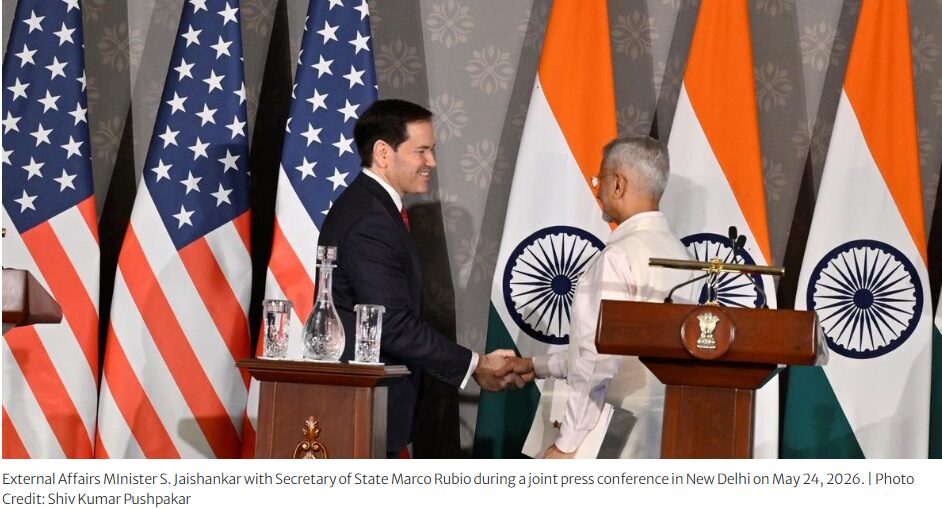
India’s External Affairs Minister S. Jaishankar outlined India’s five-point position on major global and regional issues during talks with Marco Rubio. Discussions covered regional conflicts, maritime security, trade, defence cooperation, energy security, critical minerals, artificial intelligence, and Indo-Pacific developments, reflecting the widening scope of the India–U.S. strategic partnership.
UPSC Relevance
Prelims: India–U.S. relations, Quad, critical minerals, IMEC, energy security, Indo-Pacific, nuclear cooperation.
Mains:
GS II – India and its neighbourhood, bilateral and international relations;
GS III – security, emerging technologies, energy security, economic diplomacy.
Background/Context
India–U.S. relations have evolved from Cold War-era strategic distance to a multidimensional partnership involving defence, technology, trade, maritime security, and global governance. Over the last two decades, several initiatives have accelerated cooperation:
- Civil Nuclear Agreement (2005–08)
- Major Defence Partner status (2016)
- Foundational defence agreements such as LEMOA, COMCASA and BECA
- Increasing engagement through the Quadrilateral Security Dialogue framework
- Collaboration in semiconductors, critical technologies and resilient supply chains
Recent geopolitical developments such as the Ukraine conflict, tensions in West Asia, growing competition in the Indo-Pacific and global supply chain disruptions have further strengthened the strategic importance of India–U.S. relations.
India’s Five-Point Global Approach
During the discussions, India highlighted a broad framework guiding its foreign policy approach.
Dialogue and diplomacy for conflict resolution
India reiterated that disputes should be resolved through peaceful means rather than prolonged military confrontation. This position reflects India’s strategic autonomy approach and its consistent emphasis on negotiations and diplomatic engagement.
The policy has been visible in India’s stance on conflicts in Ukraine and West Asia, where India has repeatedly advocated peace initiatives without aligning itself completely with any geopolitical bloc.
Support for safe and uninterrupted maritime commerce
India emphasized freedom of navigation and uninterrupted maritime trade routes.
Maritime chokepoints such as the Strait of Hormuz, Bab-el-Mandeb and the South China Sea are crucial for global trade and energy flows. Any disruption can affect international trade and energy security.
India’s maritime outlook also aligns with:
- SAGAR (Security and Growth for All in the Region)
- Indo-Pacific Oceans Initiative (IPOI)
Respect for international law
India stressed adherence to international law and global norms.
This includes:
- Respect for sovereignty and territorial integrity
- Observance of international conventions
- Peaceful settlement of disputes
Such principles become important in territorial disputes, maritime disagreements and regional conflicts.
Opposition to weaponisation of trade and resources
India argued against the use of economic tools as coercive instruments.
Examples include:
- Sanctions regimes
- Export restrictions on critical minerals
- Supply chain disruptions
- Strategic control over essential commodities
Recent global events have highlighted how dependence on a few countries for energy resources, semiconductors or critical minerals creates vulnerabilities.
Trusted partnerships and resilient supply chains
India stressed diversified supply chains and trusted economic partnerships to reduce risks to the global economy.
The COVID-19 pandemic and geopolitical tensions demonstrated vulnerabilities in concentrated production systems.
Initiatives supporting this objective include:
- Supply Chain Resilience Initiative (SCRI)
- India-Middle East-Europe Economic Corridor (IMEC)
- Quad technological cooperation
What are the Major Areas of India–U.S. Cooperation?
Defence and Strategic Cooperation
The two countries discussed the recently renewed ten-year defence partnership framework.
Areas of cooperation include:
- Defence technology transfers
- Joint military exercises
- Underwater domain awareness
- Defence manufacturing under “Make in India”
- Maritime security
Recent conflicts have also highlighted the need for modern warfare capabilities involving drones, AI-based systems and integrated surveillance mechanisms.
Trade and Economic Relations
India and the U.S. discussed early finalisation of an interim trade agreement which could become a stepping stone for a comprehensive bilateral trade arrangement.
Potential areas of expansion include:
- Digital economy
- Services sector
- Manufacturing
- Agricultural trade
- Technology partnerships
The United States remains one of India’s largest trading partners.
Energy Security Cooperation
India emphasized affordable and diversified energy sources.
Energy cooperation presently includes:
- LNG imports, Oil trade, Renewable energy cooperation, Strategic energy partnerships
Diversification reduces excessive dependence on specific regions and enhances long-term energy resilience.
Nuclear Cooperation
Discussions also covered opportunities arising from recent legal and regulatory developments for expanding civil nuclear cooperation.
Nuclear energy can help India achieve: Energy security, Low-carbon growth, Net-zero goals, Reduction of fossil fuel dependence
Critical Minerals and Emerging Technologies
Critical minerals such as lithium, cobalt and rare earth elements have become central to modern economic and technological systems.
India and the U.S. are cooperating in areas such as:
- Semiconductor supply chains, Artificial Intelligence, Critical minerals, Advanced manufacturing, Emerging technologies
These sectors are increasingly becoming strategic assets in global geopolitics.
Counter-terrorism Cooperation
India reiterated its “zero tolerance” approach towards terrorism.
Areas of cooperation include: Intelligence sharing, Counter-terror financing, Extradition cooperation, Narcotics control
India highlighted recent cooperation in bringing back accused individuals linked to terror activities.
What is the Significance of India–U.S. Partnership for India
A stronger partnership provides India with several strategic advantages.
Political and strategic benefits include greater influence in global institutions and stronger balancing capabilities in the Indo-Pacific region.
Economic benefits include greater investments, technology access and trade opportunities.
Security benefits include defence modernisation and maritime cooperation.
Technological gains include access to advanced technologies in AI, semiconductors and critical sectors.
Challenges in India–U.S. Relations
Despite progress, certain issues continue to create friction.
Trade disagreements
Differences remain regarding tariffs, market access and digital regulations.
Strategic autonomy concerns
India seeks partnerships without becoming part of military alliances, while the U.S. sometimes expects stronger alignment.
Technology and regulatory barriers
Restrictions on technology transfers and regulatory hurdles can slow cooperation.
Geopolitical differences
Differences in positions regarding Russia, West Asia and global conflicts occasionally emerge.
Immigration and mobility issues
Visa restrictions and movement of skilled professionals continue to remain sensitive areas.
Way Forward
Move beyond transactional engagement
The partnership should gradually shift from issue-specific cooperation towards a broader long-term strategic framework based on mutual interests.
Accelerate technology partnerships
Joint innovation in semiconductors, AI, quantum computing and critical minerals should receive greater institutional support.
Strengthen supply chain resilience
Diversification of supply chains and trusted manufacturing ecosystems can reduce dependence on single-country sources.
Expand people-to-people relations
Educational exchanges, skilled mobility arrangements and research partnerships can create stronger societal links.
Deepen coordination in global institutions
India and the U.S. should cooperate in reforming international institutions and addressing global challenges such as climate change, terrorism and health security.
Conclusion
India–U.S. relations have expanded beyond traditional diplomacy into a broad strategic partnership involving security, trade, technology and global governance. India’s five-point framework demonstrates its attempt to balance national interests, strategic autonomy and international responsibilities. The future trajectory of this partnership will likely influence not only bilateral relations but also the wider geopolitical and economic order.
Practice Questions
Question 1
Consider the following statements with reference to India’s five-point global approach:
I. India emphasizes dialogue and diplomacy as preferred tools for conflict resolution rather than prolonged military confrontation.
II. India supports trusted partnerships and resilient supply chains to reduce vulnerabilities arising from concentrated production systems.
III. India opposes the weaponisation of trade and strategic resources as instruments of coercion.
Which of the following relationships among the above statements is/are correct?
- Statement II operationalises the concerns highlighted in Statement III by creating alternative and diversified economic networks.
- Statement I contradicts Statement III because diplomatic engagement prevents economic measures from being used in international relations.
- Statement III complements Statement I by promoting stability through non-coercive mechanisms.
(a) 1 and 3 only
(b) 2 only
(c) 1, 2 and 3
(d) 3 only
Correct Answer: (a) 1 and 3 only
Question 2
Consider the following statements with reference to India–U.S. strategic cooperation:
I. India–U.S. cooperation increasingly includes emerging sectors such as artificial intelligence, critical minerals and semiconductor supply chains.
II. Defence cooperation between India and the United States has expanded beyond traditional military arrangements into technology and manufacturing domains.
III. India seeks to maintain strategic autonomy while expanding cooperation with major global powers.
Which of the following relationships among the above statements is/are correct?
- Statement I extends the trends reflected in Statement II by expanding cooperation into wider technological domains.
- Statement III contradicts Statement II because strategic autonomy prevents deeper defence cooperation.
- Statement III explains the broader framework within which Statements I and II operate.
(a) 1 only
(b) 2 and 3 only
(c) 1 and 3 only
(d) 1, 2 and 3
Correct Answer: (c) 1 and 3 only
Mains Question
- India–U.S. relations have evolved from strategic hesitation to multidimensional engagement. Discuss the factors driving this transformation and examine the challenges that remain.
- Discuss India’s five-point approach on global issues and evaluate its significance in shaping India’s foreign policy in a changing geopolitical order.
Why is Road Dust emerging as Delhi’s biggest Pollution threat?
Why in News?
The Municipal Corporation of Delhi (MCD) deploys Mechanical Road Sweeping Machines (MRSMs) across its 12 administrative zones to reduce particulate matter (PM10 and PM2.5) emissions from road dust.
A recent CAQM expert panel report and CSIR-NEERI/CRRI joint study have both identified road dust as one of the most critical and under-addressed pollution sources in the National Capital Region.
| UPSC Relevance: GS-3 Environment: Pollution Prelims & Mains: Air Pollution in Delhi: Causes, Impacts, Challenges & Policy measures. |
What Is Road Dust and Why Does It Matter?
- Road dust refers broadly to airborne particulate matter originating from roads and their surroundings, including dry soil particles, vehicle-induced resuspension, tyre and brake wear, road surface wear, and debris from the transport of Construction and Demolition (C&D) material.
- Unlike combustion-based emissions, road dust is a non-exhaust source, making it resistant to conventional clean fuel policies.
CAQM panel described road dust as “both a primary emission and a persistent source.” The defining mechanism is resuspension: dust deposited on road surfaces is repeatedly lifted back into the air by vehicular movement, particularly under dry conditions, keeping particulate levels elevated even when no active dust-generating activity is occurring.
Scale of the Problem:
Road dust is now the dominant contributor to particulate pollution in Delhi proper:
- A 2013 IIT Kanpur source apportionment study found road dust responsible for 56% of PM10 and 38% of PM2.5 in Delhi.
- Another study confirmed that road dust and transportation remain the primary sources of PM10 and PM2.5 in Delhi.
- The CSIR-NEERI/CRRI joint study recorded PM10 concentrations as high as 1,700 µg/m³ up to 10 metres from certain road stretches, against a permissible 24-hour standard of 100 µg/m³ and an annual standard of 60 µg/m³.
The same study estimated that nationwide, exposure to road dust is linked to more than 10,207 premature deaths annually.
Why Road Dust Persists?
Environmental and geographic factors:
- Delhi’s climate, with dry summers, frequent western dust storms, loose alluvial soil, and relatively low rainfall, creates a high baseline dust load that cannot be eliminated through road maintenance alone.
- Degradation of the Aravalli hill range has weakened a natural dust barrier to Delhi’s south and west, allowing more wind-blown dust to enter the city. Aravalli fringes continue to face encroachment, illegal stone crushing and large-scale barren patches, all contributing to a persistent dust plume drifting toward NCR.
- Delhi is landlocked on all sides; north-westerly winds from Pakistan and Afghanistan carry dust into the region, and the Himalayas block the escape of polluted air, causing particulate matter to stagnate.
Structural and infrastructural factors:
- Poor road surfaces, potholes, broken edges, and unpaved stretches continuously generate loose material available for resuspension.
- Unpaved road medians allow dust to blow directly onto carriageways.
- Irrigation of median and footpath plantations using thick hose pipes spills soil onto roads, which dries and adds to the dust load.
- Local roads and secondary streets are typically excluded from regular maintenance schedules, with repairs carried out only after significant damage, causing prolonged emissions.
Operational and governance barriers:
- Encroachments and unauthorised parking obstruct cleaning vehicles and allow dust to accumulate.
- The CAQM road-dust committee (2025) noted the absence of a standardised operating procedure (SOP) for sweeping, making mechanised efforts inconsistent in frequency and particle-size effectiveness.
Health Consequences:
Road dust is a major source of PM2.5 (particles under 2.5 micrometres, roughly 1/30th the diameter of a human hair) and PM10. PM2.5 is especially hazardous because it can penetrate the lung-blood barrier and enter the bloodstream directly. The documented health effects include:
- Lung irritation, inflammation, and aggravation of pre-existing conditions such as asthma and Chronic Obstructive Pulmonary Disease (COPD).
- Long-term exposure linked to premature death, particularly in people with chronic heart or lung disease.
- Reduced lung function growth in children.
- Road dust carries toxic heavy metals (from brake dust, tyre wear, and road surface wear) that raise the risk of cancer and systemic disease.
Delhi’s PM2.5 levels during high-pollution episodes routinely exceed 300 µg/m³, far above the WHO guideline of 5 µg/m³ (annual mean). India’s own National Ambient Air Quality Standard (NAAQS) for annual PM2.5 is 40 µg/m³, itself eight times the WHO limit.
Current Measures and their Limitations:
- Mechanised sweeping (MRSMs): The MCD operates MRSMs across its 12 zones and deploys 57,000 sanitation workers for areas inaccessible to machines. However, the NEERI-CRRI report stressed that sweeping needs to become more scientific with SOPs based on road type, traffic volume, and particle-size analysis.
- Water sprinklers and anti-smog guns (ASGs): MCD operates water sprinklers and ASGs. However, experts have pointed out that these measures merely transport dust from one area to another. Once particles settle and the surface dries, they are resuspended again, with the added problem of humidification.
- GRAP provisions: Under the Graded Response Action Plan (GRAP), a tiered emergency framework managed by the CAQM, dust mitigation measures are escalated with AQI deterioration.
- Under Stage I (AQI 201-300), mechanised sweeping and water sprinkling on identified roads before peak traffic hours is mandated.
- Under Stage II (AQI 301-400), daily mechanical or vacuum sweeping is required.
- GRAP also restricts Construction and Development (C&D) activity without approved dust-mitigation plans on sites over 500 sq. m.
- However, GRAP is reactive by design and does not substitute for baseline road maintenance.
- CAQM’s Operation Clean Air: CAQM’s flying-squad inspections under Operation Clean Air have flagged high-dust road stretches across Delhi and directed the MCD to intensify cleaning. The CAQM is also exploring the installation of dust sensors along major roads in Delhi-NCR to enable real-time, stretch-level monitoring of road dust concentrations.
- C&D waste management: Processing facilities for C&D waste, Sanitary Landfill Facilities, and Waste-to-Energy plants are in place, but enforcement gaps, particularly in the transport of debris, continue to contribute to road dust.
Way Forward:
- Standardised, scientific approach to sweeping: The NEERI-CRRI study calls for SOPs for mechanical sweepers based on road type, particle size, and traffic patterns, moving beyond ad hoc frequency-based deployment.
- Improved road design and maintenance: The CAQM committee recommends a standardised framework combining paving, surface repair, and greening within the road right-of-way, explicitly stating that solutions must go beyond sweeping.
- Vegetative barriers and green infrastructure: Roadside planting with drought-resilient species featuring wide canopies and rough or large leaf surfaces is recommended for dust trapping.
- A three-tier plantation system can stabilise loose soil and act as a dust filter.
- Drip irrigation using treated wastewater (including alongside metro infrastructure) is preferred over hose-pipe irrigation to prevent soil spillover.
- Aravalli restoration: Arresting further degradation of the Aravalli range through stricter regulation of stone crushing, afforestation, and encroachment removal is a long-term structural intervention to restore Delhi’s natural dust barrier.
- Technology-based monitoring: Deployment of dust sensors on high-traffic corridors would enable targeted, evidence-based deployment of mitigation resources rather than blanket operations.
Source: https://anantamias.com/current-affairs/why-is-road-dust-emerging-as-delhis-biggest-pollution-threat/
DRDO’s new Drone-launched Missile: ULPGM-V3
Why in News?
The Defence Research and Development Organisation (DRDO) completed the final deliverable configuration development trials of the Unmanned Aerial Vehicle Launched Precision Guided Missile (ULPGM)-V3.
The trials pave the way for critical user trials by the armed forces, after which the system will be ready for induction.
| UPSC Relevance: GS-3 Science and Technology: Defence Technology, Internal Security Prelims: UAV-Launched Precision Guided Missile-V3 Mains: Changing nature of Warfare and unconventional Threats, India’s Broader Counter-Drone and Drone Warfare Ecosystem |
What Is the ULPGM-V3?
- The ULPGM-V3 (also referred to as ULM-ER: Unmanned Launched Munition–Extended Range) is a fire-and-forget, precision-guided missile specifically engineered for drone warfare.
- It is designed to be launched from unmanned aerial vehicle (UAV) platforms and is capable of executing precision strikes against both ground targets (tanks, bunkers, armoured vehicles) and aerial targets (enemy drones, helicopters, and other airborne threats) without requiring direct human piloting or endangering manned aircraft.
Key Specifications of ULPGM-V3:
- Weight: 12.5 kg (lightweight, compatible with multiple UAV platforms)
- Propulsion: Dual-thrust solid motor.
- Range: Up to 4 km (day), up to 2.5 km (night); maximum strike range up to 10 km.
- Seeker: High-definition dual-channel Imaging Infrared (IIR) seeker
- Guidance: Passive homing; fire-and-forget with post-launch target update capability via two-way data link.
- Target types: Stationary and moving targets; ground and aerial threats.
- Accuracy: 10 cm Circular Error Probable (CEP)
- Terrain: Operable in plains and high-altitude regions. Operational conditions: All-weather, day and night.
Warhead Options:
The ULPGM-V3 can be fitted with three different warhead types depending on mission requirements:
- Anti-Armour Warhead: Designed to destroy heavily protected modern battle tanks, including those equipped with Rolled Homogeneous Armour (RHA) and Explosive Reactive Armour (ERA); two of the most advanced passive protection systems used in contemporary armoured warfare.
- Penetration-Cum-Blast (PCB) Warhead: Designed to pierce and destroy bunkers, hardened fortifications, and reinforced concrete structures.
- Pre-Fragmentation Warhead: Disperses high-velocity metal fragments over a wide area to maximise lethal effect against soft targets and light vehicles, particularly effective against drone swarms and aerial threats.
Strategic Significance:
- Shift in the character of modern warfare: Drones have transitioned from niche surveillance platforms to central instruments of conventional and asymmetric warfare. UAV swarms are now a frontline threat for India. India has announced a USD 234 million drone incentive programme, emergency procurement of loitering munitions, and adopted the “Eagle in the Arm” doctrine, which envisions every soldier as a trained drone operator by 2027. ULPGM-V3 directly addresses this new threat environment.
- Network-centric warfare: Two-way data link enabling post-launch retargeting reflects the broader shift toward network-centric warfare, where drones, sensors, and command systems operate in a fused, real-time decision environment. This capability is particularly relevant against fast-moving drone threats, where a target may manoeuvre or be replaced by a new priority between launch and impact.
- Reduced risk to soldiers and pilots: UAV-launched weapons eliminate the need to expose manned aircraft or soldiers during strike missions, a force-multiplying advantage in high-attrition environments.
- Aatmanirbharta in Defence: The ULPGM-V3 is a milestone in India’s Defence Production Policy, demonstrating full-stack indigenous capability, from guidance systems and seekers (RCI) to energetic materials (HEMRL) and terminal ballistics (TBRL), with a confirmed serial production supply chain involving MSMEs and the private sector.
- High-altitude relevance: The missile’s design qualification for deployment in both plains and high-altitude regions makes it directly relevant to the Ladakh and Himalayan frontier, where armour operations, helicopters, and drone surveillance are all contested.
India’s Broader Counter-Drone and Drone Warfare Ecosystem:
1. Offensive systems:
- ULPGM family (V1, V2, V3): UAV-launched precision guided missiles.
- Nagastra-1R: reusable loitering munition (kamikaze drone); inducted in 2025.
- FPV (First-Person View) anti-tank loitering munitions: inducted by the Indian Army in 2025.
2. Counter-drone systems:
- D4 System (Drone Detect, Deter and Destroy): Jointly developed by DRDO and Bharat Electronics Limited (BEL); combines radar, electro-optical sensors, RF jamming, GPS spoofing (soft kill), and laser weapons (hard kill); announced for urban deployment in March 2025.
- SAKSHAM Counter-UAS System: Developed by BEL; inducted by the Indian Army from October 2025 for low-altitude air defence.
- Bhargavastra Micro-Missile System: Designed for neutralising drone swarms; launches guided micro-missiles (range 2.5 km) with radar detection up to 6 km.
- Indrajaal: An AI-powered autonomous drone-dome system using HiveMind AI for real-time detection and elimination of hostile UAVs at scale.
- Laser-based directed-energy weapons under development by DRDO, capable of engaging targets at up to 2 km; the Indian Army and IAF are also procuring 16 indigenous drone interdiction systems using 10 kW laser beams.
- Integrated Drone Detection and Interdiction System (IDD&IS): Deployed along the China border.
The development of drone-launched weapons is one of the DRDO’s focus areas. Drones will see an even greater role in the coming days as they offer significantly reduced risk to human soldiers and pilots, persistent real-time surveillance and precision strike capability.
Source: https://anantamias.com/current-affairs/drdos-new-drone-launched-missile-ulpgm-v3/
The US Ends Russia Oil Waiver: Implications for India
Why in News?
The United States has tightened restrictions on Russian seaborne oil and reduced policy flexibility that earlier allowed certain transactions and intermediaries to continue operating under limited waivers. The move is part of the broader Western sanctions regime imposed after the Russia-Ukraine conflict.
The decision has renewed concerns about global oil supply stability, rising freight and insurance costs, and the vulnerability of major energy-importing countries such as India.
| UPSC Relevance: GS-2 International Relations: Bilateral Relations, Effect of policies and politics of developed and developing countries on India’s interests; GS-3 Economy: Energy Mains: Energy Security for India: Challenges and Way Forward. |
What is the Issue?
- Since 2022, Western countries led by the United States and the European Union have imposed sanctions on Russian oil exports to reduce Moscow’s revenues during the Russia-Ukraine War.
- However, complete disruption of Russian oil exports risked triggering a global energy crisis. Therefore, the West simultaneously:
- Imposed sanctions and price caps on Russian crude, while
- Allowing temporary waivers, shipping flexibility, and selective carve-outs to maintain global supply stability.
The latest tightening signals a tougher enforcement phase, increasing uncertainty in global energy markets.
How India became central to the Russia Oil Story?
- Before Russia invaded Ukraine in February 2022, Russian oil represented a negligible share of India’s crude imports.
- The subsequent Western sanctions regime redirected Moscow’s exports toward Asia. India rapidly became Russia’s largest seaborne crude customer, with imports rising from near zero to record levels. By mid-2025, Russia supplied more than 40 per cent of India’s total imported crude. In April-May 2026, flows were approaching 1.9 million barrels per day (bpd), near peak levels.
- Russian crude was offered at steep discounts, ranging from $6 to $10 per barrel below market. This improved refinery margins, moderated domestic fuel inflation, and provided supply flexibility at a time of extraordinary global market turbulence.
The US Ends Russia Oil Waiver: Implications for India:
- Fiscal deficit: Analysts estimated that the risk of US penalties on Russian oil purchases could add $9-11 billion to India’s import bill annually.
- Imported Inflation: A sustained rise in crude prices ripples through transport costs, food inflation (via diesel and fertiliser), manufacturing competitiveness, weakens household purchasing power, and complicates monetary policy for the Reserve Bank of India.
- Pressure on India’s Strategic Autonomy: India maintains close relations with both the United States and Russia. The sanctions environment creates diplomatic balancing challenges. India has consistently argued that energy imports are driven by economic necessity rather than geopolitical alignment.
India’s Energy Vulnerability:
India’s structural exposure to global energy shocks is defined by several overlapping vulnerabilities:
- Import dependence: India imports approximately 90 per cent of its crude oil requirements. India’s energy demand continues to rise rapidly with industrialisation, urbanisation, and expanding mobility. Domestic petroleum consumption approximately doubled between 2002 and 2021, and continues growing.
- Strait of Hormuz exposure: Approximately half of India’s crude oil and LPG imports transit the Strait of Hormuz, the narrow chokepoint between Oman and Iran that handles roughly 20 per cent of global petroleum liquids consumption and about one-quarter of all seaborne oil trade. Key suppliers: Saudi Arabia, Iraq, the UAE, and Kuwait all export primarily through this route.
- The 2025-26 Hormuz crisis: Escalating Iran-US conflict led to Iran’s announcement of Hormuz closure threats. With the Strait threatened, Brent crude rose sharply from around $70-72/barrel to over $100, with analysts warning of scenarios above $135-150/barrel in a prolonged closure.
India’s Long-Term Energy Security Strategy:
- Strategic Petroleum Reserves (SPR): India is expanding its SPR to hold crude oil for up to 90 days of consumption. The current three SPR facilities at Visakhapatnam (1.33 million tonnes), Mangaluru (1.5 million tonnes), and Padur (2.5 million tonnes) are part of Phase 1; Phase 2 expansion is planned at Chandikhol and Padur.
- Refining capacity expansion: India aims to expand its refining capacity by 20 per cent, reaching 309 million metric tonnes per year by 2030, to process a wider range of crude grades and reduce dependence on specific supply routes.
- Supply diversification: Indian refiners are accelerating diversification toward US crude, West African grades, and alternative Middle Eastern suppliers.
- Alternative fuels and energy transition: India is pursuing ethanol blending, compressed biogas, natural gas infrastructure expansion, green hydrogen, and electric mobility, all of which reduce crude demand growth over the medium term. However, the pace of transition means hydrocarbons will remain dominant for at least two more decades.
- Payment infrastructure: India is developing rupee-ruble trade mechanisms and alternative payment channels to reduce dependence on SWIFT and dollar-denominated settlements, reducing vulnerability to financial sanctions.
- Domestic exploration: India is seeking to increase domestic upstream production, including in its offshore basins, to reduce the quantum of imports required.
India’s long-term priority will be to create a diversified and resilient energy architecture. In the coming decades, economic sovereignty will depend significantly on the ability of nations to secure energy supplies while navigating an unstable geopolitical environment.
Source: https://anantamias.com/current-affairs/the-us-ends-russia-oil-waiver-implications-for-india/
Ensitrelvir: Oral Anti-COVID Drug
Why in News?
The Phase 3 SCORPIO-PEP trial demonstrated that Ensitrelvir (brand name: XOCOVA) can prevent COVID-19 when given to household contacts within 72 hours of exposure to an infected individual.
This makes SCORPIO-PEP the first and only Phase 3 study of an oral antiviral to meet the primary endpoint of preventing symptomatic COVID-19 following exposure to an infected person. Ensitrelvir is currently under review by the US Food and Drug Administration (FDA).
| UPSC Relevance: GS-3 Science and Technology: Biology and Biotechnology Prelims: Ensitrelvir, Why are Antiviral drugs difficult to develop? |
Understanding how SARS-CoV-2 replicates?
- The SARS-CoV-2 virus stores much of its protein material in the form of a long protein chain called a polyprotein. This chain must be cut into smaller functional proteins before the virus can reproduce.
- Two viral enzymes perform this cutting:
- Main Protease (Mpro): performs most of the cleavage work.
- Papain-like Protease (PLpro): cuts specific sites not handled by Mpro.
Without these proteases, the virus cannot complete its replication cycle. Thus, these enzymes became attractive targets for antiviral drug development soon after the SARS-CoV-2 genome was published in 2020.
What is Ensitrelvir?
- Ensitrelvir is an oral antiviral drug developed by the Japanese pharmaceutical company Shionogi for treating COVID-19 infections.
- Mechanism: It prevents the SARS-CoV-2 virus from multiplying by selectively targeting a critical viral enzyme, called the Main Protease (Mpro), which is essential for the replication of the SARS-CoV-2 virus.
- Administering Ensitrelvir within 72 hours of symptom onset in the primary infected patient can significantly reduce transmission and symptomatic disease.
The drug has now demonstrated effectiveness not only in treating infection but also in preventing symptomatic disease after exposure.
Why are Antiviral drugs difficult to develop?
Developing antiviral medicines is far more challenging than producing antibiotics against bacteria.
- Viruses depend on Host Cells: Unlike bacteria, which have rigid cell walls, unique ribosomes, and metabolic pathways absent in human cells, viruses do not have independent cellular machinery. They use the host’s cellular machinery for survival and replication. Therefore, drugs targeting viruses can also unintentionally damage healthy human cells.
- Absence of Broad-Spectrum Antivirals: Most antiviral drugs are virus-specific because viruses differ significantly from one another. As a result, there is no broad-spectrum antiviral drug comparable to a broad-spectrum antibiotic. Most antiviral drugs must be designed specifically for a particular virus or, at best, for a group of closely related viruses that share similar proteins.
- Cost and timeline of drug development: On average, developing a new drug takes 8 to 12 years and costs over $2 billion. Developing antivirals individually for each new pathogen is neither fast enough nor economically scalable for pandemic preparedness.
Source: https://anantamias.com/current-affairs/ensitrelvir-oral-anti-covid-drug/
From weed to wealth: Assam women turn water hyacinth into livelihoods near rhino habitat
Why in News?
Women living in villages around the Laokhowa-Burhachapori Wildlife Sanctuary in Assam have transformed invasive water hyacinth into marketable products through a livelihood initiative supported by the International Rhino Foundation and implemented by Aaranyak. The initiative seeks to generate sustainable livelihoods while strengthening conservation efforts around wildlife habitats.
UPSC Relevance
Prelims:
Ecology & Environment: Characteristics, impacts, and management of invasive alien species like water hyacinth (Eichhornia crassipes).
Geography: Location, contiguous topography, and riverine ecosystem features of Laokhowa-Burhachapori Wildlife Sanctuary, Kaziranga National Park, Orang National Park, and the Brahmaputra riverine chapori (floodplain islands) landscape.
Species in News: Conservation status, protection under the Wild Life (Protection) Act (WLPA), 1972, and habitat requirements of the Greater One-Horned Rhinoceros, Royal Bengal Tiger, and Bengal Florican.
Mains
- GS Paper II (Governance & Social Justice): Women empowerment through Self-Help Groups (SHGs), role of NGOs and civil society organizations in state welfare, and rights-based balancing of eviction drives with rehabilitative livelihoods.
- GS Paper III (Environment & Internal Security): Protected Area Management, community-based conservation models, combating illegal encroachment and poaching, habitat fragmentation, eco-corridors, and the management of invasive bio-threats.
Background and Context
The Laokhowa-Burhachapori Wildlife Sanctuary (LBWLS) complex, covering 114.19 sq. km on the southern bank of the Brahmaputra River, serves as a vital ecological corridor connecting Kaziranga National Park to the east with Orang National Park and Pobitora Wildlife Sanctuary to the west.
During the 1980s, intense anthropogenic pressures, including armed civil unrest, illegal poaching, and massive encroachment by fringe communities for paddy cultivation and commercial fisheries – virtually wiped out local populations of rhinos, tigers, and wild buffaloes. Much of the sanctuary’s land was illegally occupied and modified into agricultural fields.
Between February 2023 and early 2026, the Assam Forest Department and local district administrations executed a series of large-scale anti-encroachment operations. These operations cleared more than 2,000 hectares of forest and unsurveyed government land, removing thousands of illegal agricultural fields and settlements.
The successful restoration of this habitat allowed the Greater One-Horned Rhinoceros to return to the Laokhowa landscape after a 40-year absence. However, these enforcement drives also displaced numerous families and cut off local agricultural livelihoods, creating a pressing need for economic rehabilitation. To address this and prevent local communities from turning to illegal logging or assisting poachers, conservationists launched the water hyacinth craft initiative to transform an ecological nuisance into an alternative revenue model.
The Ecological Hazard of Water Hyacinth
Water hyacinth (Eichhornia crassipes), natively found in the Amazon basin, ranks among the world’s most aggressive invasive aquatic weeds. Supported by the nutrient-rich, wet alluvial floodplains of the Brahmaputra, it spreads across the wetlands of central Assam, creating deep ecological disruptions:
- Physical Suffocation of Wetlands: The weed multiplies rapidly, forming thick, dense mats across freshwater bodies. This blocks sunlight from reaching submerged aquatic flora, effectively halting photosynthesis.
- Deoxygenation and Chemical Alteration: As large volumes of dead water hyacinth decay, it depletes dissolved oxygen levels in the water column. This causes widespread fish mortality, disrupts the food chain for riverine birds, and degrades the water quality required by native species.
- Disruption of Megafauna Foraging: Dense weed infestations choke out native grasses and aquatic plants that form the primary diet of the Greater One-Horned Rhinoceros, Asian Elephant, and Wild Water Buffalo, altering their natural movement and foraging habits.
The Socio-Economic Transformation Model
The water hyacinth initiative offers a replicable model for rural economic development by converting an environmental hazard into high-value utility goods:
- Grassroots Institutional Setup: The project organizes fringe-village women into dedicated Self-Help Groups (SHGs), such as the Pragati SHG in Singimari village and the Bonani SHG in Kaliadinga village.
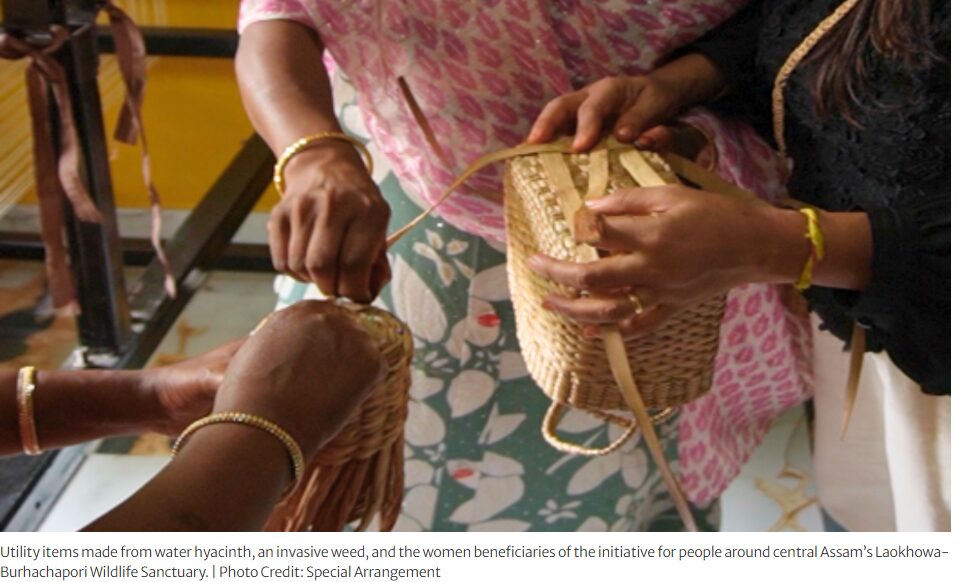
- Value-Added Handloom and Handicraft Production: Following structured technical training, the women harvest, dry, and treat water hyacinth stems to craft market-ready utility products, including dining mats, table runners, storage baskets, purses, biodegradable paper tissue boxes, and flower vases.
- Structured Market Linkages: By partnering with national conservation bodies and regional businesses across major tourism hubs like Nagaon and Kaziranga, the initiative avoids the traditional pitfalls of exploitative middle-men, guaranteeing stable monthly incomes for its members.
Joint Forest Management and Strategic Conservation
Modern wildlife management emphasizes that long-term conservation cannot rely solely on enforcement; it must integrate the socio-economic well-being of local communities. This project serves as an effective practical application of Joint Forest Management (JFM) principles:
- Mitigating Local Resource Conflict: Providing housewives with flexible, home-aligned income opportunities reduces a community’s economic dependence on illegal forest resource collection, livestock grazing, and woodcutting inside protected zones.
- Fostering Local Anti-Poaching Networks: When local communities derive direct financial security from projects tied to wildlife protection, they transition from passive bystanders or accessories into proactive guardians, often providing crucial field intelligence to forest rangers to help prevent poaching.
Multi-Dimensional Dimensions of the Initiative
1. Constitutional & Legal Dimensions
- Article 48A (Directive Principles of State Policy): Directs the State to protect and improve the environment and safeguard the forests and wildlife of the country.
- Article 51A(g) (Fundamental Duties): Mandates every Indian citizen to protect and improve the natural environment, including forests, lakes, rivers, and wildlife.
- The Wild Life (Protection) Act, 1972: Supports severe enforcement actions against illegal encroachments (Sections 29 and 35) while encouraging participatory buffer-zone management.
2. Economic & Social Dimensions
- Rural Women’s Empowerment: The project elevates women into financial stakeholders within their households without disrupting traditional domestic and child-rearing responsibilities.
- Circular Bio-Economy: Adopts a circular economic model that converts bio-waste and ecological hazards into value-added consumer commodities, stimulating sustainable micro-entrepreneurship in remote rural pockets.
3. Environmental & Geopolitical Dimensions
- Convention on Biological Diversity (CBD): Directly aligns with Aichi Biodiversity Target 9 and the Kunming-Montreal Global Biodiversity Framework (Target 6), which call for the identification, control, and eradication of invasive alien species.
- Eco-Corridor Connectivity: Secures the trans-boundary Brahmaputra riverine floodplains, maintaining an open genetic corridor for megafauna moving between Bhutan, Assam, and Bangladesh.
Key Frameworks, Schemes, and Institutional Linkages
- Indian Rhino Vision 2.0 (IRV2.0): Formulated by the Assam Forest Department alongside the IRF, this strategy aims to safely manage meta-populations of greater one-horned rhinos across secure habitats, with a target of reaching 4,500–5,000 rhinos in Assam by 2030. Restoring the LBWLS corridor is a core objective of this vision.
- National Rural Livelihoods Mission (NRLM) / Deendayal Antyodaya Yojana (DAY-NRLM): Provides a state-supported financial framework that strengthens village-level SHGs and boosts micro-enterprise development.
- Supreme Court Judgments: In T.N. Godavarman Thirumulpad v. Union of India, the Supreme Court emphasized the Public Trust Doctrine and the Polluter Pays Principle, noting that natural resources must be preserved for public and ecological welfare, which validates state anti-encroachment operations.
- Science-Based Validation: The project addresses global targets managed by the IUCN Invasive Species Specialist Group (ISSG), which advocates for community-backed mechanical harvesting as an optimal method for controlling water hyacinth over chemical or biological treatments.
Challenges, Concerns, and Criticisms
- Product Durability and Hydrophilic Vulnerability: As highlighted by local wildlife officials, water hyacinth fibers are naturally hydrophilic (moisture-absorbing). In the high-humidity, flood-prone climate of Assam, these products face significant risks of fungal infestation, mold development, and rapid structural decay, which can hurt consumer trust and lower long-term market demand.
- Unresolved Resettlement Issues: While anti-encroachment evictions successfully reclaim critical ecological space, they often cause immediate socio-economic displacement. If comprehensive resettlement and alternative livelihood options do not match the scale of the evictions, it can create lingering local resentment against forest authorities.
- Scaling and Market Constraints: Craft-based micro-enterprises often struggle to scale up production. Limited access to modern preservation technology, lack of diverse e-commerce platforms, and competition from cheap, synthetic plastic alternatives can restrict these groups to small tourist markets.
- Incomplete Ecological Eradication: Mechanical harvesting by community groups targets the fringes of water bodies but cannot keep pace with the hyper-exponential reproductive rate of water hyacinth across massive, deep-water floodplains, making it an incomplete solution for total weed eradication.
Way Forward
1. Technological Innovation and Material Preservation
To build long-term commercial viability, research institutions like the CSIR-North East Institute of Science and Technology (NEIST) should collaborate with local artisans. Introducing eco-friendly, non-toxic water-resistant coatings, anti-fungal treatments, and solar-powered dehydration kilns will reduce moisture absorption and significantly extend the shelf-life of water hyacinth products.
2. Comprehensive Rehabilitation Policy
Forest enforcement actions must operate alongside institutionalized rehabilitation strategies. Future eviction drives should integrate a mandatory “Eco-Restoration and Alternative Livelihoods Plan,” ensuring displaced populations receive priority access to state-sponsored skill development, micro-credit loans, and organized SHG employment.
3. Strategic Brand Positioning and Digital Access
The state should help move water hyacinth products beyond local tourist stalls by listing them on national e-commerce channels like Tribes India (TRIFED) and the Government e-Marketplace (GeM). Marketing these items under a specialized green brand—such as “Kaziranga Eco-Crafts”—can attract eco-conscious global consumers and command premium pricing.
4. Convergence of Centrally Sponsored Schemes
Combining resources from the Mahatma Gandhi National Rural Employment Guarantee Scheme (MGNREGS) for the physical removal of water hyacinth with financial backing from the PM Mudra Yojana or SFURTI (Scheme of Fund for Regeneration of Traditional Industries) can help build modern common facility centers and advanced tool rooms for rural artisans.
Conclusion
The transformation of water hyacinth from an ecological hazard into a sustainable economic asset along the fringes of the Laokhowa-Burhachapori Wildlife Sanctuary demonstrates how environmental preservation can coexist with human development. By linking the economic security of rural women directly to the health of nearby ecosystems, this model provides an effective blueprint for resolving conservation conflicts.
As India works to balance strict environmental laws with social welfare goals, scaling up community-inclusive initiatives like this will be essential to protecting threatened ecosystems, ensuring the safety of endangered wildlife, and empowering vulnerable rural populations.
Practice Questions
Prelims Question 1
With reference to water hyacinth, consider the following statements:
- It is an invasive aquatic plant species.
- It improves dissolved oxygen levels in freshwater ecosystems.
- Dense growth of water hyacinth can obstruct water flow.
Which of the statements given above is/are correct?
A) 1 only
B) 1 and 3 only
C) 2 and 3 only
D) 1, 2 and 3
Correct Answer: B
Explanation: Water hyacinth is an invasive species that obstructs water movement and reduces oxygen levels in aquatic systems. Statement 2 is incorrect.
Prelims Question 2
With reference to community participation in conservation, consider the following:
- Joint Forest Management
- Eco-Development Committees
- Biodiversity Management Committees
Which of the above involve local communities in environmental management?
A) 1 and 2 only
B) 2 and 3 only
C) 1 and 3 only
D) 1, 2 and 3
Correct Answer: D
Explanation: All three mechanisms involve local communities in environmental protection and sustainable resource management.
Mains Question 1
- “Conservation efforts become sustainable when local communities derive economic benefits from environmental protection.” Examine with suitable examples.
- Discuss the role of community participation in biodiversity conservation in India. How can livelihood-based approaches strengthen environmental governance?
India’s green transition still runs on coal
Why in News?
Rising global energy prices following recent tensions in West Asia have once again highlighted India’s continuing exposure to external energy shocks. Despite substantial expansion in renewable energy capacity, India continues to rely heavily on coal for actual electricity generation, raising important questions about the pace and nature of India’s energy transition.
UPSC Relevance
Prelims
- Economic & Infrastructure Development: Trends in installed power capacity vs. actual generation mix; market mechanisms like Green Energy Open Access and Real-Time Markets (RTM).
- Geography & International Relations: Strategic choke points (Strait of Hormuz, Bab-el-Mandeb); transit routes of India’s crude and Liquefied Natural Gas (LNG) imports from Saudi Arabia and Qatar.
- Science & Technology: Battery Energy Storage Systems (BESS), Pumped Storage Hydro Power (PSP), grid synchronization, and the chemistry of green hydrogen production.
Mains
- GS Paper II (International Relations): Geopolitics of West Asia, energy diplomacy, and the impact of external commodity cycles on India’s domestic inflation and fiscal deficit.
- GS Paper III (Infrastructure, Environment, and Economic Development): Energy security, structural challenges of the power sector, climate change commitments (Panchamrit targets under COP26), and transitioning from capacity creation to system transformation.
Background and Context
Over the past two decades, India’s energy landscape has undergone a massive shift in terms of installed infrastructure. In March 2005, renewable energy represented a negligible 0.72% of the country’s total installed power capacity, while coal held a dominant 58.7% share. By March 2026, policy interventions, fiscal incentives, and falling solar photovoltaic (PV) tariff costs reshaped these metrics. Renewables climbed to 42.4%, while coal’s share of installed capacity fell to 42.2%.
However, this transition remains incomplete on the generation front. Since 2018, India has added almost no new gas-based or alternative fossil fuel capacity and retired very few aging, inefficient coal plants. Because power systems depend on immediate, real-time generation rather than theoretical headline capacity, coal has stayed on as the primary balancing and baseload provider. As a result, domestic power tariffs remain tied to international Brent crude and global coal price cycles.
The Capacity-Generation Dichotomy
The core structural challenge of India’s energy sector is the wide gap between peak capacity and actual power generation. This divergence stems from the fundamental differences in Plant Load Factors (PLF) or capacity utilization rates across different energy sources:
- Intermittency of Clean Energy: Solar and wind power depend heavily on seasonal and diurnal weather patterns. Solar plants generate power for 5 to 6 hours a day, and wind generation peaks during specific monsoon months. Their average PLF ranges between 20% and 25%.
- Baseload Dominance of Coal: Coal-fired thermal power plants operate at PLFs ranging from 65% to 85%. They provide continuous, uninterrupted power that matches the country’s steady baseline demand, which makes up for the low utilization rates of renewable sources.
Grid Instability and the Balancing Crisis
As more intermittent renewable energy enters the national grid, managing grid stability becomes increasingly complex.
- The Duck Curve Phenomenon: Rapidly adding solar power creates a sharp drop in net demand during midday when solar generation peaks, followed by a steep climb in evening hours when solar output drops just as residential demand peaks.
- Thermal Ramping Constraints: Traditional Indian coal plants are designed for steady baseload operations. Forcing them to rapidly ramp generation up or down to balance fluctuating solar and wind inputs causes severe mechanical wear, lowers operational efficiency, and increases greenhouse gas emissions per unit of power generated.
Macroeconomic Vulnerabilities and External Shocks
Because coal continues to set the marginal cost of electricity production in India, the domestic economy remains exposed to global geopolitical disruptions:
- Imported Inflation and Fiscal Pressures: Spikes in international crude oil prices directly raise transportation and industrial input costs. This drives up global coal and gas indexes, leading to higher domestic electricity tariffs, broader retail inflation, and increased fiscal strains.
- The Strait of Hormuz Choke Point: Relying on this single marine corridor for a large portion of crude and Qatari LNG imports means any conflict in West Asia poses an immediate threat to India’s energy security.
Dimensions of the Energy Transition
1. Geopolitical & Strategic Dimensions
- Strategic Vulnerability Comparison: Unlike India, China has insulated its power grid from oil and gas fluctuations; oil and gas account for only 4% of its electricity mix, and over half of its new vehicle sales are electric or hybrid models. Meanwhile, European nations like Spain have used targeted regulatory models to break the link between volatile natural gas prices and electricity tariffs.
- Energy Diplomacy: India’s vulnerability highlights the need to diversify import routes and build stronger diplomatic and energy partnerships with Central Asian, African, and Latin American producers.
2. Economic & Governance Dimensions
- Financial Health of DISCOMs: Power Distribution Companies (DISCOMs) face a financial crunch due to high long-term Power Purchase Agreements (PPAs) signed with old thermal plants, coupled with the rising costs of integrating renewable energy.
- Fossil-Fuel Dependent State Revenues: Several major state governments (such as Jharkhand, Odisha, and Chhattisgarh) rely heavily on coal royalties, mining cesses, and railway freight revenues from coal transport to fund their public welfare budgets.
3. Environmental & Constitutional Dimensions
- Article 48A & COP26 Commitments: India is constitutionally committed to environmental protection and has set an ambitious target to achieve 500 GW of non-fossil fuel installed capacity by 2030 and reach Net-Zero emissions by 2070. Meeting these goals requires transforming the underlying energy system, not just adding capacity.
Relevant Committees, Frameworks, and Schemes
- Kirit Parikh Committee Recommendations: Emphasized pricing reforms in domestic gas production and regular adjustments to energy tariffs to shield the economy from sudden external price shocks.
- National Programme on Advanced Chemistry Cell (ACC) Battery Storage: A Production Linked Incentive (PLI) scheme designed to build domestic manufacturing capacity for utility-scale battery storage, which is critical for smoothing out renewable energy intermittency.
- National Green Hydrogen Mission: A strategic initiative aiming to replace fossil fuels in hard-to-abate heavy industries (such as steel, refineries, and fertilizers) with green hydrogen, helping to reduce long-term oil and gas import dependence.
- Green Energy Corridors (GEC): An infrastructure project focused on setting up intra-state and inter-state transmission lines to effectively integrate and distribute clean power from renewable-rich states across the national grid.
What are the Challenges and Concerns?
- High Costs of Battery Storage Technology: While utility-scale Battery Energy Storage Systems (BESS) offer a viable solution to renewable intermittency, the Levelized Cost of Storage (LCOS) remains high. This makes large-scale deployment economically difficult for financially strained DISCOMs without substantial state subsidies.
- Slow Development of Pumped Hydro Projects: Pumped Storage Hydropower (PSP) provides a reliable, long-duration energy storage alternative, but projects face long delays due to complex environmental clearances, land acquisition hurdles, and high initial capital costs.
- Underutilized Gas-Based Capacity: India has built considerable gas-based power infrastructure, which can ramp up and down quickly to balance the grid. However, low domestic gas production and high imported LNG prices have left much of this capacity underutilized.
- A Slow and Expensive Just Transition: Retiring old coal plants prematurely threatens the livelihoods of millions of workers employed in the domestic coal mining, logistics, and heavy industrial sectors, creating complex socio-economic challenges.
Way Forward
1. Transitioning to Comprehensive System Transformation
India must shift its policy focus from simply adding headline renewable capacity to executing a full transformation of its energy delivery systems. This requires upgrading transmission grids, investing heavily in smart grid technologies, and building out the infrastructure needed to handle large amounts of variable renewable power.
2. Accelerating Diversified Energy Storage Models
The government should introduce financial support measures, such as Viability Gap Funding (VGF), to accelerate the deployment of both BESS and Pumped Storage Hydro (PSP) networks. Setting a mandatory Energy Storage Obligation (ESO) for power utilities can help create a predictable, structured market for storage technologies.
3. Deepening Power Market Reforms
Expanding the Real-Time Market (RTM) and the Green Day-Ahead Market (G-DAM) will allow DISCOMs to dynamically adjust their power buying patterns. Introducing time-of-day tariff structures for retail consumers can incentivize shifting electricity use to peak solar generation hours, naturally smoothing out demand peaks.
4. Retrofitting the Existing Coal Fleet
Rather than shutting down thermal infrastructure immediately, India should invest in retrofitting modern coal plants to operate with greater flexibility. Lowering the technical minimum operational levels of these plants from 55% to 40% will allow them to step back during peak renewable generation hours and serve as an efficient balancing system for the grid.
Conclusion
India’s clean energy transition presents a complex dual reality: the country has achieved remarkable growth in building renewable energy infrastructure, yet it remains fundamentally reliant on fossil fuels for its day-to-day power generation. This structural imbalance leaves the domestic economy exposed to international energy crises and geopolitical shocks.
To build a truly resilient and independent energy system, India must move beyond celebrating installed capacity milestones and focus on the technical challenges of grid integration, affordable energy storage, and comprehensive power sector reforms. Until renewables can reliably supply baseline electricity generation, India’s green transition will continue to rely on coal to maintain grid stability.
Practice Questions
Prelims Question 1 (Inference based question)
Consider the following statements with reference to India’s energy transition:
I. India has substantially increased renewable energy capacity over the last two decades.
II. Coal continues to account for a large share of actual electricity generation.
III. Renewable energy sources such as solar and wind are inherently intermittent.
Which of the following relationships among the above statements is/are correct?
- Statement II validates the argument that installed capacity alone cannot accurately indicate actual energy transition outcomes.
- Statement III provides a structural explanation for the continued relevance of Statement II despite Statement I.
- Statement I contradicts Statement II because increasing renewable capacity automatically reduces coal dependence.
(a) 1 only
(b) 1 and 2
(c) 2 and 3
(d) 1, 2 and 3
Correct Answer: (b)
Explanation: Statement II supports the view that capacity expansion alone does not ensure actual replacement of fossil fuels. Statement III explains why coal continues to remain important despite renewable expansion. Statement I does not automatically contradict Statement II.
Prelims Question 2
Assertion (A): Coal continues to play a major role in India’s electricity system.
Reason (R): Coal currently provides stable baseload power and balancing support to compensate for renewable intermittency.
(a) Both A and R are true and R is the correct explanation of A.
(b) Both A and R are true but R is not the correct explanation of A.
(c) A is true but R is false.
(d) A is false but R is true.
Correct Answer: (a)
Explanation: Coal remains important because it currently performs a stabilising role by ensuring reliability and balancing fluctuations in renewable generation.
Mains Question
- India’s energy transition has succeeded in expanding renewable capacity but has not substantially displaced coal in electricity generation. Examine.
- Discuss the challenges associated with integrating renewable energy into India’s power system. Suggest measures for ensuring both sustainability and energy security.
Source: https://anantamias.com/current-affairs/indias-green-transition-still-runs-on-coal/
What is China’s Hainan FTP initiative?
What is Hainan’s Free Trade Port (FTP) Initiative?
Why in News?
China has operationalised its island-wide Free Trade Port (FTP) in Hainan with special customs arrangements and large tariff relaxations. The initiative is being projected as a major step in China’s new phase of economic opening-up and has attracted global attention due to its potential economic and geopolitical implications.
UPSC Relevance
Prelims: China’s economic geography, Free Trade Zones (FTZs), South China Sea, international trade concepts, special economic arrangements.
Mains:
GS-II (International Relations – China and regional geopolitics),
GS-III (Economy – trade policies, globalization, economic corridors and special economic zones).
Background and Context
China initiated economic reforms under Deng Xiaoping in the late 1970s through Special Economic Zones (SEZs) such as Shenzhen. These zones became engines of export-led growth.
The Hainan FTP represents the latest stage of this opening-up process. Unlike earlier SEZs that were limited industrial zones, Hainan is being developed as an entire island-based economic ecosystem with freer trade, investment, data movement and mobility.
The plan was announced in 2020 and formally operationalised in December 2025.
Understanding the Free Trade Port Initiative
A Free Trade Port is a specially designated economic area where goods, services, investments and people enjoy fewer restrictions than in the broader national territory.
The Hainan FTP operates on the principle:
“Freer access at the first line, regulated access at the second line, and free flow within the island.”
Its functioning can be understood as follows:
First line:
Refers to movement between Hainan and the outside world. Goods entering Hainan face minimal barriers.
Second line:
Refers to movement from Hainan to mainland China. Normal customs rules and tariffs apply here.
Within Hainan: Goods and economic activities move freely within the island.
Effectively, Hainan acts as a semi-autonomous trade and business zone while remaining under China’s legal and constitutional framework.
Major Features of Hainan FTP
- Trade Liberalisation: Tariff-free products increased sharply, reducing costs and boosting trade.
- Investment Liberalisation: Easier rules and incentives encourage foreign companies and investment.
- Tax Incentives: Lower taxes and import duties attract businesses and investors.
- Tourism & Mobility: Visa-free entry promotes tourism and international business travel.
- Digital Reforms: Easier regulated flow of data supports digital trade.
- Economic Benefits: Sectors like tourism, logistics, finance, technology, and retail benefit from lower costs.
- Consumer Benefits: Duty-free shopping makes goods cheaper and promotes consumption.
Strategic Importance
- Global Trade Hub: Strengthens China’s trade links with Asia and Global South countries.
- Economic Reform: Supports China’s shift to innovation, services, and consumption-led growth.
- South China Sea Role: Enhances China’s economic and strategic influence in the region.
Hainan versus Hong Kong
Many observers compare Hainan with Hong Kong, but there are important differences.
| Aspect | Hainan FTP | Hong Kong |
|---|---|---|
| Administrative status | Chinese province | Special Administrative Region |
| Legal system | Mainland Chinese system | Separate legal framework |
| Currency | Chinese Yuan | Hong Kong Dollar |
| International institutions | Part of China | Separate memberships in some bodies |
| Purpose | Trade and economic experimentation | Global finance and commerce |
Rather than replacing Hong Kong completely, Hainan may emerge as a complementary economic hub.
Significance for India
For India, Hainan offers important lessons:
Competition in trade facilitation
China’s rapid creation of integrated trade ecosystems highlights the need for India to strengthen:
- Special Economic Zones, Logistics infrastructure, Ease of doing business reforms
Maritime significance
As Hainan lies in the South China Sea region, its development has implications for Indo-Pacific maritime trade routes.
Strategic implications
Greater Chinese economic influence around maritime corridors may shape regional geopolitics affecting India’s strategic interests.
Conclusion
The Hainan FTP initiative represents China’s attempt to combine economic liberalisation with state control. It seeks to transform a relatively peripheral island into a major international trade and investment hub. Whether it becomes another Shenzhen-like success story or remains a limited experiment will depend on its ability to balance openness with regulatory control and geopolitical realities.
Practice Questions
Prelims Question 1 (Inference-based)
Consider the following statements regarding China’s Hainan Free Trade Port initiative:
I. The Hainan FTP aims to reduce barriers to trade and investment while remaining under China’s constitutional framework.
II. Hainan’s strategic location in the South China Sea gives the initiative significance beyond purely economic objectives.
III. Hainan functions identically to Hong Kong in terms of legal and administrative autonomy.
Which of the following relationships among the above statements is/are correct?
- Statement II extends the implications of Statement I beyond economic objectives into strategic dimensions.
- Statement III supports Statement I by explaining Hainan’s administrative design.
- Statement III contradicts Statements I and II.
(a) 1 only
(b) 2 only
(c) 1 and 3 only
(d) 1, 2 and 3
Answer: (c)
Explanation: Statement II broadens Statement I into geopolitical dimensions. Statement III is incorrect because Hainan does not enjoy Hong Kong-style autonomy and therefore contradicts the broader understanding of the initiative.
Prelims Question 2
Match the following:
| List I | List II |
|---|---|
| A. First Line | 1. Free movement inside Hainan |
| B. Second Line | 2. Movement from Hainan to mainland China |
| C. Within Island | 3. Movement between Hainan and outside world |
Select the correct answer:
(a) A–3, B–2, C–1
(b) A–2, B–1, C–3
(c) A–3, B–1, C–2
(d) A–1, B–3, C–2
Answer: (a)
Explanation: The “first line” concerns external access to Hainan; the “second line” regulates movement into mainland China; within the island there is relatively free movement.
Mains Questions
- “China’s Hainan Free Trade Port represents not merely an economic experiment but also a strategic geopolitical project.” Examine.
- Discuss the role of special economic arrangements such as Free Trade Ports in promoting economic development. What lessons can India draw from China’s Hainan initiative?
Source: https://anantamias.com/current-affairs/what-is-chinas-hainan-ftp-initiative/
Uniform Civil Code will not encroach upon the Rights of Tribals
Why in News?
The Union Home Minister of India has stated at a tribal conclave in Delhi that the proposed Uniform Civil Code (UCC) would not affect tribal communities, their customs, traditions, or cultural practices.
Addressing the “Janjati Sanskritik Samagam” organised during the 150th birth anniversary year celebrations of Birsa Munda, he clarified that tribal communities would be outside the ambit of UCC.
| UPSC Relevance: GS-2 Polity and Governance: Tribal Rights and Constitutional Safeguards. Mains: Uniform Civil Code: Constitutional Basis, Arguments in favour and against UCC. |
The Uniform Civil Code: Constitutional Basis
- Article 44 of the Indian Constitution, placed under Part IV (Directive Principles of State Policy), directs that “the State shall endeavour to secure for the citizens a uniform civil code throughout the territory of India.”
- As a Directive Principle, it is non-justiciable but is described as “fundamental in the governance of the country.”
- The UCC envisions replacing religion-specific personal laws (governing marriage, divorce, inheritance, adoption, and succession) with a single, uniform set of civil laws applicable to all citizens irrespective of religion, caste, or gender.
- Key facts:
- Goa is the only state that has maintained a uniform civil code since Portuguese colonial rule through the Portuguese Civil Code of 1867, making it the single pre-existing example in India.
- In 2024, the Uttarakhand Legislative Assembly passed the Uniform Civil Code of Uttarakhand, 2024, making it the first state of independent India to enact a UCC (Goa’s code predates independence). The Act came into force in 2025.
The Uttarakhand UCC explicitly excludes Scheduled Tribes from its ambit, a recognition of the constitutional protections for tribal communities under the Fifth and Sixth Schedules. This tribal exemption has become the template that the ruling government has committed to replicating in any future state or in national UCC legislation.
Why are Tribal Communities concerned about the Uniform Civil Code (UCC)?
Several tribal communities across India have expressed concerns that a nationwide Uniform Civil Code (UCC) could weaken their distinct cultural identity, customary laws, and traditional governance systems.
- Threat to Customary Laws: Tribal customary laws govern marriage, divorce, inheritance (particularly ancestral land), adoption, and forest and land use rights. E.g., the Khuntkatti system (communal land tenure of the Munda tribe) and the Chotanagpur Tenancy Act, 1908 (which prohibits transfer of tribal land to non-tribals). These customs are deeply linked to tribal identity and social organisation. A uniform legal framework may override such traditional practices.
- Impact on Traditional Governance Systems: Several tribal communities continue to rely on Village councils, Tribal elders, and community assemblies for dispute resolution and social regulation. E.g., Khasi, Garo, and Naga tribal institutions play an important role in local governance. Customary courts often resolve disputes through consensus. Tribal groups fear that a centrally framed civil code may reduce the authority of these institutions.
- Concerns over Inheritance and Family Systems: Many tribal societies follow unique inheritance patterns that differ from mainstream personal laws. E.g., Matrilineal Systems among tribes such as Khasi, Garo, and Jaintia. Property and lineage pass through the female line, often to the youngest daughter. A uniform inheritance law could potentially disturb these traditional family structures.
- Clan-Based Marriage Practices: Numerous tribal communities follow clan exogamy rules, kinship-based marriage restrictions, and community-approved marital customs. These practices are closely tied to tribal social cohesion and identity. There is apprehension that a standardised civil code may not adequately accommodate such diversity.
- Protection of Community Land Ownership: In several tribal regions, especially in the Northeast and Scheduled Areas, Land is owned collectively by communities or clans. Customary laws regulate land transfer and usage. Tribal communities fear that uniform legal standards may indirectly weaken traditional land rights and community control over resources.
Constitutional Safeguards Available to Tribes:
The exemption of tribal communities from the UCC is not merely a political accommodation, but it rests on a firm constitutional architecture protecting tribal customary law.
- Fifth Schedule (Article 244(1)): Applies to 10 states, Andhra Pradesh, Telangana, Chhattisgarh, Gujarat, Himachal Pradesh, Jharkhand, Madhya Pradesh, Maharashtra, Odisha, and Rajasthan. It provides for:
- Special administrative arrangements for Scheduled Areas; governed by a Tribes Advisory Council.
- The Governor’s power to direct that an Act of Parliament or state legislature shall not apply to a Scheduled Area, or shall apply with modifications.
- Protection against alienation of tribal land to non-tribals.
- Sixth Schedule (Article 244(2)): Applies to tribal areas in Assam, Meghalaya, Tripura, and Mizoram. It provides for Autonomous District Councils (ADCs) and Regional Councils with legislative, executive, judicial, and financial powers, including the authority to make laws on land, forests, agriculture, village administration, and customary law. The Sixth Schedule areas have far greater autonomy than Fifth Schedule areas.
- Special Articles: Articles 371A (Nagaland) and 371G (Mizoram) provide that no Act of Parliament shall apply to Nagaland or Mizoram in respect of religious or social practices, customary law and procedure, administration of civil and criminal justice involving decisions according to Naga/Mizo customary law, and ownership and transfer of land, unless the state legislature so decides.
- PESA Act, 1996: The Panchayats (Extension to Scheduled Areas) Act, 1996, enacted under the Fifth Schedule framework, recognises the authority of Gram Sabhas in Scheduled Areas to protect customary traditions, manage community resources, and administer customary law. Nearly 30 years after enactment, PESA remains unevenly implemented across the ten Fifth Schedule states.
Tribal exemption from the UCC is not a concession; it is a constitutional necessity, embedded in the Fifth and Sixth Schedules, PESA. However, the debate over the Uniform Civil Code reflects the broader constitutional tension between equality and diversity in India.