Agri-Food AI: Building Interoperable Farmer-Centred Systems
Why in News?
The second meeting of the Global Initiative on AI for Agri-Food Systems in New Delhi on 10 October 2026 discussed governance and working-group priorities for responsible agricultural AI.
- ITU coordinates the initiative with FAO, IFAD and WFP; TEC and ICAR jointly hosted the meeting.
- Deliberations covered proposed coordination structures, working-group leadership and membership, terms of reference, and initial work streams.
- Interoperable, farmer-centred AI was a stated objective; the announcement does not establish mandatory global standards or demonstrate improved crop yields.
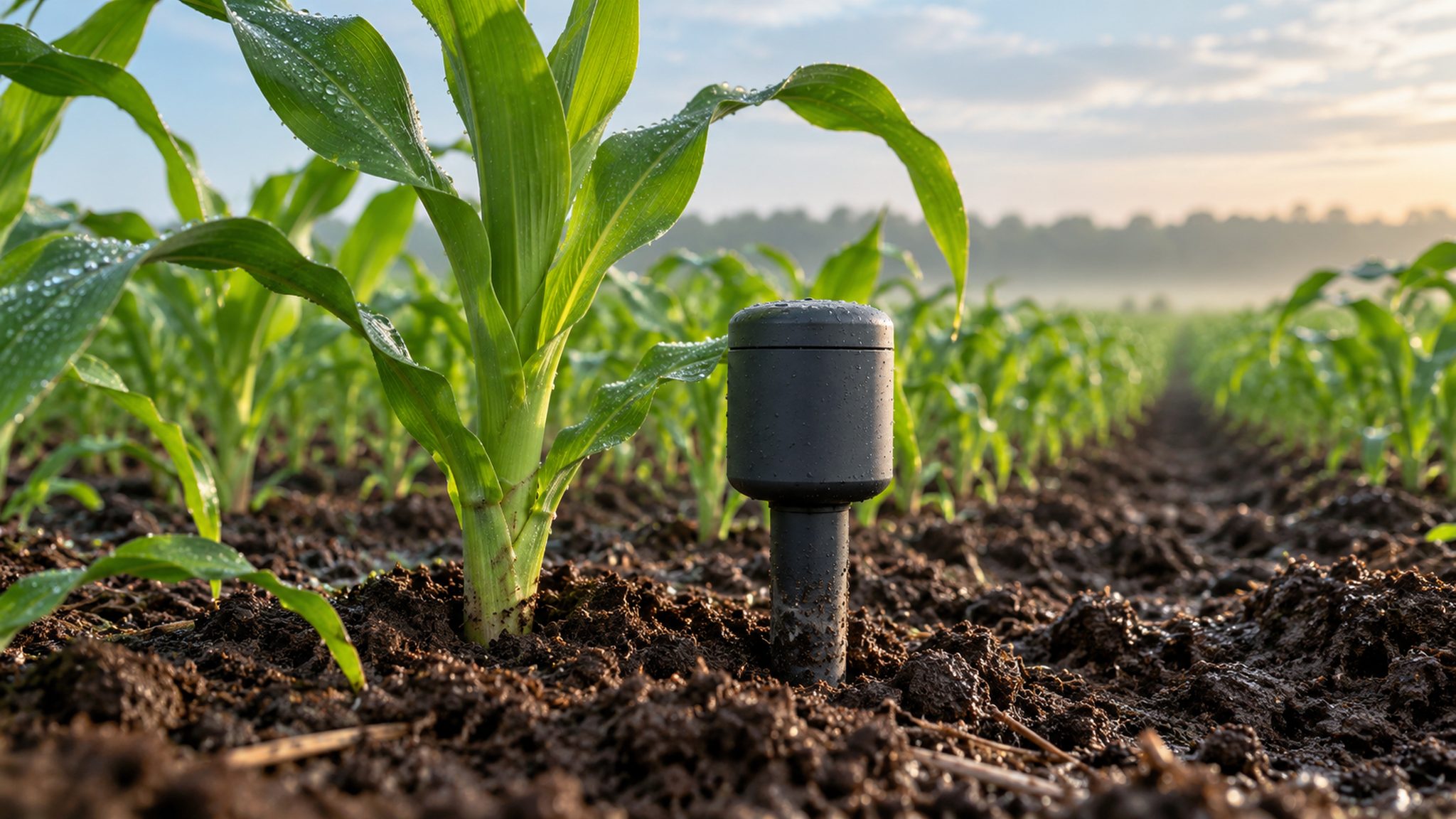
- Connected agriculture combines observations from sensors, weather stations, drones and satellites with analysis that may inform farm decisions.
- Farmer benefit depends on trustworthy recommendations and usable delivery, not merely connecting more devices or collecting larger datasets.
UPSC Relevance
Prelims Relevance
- GI-AI4FS: international cooperation on AI for agri-food systems.
- ITU coordinates the initiative with FAO, IFAD and WFP.
- IoT: connected devices exchanging observations.
- Interoperability: systems exchanging and interpreting usable information.
- Local validation: checking whether a model works in its intended agricultural setting.
Mains Relevance
GS Paper 3
- Agricultural extension, precision farming and responsible use of emerging technologies.
- Separating data compatibility from the validity of farm recommendations.
GS Paper 2
- International standard-setting cooperation and accountability in digital public services.
Essay
- Technology serves development when people can understand, question and use its recommendations.
Background and Context
What the Meeting Established
The development concerns the organisation of international cooperation; it is not evidence that a global agricultural AI rulebook has taken effect.
- The PIB account identifies the International Telecommunication Union as coordinator, working with FAO, IFAD and WFP. This brings telecommunications and agricultural institutions into a shared discussion about responsible applications across food systems.
- TEC and ICAR jointly hosted the meeting, connecting expertise in communications with agricultural research. That institutional combination matters because transmitting a measurement and interpreting its significance for crops require different technical capabilities.
- The agenda addressed proposed governance, working-group leadership and membership, terms of reference, and priorities. Such arrangements can divide responsibilities and organise future work; discussing them does not itself create enforceable obligations for farmers.
- The ITU meeting agenda identified opportunities for research, pilot projects and financing. These are avenues for further collaboration, not proof that specific products have reached farms or that commercial deployment has succeeded.
- The release describes potential applications including crop-disease detection, precision farming, traceability and reducing post-harvest losses. Treat these as possible uses: claims about actual performance still require evidence from the relevant operating conditions.
How Farm Observations Become Advice
A conceptual irrigation example shows the chain from a field measurement to a recommendation, without claiming that this meeting deployed such a service.
- A soil-moisture sensor records a physical observation, while a weather service supplies a forecast. These inputs describe different aspects of farm conditions; neither independently determines when a farmer should irrigate a particular crop.
- Data exchange needs agreed formats and meanings, including units, measurement time and field identity. If one system cannot interpret another system’s readings correctly, moving the data successfully still fails to produce usable information.
- An analytical model may combine those observations with crop stage and soil characteristics to suggest irrigation timing. This is a conceptual mechanism, not a verified description of an initiative product or an announced service.
- A delivery channel must make the advice understandable and timely. Farmers facing weak connectivity or language barriers may need assisted access; a technically sound recommendation has little value if it cannot guide action.
- A feedback loop should compare the advice with field observations and outcomes, so errors can be corrected. Evaluation must distinguish a useful recommendation from changes caused by rainfall, input choices or other growing conditions.
Interoperability Is Not Local Validity
Compatible information can travel between systems, but a recommendation still needs to work for the farmer and conditions where it will be used.
- Interoperability concerns exchange and interpretation; local validity concerns whether the resulting advice is dependable in context. A common data format cannot establish that a model trained elsewhere represents a particular crop or soil.
- A locally tested model should be assessed under relevant growing conditions before its advice is relied upon. Agricultural variation makes blanket claims risky: successful performance in one setting does not automatically transfer to another.
- Farmer-centred governance should explain what data is collected, why it is needed and who can access it. Meaningful choice requires understandable terms; technical compatibility is not permission for unlimited reuse of farm information.
- Uncertainty and recourse matter when advice could affect irrigation or crop protection. Users should know the limits of a recommendation and have a route to human assistance, rather than treating an automated output as certainty.
- Accountability requires clear responsibilities for data quality, model evaluation and advice delivery. These are design priorities for trustworthy systems, not requirements that the meeting announcement can be assumed to have legally imposed worldwide.
Way Forward
Test Usefulness Before Scaling
- Specify evaluation conditions: name the crop, location and decision before testing whether advice improves an outcome.
- Document exchange rules: publish usable definitions and interfaces while protecting access to sensitive farm information.
- Build correction channels: connect digital recommendations with agricultural expertise, farmer feedback and clear responsibility for responding to errors.
Conclusion
- International coordination can help agricultural systems exchange information, but its value depends on how that information supports decisions in actual fields.
- For a Mains answer, separate compatible data, locally valid models and farmer control: each solves a different problem, and none can substitute for the others.
UPSC Practice Questions
Prelims MCQ 1
With reference to AI-enabled agricultural systems, consider the following statements:
- Interoperability concerns the exchange and interpretation of information between systems.
- Using a common data format guarantees that advice is valid for every crop and soil.
- ITU coordinates GI-AI4FS in collaboration with FAO, IFAD and WFP.
How many of the above statements are correct?
(a) Only one (b) Only two (c) All three (d) None
Answer: (b) Only two
Explanation:
Statements 1 and 3 are correct. Compatible formats do not establish local model validity; performance must be assessed for the intended setting.
Prelims MCQ 2
Which is the most appropriate interpretation of the October meeting on GI-AI4FS?
(a) It imposed mandatory worldwide rules on agricultural sensors. (b) It demonstrated universal crop-yield improvements from AI. (c) It advanced discussion on governance, working groups and responsible applications. (d) It replaced national agricultural research institutions.
Answer: (c) It advanced discussion on governance, working groups and responsible applications.
Explanation:
The announcement reports deliberations on governance and work streams, not an enacted global regulatory regime or demonstrated universal farm outcomes.
UPSC Mains Questions
- Explain why data interoperability alone cannot ensure dependable AI-based agricultural advice. Suggest safeguards for farmer-centred deployment.
- Assess the role of international cooperation in agricultural AI governance. How should pilot evaluation and farmer feedback guide wider adoption?
Sources: PIB Communications Ministry and ITU meeting agenda.
Frequently Asked Questions
What is GI-AI4FS?
It is the Global Initiative on AI for Agri-Food Systems, coordinated by ITU with FAO, IFAD and WFP. It advances cooperation on responsible AI applications across agriculture and food systems.
What did the second meeting discuss?
The meeting discussed proposed governance and coordination, working-group leadership and membership, terms of reference, priorities and initial work streams. This does not mean it enacted mandatory global agricultural AI standards.
Why is interoperability useful in agriculture?
Interoperability helps different systems exchange and interpret information, such as sensor readings and weather data. Compatible formats and meanings can support useful analysis, but they cannot guarantee an accurate recommendation.
Why must agricultural models be validated locally?
Crop, soil and growing conditions affect whether advice is dependable. A model that works in one setting cannot automatically be assumed suitable elsewhere, even when the input data uses a common format.