Ambedkar’s Mahad Satyagraha, a ‘watershed moment of Dalit assertion’
Why in News?
The historic Mahad Satyagraha marked its 99th anniversary and the beginning of its centenary year on 20 March 2026, which is also officially observed across India as Social Empowerment Day
UPSC Relevance:
GS-I: Caste System, GS-II: Social Justice.
The Mahad Satyagraha (1927)
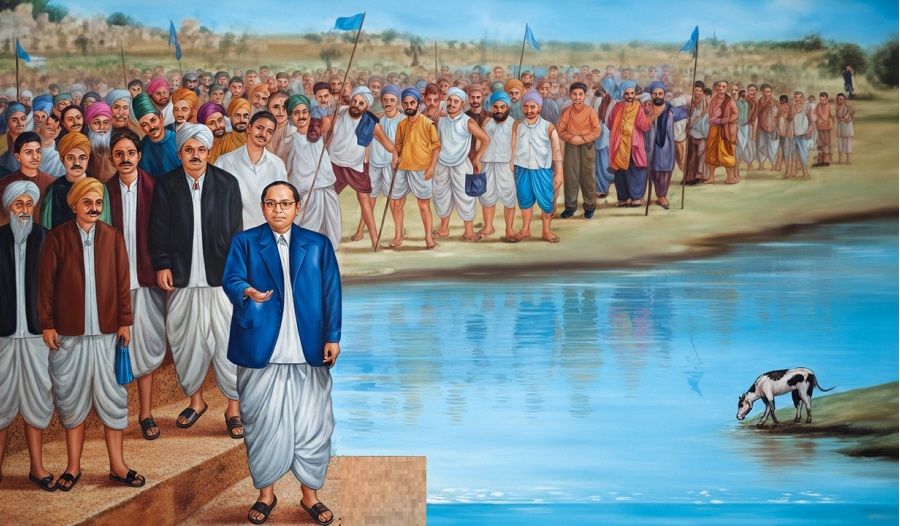
- The Mahad Satyagraha, also known as the Chavdar Tale Satyagraha, was one of the most significant civil rights movements in Indian history. Led by Dr. B.R. Ambedkar on 20 March 1927, it was a nonviolent protest to allow untouchables to use water from a public tank in Mahad (in present-day Raigad district, Maharashtra).
- The day is now observed as Social Empowerment Day in India. Its 99th anniversary just passed on 20 March 2026.
Background and Cause
- The oppressed castes — called “Depressed Classes” during the colonial era — had faced severe discrimination, segregation, and social ostracism for centuries. Access to public resources such as water bodies, temples, and schools was routinely denied to them, perpetuating their social, political, and economic marginalization.
- A key legal trigger came in 1923. Social reformer S.K. Bole passed the Bole Resolution in the Bombay Legislative Council, mandating that public water sources, wells, and dharamshalas be opened to the Depressed Classes.
- The Mahad Municipal Council adopted this resolution in 1924, but severe resistance from dominant-caste Hindus prevented Dalits from actually accessing the town’s Chavdar Tank.
The March of 20 March 1927 — Phase One
- Ambedkar conducted meetings with local Dalit leaders, stressed on creating “a wave of awakening” among the lower caste people of Konkan, and directed organisers to spread news of the conference.
- On 20 March 1927, Ambedkar led thousands of Dalits in a peaceful march to the Chavdar Tank. In a historic and symbolic act, he drank water from the tank, asserting the right of untouchables to access public resources. This act directly challenged centuries-old caste taboos and transformed a basic necessity into a powerful symbol of equality and human dignity.
- The backlash was immediate. Upper-caste Hindus conducted a purification ritual of the tank by “emptying out 108 earthen pots full of cow’s urine into it.” Under pressure from the oppressor castes, the Mahad Municipality on 4 August 1927 revoked its 1924 resolution that had declared the Chavdar Tank open to the Depressed Classes.
Ambedkar’s Address and the Women’s Assertion
- The Mahad Satyagraha was not just about water — it also had a feminist dimension. Ambedkar asked Dalit women to abandon old customs that served as recognizable markers of untouchability and to wear saris like high-caste women. Before that time, Dalit women were not allowed to drape saris completely.
- Immediately after Ambedkar’s speech, Dalit women readily decided to do so, and upper-caste women like Lakshmibai Tipnis helped them dress accordingly.
Phase Two and the Burning of Manusmriti — December 1927
- Ambedkar announced a second, larger conference for December 1927. However, the oppressor castes initiated legal action, and on 14 December 1927, the Mahad civil court issued a temporary injunction prohibiting Ambedkar and his colleagues from accessing the Chavdar Tank until further orders.
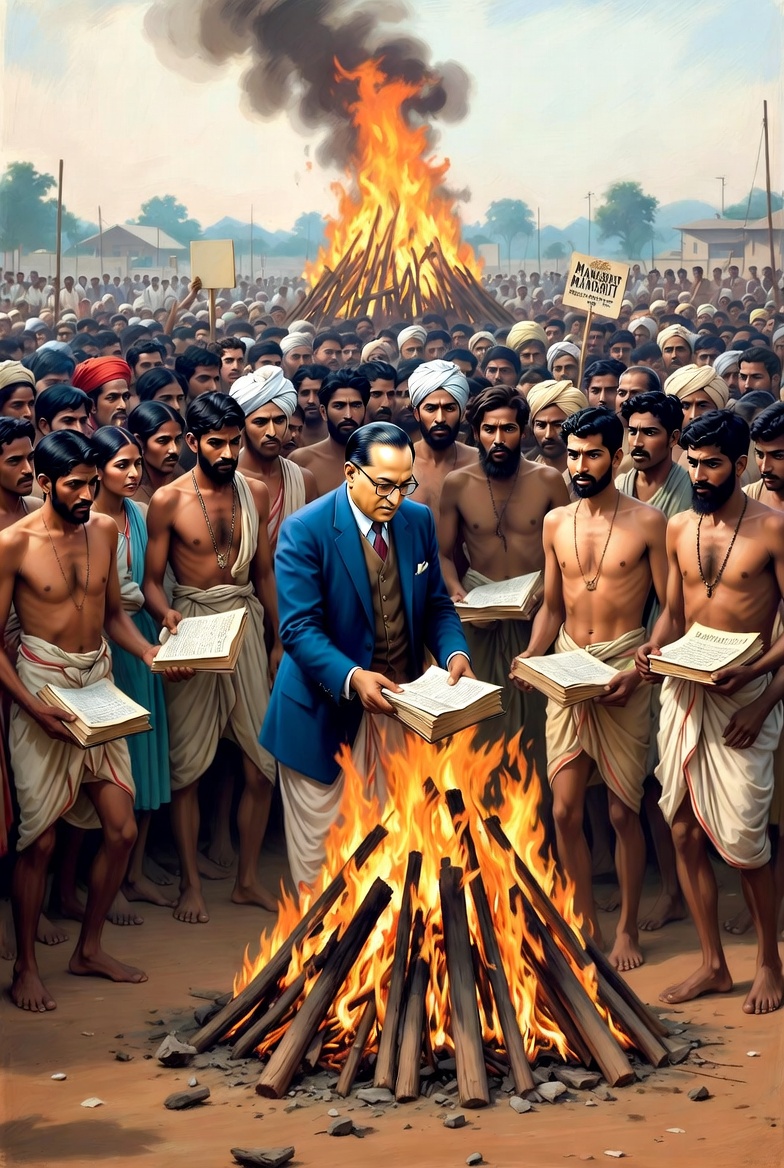
- Rather than violate the court order, Ambedkar responded with a powerful symbolic gesture. On 25 December 1927, Ambedkar burned the Manusmriti — one of the most influential Hindu law texts that provided scriptural justification for the caste system, prescribing severe punishments for those who violated caste boundaries.
- In his address, Ambedkar said: “It is not as if drinking the water of the Chavdar Lake will make us immortal. We have survived well enough all these days without drinking it. We are going to the Lake to assert that we too are human beings like others. This meeting has been called to set up the norm of equality.”
This day, 25 December, is commemorated as Manusmriti Dahan Din.
The Legal Victory (1937)
- In the civil suit, Ambedkar argued that the tank belonged to the Mahad Municipality and should be open to all. The trial court ruled against the upper-caste plaintiffs, stating they failed to prove any longstanding legal custom of exclusion.
- After appeals by both sides, the Bombay High Court also dismissed the case in 1937 — thus, after almost 10 years of struggle, Ambedkar secured legal victory for his people.
Significance and Legacy
1. Shift from petitions to direct action: Mahad marked a paradigm shift in Dalit politics — moving from submitting petitions to the British government, to taking direct, mass-mobilized civic action.
2. Water as dignity: The Mahad Satyagraha reframed access to water as a question of human dignity. By denying Dalits access to water, society effectively denied them their basic humanity.
3. “Before salt, there was water”: A powerful parallel is often drawn between Mahad (1927) and Gandhi’s Dandi March (1930). While Gandhi used salt to mobilize people against the external colonizer (British imperialism), Ambedkar used water to fight what he called internal colonialism — the caste system itself.
4. Constitutional influence: The Mahad Satyagraha influenced Article 15 (non-discrimination) and Article 17 (abolition of untouchability) of the Indian Constitution.
5. Ideological rejection of caste: The burning of the Manusmriti was not an isolated act but part of Ambedkar’s broader project of annihilating caste — challenging not just contemporary social practices but the scriptural authority that undergirded caste discrimination.
Practice MCQs:
The Mahad Satyagraha of 1927 was led to assert the right of untouchables to access which public resource?
A. A temple in Mahad
B. Chavdar Tank (a public water tank)
C. A public school in Raigad
D. A government dharamshala
Answer: C.
Which constitutional articles are most directly linked to the spirit of the Mahad Satyagraha?
A. Articles 12 and 13
B. Articles 15 and 17
C. Articles 19 and 21
D. Articles 25 and 26
Answer: B.