Bharat Ratna and C.N.R. Rao’s Scientific Legacy
Why in News?
Professor C.N.R. Rao, a Bharat Ratna recipient, received a notice during Karnataka’s Special Intensive Revision (SIR) of electoral rolls over a spelling discrepancy between “Prof.” and “Proff.” in his recorded name.
| UPSC Relevance: GS-1 History and Culture: Awards and Honours; GS-3 Science and Technology: Contributions of Scientists Prelims: Key facts about Bharat Ratna Mains: Contributions of Prof. C.N.R. Rao |
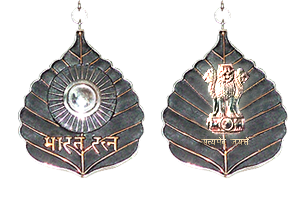
About Bharat Ratna Award:
- Meaning: Jewel of India; it is India’s highest civilian award.
- Institution: Established on 2 January 1954 through a Presidential notification.
- Purpose: Recognition of exceptional service or performance of the highest order.
- Eligibility: Any person, without distinction of race, occupation, position or sex.
- Selection: The Prime Minister recommends recipients to the President; formal public nominations are not required.
- Award: A peepal-leaf-shaped medallion and a Sanad signed by the President.
- Monetary grant: The award carries no monetary grant.
- Frequency: It need not be awarded every year.
Originally, the award recognised contributions to art, literature, science and public service. In 2011, its scope expanded to “any field of human endeavour”, enabling recognition of achievements such as sporting excellence.
Annual Limit:
The published MHA scheme prescribes a maximum of three awards in a year. However, more recipients have been honoured exceptionally. Example: Five recipients in 2024: Karpoori Thakur (posthumous), P.V. Narasimha Rao (posthumous), Chaudhary Charan Singh (posthumous), M.S. Swaminathan (posthumous) and L.K. Advani.
Bharat Ratna and Article 18:
- Article 18(1) prohibits the State from conferring titles, except military and academic distinctions.
- In Balaji Raghavan/S.P. Anand v. Union of India, decided on 15 December 1995, the Supreme Court held that:
- Bharat Ratna and Padma awards are not “titles” prohibited by Article 18.
- Recognition of merit is compatible with constitutional equality.
- The awards must not be used as prefixes or suffixes to recipients’ names.
Historical Facts for Prelims:
- First recipients, 1954: C. Rajagopalachari, S. Radhakrishnan and C.V. Raman.
- Posthumous conferment: Lal Bahadur Shastri, in 1966, became the first posthumous recipient.
- First woman recipient: Indira Gandhi
- Foreign recipients: Khan Abdul Ghaffar Khan, Nelson Mandela.
- First sportsperson and youngest recipient: Sachin Tendulkar
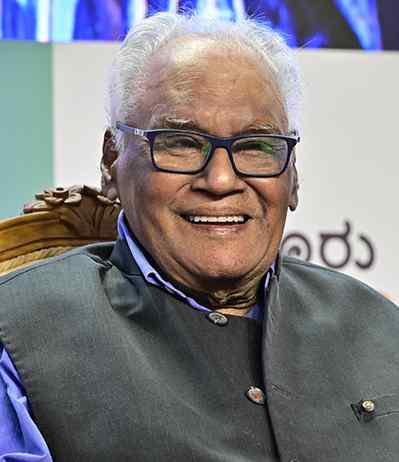
About Professor C.N.R. Rao:
- Chintamani Nagesa Ramachandra Rao, born in 1934 in Bengaluru, is a leading Indian chemist specialising in solid-state, structural and materials chemistry. He received the Bharat Ratna in 2014.
- His institutional contributions include leadership at the Indian Institute of Science (IISc) and the development of the Jawaharlal Nehru Centre for Advanced Scientific Research (JNCASR), Bengaluru.
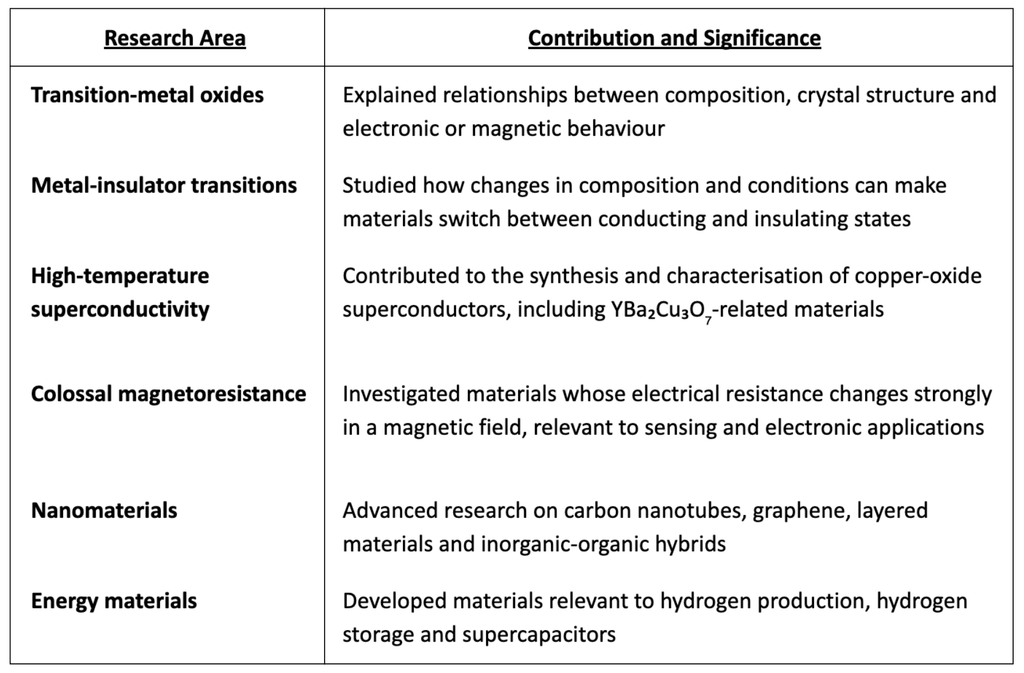
Major Scientific Contributions:
UPSC PYQ 2021
Q. Consider the following statements in respect of Bharat Ratna and Padma Awards:
1. Bharat Ratna and Padma Awards are titles under Article 18(1) of the Constitution of India.
2. Padma Awards, which were instituted in the year 1954, were suspended only once.
3. The number of Bharat Ratna Awards is restricted to a maximum of five in a particular year.
Which of the above statements are not correct?
(a) 1 and 2 only
(b) 2 and 3 only
(c) 1 and 3 only
(d) 1, 2 and 3
Answer: (d)
UPSC Mains PYQ 2019
Q. How was India benefited from the contributions of Sir M. Visvesvaraya and Dr M. S. Swaminathan in the fields of water engineering and agricultural science, respectively?