Industrial Fuel Cameras: Linking Visual Checks With Emission Data
Why in News?
On 6 October 2026, CAQM announced expanded camera coverage of industrial fuel use in NCR, requiring additional installations by 31 October.
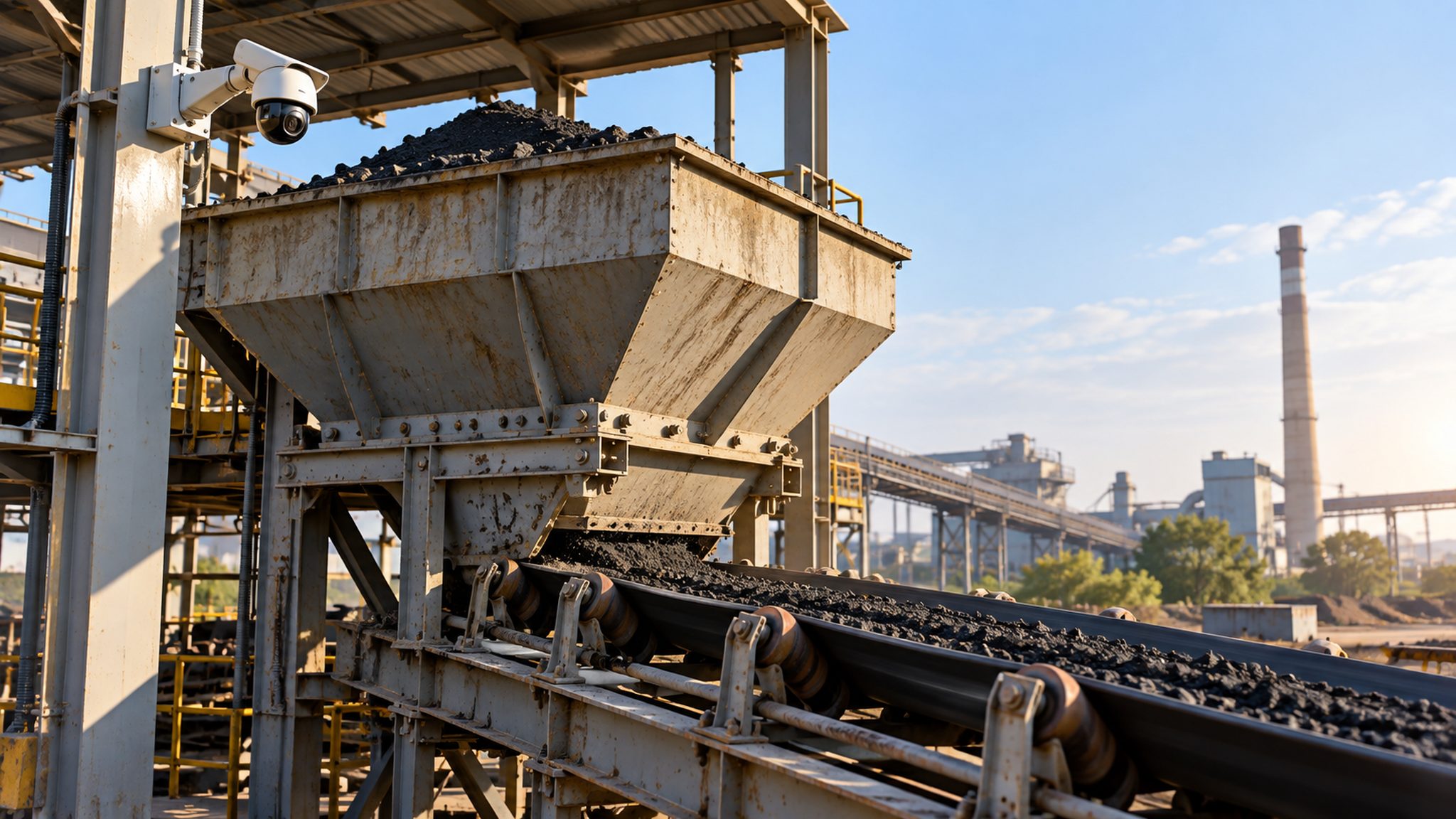
- PTZ cameras must cover all fuel-storage areas and charging points; gas-based units must bring the gas gauge or meter into view.
- Live feeds must reach CPCB and the respective State Pollution Control Boards or Delhi Pollution Control Committee.
- Industries must provide power backup for cameras and connectivity; regulators must establish infrastructure to receive the streams.
- The order follows inspection findings of unapproved fuels; its installation deadline does not establish that every unit already complies.
- Fuel restrictions are difficult to enforce when an inspector sees only a brief part of a factory’s operating cycle.
- Visual evidence and emission measurements answer different questions; using both can make suspected violations easier to investigate.
UPSC Relevance
Prelims Relevance
- PTZ: pan, tilt and zoom camera functions.
- CAQM: Commission for Air Quality Management in NCR and Adjoining Areas.
- CPCB, State Pollution Control Boards and DPCC: recipients of the required video feeds.
- OCEMS: Online Continuous Emission Monitoring Systems.
- Fuel-use footage does not directly measure pollutant concentrations.
Mains Relevance
GS Paper 3
- Industrial air-pollution control through input checks and emissions monitoring.
- Limits of remote environmental surveillance and the continuing need for inspections.
GS Paper 2
- Coordination between a regional commission and pollution-control regulators.
Essay
- Technology strengthens accountability only when evidence leads to action.
Background and Context
What the Additional Cameras Must Show
The new coverage follows the fuel through the industrial premises, making storage and use visible alongside existing monitoring locations.
- CAQM already prescribed an approved-fuel list for different NCR applications, including industries. Its flying squads nevertheless found unapproved fuels during inspections, exposing a gap between a rule and actual practice.
- Storage-area coverage helps show what material is kept on site and how it moves. A camera view provides an observation to investigate, rather than a laboratory identification of the fuel’s composition.
- Charging-point coverage brings the place where fuel enters equipment into view. This matters because looking only at stored material cannot establish which material is actually fed during a particular operating period.
- For gas-based fuel, the order requires the gauge or meter to be captured. Reading that instrument visually is different from treating the camera itself as a sensor that measures gas flow.
- Backup power is required for both cameras and connectivity. A working camera alone cannot support continuous remote oversight if the network connection fails and regulators cannot receive the live feed.
How Cameras Complement Stack-Emission Monitoring
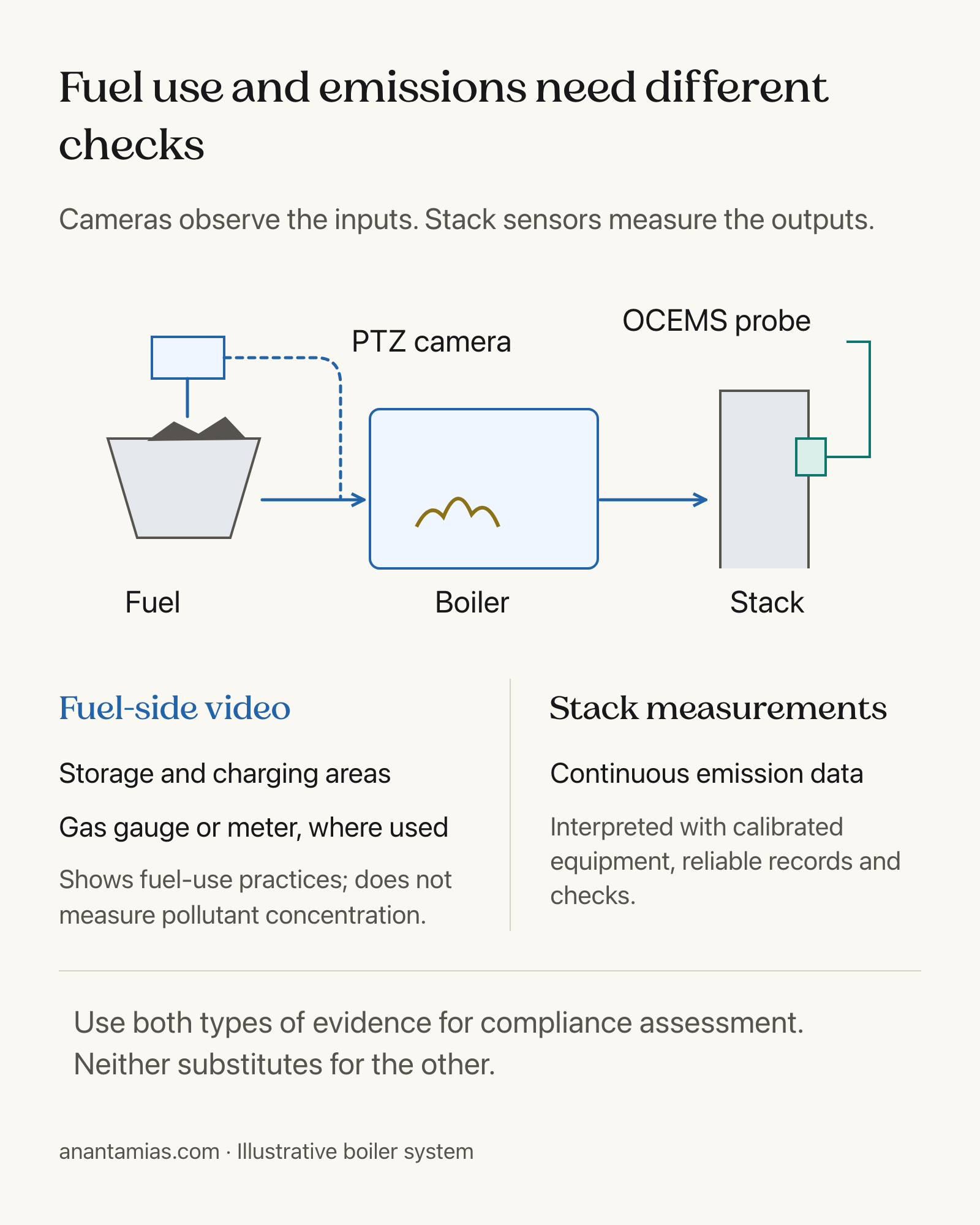
The central distinction is between seeing industrial activity and measuring emissions from that activity; neither evidence stream makes the other redundant.
- OCEMS supplies continuous measurements of monitored emission parameters. A PTZ camera supplies images of selected locations; movement and zoom improve visibility but do not convert footage into a chemical measurement.
- CPCB’s earlier arrangements already paired PTZ cameras with OCEMS. In specified boiler-using textile and food-processing units, camera locations included the monitoring port-hole and the flue-gas discharge from the stack.
- For metal units, the release identifies fume-extraction and furnace-feeding areas among earlier camera locations. The new fuel-area coverage adds another view of operations instead of replacing those existing observation points.
- A useful evidence comparison asks what was fed into equipment and what the stack monitor recorded. Matching observations in time can guide an inspection; it does not automatically establish causation or liability.
- Visible smoke may prompt attention, but appearance alone cannot establish pollutant concentrations or compliance with an emission limit. Conversely, an apparently clear plume cannot prove that all relevant emissions are acceptable.
Where Remote Compliance Checks Can Fall Short
The order creates a monitoring obligation; its environmental value depends on usable evidence, regulatory follow-through and verified operation at the industrial unit.
- Remote access can widen oversight beyond occasional visits, yet a live feed is useful only when the required area remains visible. An obstructed lens or poor angle can leave activity unexplained.
- Regulatory responsibility is shared: industries provide coverage and backup, while CPCB and state boards or DPCC provide receiving infrastructure. Installation alone does not demonstrate that this entire chain works reliably.
- Inspections remain necessary when footage suggests a breach or measurements need checking. Cameras can help select questions and locations for examination without establishing that every suspected violation has already been proved.
- Data reliability needs attention alongside hardware. As an implementation safeguard, regulators should reconcile periods of missing footage with equipment operation before interpreting the remaining record as continuous evidence of compliance.
- The official release announces expanded monitoring, not measured pollution reductions. For an answer, distinguish a mandated compliance mechanism from evidence that fuel practices or ambient air quality have improved.
Way Forward
Make the Evidence Usable
- Check camera coverage and stream availability at the actual storage, charging and gas-meter locations before recording an installation as functional.
- Use time-matched footage and emissions records to prioritize inspections, while treating unexplained gaps as questions requiring investigation.
- Assess success through verified fuel compliance and regulatory action, alongside reliable monitoring, rather than counting installed cameras alone.
Conclusion
- Industrial fuel enforcement works best when observations of inputs are read alongside measurements of outputs and followed by inspection where the evidence requires it.
- The exam takeaway is complementarity: cameras can reveal practices, OCEMS measures monitored emission parameters, and regulators must assess both before drawing a compliance conclusion.
UPSC Practice Questions
Prelims MCQ 1
With reference to the expanded industrial camera coverage announced by CAQM, consider the following statements:
- Cameras must capture fuel-storage areas and fuel-charging points.
- For gas-based fuel, the gas gauge or meter must be captured.
- PTZ camera footage directly measures pollutant concentrations in stack gases.
How many of the above statements are correct?
(a) Only one (b) Only two (c) All three (d) None
Answer: (b) Only two
Explanation:
The first two requirements appear in the order as reported by PIB. Cameras provide visual observations; pollutant measurements require emission-monitoring instruments.
Prelims MCQ 2
Which approach best combines industrial cameras with OCEMS for regulatory oversight?
(a) Use plume appearance as a substitute for emission measurements (b) Treat camera installation as proof that only approved fuels are used (c) Compare time-matched operational footage and emission records, then investigate anomalies (d) Discontinue physical inspections once live streaming begins
Answer: (c) Compare time-matched operational footage and emission records, then investigate anomalies
Explanation:
The two systems provide different evidence. Combining observations can guide investigation, while reliable measurements and inspections remain necessary.
UPSC Mains Questions
- Explain how monitoring industrial fuel inputs can complement stack-emission monitoring. Discuss the limits of camera-based enforcement. (150 words)
- Technology can improve environmental oversight without guaranteeing compliance. Examine this statement with reference to industrial fuel-use surveillance in NCR. (250 words)
Source: PIB, Ministry of Environment, Forest and Climate Change.
Frequently Asked Questions
What has CAQM changed in industrial camera monitoring?
CAQM has expanded coverage to fuel-storage areas, charging points and gas gauges or meters. The order also requires live feeds to regulators and backup power for cameras and connectivity.
Can PTZ cameras measure air-pollutant concentrations?
No. PTZ cameras provide visual observations of industrial activity and specified locations. Emission-monitoring instruments provide measurements of monitored pollutants or parameters; footage cannot replace those measurements or establish concentrations from plume appearance.
What is the role of OCEMS?
Online Continuous Emission Monitoring Systems provide continuous measurements of monitored emission parameters. Their readings can be considered alongside operational footage, helping regulators investigate possible links between fuel-use practices and stack emissions.
Does the order prove that industrial pollution has fallen?
No. The release announces monitoring requirements and explains their enforcement purpose. Demonstrating an improvement would require evidence of implementation, verified fuel-use compliance and appropriate pollution measurements after the measures operate.