Coal mining near Ramappa Temple may harm the Heritage Site and Lake
Why in News?
Heritage activists have raised concerns over the proposed PVNR Opencast Coal Mine at Venkatapur in Telangana’s Mulugu district, located around 5 km from the UNESCO-inscribed Kakatiya Rudreshwara (Ramappa) Temple. The proposed project has triggered concerns over possible impacts on the temple, the Ramappa Lake and the wider cultural landscape.
The concerns are significant because UNESCO recognises the temple not merely as an isolated monument but as part of a wider setting involving the Kakatiya-built reservoir, irrigation systems, agricultural land and natural landscape.
| UPSC Relevance: GS-1 History & Culture: Medieval India, Temple Architecture Prelims: Ramappa Temple, UNESCO World Heritage Sites |
About Ramappa Temple:
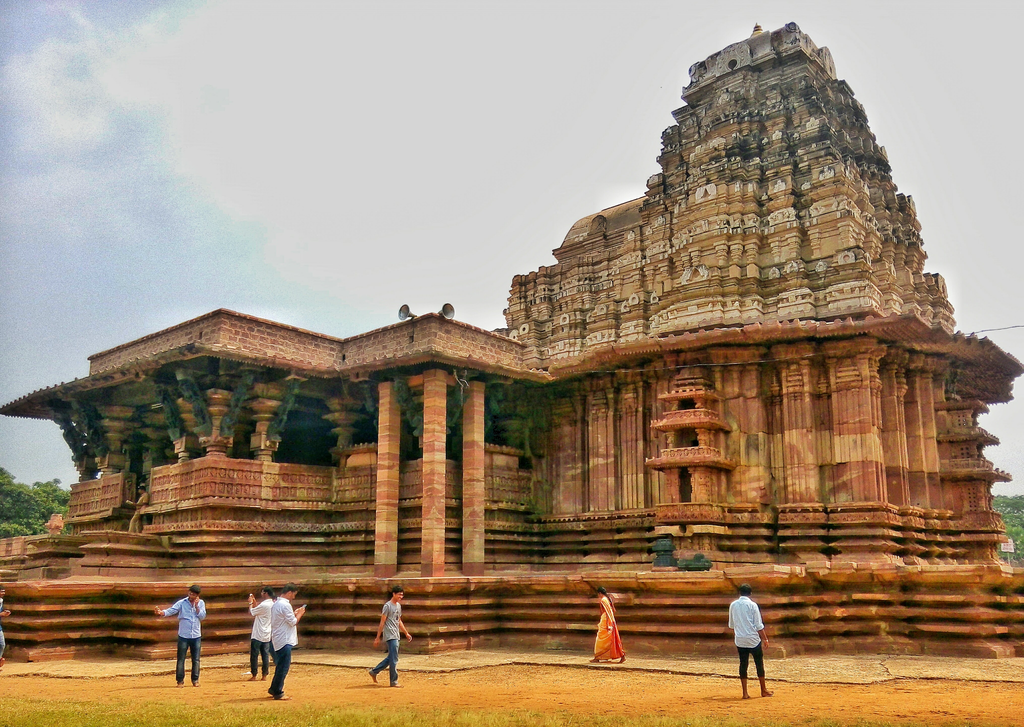
- Kakatiya Rudreshwara Temple, popularly known as Ramappa Temple, is located at Palampet in Mulugu district, Telangana.
- It was built during the Kakatiya period, and construction began around 1213 CE. It was inscribed on the UNESCO World Heritage List in 2021.
Key Architectural Features:
- Hybrid style: The temple features a Vesara-style superstructure integrated into a highly distinct local Kakatiya style of temple architecture.
- Material Selection: The main structure is built from locally sourced red sandstone, beautifully contrasted by intricately carved pillars and beams made of dark, fine-grained granite and dolerite (black basalt).
- Innovative Sandbox Foundation: To survive earthquakes, the Kakatiyas pioneered the sand-box technique. Deep foundation trenches were filled with sand mixed with lime, jaggery, and binding herbs. This creates a cushion that absorbs and dissipates seismic shockwaves.
- Floating Vimana (Tower): The temple’s pyramidal roof tower (Vimana) is constructed from revolutionary lightweight, porous bricks that literally float on water. By mixing clay with sawdust and husks, the engineers reduced the weight of the roof superstructure, preventing the foundation from collapsing under its own weight.
- Lustrous Basalt Sculptures: The temple is globally renowned for its high-relief Madanikas (female dancers) and Naginis bracket figures. Carved out of ultra-hard black basalt, these masterpieces feature a mirror-like, metallic finish that retains its brilliant lustre even after 800 years of weathering.
- Integrated Cultural Landscape: The temple is intentionally positioned adjacent to Ramappa Cheruvu, a massive artificial reservoir built by the Kakatiyas.
Why is the Proposed Mine a Concern?
The proposed PVNR Opencast Mining Project at Venkatapur by the Singareni Collieries Company Limited (SCCL) is a concern for the Ramappa Temple (a UNESCO World Heritage site) due to four main risks:
- Ground Vibrations: Heavy machinery, excavation, and blasting from mining could destabilise the ancient temple’s delicate foundation and structural stability.
- Hydrogeological Impact: Deep excavation can alter groundwater flow, drainage patterns and the local water table. This is important because the temple is closely associated with Ramappa Lake and the wider Kakatiya irrigation system.
- Heritage Landscape Degradation: UNESCO recognises the site’s Outstanding Universal Value (OUV) based on the interconnectedness of its architecture, nature, and water systems. Surrounding environmental damage threatens the site’s overall authenticity and integrity.
- Disruption to Ramappa Lake & Irrigation: Ramappa Lake is a Kakatiya-era artificial reservoir forming an important component of the site’s historical landscape. UNESCO has specifically recognised the relationship between the temple, reservoir and irrigation system.
The Ramappa Temple has been protected since 1914 and is managed by the Archaeological Survey of India (ASI). Under the UNESCO World Heritage Convention, India has obligations to protect and conserve the Outstanding Universal Value of World Heritage properties.
The Ramappa Temple-coal mine debate represents a larger challenge for India: how to reconcile mineral and energy security with the conservation of irreplaceable cultural and ecological heritage.
Practice Prelims MCQ:
Q. Consider the following statements regarding the Kakatiya Rudreshwara (Ramappa) Temple:
- It is located in Telangana and was inscribed on the UNESCO World Heritage List in 2021.
- Its architectural significance is associated with the Kakatiyan tradition and includes a distinctive pyramidal Vimana and an innovative sandbox foundation.
- The UNESCO recognition is limited to the temple structure itself and does not take into account its relationship with the surrounding water and cultural landscape.
How many of the above statements are correct?
(a) Only one
(b) Only two
(c) All three
(d) None
Answer: (b)
Explanation: Statement 3 is incorrect: UNESCO’s recognition considers the temple in its broader cultural and landscape context, including its relationship with the Ramappa Lake, irrigation system, agricultural landscape and natural setting.