Cochin Ship Repair JV: Building a Maritime Services Cluster
Why in News?
Cochin Shipyard Limited and Drydocks World signed a ship-repair joint venture agreement on 11 September 2026 to operate and expand the International Ship Repair Facility in Cochin.
- Equal ownership: each partner will hold a 50% stake, with initial capital funded through equity contributions from both parties.
- New development: the agreement formalises collaboration explored through an MoU signed during India Maritime Week 2025.
- Facility mandate: the venture will operate, consolidate and expand the International Ship Repair Facility, serving Indian, regional and international customers.
- Expected benefits: additional capacity, skilled employment and better turnaround are prospective outcomes, not independently measured achievements announced in the release.
- Maritime services create value through maintenance, repair and conversion, alongside the more visible activities of building ships and moving cargo.
- Industrial cooperation between Indian and UAE-linked firms can combine local engineering capability with international repair experience and customer networks.
UPSC Relevance
Prelims Relevance
- Cochin Shipyard Limited and Drydocks World: the joint venture partners.
- Drydocks World: a DP World company.
- International Ship Repair Facility: located in Cochin, Kerala.
- Joint venture: shared equity ownership in a defined business arrangement.
- Ship repair, conversion and shipbuilding: distinct maritime activities.
Mains Relevance
GS Paper 3
- Maritime infrastructure, industrial clusters and skilled employment.
- Public-private cooperation and evidence-based infrastructure evaluation.
GS Paper 2
- India-UAE economic cooperation through industrial partnerships.
Essay
- Infrastructure creates lasting value when institutions and skills match physical assets.
Background and Context
What changed from the earlier understanding?
The fresh development is a formal equity partnership around a defined facility, following an earlier exploratory understanding.
- The 2025 MoU explored ship repair and allied maritime services cooperation. The new agreement establishes the partnership structure intended to carry that collaboration forward.
- The 50:50 ownership means both parties will hold equal equity stakes. Initial capital comes from their equity contributions; the release does not supply a completed investment or spending total.
- The venture’s stated scope is the International Ship Repair Facility in Cochin. Operating, consolidating and expanding this facility is more specific than a general announcement about maritime cooperation.
- Cochin Shipyard brings domestic shipbuilding and repair capabilities, engineering experience and skilled workers. These existing strengths provide the local industrial foundation described in the release.
- Drydocks World, a DP World company, brings experience in vessel maintenance, major conversions and offshore engineering. Complementarity between the partners explains the business rationale, rather than proving future commercial success.
How does a ship-repair facility create value?
Repair services keep existing vessels serviceable, making infrastructure useful throughout a ship’s operating life rather than only at construction.
- Shipbuilding creates a vessel; repair and maintenance address an existing vessel’s condition. Conversion changes its configuration or use. These activities share engineering skills but serve different commercial requirements.
- The Ministry describes ISRF as having a ship lift system and modern docking facilities. Such infrastructure enables access needed for repair work; the announcement does not establish new numerical lifting capacities.
- Repair work can require inspection, fabrication, component replacement and engineering support. This explains why a repair facility depends on coordinated specialist services, rather than functioning only as a place to berth.
- Turnaround time matters because time spent awaiting or undergoing repair affects vessel availability. Faster service is an expected partnership benefit here, not a measured improvement demonstrated by the agreement.
- Quality and safety matter alongside speed. For an analytical answer, judge whether service reliability improves, rather than assuming that larger capacity automatically means better repair performance for customers.
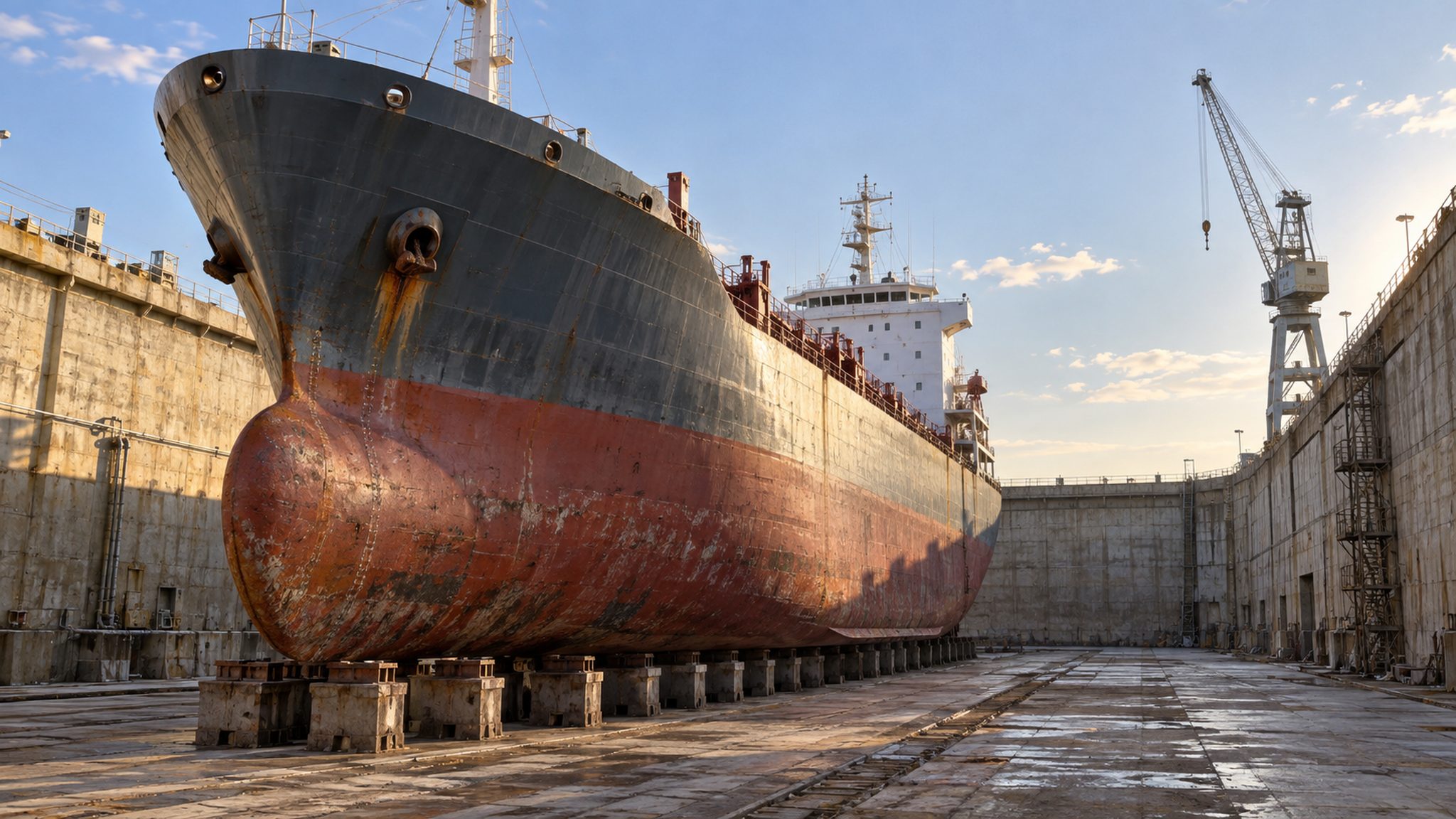
How can one facility support an industrial cluster?
A repair cluster forms when recurring vessel work supports nearby specialist businesses, workers and services that reinforce one another.
- Engineering and fabrication suppliers can serve repair orders generated by the main facility. The Ministry identifies opportunities in these activities, although the release does not quantify realised orders or supplier income.
- Skilled employment depends on actual workloads and capabilities. A pipeline of repair projects could support specialist training and jobs; the announcement alone cannot establish that those employment gains have occurred.
- International customers broaden the potential market beyond domestic vessels. The facility’s location near major shipping routes supports the commercial rationale, while winning repair contracts still requires competitive and dependable services.
- Local linkages determine how much value spreads through Kerala’s economy. Procurement, workforce development and supporting services are useful evaluation questions, rather than outcomes that can be inferred solely from equity ownership.
- Replication elsewhere is an ambition expressed in the announcement. A successful cluster model would need suitable demand, skills and infrastructure at each location; this agreement does not establish completed nationwide hubs.
What should an infrastructure assessment distinguish?
Separate the signed arrangement, its intended operational changes and the evidence needed to judge its eventual economic results.
- Agreement versus delivery: signing establishes the collaboration milestone. Expanded capacity, improved efficiency and employment should be evaluated later against actual facility operations, rather than reported as completed benefits today.
- Facility partnership versus company ownership: equal stakes concern the joint venture. The announcement does not say that the entire Cochin Shipyard enterprise has been privatised or transferred to its partner.
- Commercial cooperation versus defence arrangements: this is a ship-repair business partnership. Its international context does not turn it into a defence pact or establish access rights for foreign naval forces.
- Useful performance evidence would include actual repair throughput, delivery reliability, safety performance and supplier participation. These are proposed assessment measures, not statistics or reporting commitments announced by the Ministry.
Way Forward
Track whether the facility creates dependable services
- Build skills around demand by connecting training to the repair and fabrication work that the facility actually secures.
- Assess operational delivery through service reliability, safety and turnaround evidence, alongside any additional capacity brought into use.
- Strengthen local suppliers through transparent procurement opportunities and quality requirements that help smaller engineering businesses participate.
Conclusion
- The Cochin joint venture illustrates how maritime infrastructure can support a wider repair-services economy when physical facilities, skills and specialist suppliers work together.
- The exam distinction is between the signed partnership and its expected benefits: equal equity is established in the agreement, while industrial outcomes require subsequent evidence.
UPSC Practice Questions
Prelims MCQ 1
With reference to the Cochin Shipyard-Drydocks World agreement, consider the following statements:
- Both partners will hold equal equity stakes in the joint venture.
- The arrangement concerns operating and expanding the International Ship Repair Facility.
- The announcement establishes privatisation of the entire Cochin Shipyard enterprise.
How many of the above statements are correct?
(a) Only one (b) Only two (c) All three (d) None
Answer: (b) Only two
Explanation:
Equal ownership and the facility mandate are stated in the release. It does not announce privatisation of the entire Cochin Shipyard enterprise.
Prelims MCQ 2
Which best explains how a ship-repair facility can support an industrial cluster?
(a) It eliminates demand for engineering skills (b) It generates recurring demand for specialised suppliers and services (c) It automatically creates a defence alliance (d) It replaces all shipbuilding activity
Answer: (b) It generates recurring demand for specialised suppliers and services
Explanation:
Repair work can support fabrication, engineering, maintenance and associated services. A cluster develops through these business and skill linkages, rather than through the facility alone.
UPSC Mains Questions
- Explain how ship-repair infrastructure can generate industrial-cluster benefits. Identify the conditions needed for those benefits to reach local firms and workers.
- Distinguish between an infrastructure partnership announcement and verified economic outcomes. Discuss suitable criteria for evaluating a maritime services joint venture.
Source: PIB, Ministry of Ports, Shipping and Waterways.
Frequently Asked Questions
What did Cochin Shipyard and Drydocks World sign?
They signed a joint venture agreement to operate, consolidate and expand the International Ship Repair Facility in Cochin. Each company will hold an equal stake, with initial equity contributions from both partners.
How is this different from the earlier MoU?
The earlier MoU explored cooperation in ship repair and allied services. The new agreement formalises a joint venture with an identified ownership structure and a defined facility mandate.
Does the agreement privatise all of Cochin Shipyard?
No such transfer is announced in the release. The equal ownership shares relate to the joint venture around the repair facility, not ownership of the entire Cochin Shipyard enterprise.
Have the promised jobs and faster repairs already materialised?
The announcement describes employment, capacity and turnaround gains as expected benefits. Signing the agreement does not independently demonstrate that these operational or economic improvements have already been delivered.
Why is ship repair relevant to industrial policy?
Repair can sustain demand for fabrication, engineering and specialist maintenance services. When local suppliers and skilled workers participate, a facility can support a broader industrial cluster around recurring vessel work.