CSIR‑CIMFR conducts India’s first trial blast of Dozer‑Push mining method
Why in News?
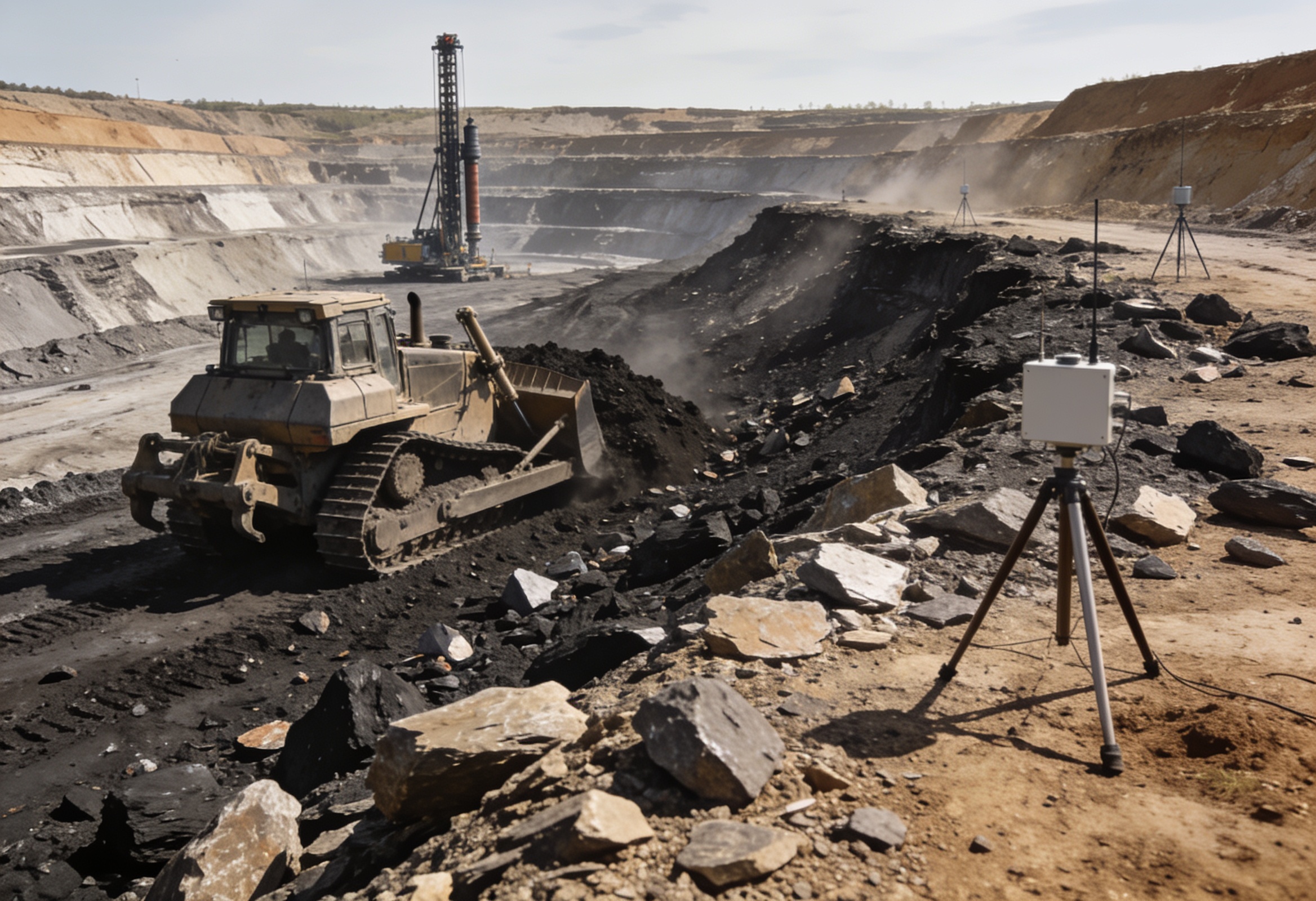
First successful trial blast of the Dozer‑Push mining method conducted in India by CSIR‑CIMFR at PEKB mine, integrating automation, digital design and large‑scale cast blasting to push blasted material with unmanned dozers.
- First domestic trial: CSIR‑CIMFR conducted the inaugural Dozer‑Push trial blast in India, marking a national milestone in mining technique adaptation.
- Automation and safety: The trial used man‑less automated drilling and automated dozers, reducing frontline human exposure to blasting and haulage risks.
- Productivity and cost: Preliminary estimates indicate a 7–10% reduction in operational cost versus conventional truck‑shovel or dragline systems.
- Phased validation: The trial is the first of several planned blasts; design refinements and environmental monitoring will follow before wider adoption.
The development matters in the context of:
- Indian coal-mining profile: Surface mining still supplies a major share of domestic thermal coal; efficiency gains in opencast operations directly affect energy supply economics.
- Conventional alternatives: Typical methods include truck‑shovel, shovel‑dumper and dragline systems; Dozer‑Push offers an alternate cycle centred on cast blasting and push movement.
- CSIR‑CIMFR role: The Dhanbad institute provides applied mining R&D, including blast design, vibration mitigation and mechanisation pathways for Indian geology and operational norms.
- Private participation: Trial executed at a mine operated by Adani Natural Resources, showing private sector collaboration in technology trials.
- Regulatory environment: Mining operations must comply with environmental clearances, blast safety norms, and land restoration obligations under Indian law.
- Labour and skill impact: Automation changes skill mix at sites: fewer manual haulage roles, higher demand for remote operation, maintenance and blast engineering skills.
UPSC Relevance
Prelims Relevance
- Questions may test differences between opencast mining methods, features of Dozer‑Push method, and immediate operational benefits such as cost and safety metrics.
Mains Relevance
GS3 Science & Technology
- Discuss technology adoption in mineral sector, impact on productivity, labour transitions, environmental management and regulatory challenges. Useful for essays on science, technology and society and infrastructure modernisation topics.
Essay
- Material for essays on technology and employment, sustainable resource extraction, and modernization of extractive industries in India’s growth narrative.
Background and Context
What is Dozer‑Push mining?
Method built around cast blasting and pushing blasted material with dozers rather than truck haulage.
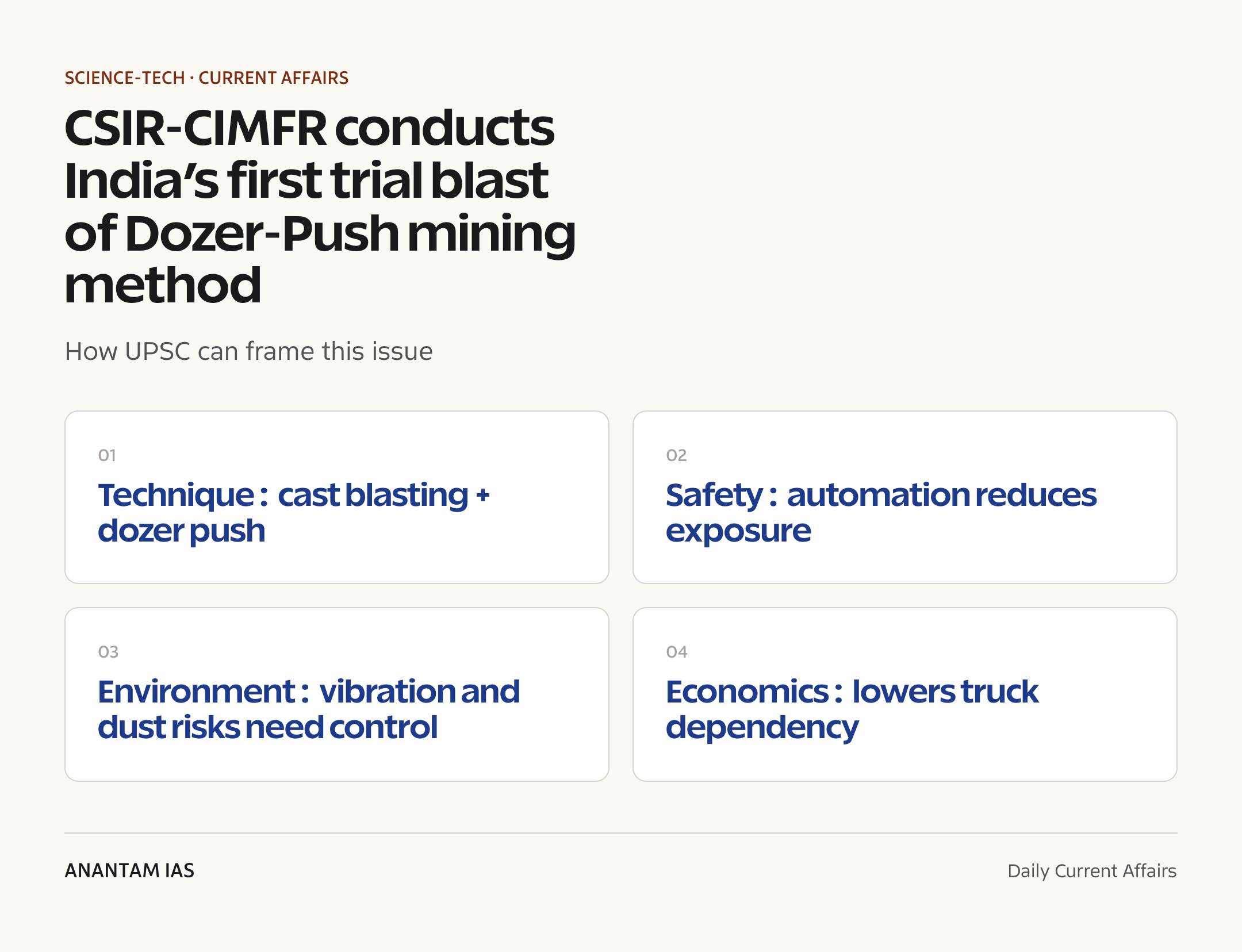
- Cast blasting: Large scale blasting to fragment and throw overburden or coal into a pre‑decoked or void area for direct dozer access.
- Dozer push: Use of large dozers to push blasted material along bench slopes to recovery points without intermediate truck haulage.
- Cycle change: Replaces repetitive drill‑load‑haul cycles with integrated drill‑blast‑push operations.
- Simpler fleet: Reduces dependency on large fleets of haul trucks, altering capital and operating cost structures.
- Automation fit: Suits unmanned or remote operation of drill rigs and dozers, reducing frontline worker exposure to hazards.
Why CSIR‑CIMFR developed the method for India
Adaptation aimed at local geology, operational conditions and safety/environmental constraints.
- Local geology: Indian seams and overburden characteristics required tailored blast design to control flyrock and vibration.
- Monsoon constraints: Dozer‑Push can limit weather‑induced haulage delays by reducing truck movement needs during heavy rains.
- Cost pressures: Rising diesel and maintenance costs make lower truck usage attractive for mining companies.
- Safety goals: Reduce exposure to haulage and loading risks through remote operation and mechanisation.
- Technology transfer: Trial allows benchmarking against global cast‑blast operations and calibration for Indian mines.
Trial specifics at PEKB mine
Technical facts about the inaugural blast and equipment used.
- Location: PEKB (Parsa East and Kanta Basan) opencast coal mine, Udaipur block, Ambikapur, Chhattisgarh.
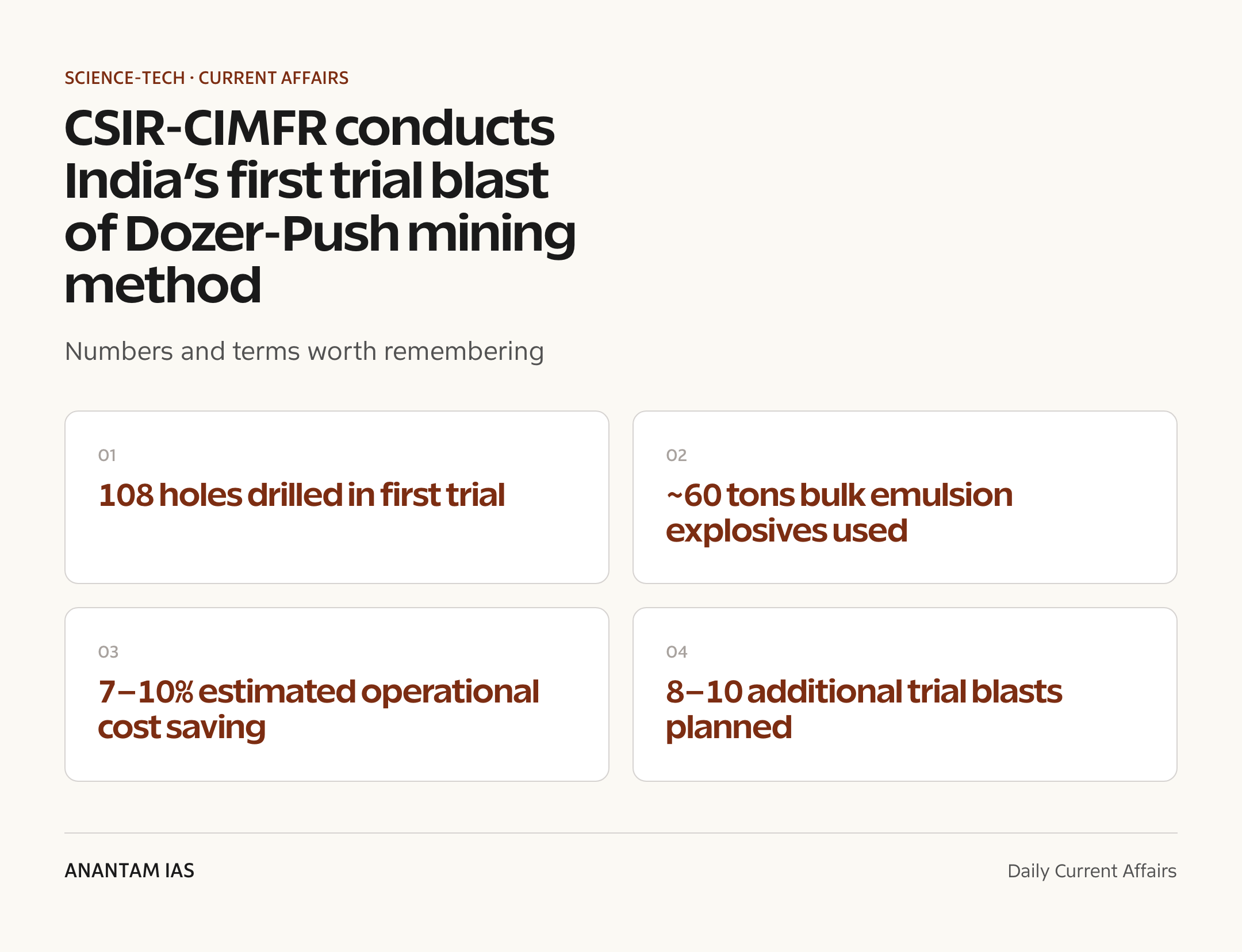
- Drilling: 108 holes drilled using an automated, man‑less drill rig as part of the trial.
- Explosives: Bulk emulsion explosive used for cast/throw blasting; reported charging quantity was ~60 tons.
- Pushing: Specially designed, large automated dozers planned to move blasted material into decoaled area for recovery.
- Team: Trial led by Prof. Arvind Kumar Mishra and CSIR‑CIMFR S&T team with the mine operator executing site operations.
Operational advantages signalled
Immediate benefits claimed or projected from the trial data and design.
- Cost reduction: Estimated 7–10% operational cost saving compared to truck‑shovel cycles.
- Faster recovery: Enables quicker coal recovery by reducing cycle time lost to hauling and truck turnaround.
- Dragline support: Frees up dragline machines by improving bench management and material distribution.
- Safety improvements: Lowers risks from truck haulage and on‑bench personnel exposure when automated equipment used.
- Weather resilience: Less dependency on truck movement helps operations during heavy rains.
Environmental and social concerns
Potential downside areas that need assessment during scale up.
- Blast impacts: Large cast blasts raise concerns on vibration, flyrock and airblast; design must meet safety thresholds.
- Dust and emissions: Fragmentation and dozer movement generate dust; need for dust suppression plans and monitoring.
- Rehabilitation: Changed benching and material distribution can affect progressive reclamation and water management.
- Community risk perception: Larger blasts may alarm local communities; engagement and early warning systems are necessary.
- Labour displacement: Reduced haulage roles require reskilling programs and social safeguards for affected workers.
Way Forward
Refined technical validation
- Additional trial blasts: Conduct the planned 8–10 follow‑up blasts under varying seam conditions to finalise blast parameters.
- Monitoring suite: Deploy vibration, airblast, flyrock and dust monitors with public data reporting for transparency.
- Benchmark metrics: Record detailed cycle‑time, fuel, maintenance and recovery figures to validate cost claims.
Regulatory and safety measures
- Blast certification: Ensure blast design and emulsion use comply with statutory blast safety guidelines and approvals.
- Standard operating procedures: Draft SOPs for automated drilling, charging and dozer push operations with contingency protocols.
- Emergency planning: Strengthen on‑site emergency response and community notification systems around major blasts.
Environmental safeguards
- Impact assessment: Undertake site level environmental impact assessments specific to cast blasting and dozer push.
- Mitigation measures: Implement dust suppression, progressive rehabilitation, and water runoff control tailored to the method.
- Monitoring and compliance: Use continuous environmental monitoring tied to mine environmental management plans.
Social and workforce transition
- Reskilling programs: Create training modules on remote equipment operation, maintenance and blast design for local workforce.
- Stakeholder engagement: Conduct sustained consultations with affected communities to explain safety measures and benefits.
- Policy support: Consider social safety nets and placement assistance for displaced haulage workers during transition.
Conclusion
The CSIR‑CIMFR Dozer‑Push trial is a significant step toward mechanised, lower‑cost and potentially safer opencast mining in India. Realising benefits at scale will require rigorous technical validation, strict environmental safeguards, updated regulatory protocols and targeted workforce transition measures to manage social impacts.
UPSC Practice Questions
Prelims MCQ 1
Which of the following best describes the Dozer‑Push mining method trialed by CSIR‑CIMFR?
(a) A. Use of draglines to remove overburden and load trucks for haulage. (b) B. Cast blasting to throw material into a void followed by pushing fragmented material with dozers. (c) C. Continuous underground longwall extraction using hydraulic supports. (d) D. Use of conveyor belts to transport coal from benches to surface.
Answer: B
Explanation:
Dozer‑Push uses cast or throw blasting to fragment and displace material into an area where dozers push it for recovery, replacing truck haulage. Options A, C and D describe other mining methods.
Prelims MCQ 2
During the CSIR‑CIMFR trial at PEKB mine, which of the following elements was reported as used?
(a) A. Manual hand drilling for precision holes. (b) B. Bulk emulsion explosives and automated drill rigs. (c) C. Underground stoping and backfilling with cement paste. (d) D. Use of dragline only without blasting.
Answer: B
Explanation:
The trial involved automated (man‑less) drilling and use of bulk emulsion explosives for cast/throw blasting. Options A, C and D are inconsistent with the trial description.
UPSC Mains Questions
- {‘question’: ‘Analyse how adoption of the Dozer‑Push mining method could reshape opencast coal mining economics and operations in India. What policy and regulatory steps should the government take to ensure environmentally responsible scale up?’, ‘guidance’: ‘Discuss capital and operating cost implications, fleet restructuring, productivity and seasonal resilience, labour impacts and training needs. Recommend policy measures like updated blast safety norms, environmental monitoring requirements, reskilling funding and pilot‑to‑scale regulatory frameworks.’}
- {‘question’: ‘Examine the social implications of increased automation in surface mining, using the Dozer‑Push trial as an example. How can companies and the state design transition strategies that protect livelihoods while encouraging technology adoption?’, ‘guidance’: ‘Cover direct and indirect job displacement, skill upgradation pathways, local employment clauses, social safety nets and stakeholder engagement. Suggest practical modules for training and examples of corporate responsibility actions.’}
Source: PIB, Ministry of Science & Technology (CSIR‑CIMFR).
Frequently Asked Questions
q
a
q
a
q
a
q
a
q
a
q
a