Currency Distribution

Context:
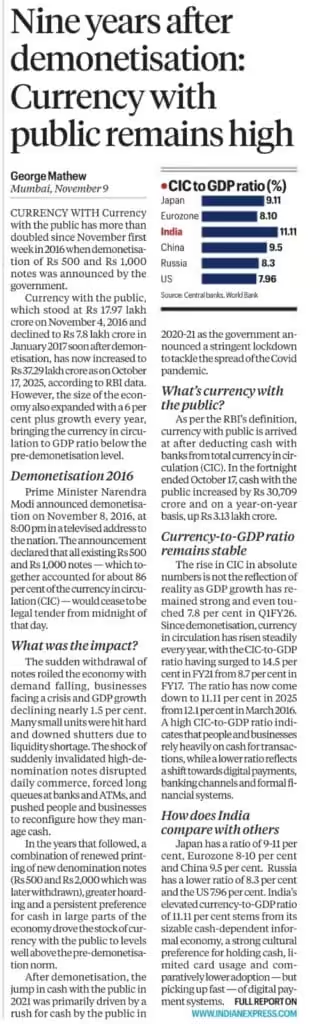
Nine years after the 2016 demonetisation drive — when ₹500 and ₹1,000 notes were invalidated — currency with the public has more than doubled, according to the Reserve Bank of India (RBI) data. Despite the government’s push for a cashless economy and digital payments, the currency-in-circulation (CIC) and currency-to-GDP ratio remain significantly high.
UPSC Relevance:
Economics (Prelims)
UPSC PYQ:
Q. Which one of the following links all the ATMs in India? (2018)
(a) Indian Banks’ Association
(b) National Securities Depository Limited
(c) National Payments Corporation of India
(d) Reserve Bank of India
Key Data Highlights:
| Indicator | 2016 (Pre-Demonetisation) | 2017 (Post-Demonetisation) | 2025 (Latest) |
|---|---|---|---|
| Currency with Public | ₹17.97 lakh crore | ₹7.8 lakh crore | ₹37.29 lakh crore |
| CIC-to-GDP Ratio | 12.1% | 8.7% (FY17) | 11.1% (FY25) |
Currency to GDP Ratio:
The currency to GDP ratio is the value of currency in circulation divided by the country’s gross domestic product. A higher ratio can indicate a larger role for cash in the economy, while a lower ratio may suggest greater use of digital payments.
The value of banknotes in circulation to GDP ratio continues to see a decline as the same fell to 11.11% in FY25 compared to 11.5% in FY24, according to the RBI annual report.

Reasons for High Cash Usage:
- Large informal sector (~85% of employment).
- Cash-driven rural economy and low financial inclusion in parts of India.
- Cultural preference for liquidity and cash security.
- Slow adoption of formal credit and banking systems.
- Festive seasons and elections often increase cash in circulation.
Implications for the Economy
- Government and RBI will likely focus on further promoting digital payments, financial literacy, and rural connectivity.
- High CIC/GDP ratio limits formalisation of the economy.
- Reflects partial success of demonetisation’s goals of curbing black money and boosting digital payments.
- Suggests a hybrid cash-digital economy, not a fully cashless one.
Prelims Pointers:
- Currency in Circulation (CIC) = Notes & coins issued by RBI minus currency held by banks.
- “Currency with the public” is the total currency in circulation (CIC) minus the cash held by banks.