Custodial deaths
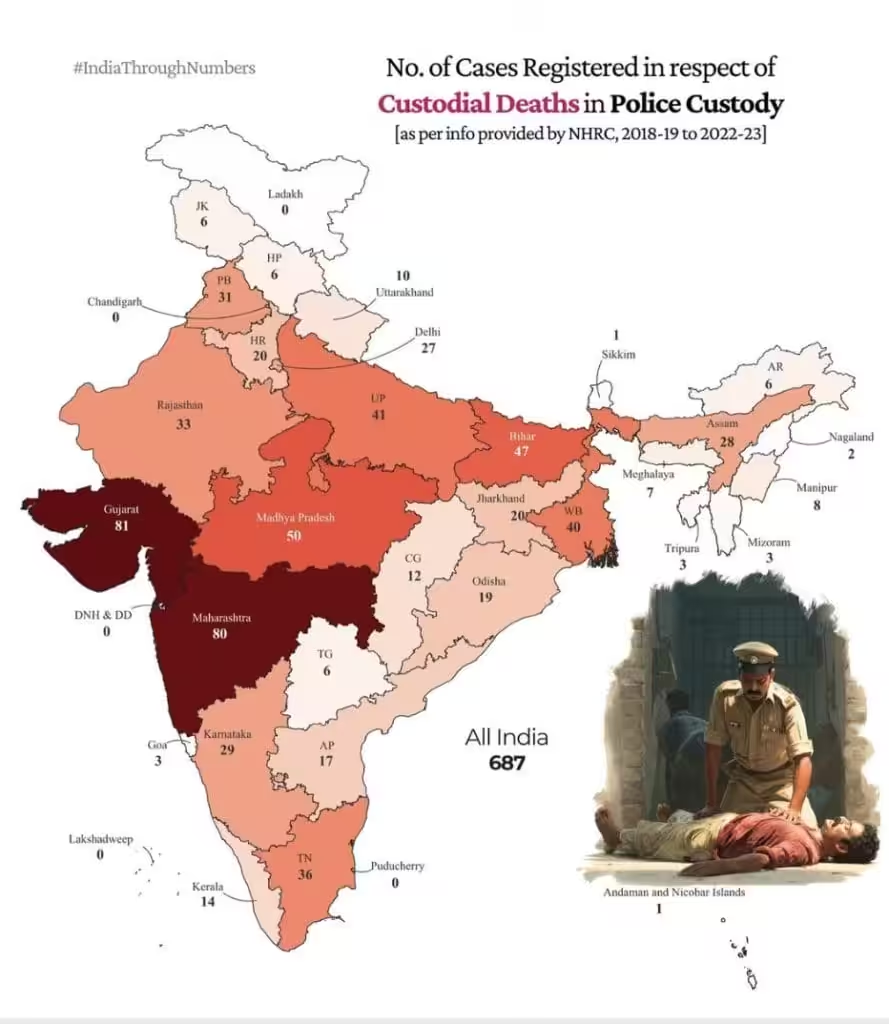
Context: A significant number of custodial deaths take place, of which a considerable number of them are reported, a few of the policemen are arrested, and none of them are convicted.

Data show that Tamil Nadu has a long history of police brutality. According to data from Parliament, 490 deaths were reported while suspects were in judicial or police custody between 2016-17 and 2021-22 (up to March 31, 2022). Uttar Pradesh reported the highest number of fatalities (2,630) in judicial/police custody among all the States, while Tamil Nadu reported the highest number among the southern States. Dalits are disproportionately targeted for police brutality. Across India, no police officer has been held accountable for such deaths in this period. Data also show that convictions of State police personnel have been rare, not just in the case of custodial deaths, but also in any human rights violations case. Policemen arrested for human rights violations is disproportionately low compared to the actual cases.

Difference between judicial custody and police custody
| Police custody | Judicial custody |
| Primarily for investigation, interrogation, and gathering evidence | To ensure the accused is not subjected to undue police influence and to safeguard their rights. |
| Held at a police station lock-up. | Held in jail. |
| Duration is maximum of 15 days from the date of initial detention. | Can extend beyond 15 days, up to 90 days for serious offenses or 60 days for others, if the magistrate deems it necessary. |
| Police have direct physical control and can interrogate the accused. | The magistrate has overall control, and police need court permission to interrogate the accused |
Rights of individual if being accused
Article 20(1): This clause prevents the retrospective application of criminal laws. It means that a person cannot be punished for an act that was not an offense at the time it was committed, nor can they be subjected to a penalty greater than what was prescribed at the time of the offense.
Double Jeopardy Article 20(2): This clause prohibits the prosecution and punishment of a person more than once for the same offense.
Self-Incrimination Article 20(3): This clause protects individuals from being compelled to be a witness against themselves.
Key Rights of a Person in Custody:
- Right to be Informed of the Grounds of Arrest
- Right to Consult with legal practitioner and be Defended by a Lawyer
- Right to be Produced before the nearest Magistrate within 24 hours of their arrest
- Right to Remain Silent and courts cannot presume guilt based on silence.
- Right to be Free from Torture and Inhuman Treatment (Article 21)
- Right to a Fair and impartial Trial, with equal opportunities and treatment.
- Right to have Someone Informed of the Arrest (a friend, relative, or other interested person)