Diabetes

Context:
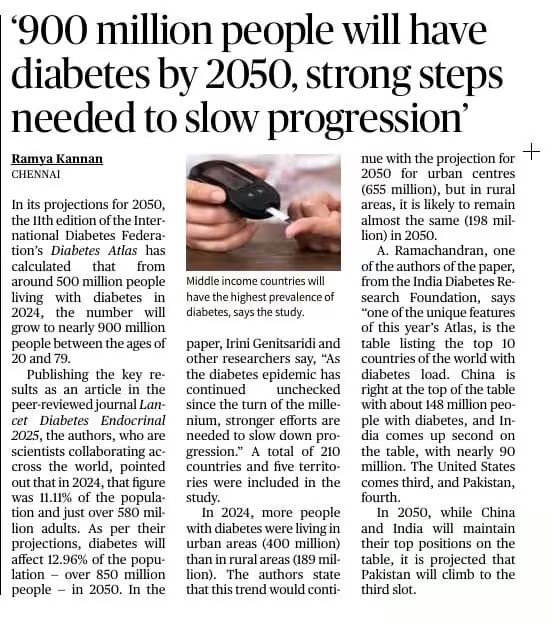
The International Diabetes Federation (IDF), in its 11th edition of the Diabetes Atlas, has projected that the number of people living with diabetes worldwide will rise from around 500 million in 2022 to nearly 900 million by 2050 (age group 20–79). Experts warn that strong preventive measures are urgently needed to slow this trajectory.
UPSC Relevance:
Science and Tech.
UPSC PYQ:
In the context of hereditary diseases, consider the following statements: [2021]
1) Passing on mitochondrial diseases from parent to child can be prevented by mitochondrial replacement therapy either before or after in vitro fertilisation of the egg.
2) A child inherits mitochondrial diseases entirely from mother and not from father.
Which of the statements given above is/are correct?
a) 1 only
b) 2 only
c) Both 1 and 2
d) Neither 1 nor 2
11th edition of the Diabetes Atlas findings:
- Global prevalence (2024): ~11.1% of adults (~580 million)
- Projected prevalence (2050): ~12.6% (~850–900 million)
- Middle-income countries show the highest prevalence growth.
- Urban areas:
- 2024: ~400 million
- 2050: ~655 million
- Rural areas:
- 2024: ~198 million
- 2050: ~198 million (largely stagnant, likely due to under-diagnosis)
- Country-wise burden (2050 projection):
- Pakistan – projected to move to third place by 2050
- China – highest
- India – second
- USA – third
Drivers of the Diabetes Explosion:
Lifestyle Factors:
- Rapid urbanisation → sedentary lifestyles
- High intake of ultra-processed foods and sugary beverages
- Obesity, stress, sleep disorders
Structural Factors:
- Poor walkability and active transport in cities
- Weak focus on preventive healthcare
- Inadequate integration of NCDs into primary health systems
Socio-economic Factors:
- Low health literacy
- Expansion of middle-income groups
- Cheap, calorie-dense but nutrient-poor diets
About Diabetes:
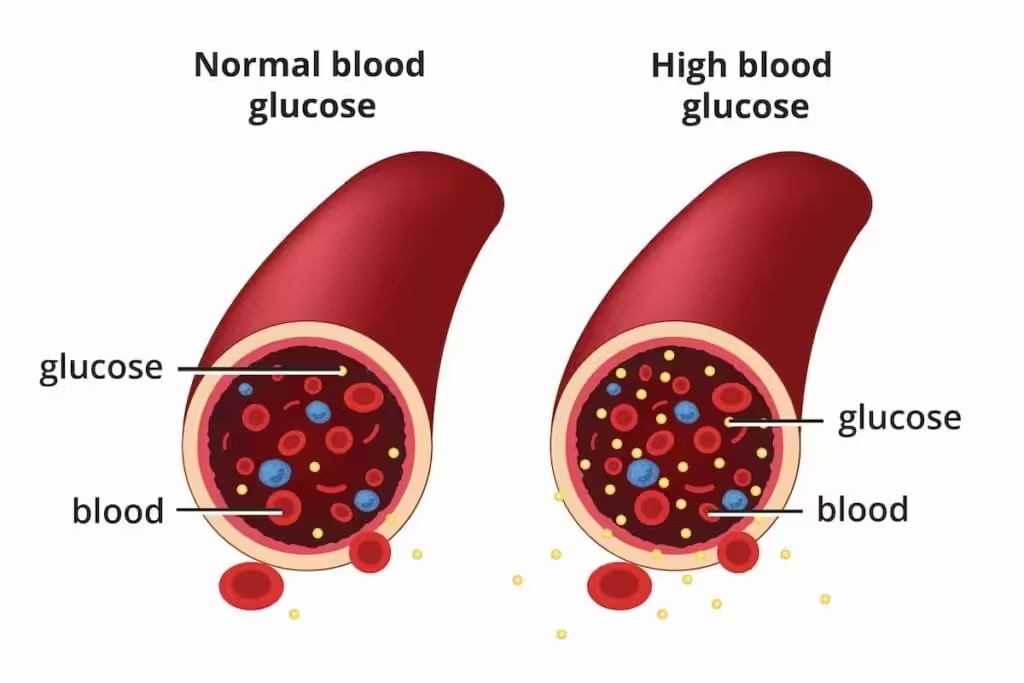
Diabetes is a chronic, metabolic disease characterized by elevated levels of blood glucose (or blood sugar), which leads over time to serious damage to the heart, blood vessels, eyes, kidneys and nerves.
- The most common is type 2 diabetes, usually in adults, which occurs when the body becomes resistant to insulin or doesn’t make enough insulin.
- About 830 million people worldwide have diabetes, the majority living in low-and middle-income countries. More than half of people living with diabetes are not receiving treatment. Both the number of people with diabetes and the number of people with untreated diabetes have been steadily increasing over the past decades.
Types of Diabetes:
- Type 1: Autoimmune destruction of insulin-producing cells, requiring daily insulin; mostly affects children and young adults.
- Type 2: Body resists insulin or doesn’t produce enough; linked to overweight, inactivity, and genetics; accounts for over 95% of diabetes cases; can be prevented with lifestyle changes.
- Gestational Diabetes: High blood sugar during pregnancy; increases risks for mother and child and raises chance of developing Type 2 later.
Symptoms
Symptoms of type 1 diabetes include the need to urinate often, thirst, constant hunger, weight loss, vision changes and fatigue. These symptoms may occur suddenly. Symptoms for type 2 diabetes are generally similar to those of type 1 diabetes but are often less marked. As a result, the disease may be diagnosed several years after onset, after complications have already arisen. For this reason, it is important to be aware of risk factors.
Type 5 diabetes:
A newly recognized form affecting lean teens and young adults with a body-mass index (BMI) below 18.5 kg/m².
Govt. Steps:
- Fit India Movement
- Ayushman Arogya Mandirs
- The Central Board of Secondary Education mandates ‘sugar boards’ in schools to educate children on sugar content in foods and health risks.
- World Diabetes Day
- National Programme for Prevention and Control of Non-Communicable Diseases (NP-NCD)
- Pradhan Mantri Bhartiya Janaushadhi Pariyojana (PMBJP)