Disaster Resilience

Context:
In this article writer discuss about India’s evolving strategy for disaster risk reduction (DRR) and resilience building, focusing on the integration of technology, finance, and institutional coordination.
UPSC Relevance:
Disaster and Disaster management
UPSC PYQ:
Q. Vulnerability is an essential element for defining disaster impacts and its threat to people. How and in what ways can vulnerability to disasters be characterized? Discuss different types of vulnerability with reference to disasters. (2019)
What is Disaster resilience:
Definition:
Disaster resilience is our ability to prevent, withstand and recover from the harmful impacts of natural hazards on people, places and the natural environment.
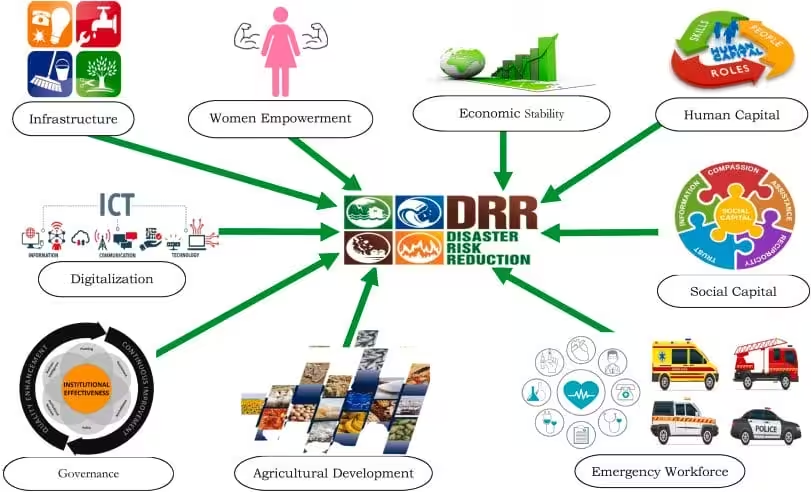
SDG 11 focuses explicitly on making cities and human settlements inclusive, safe, resilient, and sustainable. This goal underscores the importance of developing urban areas that can effectively anticipate and manage challenges posed by natural disasters, such as floods, earthquakes, and hurricanes.
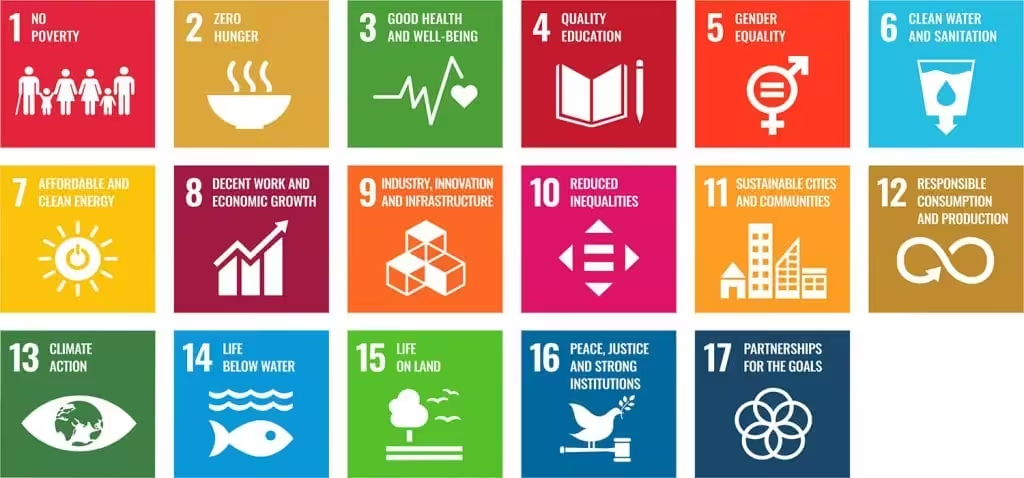
India Approach for Disaster Risk Reduction:
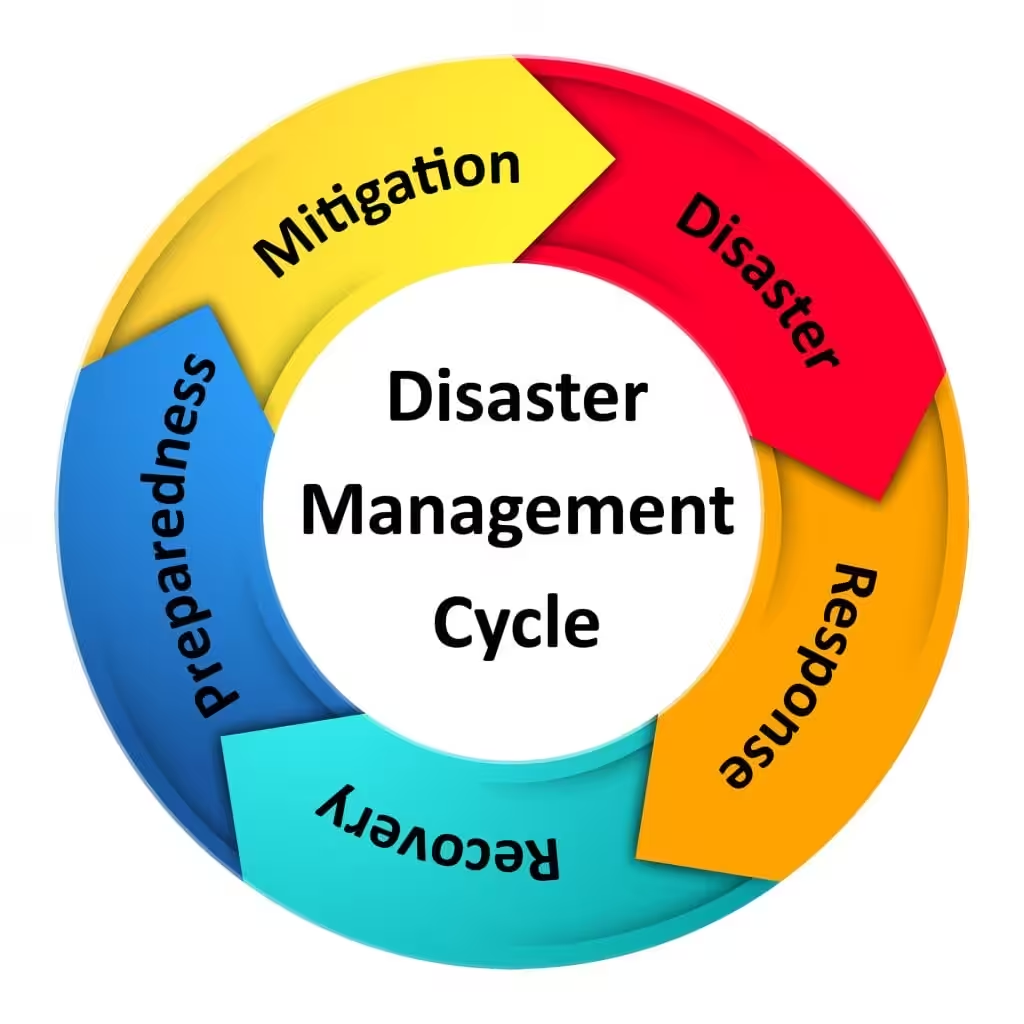
- India’s approach now covers pre-disaster, during disaster, and post-disaster phases.
- Guided by the Prime Minister’s 10-Point Agenda on DRR (2016) and implemented by the Home Ministry (MHA) and NDMA.
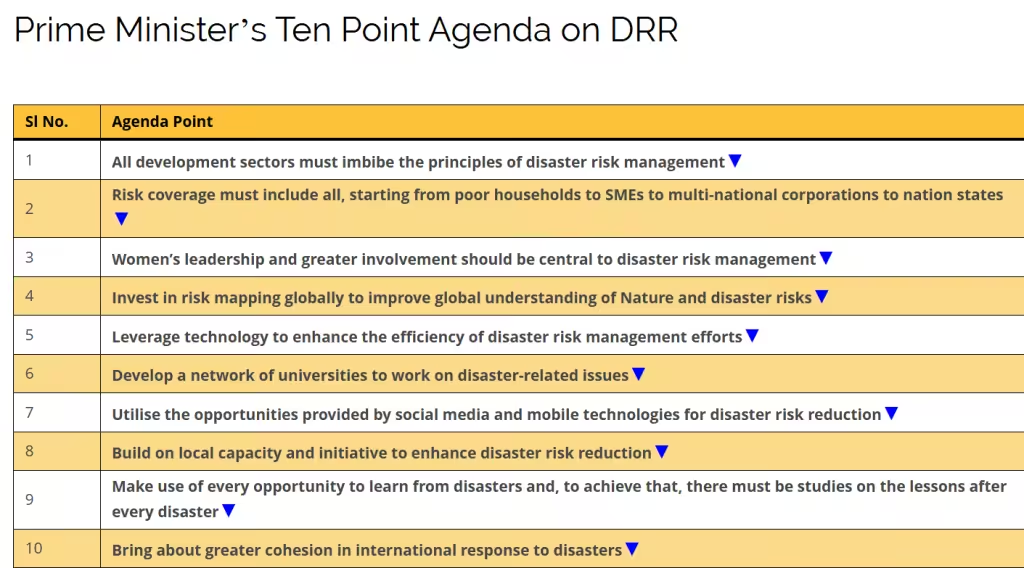
Source: NDMA
15th Finance Commission & Budget Allocation:
- In 2021, the 15th Finance Commission allocated ₹22,184 crore ($3 billion) for DRR over 5 years.
- Emphasis shifted from post-disaster relief to prevention, mitigation, preparedness, capacity building, and reconstruction.
Funds distribution:
- 30% for first segment (preparedness 10%, capacity building 10%, mitigation 10%)
- 70% for post-disaster (response 40%, reconstruction 30%)
- Capacity Building and Institutional Strengthening:
- Establishment of geo-spatial training labs, faculty-led modules, and action-based learning at NIDM (National Institute of Disaster Management).
- A standard course covering 36 streams of disaster management launched.
- Creation of specialised volunteer groups like Apda Mitra and Yuva Apda Mitra.
- Leveraging Science and Technology:
- Use of remote sensing, scientific rainfall assessment, and bio-engineering for landslide prevention.
- Community-Level Disaster Preparedness
- Over ₹10,000 crore ($1.2 billion) approved for state-level DRR plans.
- International Collaboration
- India is contributing to the Coalition for Disaster Resilient Infrastructure (CDRI) to share best practices globally.