Ganga Innovation Meet 2026: Technology, Biodiversity and River Rejuvenation
Ganga Innovation Meet 2026 brought together technology, research and river-rejuvenation ideas under the Namami Gange umbrella. The event signalled that river governance is increasingly looking to sensors, biodiversity science, citizen participation and applied innovation.
For UPSC, this topic helps students move beyond a static Namami Gange note. It asks what kind of innovation actually matters for a living river system.
This article explains the innovation agenda in river governance and connects it with biodiversity, pollution control and institutional coordination.
Quick Facts
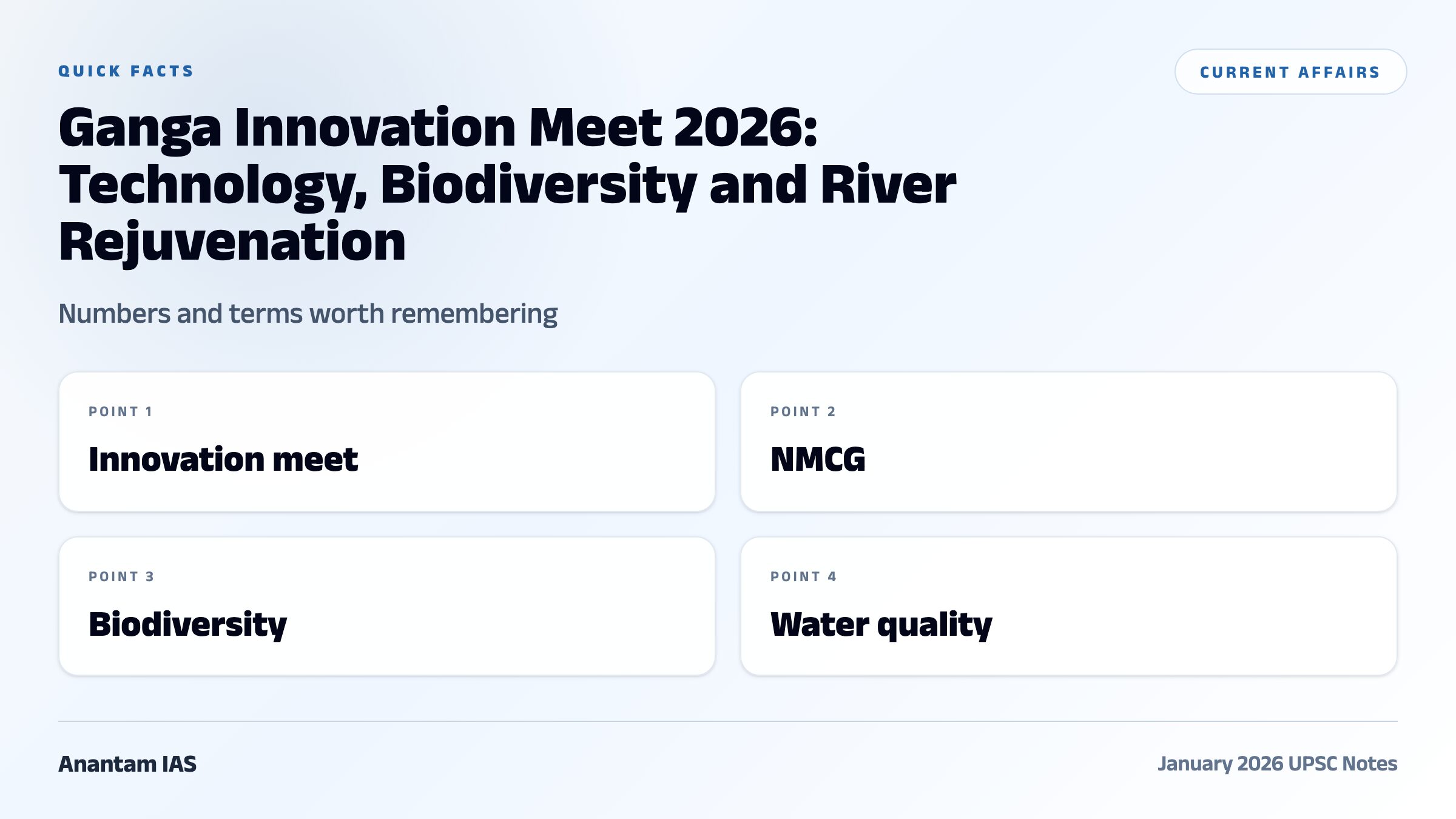
- Ganga Innovation Meet was organised in January 2026.
- It was linked to Namami Gange and NMCG’s river-rejuvenation agenda.
- Themes included technology, biodiversity, pollution monitoring and stakeholder participation.
- River governance requires basin-level thinking, not city-wise projects alone.
- The topic is relevant for GS-III environment and science and technology.
- Official source: PIB Jal Shakti release dated 13 January 2026.
- Official source: PIB, Ministry of Jal Shakti.
What Just Happened
The Meet created a platform for innovation in river rejuvenation, including technological and ecological approaches.
The policy signal was that river cleaning cannot remain a civil-engineering exercise. It needs data, ecological restoration and community engagement.
For aspirants, the event is useful for writing answers on how environmental governance can use technology without losing sight of ecology.
Background and Historical Context
Ganga rejuvenation efforts have evolved from project-based sewage treatment to a broader basin approach involving pollution control, biodiversity, wetlands, afforestation and public participation.
NMCG has increasingly used research institutions, data systems and stakeholder platforms to strengthen implementation.
Innovation in river governance can include real-time water-quality monitoring, low-cost sensors, bio-remediation, biodiversity mapping and riverfront behaviour change.
Key Features of River Innovation
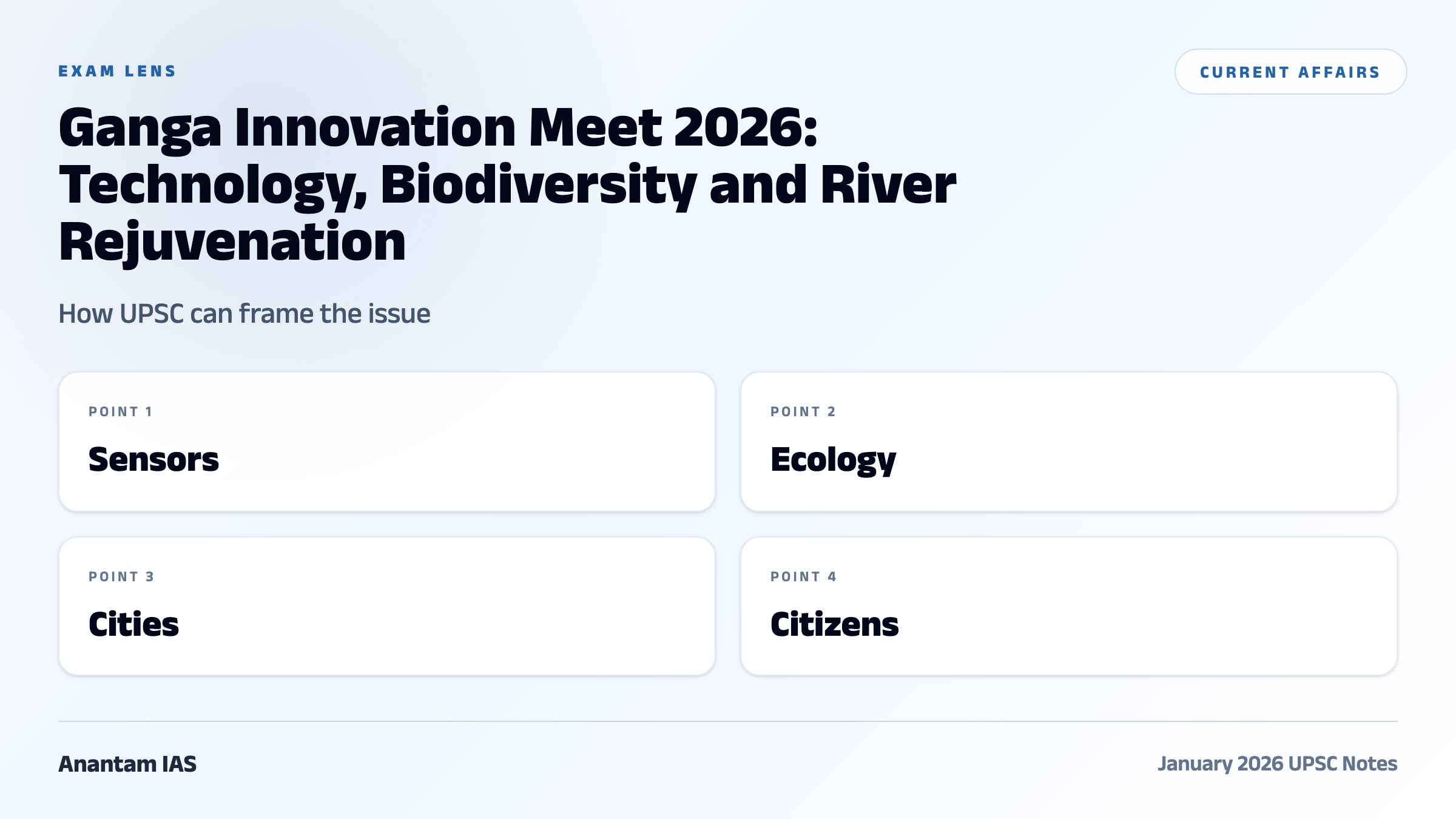
The core policy architecture can be read through these features.
- Technology focus: digital and scientific tools can improve monitoring.
- Biodiversity link: river health includes species, habitats and ecological flows.
- Stakeholder platform: innovators, researchers and administrators can interact.
- Basin thinking: tributaries and catchments must be part of solutions.
- Citizen role: behavioural change and local monitoring can support formal systems.
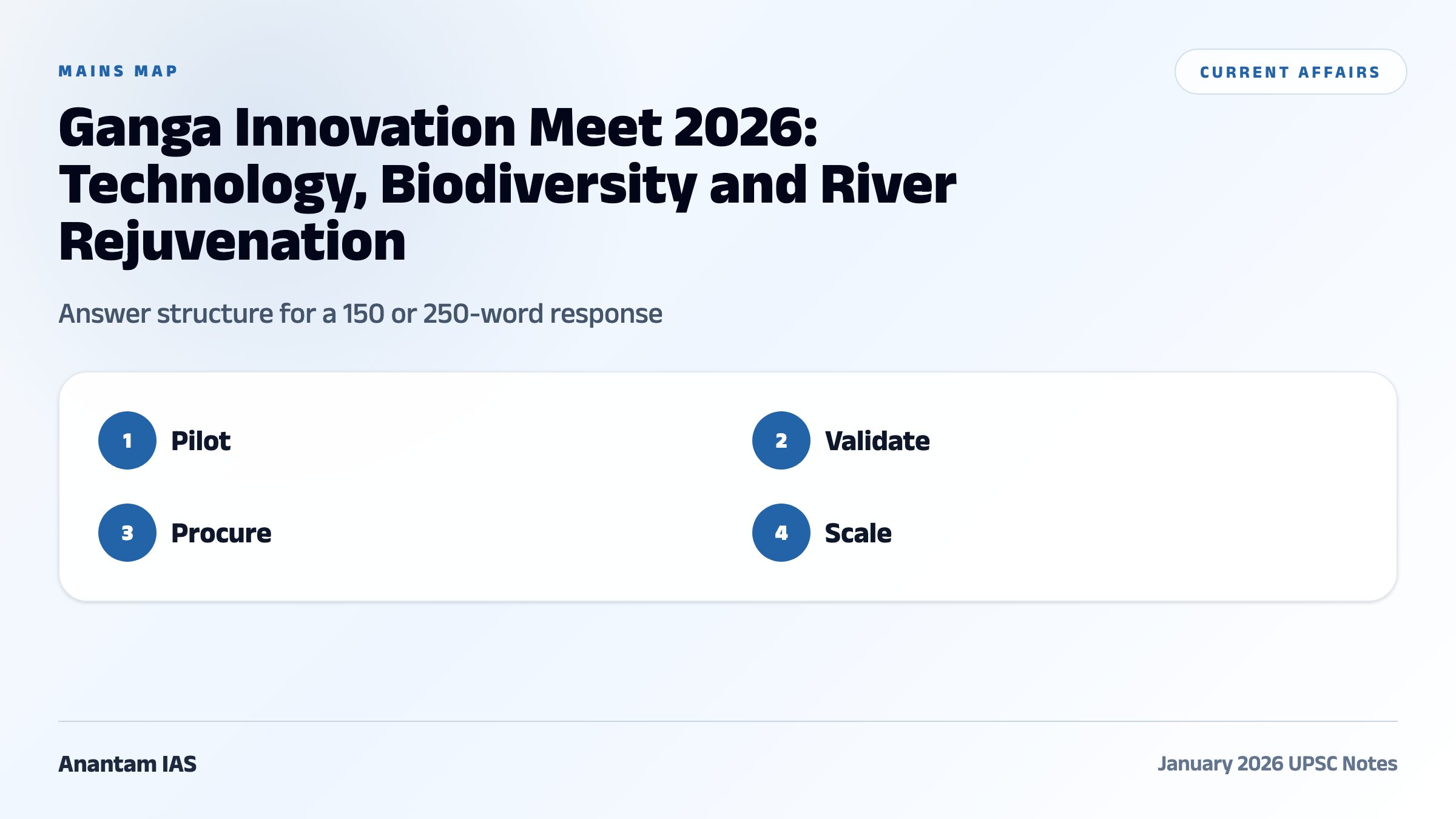
- Implementation test: pilots must move into procurement and field use.
Why It Matters
This is a high-yield UPSC topic because it joins current news with durable syllabus themes.
- It connects a January 2026 event with durable UPSC syllabus themes.
- It gives usable facts for Prelims and analytical hooks for Mains.
- It helps students move from news recall to policy reasoning.
- It can be linked with static concepts in polity, economy, governance, science, environment or society.
Detailed Analysis: River Innovation Lens
Innovation cannot be gadget-driven. A sensor is useful only when institutions respond to the data.
Ecological restoration is different from beautification. A clean-looking riverfront is not the same as a healthy river.
Public participation matters because rivers are social spaces. Ritual use, waste disposal, tourism and urban growth all shape river outcomes.
Comparative Perspective
A comparison helps prevent the answer from becoming a one-dimensional news summary.
- STP dashboards: track sewage-treatment performance.
- Biodiversity programs: focus on species and habitats.
- Wetland restoration: improves natural filtration and flood buffering.
- Innovation meets: create a bridge between ideas and mission implementation.
Challenges
The policy or institutional promise runs into recurring constraints.
- Pilot projects often fail to scale.
- Ecological indicators are harder to communicate than infrastructure milestones.
- Cities may lack capacity to adopt new tools.
- Data from sensors needs validation and maintenance.
- River rejuvenation requires coordination across multiple states.
Prelims Pointers
- NMCG is linked to Namami Gange implementation.
- BOD, dissolved oxygen and faecal coliform are important water-quality indicators.
- Environmental flows sustain river ecosystems.
- Wetlands can support natural water purification.
- Ganga river dolphin is an important indicator species.
- River basins cross administrative boundaries.
Mains Questions
- River rejuvenation requires ecological restoration, not only pollution-control infrastructure. Discuss. (GS Paper III, 250 words)
- How can technology improve river governance without becoming a substitute for enforcement? (GS Paper III, 150 words)
- Explain the importance of basin-level planning in river conservation. (GS Paper III, 250 words)
- Citizen participation is critical to environmental governance. Analyse with reference to river rejuvenation. (GS Paper III, 250 words)
Way Forward
Innovation platforms should connect pilots with procurement pathways, city-level capacity and public data disclosure.
River-health dashboards should include ecological indicators, not only sewage-infrastructure milestones.
For UPSC, frame Ganga Innovation Meet as a shift from project execution to adaptive river governance.
The examiner is unlikely to reward a bare fact dump here. The better answer connects the January 2026 event to institutional design, implementation capacity and India’s long-term development priorities.
Frequently Asked Questions
What is Ganga Innovation Meet?
It is a platform focused on innovative approaches for Ganga river rejuvenation.
How is it linked to Namami Gange?
It supports the mission’s broader goals of pollution control, biodiversity and river restoration.
Why is technology important?
It can improve monitoring, data quality and targeted action.
What is ecological flow?
It is the water flow needed to sustain river ecosystems.
Why is this UPSC-relevant?
It combines environment, science, governance and federal coordination.
What is the main caution?
Innovation must scale into accountable implementation, not remain a conference theme.