Ganga River Pollution Issue


Why in news:
Report on Ganga Pollution: The Central Pollution Control Board (CPCB) has submitted a report to the National Green Tribunal (NGT) highlighting that over 50% of the Grossly Polluting Industries (GPIs) in Uttar Pradesh are violating government-stipulated pollution norms.
UPSC Relevance:
Conservation, environmental pollution and degradation.
UPSC PYQ:
Q. Discuss the Namami Gange and National Mission for Clean Ganga (NMCG) programmes and causes of mixed results from the previous schemes. What quantum leaps can help preserve the river Ganga better than incremental inputs? (2015).
About Ganga River:
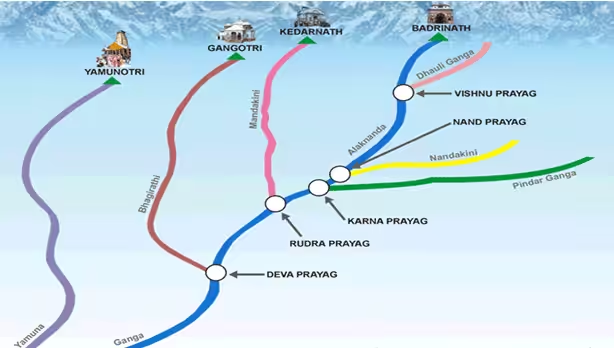
Five Confluences (Prayags) and Tributaries
- Vishnu Prayag
- Confluence: Alaknanda + Dhauliganga
- Nand Prayag
- Confluence: Alaknanda + Nandakini
- Karna Prayag
- Confluence: Alaknanda + Pindar Ganga
- Rudra Prayag
- Confluence: Alaknanda + Mandakini
- Dev Prayag
- Confluence: Alaknanda + Bhagirathi
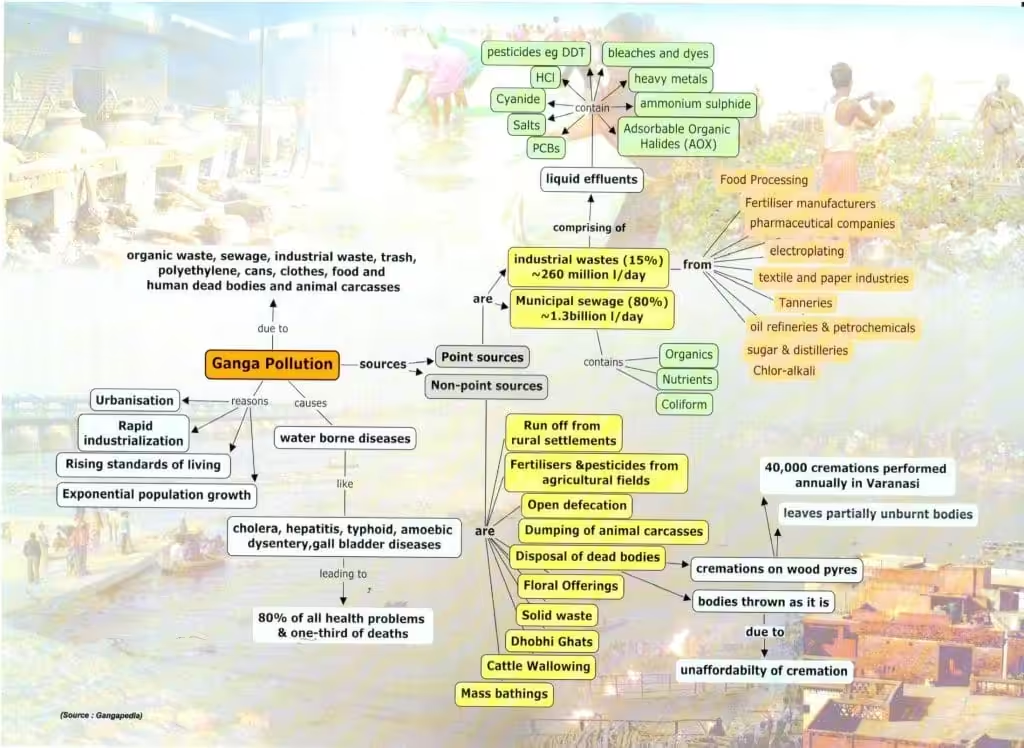
Ganga River Pollution:
Rapidly increasing population, rising standards of living and exponential growth of industrialisation and urbanisation have exposed water resources, in general, and rivers, in particular, to various forms of degradation. Major point sources of pollution in river Ganga are discharge of untreated/partially treated sewage from- -urban- centres- discharge from open drains carries sewage, -industrial wastewater, returned storm water discharge from major tributaries discharge of untreated/partially treated/treated wastewater from industrial units .
- In the Ganga basin approximately 12,000 million litres per day (mld) sewage is generated, for which presently there is a treatment capacity of only around 4,000 mld.
- The industrial pockets in the catchments of Ramganga and Kali rivers and in Kanpur city are significant sources of industrial pollution. The major contributors are tanneries in Kanpur, distilleries, paper mills and sugar mills in the Kosi, Ramganga and Kali river catchments.
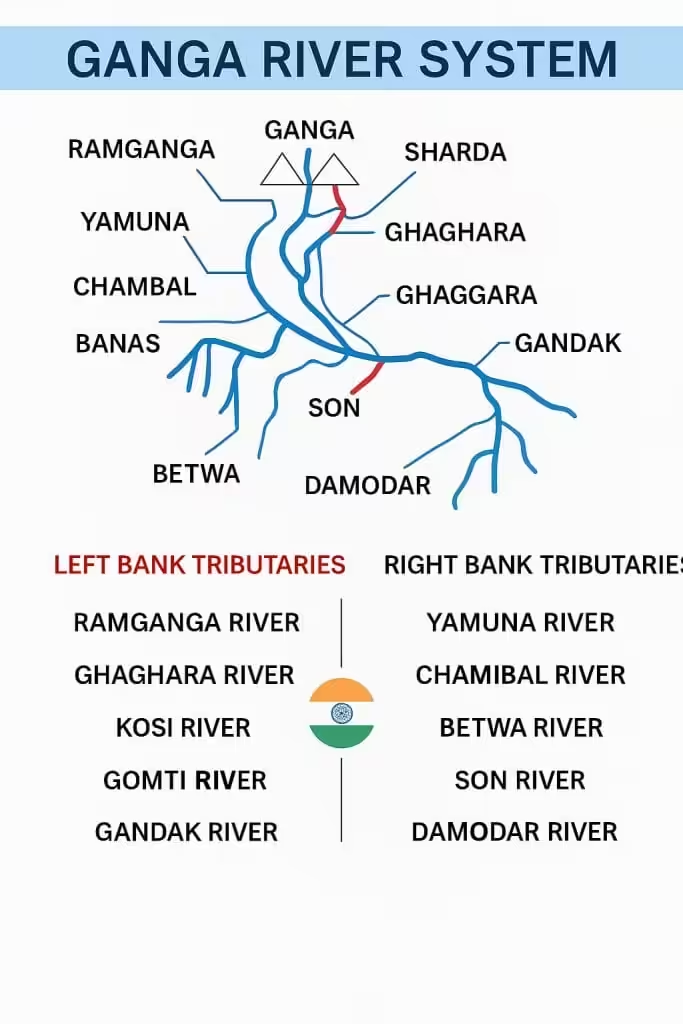
Water Quality with time:
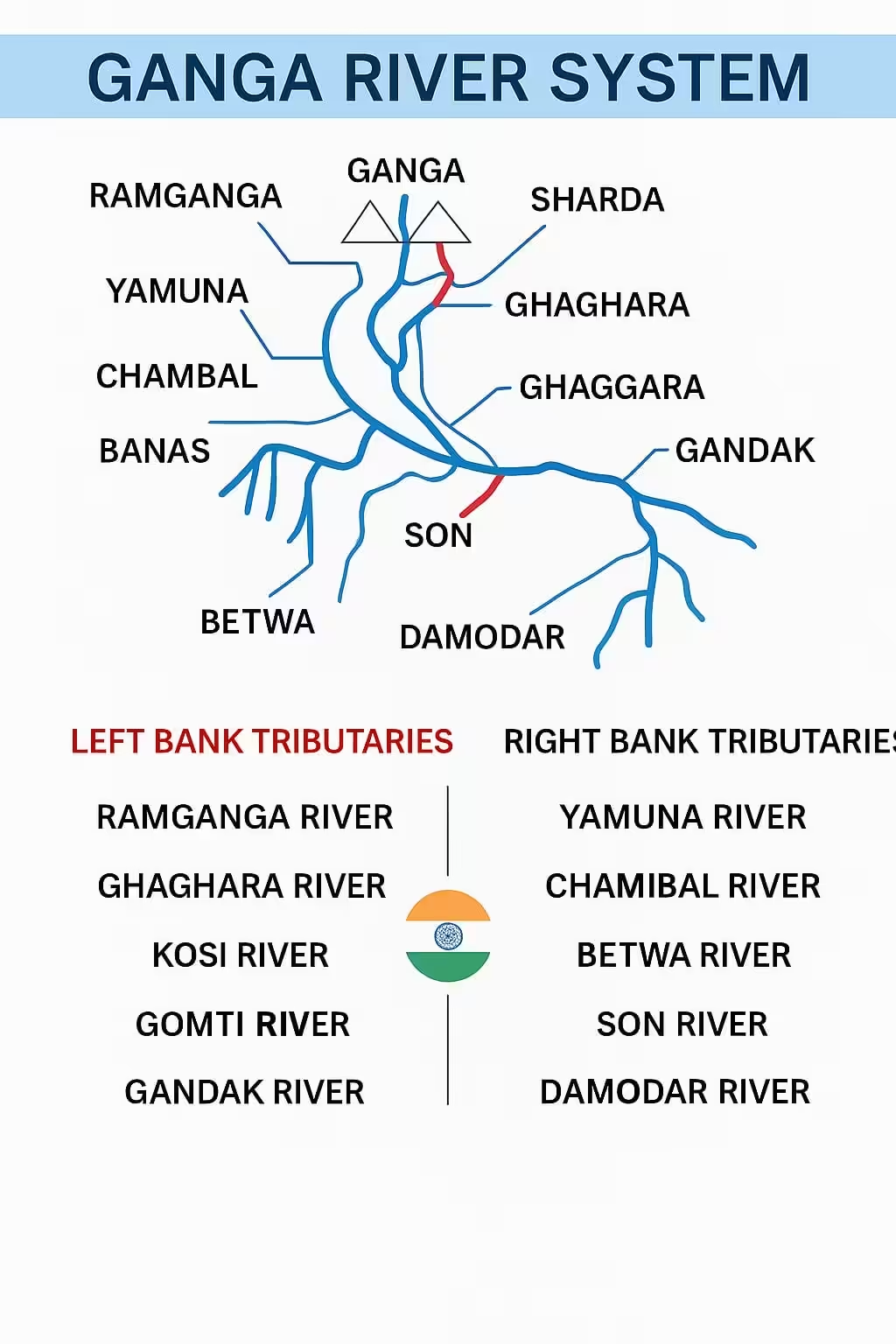
Major Sources:
- Industrial effluents
- Untreated sewage
- Agricultural runoff
Govt. Initiatives:
- The first major initiative, the Ganga Action Plan (GAP), launched in 1985, focused primarily on building sewage treatment plants (STPs) in major cities.
- The National Ganga River Basin Authority (NGRBA), established in 2009, adopted a more comprehensive approach, incorporating basin-level planning and stakeholder involvement.
Namami Gange program:
In 2014, the government launched its flagship program, Namami Gange. This integrated conservation mission expanded beyond sewage treatment to include industrial pollution abatement, riverfront development, biodiversity conservation, and public awareness components.
- Sewage infrastructure expansion: Construction and rehabilitation of STPs to increase treatment capacity to 3,293 million liters per day (MLD), covering major urban centers.
- Industrial pollution control: Implementing zero liquid discharge requirements for industries and relocating tanneries from sensitive zones.
- River surface cleaning: Deploying trash skimmers and developing systems to intercept floating waste, particularly after religious events.
- Biodiversity conservation: Establishing conservation areas for endangered species and restoring riparian vegetation to enhance ecosystem services.
- Public awareness and engagement: Mobilizing communities, religious leaders, and educational institutions to foster a sense of ownership and responsibility.
In a judgment that referred to Ganga river as “Ganga Maa” and deliberated on the nature of God, the Uttarakhand High Court has declared Ganga and Yamuna and their tributaries “juristic/legal persons/living entities having the status of a legal person”.