Gyroplane Training Rules: Separating Rotor Lift From Propeller Thrust
Why in News?
On September 29, 2026, the Ministry of Civil Aviation announced that DGCA had prescribed ground and flying training for candidates seeking a gyroplane pilot licence.
- The new Civil Aviation Requirement covers the syllabus for the gyroplane category.
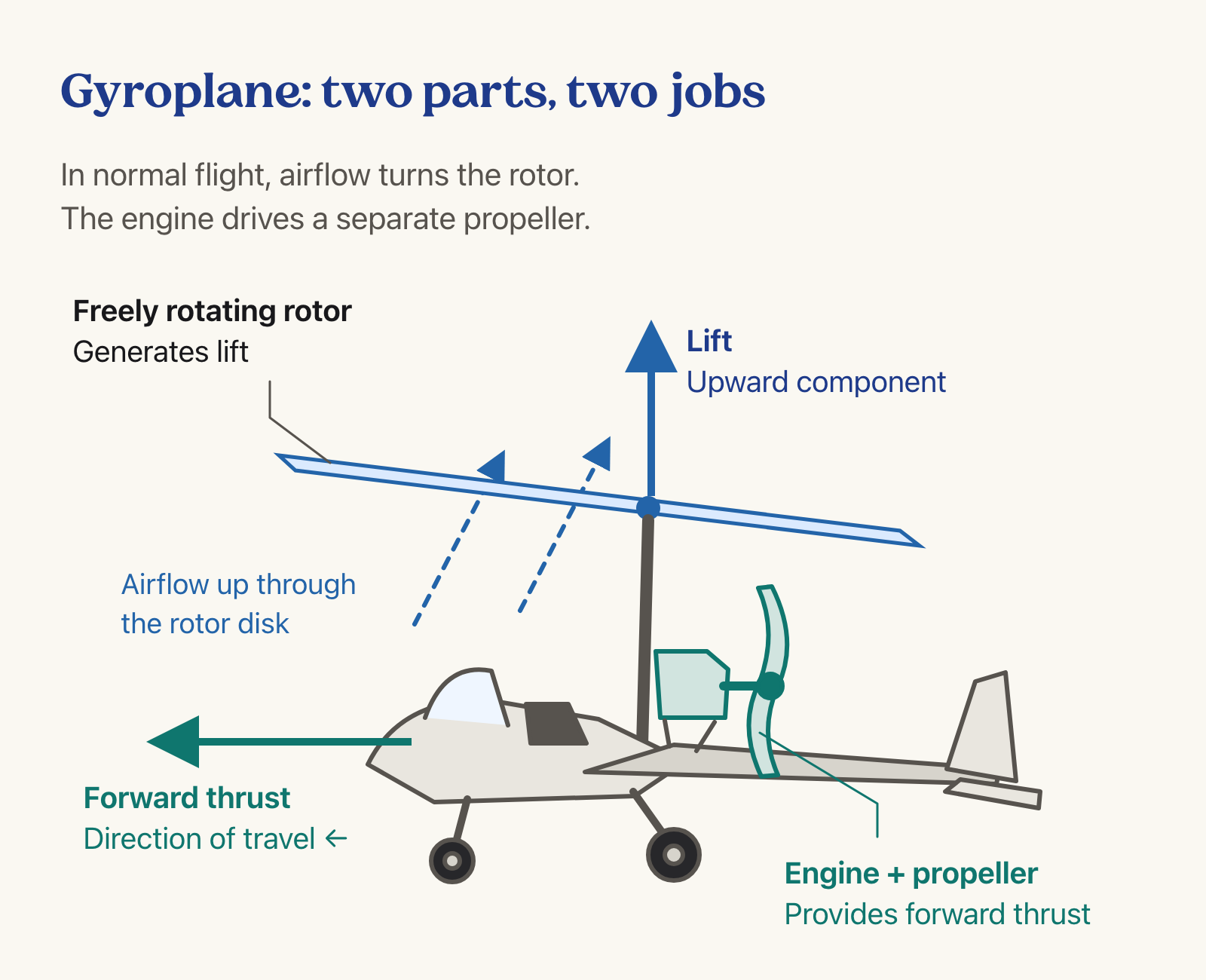
- A freely rotating rotor produces lift; a separate propeller provides forward thrust.
- The ministry calls this an initial step towards introducing and operationalising gyroplanes in India.
- Further development includes training organisations and manufacturing or assembly capabilities.
- The policy question is how to connect aircraft-specific skills with safe entry into a new aviation segment.
- A machine’s potential usefulness does not establish permission or readiness to offer every proposed service.
UPSC Relevance
Prelims Relevance
- Gyroplane: rotorcraft using autorotation for rotor lift.
- Propeller thrust is distinct from rotor lift.
- DGCA and Civil Aviation Requirements.
- Difference between a training syllabus, a pilot licence and operational readiness.
Mains Relevance
GS Paper 3
- Science underlying new aviation applications and aircraft-specific safety.
GS Paper 2
- Sequencing regulation, training capacity and supervision when introducing new technology.
Background and Context
How a gyroplane stays airborne
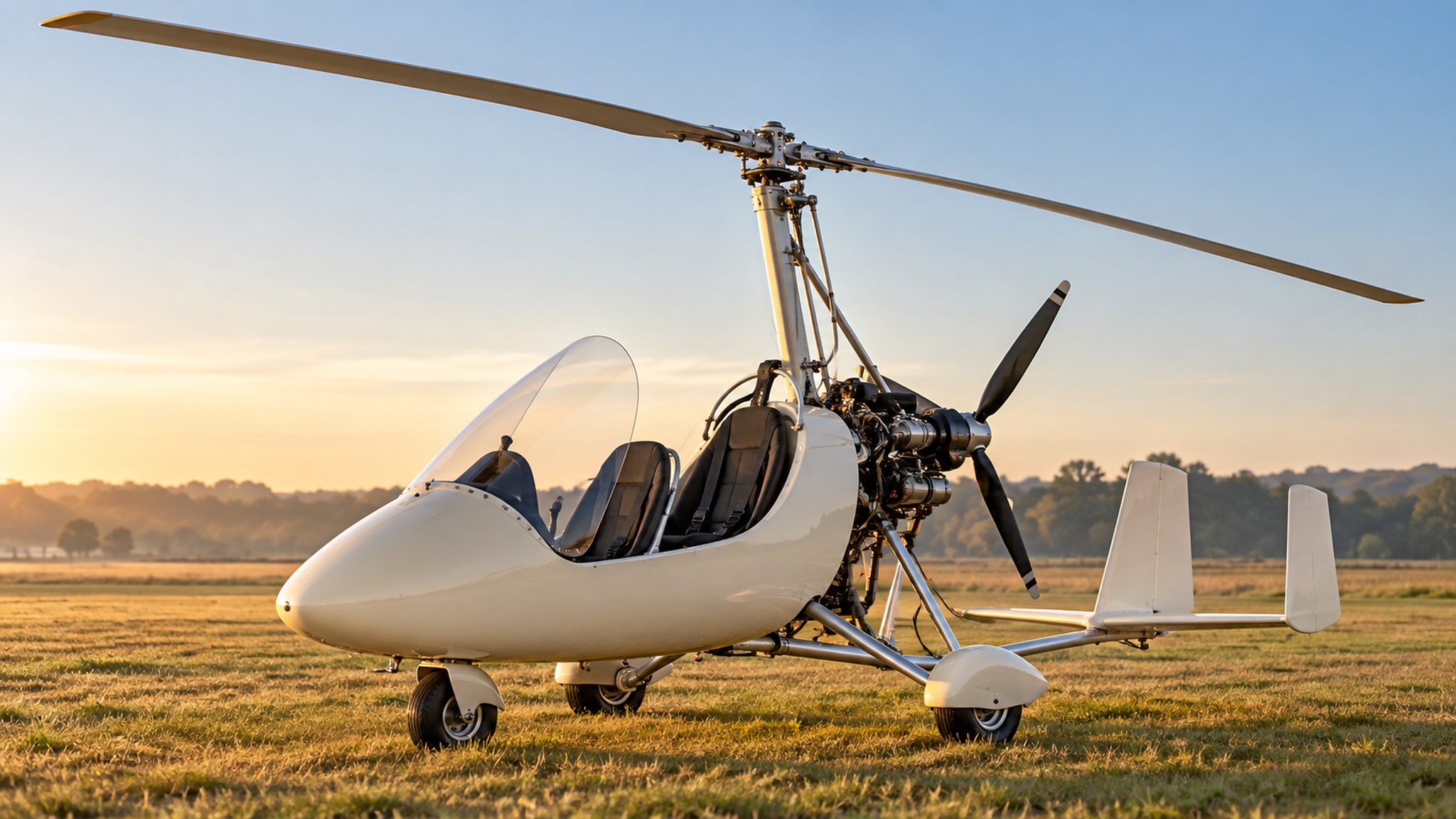
The aircraft separates two jobs: supporting its weight and moving forward.
- The main rotor blades are rotating airfoils. Their movement through air creates aerodynamic forces, including the upward component that supports the aircraft against its weight during flight.
- In normal flight, the rotor turns through autorotation: air flowing through the rotor sustains its rotation. The engine does not continuously drive this rotor as in powered helicopter flight.
- A separate, engine-driven propeller supplies forward thrust. Treat the rotor and propeller as different systems even when both are visible as spinning blades on the same aircraft.
- The important relationship is airflow to rotor rotation to lift, alongside engine power to propeller thrust. Calling the main rotor an engine-powered lifting fan would misdescribe the mechanism.
- The FAA handbook explains that a gyroplane’s rotor normally operates in autorotation. This is an operating principle, not a claim that every flight condition or handling error is safe.
What the training announcement establishes
A prescribed learning framework is a defined regulatory step, with a limited scope.
- The announced CAR is titled Ground and Flying Training Syllabus for Issue of Pilot Licence for Gyroplanes. Its stated purpose is training candidates seeking the relevant DGCA licence.
- Ground training and flying training appear together in the announced syllabus. This distinction matters: understanding an aircraft on paper and demonstrating competence while operating it are different learning tasks.
- The announcement establishes a syllabus; it does not report that all prospective pilots have completed training or received licences. A new framework should not be mistaken for completed qualification.
- The ministry describes this as an initial step. That wording limits the inference: it announces progress towards operationalisation, rather than certifying that the entire supporting aviation system is ready.
- The short release does not reproduce detailed training hours, medical criteria or examination requirements. Avoid importing figures from another aircraft category or a foreign licensing system into the Indian syllabus.
Why aircraft-specific safety matters
The policy lesson is to match training to the actual machine and its operating environment.
- Rotorcraft is a broad category, not a promise of identical controls or performance. A gyroplane and a helicopter should not be treated as interchangeable merely because each has a rotor.
- The contrast concerns normal powered flight: helicopter rotors receive engine power, while the gyroplane rotor autorotates. Helicopters can also use autorotation, so the term is not exclusive to gyroplanes.
- An engine problem does not become harmless because a rotor can autorotate. Flight conditions and pilot handling still matter; the news release provides no guarantee of automatic safety after power loss.
- A useful training-policy question is whether instruction connects mechanism with judgment: what produces lift, what supplies thrust, and how operating limits constrain a particular aircraft and planned flight.
- For policy answers, distinguish a technology description from a safety finding. Knowing how an aircraft flies does not establish its accident record, suitability for every location or readiness for passenger service.
From a syllabus to usable aviation services
Pilots, organisations and aircraft capability must come together before proposed applications become dependable services.
- The ministry identifies joyrides, air experience flights and aerial work as potential uses. Examples include agricultural spraying, banner towing, surveillance and surveys; these describe applications, not blanket operational permission.
- It also identifies training organisations as a further development need. Publishing a syllabus is not evidence that enough instructors, suitable aircraft and institutions are already available to train candidates.
- Manufacturing and assembly capabilities form another part of the stated development pathway. The announcement does not quantify domestic production, name a completed fleet or prove that servicing capacity is sufficient.
- A survey mission and an agricultural application involve different operating tasks. As a policy recommendation, assess the intended task and local risks rather than assuming one aircraft description establishes universal suitability.
- The durable governance distinction is between pilot competence and service readiness. A licensing pathway addresses the human operator; safe deployment also requires attention to the aircraft, supporting organisations and intended operation.
Way Forward
Build readiness around the actual operation
- Develop training capacity alongside the syllabus, with aircraft-specific instruction and clear assessment of practical competence.
- Communicate the difference between potential uses and permitted operations so promotional claims do not outrun the regulatory position.
- Assess maintenance support and task-specific risks before scaling services; treat these as implementation priorities, not achievements established by the announcement.
Conclusion
- The gyroplane news connects a clear scientific distinction, rotor lift versus propeller thrust, with an equally important regulatory distinction: prescribing training is one stage in developing a safe aviation segment.
- Use the development to argue for sequenced regulation: establish learning requirements, develop competent operators and supporting capacity, and assess the intended service before claiming operational readiness.
UPSC Practice Questions
Prelims MCQ 1
With reference to gyroplanes, consider the following statements:
- In normal flight, the main rotor operates in autorotation.
- Forward thrust is supplied by a propeller.
- The main rotor must be continuously driven by the engine in normal flight.
How many of the above statements are correct?
(a) Only one (b) Only two (c) All three (d) None
Answer: (b) Only two
Explanation:
Statements 1 and 2 are correct. The freely rotating rotor generates lift, while the engine-driven propeller supplies thrust; statement 3 describes the mechanism incorrectly.
Prelims MCQ 2
What does the September 2026 DGCA announcement specifically establish?
(a) Blanket approval for all gyroplane aerial work (b) A completed nationwide network of training organisations (c) A ground and flying training syllabus for the gyroplane pilot licence (d) Automatic recognition of every foreign gyroplane licence
Answer: (c) A ground and flying training syllabus for the gyroplane pilot licence
Explanation:
The ministry describes the CAR prescribing the syllabus as an initial step. It identifies training organisations and manufacturing or assembly capabilities as further development needs.
UPSC Mains Questions
- Explain the distinction between rotor lift and propeller thrust in a gyroplane. Why should training reflect the specific aircraft mechanism?
- A training framework is necessary but insufficient for operationalising a new aviation segment. Discuss with reference to gyroplanes.
Sources: PIB, Ministry of Civil Aviation and Federal Aviation Administration, Rotorcraft Flying Handbook.
Frequently Asked Questions
What is a gyroplane?
A gyroplane is a rotorcraft whose freely rotating main rotor produces lift while a separate propeller provides forward thrust. This separates its normal flight mechanism from that of a powered helicopter rotor.
What did DGCA announce?
The Ministry of Civil Aviation announced a Civil Aviation Requirement prescribing ground and flying training for candidates seeking a gyroplane pilot licence. It described this as an initial step towards operationalisation in India.
Does autorotation make engine failure automatically safe?
No. Autorotation describes how airflow sustains rotor rotation; it is not an automatic safety guarantee. Flight conditions, aircraft limitations and pilot handling remain relevant when engine power is lost.
Are all proposed gyroplane activities now approved?
The announcement does not establish blanket approval for every application. It lists potential activities and prescribes a training syllabus, while identifying further needs such as training organisations and manufacturing or assembly capabilities.