High-Altitude Platform: Testing a Stratospheric Airship
Why in News?
On 6 October 2026, DRDO reported a successful experimental flight of its lighter-than-air High-Altitude Platform, including a commanded descent and recovery after a stratospheric flight.
- The platform reached 21 km above mean sea level and remained at 20 km for more than 30 minutes.
- The ground station received real-time video and vehicle parameters throughout the flight.
- The onboard equipment included navigation instruments, cameras and altitude control; flight performance data was analysed after recovery.
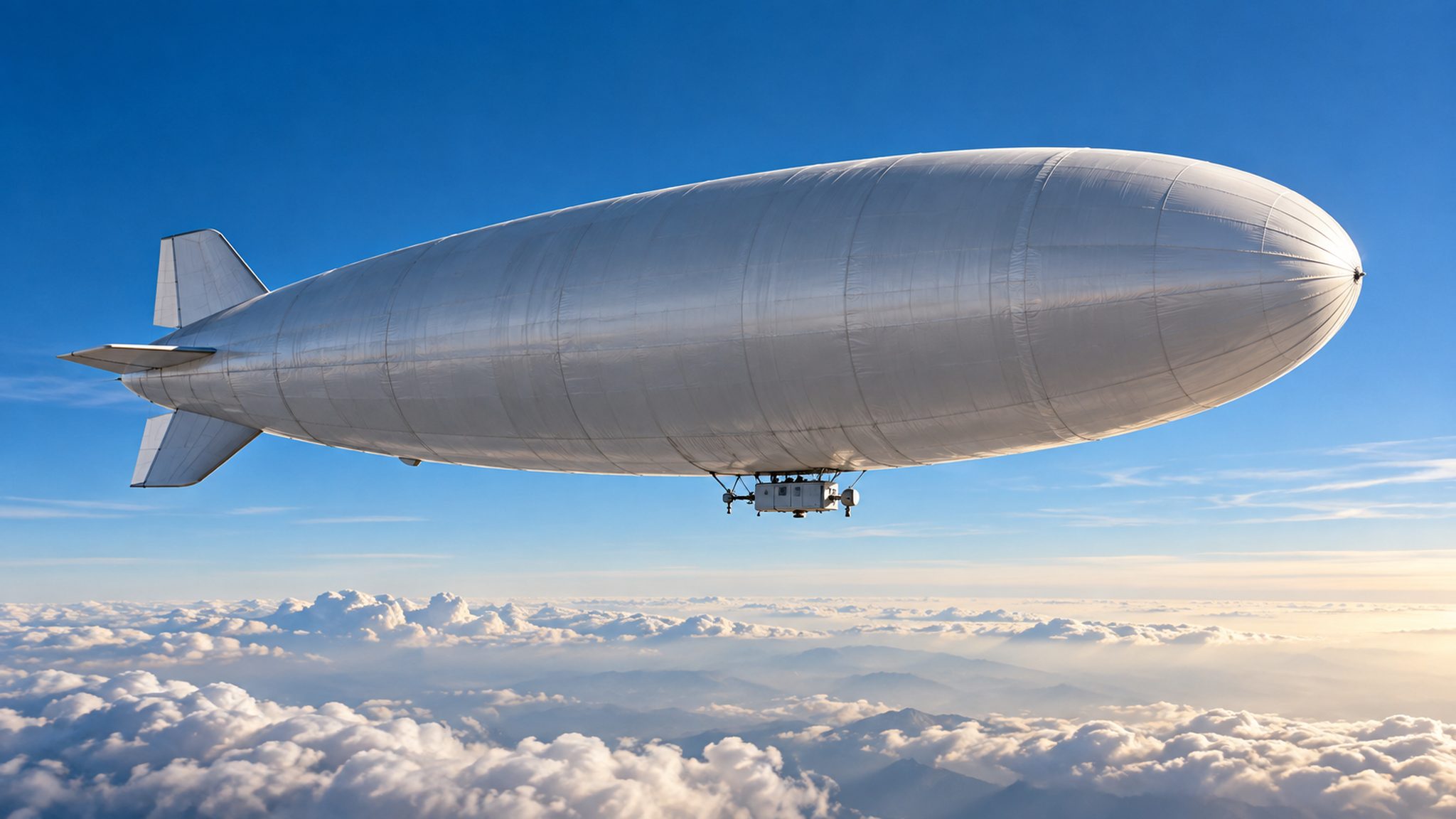
- The platform is being developed by ADRDE, Agra, as a long-endurance stratospheric aerial surveillance system.
- The trial demonstrates a step in experimental flight performance, while sustained operational use remains a separate engineering challenge.
- The term high-altitude platform must be read with the design description: this announcement concerns a lighter-than-air system, not a solar fixed-wing aircraft.
UPSC Relevance
Prelims Relevance
- ADRDE is the DRDO establishment developing this platform.
- The reported system is lighter than air.
- AMSL means above mean sea level.
- Buoyant lift depends on displaced air and the total system weight.
- An atmospheric airship is not an orbiting satellite.
Mains Relevance
GS Paper 3
- Indigenous aerospace technology and the path from trials to operational capability.
- Surveillance platforms, airspace coordination and technological limits.
Essay
- A scientific milestone gains meaning when its demonstrated results are separated from future ambitions.
Background and Context
How a Lighter-Than-Air Platform Stays Aloft
This platform uses an atmospheric flight principle; reaching a high altitude does not turn an airship into a satellite.
- Buoyancy comes from displaced air. As NASA explains, upward lift must be considered against the weight of the entire system, including its envelope, lifting gas, instruments and other carried equipment.
- Thin air makes the lifting problem important at high altitude. For a given displaced volume, lower surrounding air density means less displaced air mass; designers must balance envelope size against the mass being supported.
- The payload is not weightless just because the platform is high above the ground. Adding cameras or control equipment changes the mass that must be supported, creating trade-offs between carried capability and flight design.
- The release identifies a lighter-than-air system but does not specify its lifting gas. Naming a particular gas, envelope material or solar-power arrangement as a confirmed feature would go beyond the published evidence.
- A satellite follows an orbit under gravity with sufficient forward motion, as explained by NASA. This atmospheric platform relies on lift instead; an altitude milestone does not demonstrate orbital flight capability.
What Navigation, Control and Ground Data Contribute
The trial tested a flying system with instruments and ground communication, rather than reporting only that an envelope reached a particular height.
- The platform carried an inertial measurement unit and a GPS receiver among its instrumentation. These are parts of the navigation and measurement package, distinct from the cameras carried to acquire visual information during flight.
- An altitude control mechanism was among the reported subsystems. The platform was commanded to descend and recovered; this should not be expanded into an unsupported claim about autonomous station-keeping in all stratospheric wind conditions.
- The Ground Control Station received real-time video and other vehicle parameters throughout the flight. This provided information about the platform while airborne, alongside the performance analysis carried out after the system was recovered.
- Surveillance payloads and platform control serve related but different purposes. A camera collects observations, while flight instrumentation helps describe vehicle behaviour; an operational system needs the observation mission and the flight system to work together.
- The trial involved aviation and civil authorities, including the Indian Air Force and airspace agencies. Such coordination matters because experimental ascent, high-altitude flight and recovery take place within a wider managed aviation environment.
What the Trial Proves and What Remains Open
A successful experimental flight supports further development; its measured performance must remain distinct from the intended long-endurance surveillance mission.
- The headline result combines a maximum altitude, time spent at a stated altitude and successful recovery. These are specific observations from the reported trial, rather than a declaration of unrestricted readiness for operational missions.
- Maximum altitude and endurance answer different questions. Reaching a high point demonstrates ascent performance; remaining useful aloft for extended periods requires sustained support for flight, payload operation and communication under the relevant environmental conditions.
- The long-endurance objective remains the development direction identified in the release. The reported time at altitude does not establish flights lasting weeks or months, continuous border surveillance or deployment of a service-ready platform.
- Station-keeping means maintaining a useful position over an area. It is a separate performance question from altitude control; a platform staying at a given height does not, by itself, prove it stayed over one location.
- Operational evaluation should examine repeatability, payload usefulness and recovery reliability. These are reasonable future assessment questions, not additional achievements claimed by the release; the announcement leaves the full operational performance envelope unspecified.
Way Forward
Evaluate the Full Mission
- Report endurance and positional performance separately so altitude achievements are not mistaken for persistent coverage.
- Test payload and communications reliability across representative conditions, documenting both successful performance and limitations.
- Retain airspace coordination and recovery planning as the programme moves from experimental flights toward more demanding trials.
Conclusion
- The trial is a meaningful development milestone for an indigenous lighter-than-air platform. Its value lies in demonstrated flight, telemetry and recovery, while long-endurance surveillance remains the intended application.
- For an exam answer, connect buoyancy, payload and control, then distinguish atmospheric flight from orbit and experimental success from operational deployment. This preserves both the technological promise and the evidence limit.
UPSC Practice Questions
Prelims MCQ 1
With reference to the reported DRDO High-Altitude Platform trial, consider the following statements:
- The reported platform is a lighter-than-air system.
- The announcement establishes weeks of continuous operational surveillance.
- The system was recovered after a commanded descent.
How many of the above statements are correct?
(a) Only one (b) Only two (c) All three (d) None
Answer: (b) Only two
Explanation:
Statements 1 and 3 are supported by the Ministry of Defence release. It reports a limited experimental flight, not weeks of continuous operational surveillance.
Prelims MCQ 2
Which distinction between a lighter-than-air platform and an orbiting satellite is correct?
(a) Both remain aloft primarily through buoyancy. (b) Both must hover at a fixed location above Earth. (c) The platform relies on atmospheric lift, while satellite motion follows an orbit under gravity. (d) Reaching the stratosphere automatically establishes orbital flight.
Answer: (c) The platform relies on atmospheric lift, while satellite motion follows an orbit under gravity.
Explanation:
Buoyant lift requires surrounding air. Orbital motion depends on gravity and forward motion; reaching a stratospheric altitude does not mean a vehicle is in orbit.
UPSC Mains Questions
- Explain the significance of a lighter-than-air stratospheric platform for surveillance. What distinguishes an experimental flight milestone from demonstrated operational capability?
- Discuss how buoyancy, payload mass, flight control and ground communication shape high-altitude platform design. Why should altitude and endurance be assessed separately?
Sources: PIB, Ministry of Defence and NASA Scientific Balloon FAQs.
Frequently Asked Questions
What did DRDO report in this trial?
DRDO reported an experimental flight reaching 21 km above mean sea level, remaining at 20 km for more than 30 minutes, and ending with a commanded descent and successful recovery.
Is this a solar fixed-wing aircraft?
No. The release describes this specific platform as a lighter-than-air system being developed by ADRDE. It does not confirm a solar fixed-wing configuration or identify a particular lifting gas.
Does this trial prove long-endurance deployment?
No. Long-endurance stratospheric surveillance is the stated development objective. The reported altitude and time at altitude do not establish weeks of continuous flight or deployment of an operational surveillance service.
How is an airship different from a satellite?
An airship remains in the atmosphere and depends on lift. An orbiting satellite follows a path governed by gravity and forward motion; reaching a high atmospheric altitude does not establish an orbit.