Farm Machinery Testing: From Equipment Claims to Verifiable Performance
Why in News?
An agricultural machinery testing facility was inaugurated at the International Centre for Automotive Technology (ICAT), Manesar, on 25 September 2026.
- The Ministry of Heavy Industries announced the inauguration through PIB, describing the facility as an expansion from automotive into agricultural testing and certification.
- The stated aim is reliable agricultural equipment; the announcement does not publish a detailed accredited test scope, list of applicable standards or product-wise certification procedure.
- No universal certification mandate for farm machines follows from this release. The opening of a facility and a legal requirement to use it are separate matters.
- Machinery purchases involve information asymmetry: manufacturers know more about equipment performance than buyers. Independent, interpretable test results can help farmers question claims before committing scarce capital.
- A machine must also suit its working conditions. Measured performance is useful evidence, but operating cost, local repair support and the intended farm task still shape a purchase decision.
UPSC Relevance
Prelims Relevance
- ICAT: International Centre for Automotive Technology, located at Manesar.
- Commercial testing: establishes performance characteristics of machines in, or ready for, commercial production.
- Batch testing: examines machines already tested or being commercially manufactured.
- User surveys: can assess durability and after-sales service under farmers’ operating conditions.
- Testing and certification: measurement and an assessment of conformity have different purposes.
Mains Relevance
GS Paper 3
- Agricultural mechanisation, productivity and appropriate technology.
- Quality infrastructure as a means of reducing farmers’ equipment risks.
GS Paper 2
- Transparent public testing services and evidence-based consumer protection.
Essay
- Trust in technology depends on evidence that users can understand.
Background and Context
How testing makes performance claims useful
The following principles explain machinery testing generally; they are not a list of capabilities announced for ICAT’s new facility.
- A useful test question names the work being assessed and the conditions of measurement. Saying a machine is powerful is less informative than specifying the task and recorded result.
- Comparable conditions matter when interpreting results. Differences in equipment configuration, operating settings or test conditions can make apparently similar figures unsuitable for a direct comparison between two machines.
- A test report should identify the tested model, method and limitations. Buyers need to know what was measured before treating a headline performance claim as evidence for their own purchase.
- The official Budni institute’s testing framework distinguishes commercial tests, which establish performance characteristics, from confidential tests supplying manufacturers with development information. These are examples from an existing institution.
- An equipment demonstration can show a machine working; documented testing makes the conditions and findings examinable. Neither should be interpreted as proof that every user will obtain identical results.
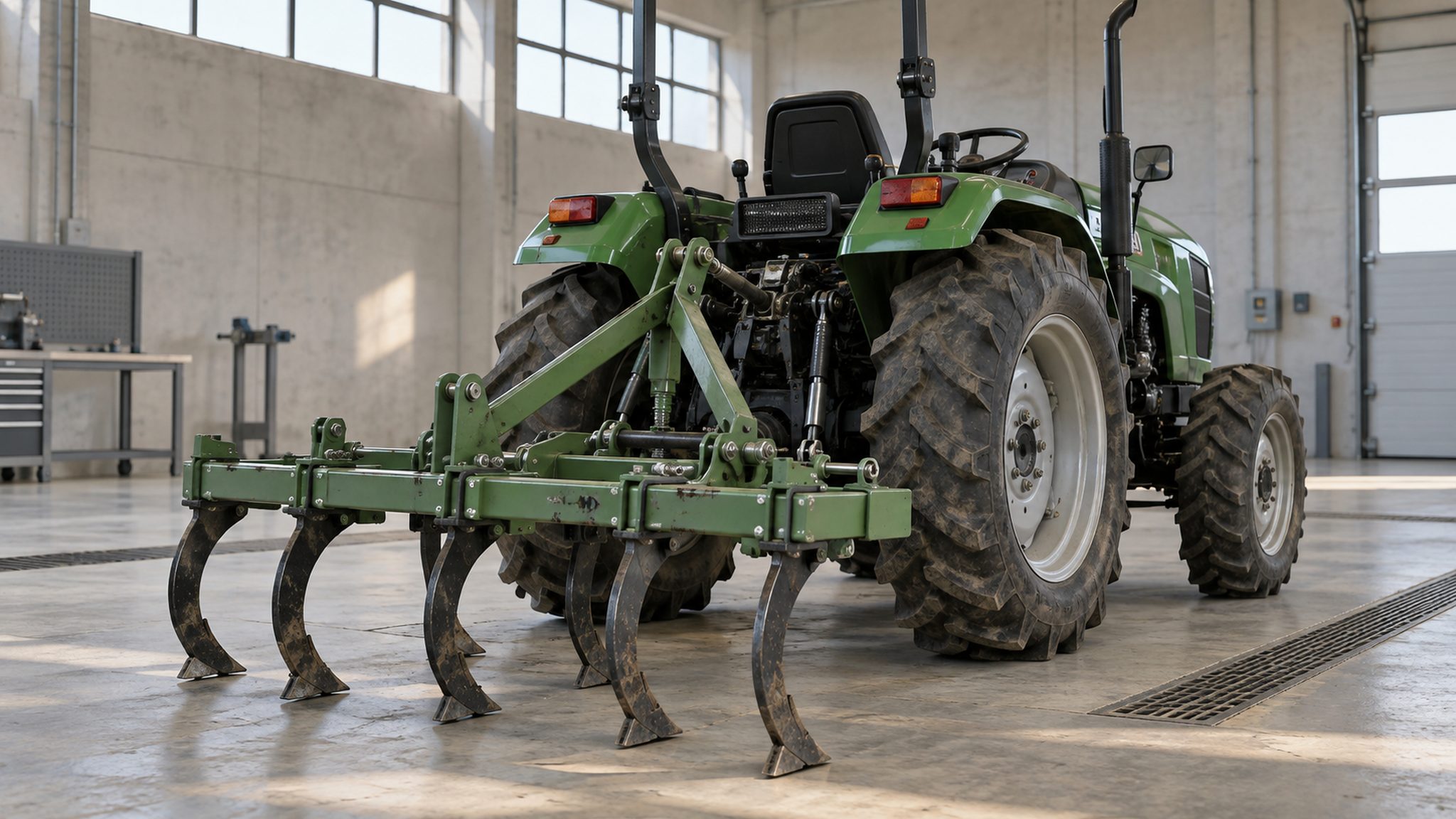
Performance, safety and certification answer different questions
A performance claim does not settle every question about a machine’s quality or permitted use.
- Performance concerns how equipment carries out its intended task. A result must be read with the operating conditions; a favourable finding on one parameter does not establish overall superiority.
- Safety assessment addresses hazards and protective requirements relevant to the equipment. It should not be inferred from a productivity result, a manufacturer’s reputation or the simple fact that testing occurred.
- Certification concerns conformity with specified requirements within an identified scope. The practical question is what the certificate covers, rather than whether an advertisement merely uses the word certified.
- Accreditation and the opening of a laboratory are also different claims. Readers should check the published scope before assuming that every agricultural machine or every test falls within it.
- For ICAT’s new facility, the release confirms inauguration and intended purpose. It does not establish the detailed standards, accreditation coverage or compulsory certification rules that an applicant would need to verify.
Why field suitability remains a separate decision
Controlled evidence supports farm decisions, while actual use reveals whether equipment fits the user’s work and support network.
- A purchase assessment should connect measured capability with the farm operation, available power and working conditions. Passing a specified test cannot itself decide whether ownership is economically sensible for a particular farmer.
- Budni’s framework includes user surveys within its batch-testing programme to examine durability and after-sales service at farmers’ fields. This illustrates why evidence from use complements initial performance measurements.
- Repair access matters because equipment that cannot be restored promptly may miss a seasonal operation. Purchase comparisons should examine service availability and consumable parts alongside the advertised machine specification.
- The Krishi Vigyan Kendra extension discussion offers a related policy link: local advice can help farmers translate technical information into choices suited to their conditions.
- The REWARD field-evidence approach illustrates a broader lesson: local validation improves implementation. It complements laboratory evidence without turning each farm observation into a formal certification result.
Way Forward
Make testing evidence usable
- Publish the facility’s service scope, applicable methods, application process and report limitations so that manufacturers and users know exactly what can be assessed.
- Provide plain-language report summaries alongside technical findings, distinguishing measured performance, assessed safety requirements and matters outside the test.
- Connect test results with local demonstrations and service information, helping farmers compare suitable purchase or hiring options rather than relying on promotional claims.
Conclusion
- Farm machinery testing can reduce information gaps when reports make conditions, results and limitations clear. The ICAT inauguration creates an institutional opportunity; outcomes will depend on the services actually delivered.
- For an answer on mechanisation, connect quality assurance with suitability and serviceability. Better machinery decisions require both credible technical evidence and a realistic assessment of the farmer’s operating needs.
UPSC Practice Questions
Prelims MCQ 1
With reference to agricultural machinery testing, consider the following statements:
- Commercial tests can establish the performance characteristics of machinery ready for commercial production.
- A favourable performance result necessarily proves conformity with every applicable safety requirement.
- User surveys can provide evidence about durability and after-sales service.
How many of the above statements are correct?
(a) Only one (b) Only two (c) All three (d) None
Answer: (b) Only two
Explanation:
Statements 1 and 3 match Budni’s published testing framework. Statement 2 is incorrect: performance findings do not automatically establish safety conformity beyond the assessed scope.
Prelims MCQ 2
Which conclusion is supported by the September 2026 announcement about ICAT?
(a) Every farm machine must now obtain certification exclusively from ICAT. (b) All agricultural testing laboratories have received identical accreditation. (c) An agricultural machinery testing facility was inaugurated at ICAT. (d) Field evaluation of agricultural machinery has been discontinued.
Answer: (c) An agricultural machinery testing facility was inaugurated at ICAT.
Explanation:
PIB confirms the inauguration. It announces neither an exclusive certification mandate nor universal accreditation, and it does not discontinue field evaluation.
UPSC Mains Questions
- How can independent machinery testing reduce information asymmetry in agricultural equipment markets? Discuss the limits of relying on test results alone.
- Distinguish machinery performance, safety conformity and field suitability. Suggest measures to make testing infrastructure more useful for farmers.
Sources: PIB, Ministry of Heavy Industries and Central Farm Machinery Training and Testing Institute, Budni.
Frequently Asked Questions
What did ICAT announce in September 2026?
PIB reported the inauguration of an indigenous agricultural machinery testing facility at ICAT, Manesar. The stated purpose is to support reliable equipment and expand the institution’s testing and certification work into agriculture.
Does every farm machine now need certification from ICAT?
The announcement does not establish such a requirement. It confirms a facility opening but does not set out an exclusive certification mandate, detailed standards list or product-wise compulsory certification procedure.
Why is performance testing different from safety assessment?
Performance testing examines how a machine carries out a task under specified conditions. Safety assessment examines relevant hazards and protective requirements. A favourable result in one area does not automatically establish conformity in the other.
Why do field observations matter after laboratory testing?
Field observations help explain durability, service support and suitability under actual operating conditions. They complement controlled results, allowing users to consider maintenance and local needs without assuming that one test predicts every farm’s experience.