High-Altitude Health: Why Mountain Populations Need Field Research
Why in News?
On 11 October 2026, the Health Ministry announced ICMR’s Centre for High Altitude Medicine and Public Health Research at Keylong, Himachal Pradesh, with its foundation ceremony scheduled for 12 October.
- ICMR-CHAMP is being established under the Department of Health Research, Ministry of Health and Family Welfare.
- The announced mandate combines high-altitude physiology with public health research involving Himalayan and tribal populations.
- Telemedicine, drone logistics and surveillance are proposed research areas; the announcement does not establish that these services are operational.
- The PIB curtain raiser reports a scheduled foundation ceremony, not completed facilities or demonstrated health improvements.
- Mountain health includes everyday care, maternal health and chronic disease, alongside altitude-related physiological stress.
- Place-based evidence can test whether interventions remain useful when terrain, weather and referral access differ from plains settings.
UPSC Relevance
Prelims Relevance
- Keylong: Lahaul and Spiti district, Himachal Pradesh.
- ICMR: Indian Council of Medical Research.
- Hypoxia: inadequate oxygen availability to tissues; reduced inspired oxygen pressure is the central altitude-related stress.
- Acclimatisation: physiological adjustment during exposure to a changed environment.
- Longitudinal research: repeated observation over time, rather than a single snapshot.
Mains Relevance
GS Paper 2
- Research priorities for equitable healthcare in remote and tribal regions.
- Connecting specialist advice with reliable primary care and referrals.
GS Paper 3
- Climate-sensitive health surveillance and disaster preparedness.
Essay
- Equal access may require different service designs for different geographies.
Background and Context
Altitude Changes Physiology; Terrain Changes Access
Mountain health links an environmental exposure with the ability to obtain care, but the two mechanisms must remain distinguishable.
- Lower atmospheric pressure reduces the partial pressure of inspired oxygen at altitude. The resulting physiological stress differs from poor access to a clinic: one concerns exposure, the other concerns healthcare delivery.
- Acclimatisation involves adjustment over time, including increased ventilation. The CDC Yellow Book explains that altitude, ascent rate and exposure duration shape hypoxic stress; mountain populations cannot be treated as one uniform group.
- Residents and new arrivals require distinct research questions. An observation among people arriving rapidly at altitude cannot automatically describe the experience of long-settled communities living and working in the same landscape.
- Geographical isolation is a separate public-health problem identified in the announcement. Researchers should examine how journeys, seasonal disruption and referral arrangements affect access, rather than assuming a nearby consultation guarantees completed care.
- Research scope extends beyond mountaineering illness to maternal and child health, nutrition, mental health and chronic disease. This matters because a specialised mountain programme must still study ordinary healthcare needs in difficult settings.
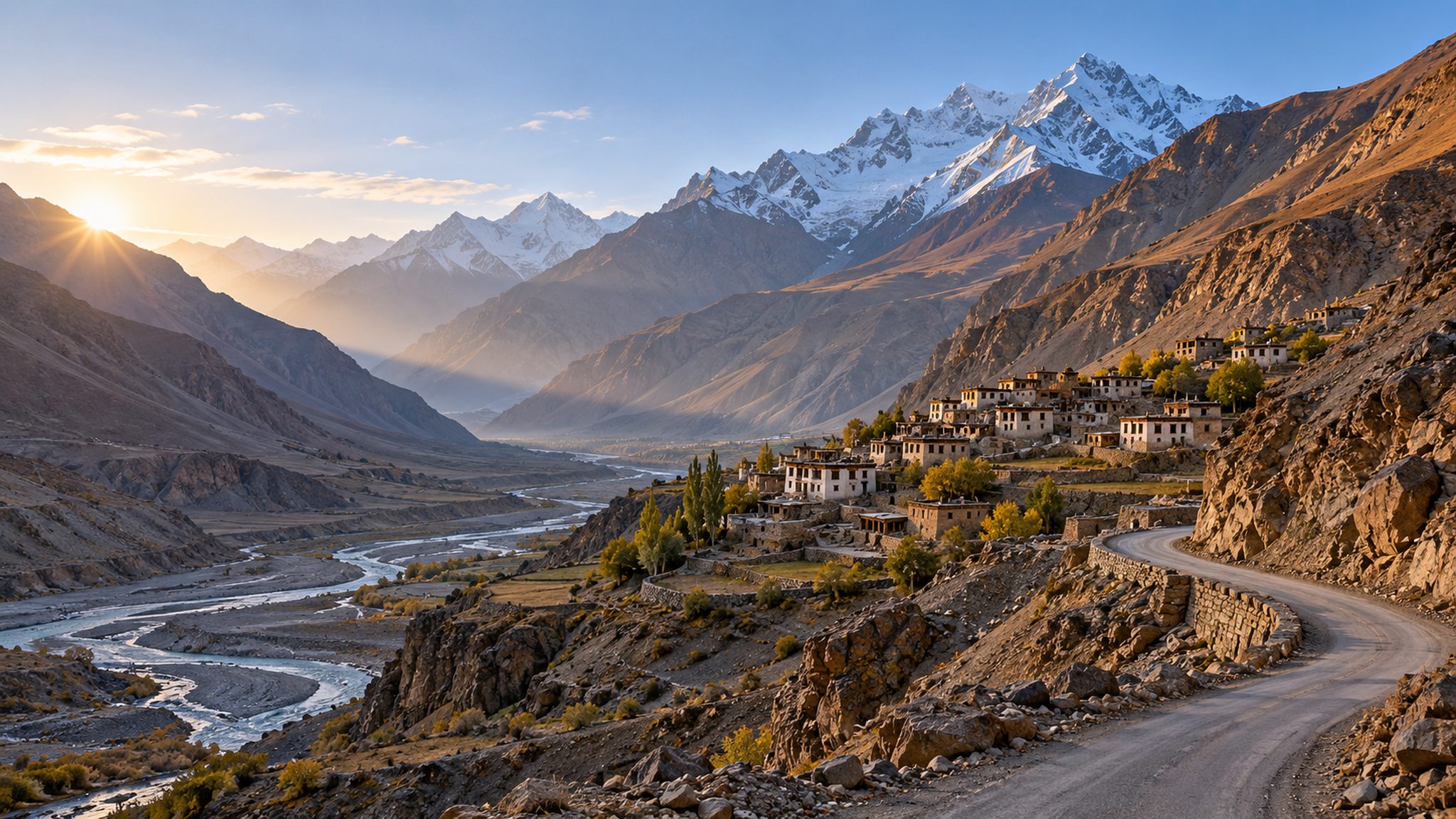
Why Follow Communities Over Time?
The proposed field-research location makes repeated observation central to the research case, rather than treating the foundation ceremony as a health outcome.
- Longitudinal studies observe health and relevant conditions repeatedly over time. They can investigate whether changes in exposure precede changes in outcomes, a question that a single survey cannot answer equally well.
- Climate variability belongs in the announced research mandate alongside infectious and non-communicable diseases. The research task is to test relationships with health outcomes, not assume every observed illness is caused by climate change.
- Comparability needs careful design: age, occupation, prior residence and access to services may differ between groups. Otherwise, an apparent altitude-related pattern could partly reflect who was studied or how care was recorded.
- Repeated measurement brings its own challenge when participants move or cannot return. Researchers should account for missing observations, because the hardest-to-reach households may also be those whose health needs are least visible.
- Community participation should shape research questions and communication. For tribal and remote populations, consent, understandable explanations and feedback about findings are practical requirements for a useful programme, rather than optional publicity activities.
A Research Platform Is Not Yet a Working Service
The announcement identifies intended capabilities; implementation and effectiveness remain questions for later evidence.
- Telemedicine is proposed for exploration, not reported as a completed service. Its evaluation should examine whether remote advice leads to assessment, follow-up and referral when required, rather than count digital contacts alone.
- Drone-enabled logistics is another intended research field. A credible study would examine delivery reliability under local conditions and integration with health facilities before treating an experimental transport option as a dependable supply system.
- Public-health surveillance can connect repeated observations to preparedness only when information reaches people able to respond. The relevant question is whether a signal changes action, not simply whether a monitoring platform exists.
- Translational research connects findings to decisions about services and policy. The announced collaborations with medical and research institutions offer a potential route, but institutional partnership alone does not demonstrate that communities benefit.
- Implementation assessment should separate a foundation stone, usable research capacity, completed studies and improved care. These are different milestones; reporting one as proof of the next would turn an announced programme into an unsupported success claim.
Way Forward
Test Whether Research Changes Care
- Define local outcomes: track referral completion and continuity of care alongside research outputs.
- Design for seasons: evaluate proposed services across locally relevant weather and access conditions.
- Return findings: involve communities and district health teams in deciding which results can inform feasible service changes.
Conclusion
- Mountain health combines physiological exposure with service access and environmental change. A research centre earns public-health value when it distinguishes these mechanisms and tests locally workable responses.
- ICMR-CHAMP remains an announced research initiative at this stage. Its UPSC relevance lies in the field-evidence approach, while operational readiness and health benefits require later verification.
UPSC Practice Questions
Prelims MCQ 1
With reference to high-altitude health, consider the following statements:
- Lower atmospheric pressure reduces the partial pressure of inspired oxygen.
- Acclimatisation and access to referral care describe the same mechanism.
- A longitudinal study involves repeated observation over time.
How many of the above statements are correct?
(a) Only one (b) Only two (c) All three (d) None
Answer: (b) Only two
Explanation:
Statements 1 and 3 are correct. Acclimatisation concerns physiological adjustment; referral access concerns the delivery of healthcare.
Prelims MCQ 2
Which finding would most directly support the effectiveness of a proposed mountain telemedicine service?
(a) A foundation stone has been laid (b) An institutional website has been launched (c) Patients consistently receive needed follow-up and complete appropriate referrals (d) A research collaboration has been announced
Answer: (c) Patients consistently receive needed follow-up and complete appropriate referrals
Explanation:
Service effectiveness requires evidence about care delivered and its continuity. Announcements and infrastructure milestones do not establish those outcomes.
UPSC Mains Questions
- Explain why high-altitude public health requires research on both physiological exposure and healthcare access. (150 words)
- How can longitudinal field research strengthen climate-resilient healthcare for remote Himalayan communities? Discuss the implementation limits of digital health and logistics innovations. (250 words)
Sources: PIB Ministry of Health and CDC Yellow Book.
Frequently Asked Questions
What is ICMR-CHAMP?
It is the planned ICMR Centre for High Altitude Medicine and Public Health Research at Keylong, Himachal Pradesh. Its announced remit joins mountain physiology with broader public-health research involving Himalayan populations.
Was the centre already operational in the announcement?
No. The 11 October announcement scheduled a foundation-stone ceremony for 12 October. It described intended research capabilities and collaborations, without establishing that facilities or proposed services were already operational.
Why does altitude create physiological stress?
Lower atmospheric pressure reduces inspired oxygen pressure. The resulting hypoxic stress depends on factors including altitude, ascent rate and duration of exposure; it is distinct from the difficulty of reaching healthcare.
What can longitudinal research contribute?
Repeated observation helps researchers examine how environmental conditions and health outcomes change over time. Careful comparisons and attention to missing observations remain necessary; observing a relationship alone does not establish causation.
Are telemedicine and drone deliveries confirmed services?
The announcement identifies them as areas to explore. Their reliability, integration with existing care and practical value for remote communities require evaluation before they can be described as established benefits.