India must reboot neighbourhood policy – Trade is the key
Why in News?
India’s relations with neighbours like Bangladesh, Nepal, and Sri Lanka are undergoing political transitions, creating an opportunity to reset (reboot) India’s neighbourhood policy, with trade as the central tool.
UPSC Relevance:
GS-II: India’s neighbourhood policy, SAARC, South Asia geopolitics
GS-III: Regional trade, NTBs, connectivity, energy security, export-led growth vs. domestic demand
What is India’s Neighbourhood Policy?
Core Idea
- India’s approach towards immediate neighbours is called “Neighbourhood First Policy.”
Objectives
- Ensure regional stability
- Improve economic integration
- Counter external influence (especially China)
- Promote connectivity and development
Recent Challenges (Why “Reboot” is Needed)
Bangladesh Issue
- Political change after decline of Sheikh Hasina.
- Rise of Tarique Rahman.
- Shift towards “Bangladesh First” policy.
- Bangladesh’sfocus is now on unsentimental, interest-based ties rather than historical emotional baggage
Nepal Issue
- Rise of new political forces like Rastriya Swatantra Party.
- Leaders like Balendra Shah symbolize generational change.
- Demand for a relationship based on “equality” and sovereignty over “special status” rhetoric
Sri Lanka Issue
- New leadership after economic crisis.
- Moving towards pragmatic engagement with India.
Conclusion:
Entire neighbourhood is shifting from:
- Dependency → Partnership
- Emotion → Pragmatism
Problems with India’s Current Trade Policy
Despite geographical proximity, India’s trade policy has often been “self-defeating”:
- Infrastructure & Barriers: Extraordinary open-border legacies (like with Nepal) are neutralized by poor infrastructure and non-tariff barriers.
- Trade Imbalance: India criticizes its trade deficit with China but runs massive surpluses with its own smaller neighbors, refusing them the market access it demands from others.
- Dominance of Outsiders: China remains the dominant source of imports for these nations, while the West remains their primary export destination.
What Should India Do? (Key Solutions)
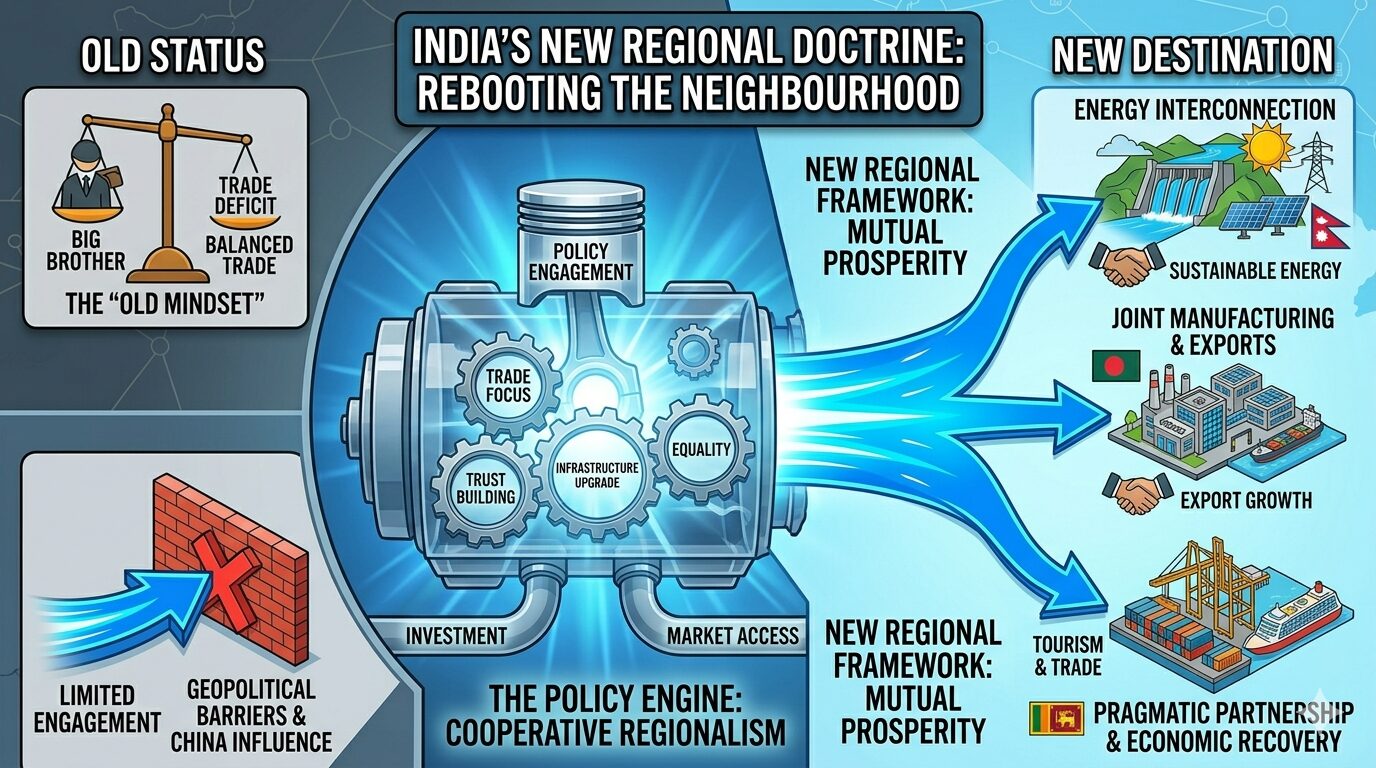
- Shift from Patronage to Partnership: Move away from the assumption that India is doing “favors.” Focus on measurable, shared economic benefits.
- Import more, not less: India should open its market to Bangladesh, Nepal, and Sri Lanka — not out of generosity, but because it’s in India’s own economic interest. More trade = more growth on both sides.
- Fix the borders: An India–Bangladesh–Nepal connectivity corridor would transform the poorest parts of the eastern Subcontinent. Roads, railways, customs — all need modernisation.
- Energy cooperation: Gulf instability is already affecting South Asia (jobs, remittances, fuel). India has begun supplying hydrocarbons to neighbours. This should become a formal cooperation framework.
- Investment + rules of origin guardrails: So Chinese goods don’t simply re-enter India via Bangladesh with a sticker change.
The Global Imperative (Why Now?)
- Fragmentation of Global Trade: The return of tariffs and sanctions globally makes export-led growth uncertain for small economies. The Indian market offers a stable, high-scale alternative.
- Gulf Turbulence: Economic stress in the Gulf impacts the South Asian diaspora and energy supply, making regional cooperation on energy security urgent.
| Feature | Old Policy Mindset | New Proposed Policy (“Reboot”) |
| Philosophy | Patronage/Generosity (“Big Brother”) | Interest-based Partnership (Equality) |
| Trade Focus | Protectionism & Trade Surpluses | Market Access & Investment Ties |
| Connectivity | Rhetorical/Strategic | Physical Infrastructure & Trade Facilitation |
| Engagement | Political Deference/Gratitude | Mutual Growth, Jobs, and Exports |
Regional Cooperation Without SAARC
- Revival of SAARC not necessary
- Focus on:
- Bilateral agreements
- Sub-regional cooperation (BBIN, etc.)
Way Forward
- Adopt reciprocal trade openness
- Build trust through visible economic gains
- Invest in border infrastructure
- Promote regional value chains
- Respect sovereignty of neighbours
Main Question Practice:
- Evaluate the shift from ‘geopolitics’ to ‘geoeconomics’ in India’s Neighborhood First policy.
- How can a trade-led approach help India mitigate the rising influence of extra-regional powers in South Asia?