India-Oman CEPA likely to come into force on June 1
Why in News?
The Comprehensive Economic Partnership Agreement (CEPA) between India and Oman is expected to come into force from June 1, 2026. The pact was signed in December 2025.
| UPSC Relevance: GS-2 International Relations: Trade Agreements; Bilateral Trade Prelims: India-Oman Comprehensive Economic Partnership Agreement (Key Facts) |
What is the Comprehensive Economic Partnership Agreement?
- A Comprehensive Economic Partnership Agreement (CEPA) is an advanced form of Free Trade Agreement (FTA) that covers not only trade in goods but also:
- Trade in services
- Investment flows
- Rules of origin
- Customs cooperation
- Trade facilitation
- Professional mobility
- Intellectual property and regulatory cooperation
- CEPAs are broader and deeper than conventional FTAs because they aim at comprehensive economic integration between partner countries.
India has signed CEPAs with countries such as the United Arab Emirates, Japan, and South Korea.
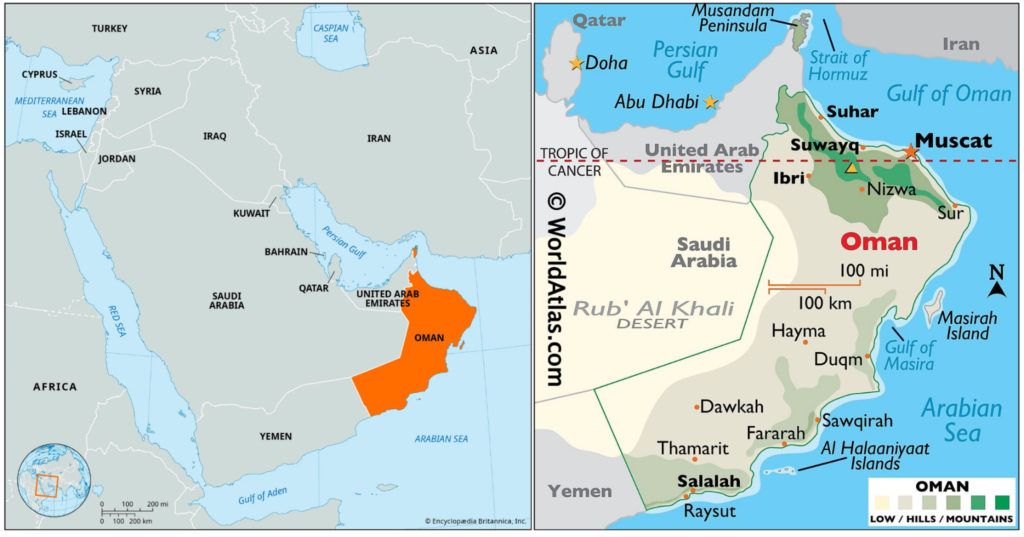
India-Oman Comprehensive Economic Partnership Agreement:
- The India-Oman Comprehensive Economic Partnership Agreement (CEPA) is expected to become operational from June 1, 2026.
- Aim: To deepen bilateral trade, investment, and strategic economic cooperation.
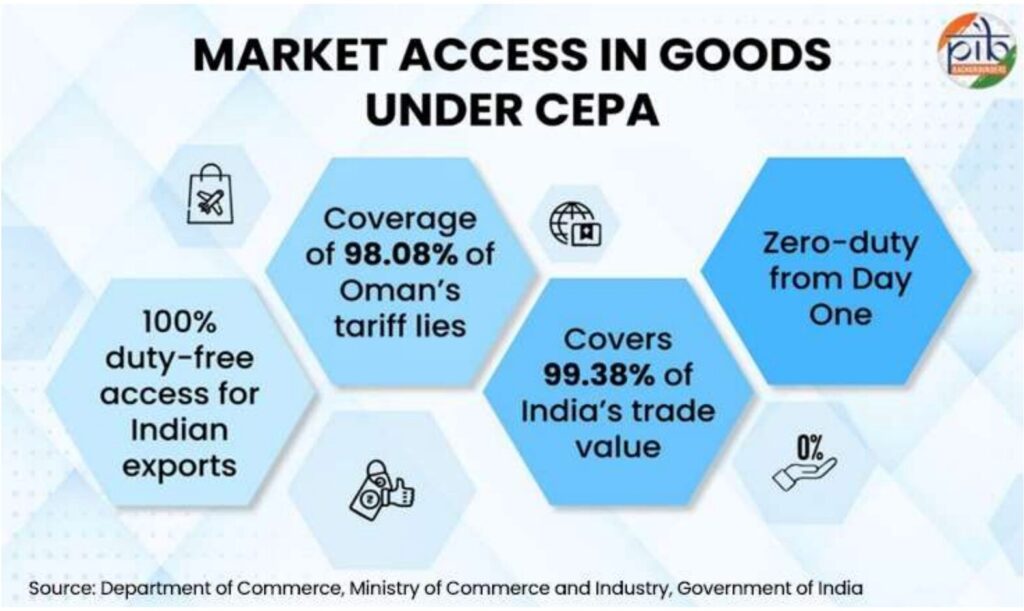
Major Highlights of the India-Oman CEPA:
- Duty-Free Access for Indian Exports:
- Oman has offered duty-free access on 98.08% of its tariff lines. This covers nearly 99.38% of India’s exports by value.
- Key Indian sectors expected to benefit: Textiles and garments, Leather and footwear, Gems and jewellery, Pharmaceuticals, Agriculture and processed food, Engineering goods, Medical devices, Chemicals and plastics, Automobiles and auto components & Labour-intensive sectors.
- Tariff Concessions by India: India will reduce tariffs on selected Omani products, including dates, Marble, Petrochemical products and certain industrial inputs.
- Protection of Sensitive Sectors: India excluded several sensitive products from tariff concessions, including dairy products, Tea and coffee, Tobacco, Rubber, and certain jewellery items.
- Services and Investment Cooperation: The agreement expands opportunities in Information Technology (IT), Education, Healthcare, Professional services, Research and development and Audiovisual services.
- Mobility of Professionals: The agreement includes provisions for easier movement of Indian professionals, enhanced quotas for intra-corporate transferees and longer duration of stay for contract workers. This is expected to benefit skilled Indian workers and service providers in Oman.
India-Oman Economic Engagement:
- During FY 2024-25, bilateral trade between the two countries stood at USD 10.61 billion, compared to USD 8.94 billion in FY 2023-24.
- India’s major exports to Oman: Engineering goods, Food products, Pharmaceuticals, Machinery, Textiles.
- India’s major imports from Oman: Crude oil and petroleum products, Urea and fertilisers, Chemicals, Metals and minerals.
Strategic Significance of the CEPA:
- Strengthening India’s West Asia Outreach: The agreement strengthens India’s economic and strategic engagement with the Gulf region and complements India’s broader West Asia policy.
- Boost to Exports and Manufacturing: The CEPA is expected to increase Indian exports, enhance manufacturing competitiveness, generate employment in labour-intensive sectors and support MSMEs. Estimates suggest the pact could raise Indian exports by nearly USD 2 billion over the next few years.
- Gateway to Gulf and African Markets: Oman’s strategic location can help Indian businesses access Gulf Cooperation Council (GCC) markets, East African markets and Global shipping routes through the Arabian Sea.
- Supply Chain Diversification: The agreement may strengthen resilient supply chains amid global trade disruptions and geopolitical uncertainties.
The India-Oman CEPA marks a major step in India’s trade diplomacy and economic engagement with the Gulf region. The agreement is also significant as Oman occupies a strategic position near the Strait of Hormuz, one of the world’s most important energy transit routes.
UPSC PYQ 2020
Q. With reference to the international trade of India at present, which of the following statements is/are correct?
1. India’s merchandise exports are less than its merchandise imports.
2. India’s imports of iron and steel, chemicals, fertilisers and machinery have decreased in recent years.
3. India’s exports of services are more than its imports of services.
4. India suffers from an overall trade/current account deficit.
Select the correct answer using the code given below:
(a) 1 and 2 only
(b) 2 and 4 only
(c) 3 only
(d) 1, 3 and 4 only
Answer: (d)
UPSC PYQ 2020
Q. Consider the following statements:
1. The value of Indo-Sri Lanka trade has consistently increased in the last decade.
2. “Textile and textile articles” constitute an important item of trade between India and Bangladesh.
3. In the last five years, Nepal has been the largest trading partner of India in South Asia.
Which of the statements given above is/are correct?
(a) 1 and 2 only
(b) 2 only
(c) 3 only
(d) 1, 2 and 3
Answer: (b)