Indian Seafarers: Every Fifth Seafarer Is Now Indian
Why in News?
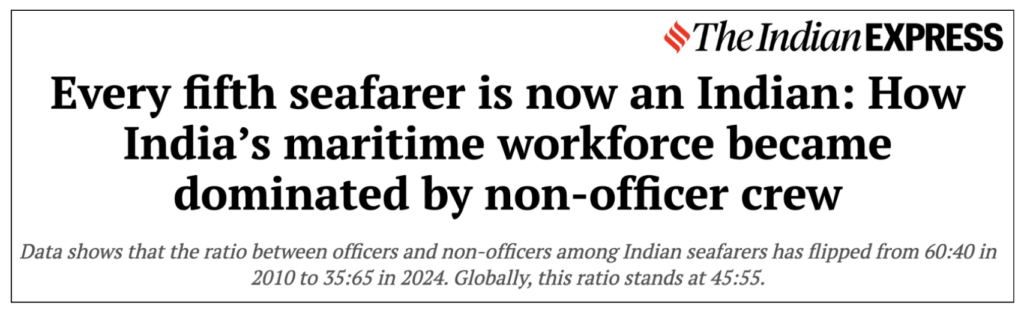
Data maintained by the Directorate General of Shipping (DGS) shows India’s seafarer workforce has expanded more than fivefold since 2010 to over 3.23 lakh, making the country one of the world’s top three suppliers of maritime crew.
Today, nearly one in five seafarers globally is Indian — but the composition has tilted sharply away from officers towards non-officer ratings, even as a closure of the Strait of Hormuz in early March 2026 left thousands of Indian crew exposed in the Gulf.
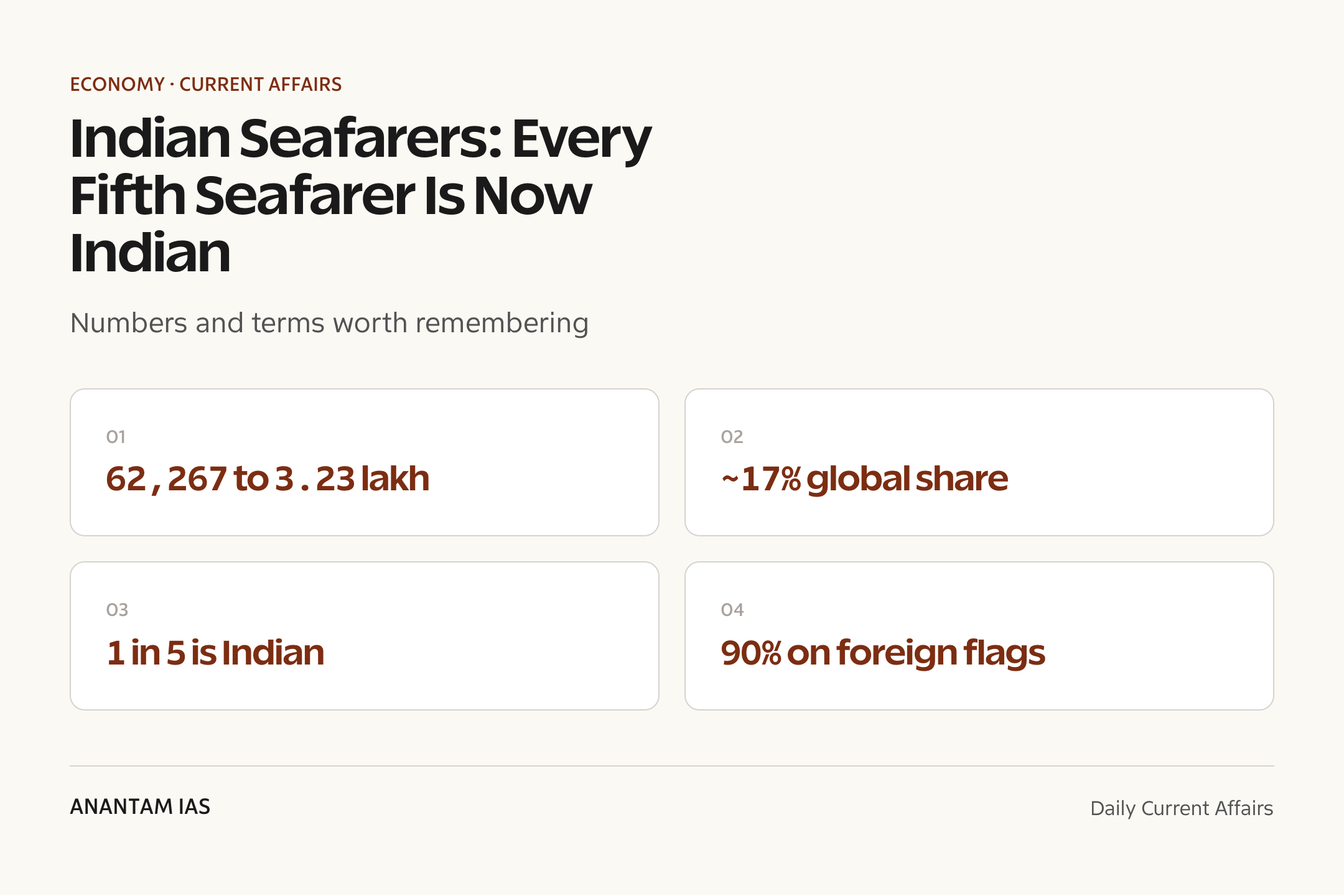
- India accounts for about 17% of the global seafaring workforce — roughly 3.23 lakh seafarers out of a global total of about 1.89 million.
- The active seafarer base grew from 62,267 in 2010 to over 3 lakh in 2024 — one of the most significant shifts in the global maritime labour market.
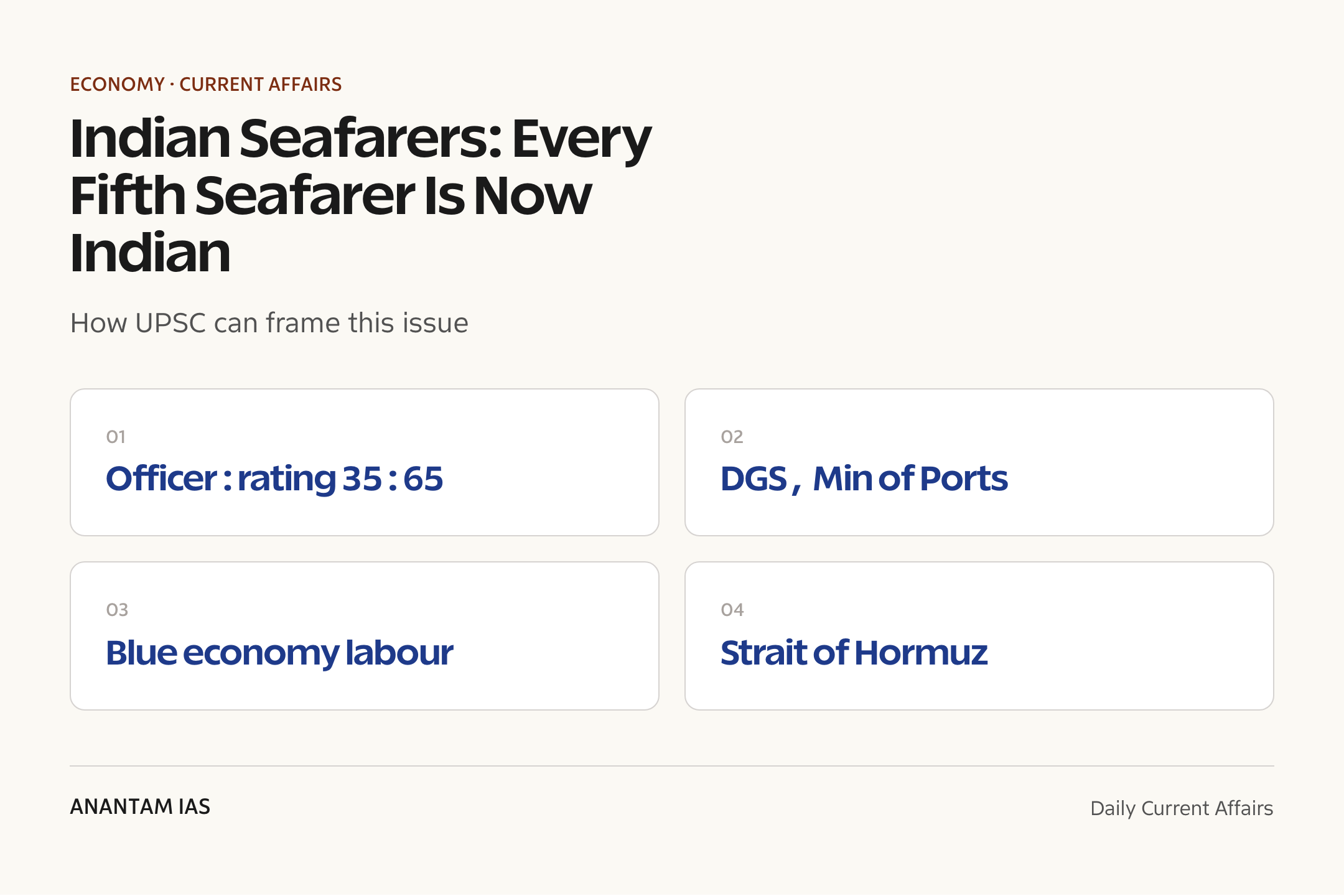
- The officer-to-rating ratio among Indian seafarers flipped from 60:40 in 2010 to 35:65 in 2024; the global ratio is about 45:55.
- Nautical (deck) crew rose more than fivefold from 36,423 to 207,109; engineering crew more than tripled from 25,844 to 100,792 (2010-2024).
- Indians overwhelmingly serve on foreign-flagged vessels — about 90% (2,78,466 of 3,07,901) in 2024, up from 86% in 2016.
- As of June 11, 2026, the government said over 18,000 Indian seafarers faced uncertainty across the broader Gulf region (down from 23,000 in mid-March).
The development matters in the context of:
- Links three syllabus strands — labour/skilling economics, the maritime (blue) economy, and external affairs/maritime security in the Gulf.
- Sits within Maritime India Vision 2030, which targets lifting India’s global seafarer share towards 20%.
UPSC Relevance
Prelims Relevance
- Directorate General of Shipping (DGS) — apex maritime safety authority (est. 1949) under the Ministry of Ports, Shipping and Waterways; registers seafarers, certifies officers and surveys vessels.
- Seafarer ‘officers’ — certified deck/engine officers (Master, Chief Officer, Chief/Second/Third Engineer) holding Certificates of Competency.
- ‘Ratings’ — non-officer operational crew (Able Seamen, oilers, motormen, bosuns, cooks, hospitality and salon staff).
- Bosun — the senior-most non-officer deckhand; Able Seaman — a qualified deck rating.
- STCW — Standards of Training, Certification and Watchkeeping for Seafarers, the IMO convention governing seafarer qualifications.
- IMO — International Maritime Organisation, the UN body for shipping safety and standards.
- Flag of a vessel — the country of registration whose laws govern the ship; most Indian crew serve on foreign-flagged ships.
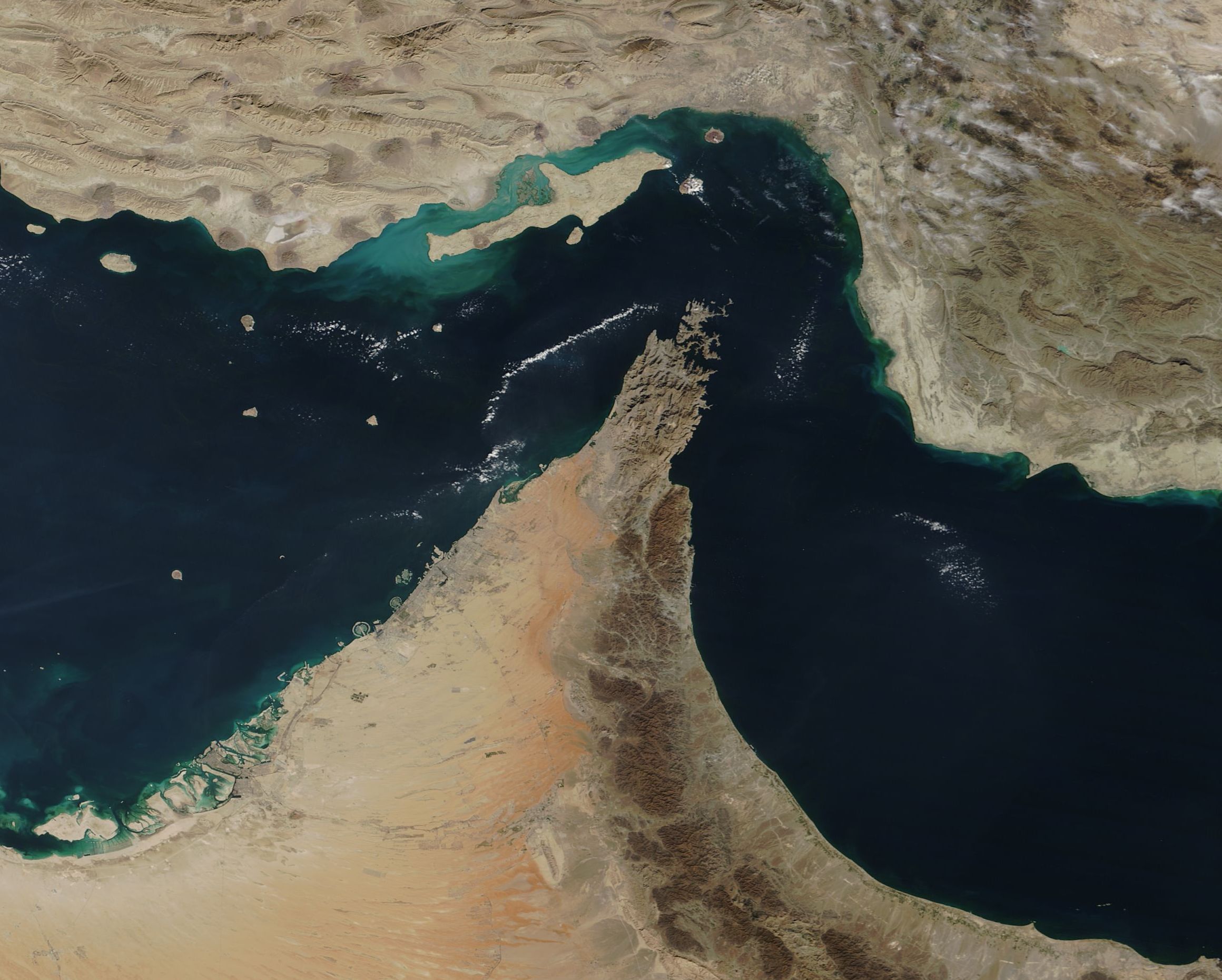
- Strait of Hormuz — chokepoint between the Persian Gulf and the Gulf of Oman, carrying a large share of seaborne crude.
- Maritime India Vision 2030 — Ministry blueprint to develop ports, shipping and the maritime workforce.
- Indian Maritime University (IMU) — a central university (Chennai) for maritime education and seafarer training.
Mains Relevance
GS Paper 3
- Maritime workforce as a growth and employment engine within the blue economy; the officer vs rating skill gap and its wage and remittance implications.
- Skilling, certification and infrastructure are needed to move Indian seafarers up the value chain from ratings to officers.
GS Paper 2
- Welfare and safety of Indians abroad — the state’s duty to protect seafarers in conflict-exposed sea lanes like the Strait of Hormuz.
Essay
- Human capital and globalisation: do nations gain when their workers fill the lower rungs of the global labour market?
Background and Context
Officers vs ratings — what the ranks mean
A ship’s crew splits into two broad tiers, and the distinction drives both wages and skill.
- Officers hold IMO Certificates of Competency and command the vessel — the Master and deck officers run navigation; the Chief, Second and Third Engineers run the engine room.
- Ratings are the hands-on non-officer crew — Able Seamen and bosuns on deck, oilers, motormen and engine petty officers below, and cooks, salon and hospitality staff in catering.
- Officers earn substantially more and need longer, costlier training and sea-time; ratings enter faster and cheaper.
- The officer-to-rating ratio is a rough proxy for how high up the value chain a country’s seafarers sit.
The numbers — a fivefold surge
India’s maritime labour force has exploded in scale over one and a half decades.
- Active Indian seafarers rose from 62,267 in 2010 to over 3.23 lakh in 2024 — more than a fivefold jump.
- India is now among the top three suppliers of maritime personnel alongside the Philippines and China, with about a 17% global share.
- Against a global pool of about 1.89 million seafarers, that means nearly one in five is Indian.
- Maritime India Vision 2030 targets pushing this share towards 20% and beyond.
The crew-vs-officer gap has widened
The catch is that almost all of the growth came from non-officer ranks.
- The officer-to-rating ratio flipped from 60:40 in 2010 to 35:65 in 2024 — well below the global 45:55.
- Nautical (deck) crew grew more than fivefold (36,423 → 207,109); engineering crew more than tripled (25,844 → 100,792).
- In 2010, nearly half of non-engineering Indian crew (16,590, or 46%) worked at third officer or above; by 2024, this fell to under 20% (40,303).
- In 2024, half the non-engineering Indian crew were cooks, hospitality, salon, cruise, wiper and cleaner roles — under 37% held such roles in 2010.

Where the bodies serve — foreign flags
Indians are crewing the world’s fleet, not India’s, which shapes both earnings and risk.
- About 90% of Indian seafarers (2,78,466 of 3,07,901) worked on foreign-flagged vessels in 2024, up from 86% in 2016.
- This brings in dollar wages and remittances, reinforcing India’s position as a leading remittance-receiving economy.
- But it also leaves Indian crew exposed to risks on routes governed by other flag states and patrolled by other navies.
- Some bright spots: Indian bosuns rose from none in 2010 to 4,324 in 2024, and Able Seamen from 708 to 16,568.
The MSME and skilling angle
The workforce sits on a base of training institutes and small recruitment-and-placement firms.
- Seafarers are trained at the Indian Maritime University (IMU) and 100-plus DGS-approved STCW institutes, plus Skill-India-linked rating courses.
- Recruitment and crewing are largely run by RPSL (Recruitment and Placement Services Licence) agencies — many of them MSMEs.
- The rating-heavy tilt reflects shorter, cheaper training pipelines that scale fast; upgrading to officers needs longer sea time and certification.
- DGS has rolled out simulator-based training (web and 360-degree immersive) to build higher-end navigational and engineering skills.
The maritime-security context — Hormuz
A volatile Gulf has turned a labour story into a safety-of-Indians-abroad story.
- After the Strait of Hormuz was effectively closed in early March 2026, the heavy Indian presence on foreign-flagged tankers became a liability.
- As of June 11, 2026, 562 Indian seafarers were aboard 13 Indian-flagged vessels — 329 in the Persian Gulf west of the Strait and 233 in the Gulf of Oman to the east.
- That was down from 753 seafarers on 27 Indian-flagged vessels in mid-March; at least one tanker safely exited the strait on June 15.
- Across the broader Gulf, the government said over 18,000 Indian seafarers faced uncertainty (down from 23,000 in mid-March); seafarer safety was flagged at the G7 and IORA levels.
Way Forward
Move up the value chain
- Expand officer-track training, sea-time berths and cadet placements so India’s share of high-wage Certificate of Competency roles rises, not just ratings.
- Strengthen the simulator and STCW capacity at IMU and DGS-approved institutes to push ratings towards officer certification.
Protect and formalise the workforce
- Build contingency and evacuation protocols for crew on conflict-exposed routes, and pursue seafarer safety through the IMO, G7 and IORA.
- Formalise RPSL/MSME crewing agencies, plug remittance leakages, and grow the share of Indians on the limited Indian-flagged fleet.
Conclusion
India’s rise to nearly one in five of the world’s seafarers is a genuine human-capital success, anchored by the Directorate General of Shipping and a fast-scaling training base — and a quiet pillar of the country’s remittance economy.
But the slide in the officer-to-rating ratio and the concentration on foreign-flagged ships show the gains are clustered at the lower, more exposed end of the labour chain. The next phase must move Indians up to officer ranks and harden their safety on volatile sea lanes.
UPSC Practice Questions
Prelims MCQ 1
With reference to India’s seafarer workforce, consider the following statements:
- India is among the top three suppliers of seafarers globally, alongside the Philippines and China.
- Between 2010 and 2024, the officer-to-ratings ratio among Indian seafarers shifted in favour of officers.
- A majority of Indian seafarers are employed on foreign-flagged vessels.
How many of the above statements are correct?
(a) Only one (b) Only two (c) All three (d) None
Answer: (b) Only two
Explanation:
Statements 1 and 3 are correct — India is a top-three supplier (about 17% of the global pool) and roughly 90% of Indian seafarers work on foreign-flagged ships. Statement 2 is wrong: the officer-to-rating ratio shifted AWAY from officers, from 60:40 in 2010 to 35:65 in 2024.
Prelims MCQ 2
The Directorate General of Shipping, which maintains data on Indian seafarers, functions under which Union Ministry?
(a) Ministry of External Affairs
(b) Ministry of Ports, Shipping and Waterways
(c) Ministry of Defence
(d) Ministry of Commerce and Industry
Answer: (b) Ministry of Ports, Shipping and Waterways
Explanation:
The DGS is the apex maritime safety authority (established in 1949), an attached office of the Ministry of Ports, Shipping and Waterways. It handles seafarer registration, officer certification and vessel survey.
UPSC Mains Questions
- India is now among the top three suppliers of seafarers globally, yet its workforce has tilted sharply towards non-officer ratings. Examine the economic significance of this maritime workforce and the challenges in moving it up the value chain. (250 words)
- The heavy presence of Indian seafarers on foreign-flagged vessels in the Gulf has exposed them to maritime-security risks during the Strait of Hormuz disruption. Discuss the state’s responsibility towards Indians working in conflict-exposed sea lanes. (250 words)
Sources: Directorate General of Shipping, Ministry of Ports, Shipping and Waterways and The Indian Express.
Frequently Asked Questions
What does it mean that one in five seafarers is Indian?
It means that of roughly 1.89 million seafarers crewing merchant ships worldwide, about 3.23 lakh — close to 17%, or nearly one in five — are Indian nationals. India is among the top three suppliers of maritime crew alongside the Philippines and China, a position built up over the past decade and a half.
What is the difference between an officer and a rating?
Officers are certified senior crew who command the ship — the Master and deck officers run navigation, while the Chief, Second and Third Engineers run the engine room, all holding IMO Certificates of Competency. Ratings are the non-officer operational crew, such as Able Seamen, bosuns, oilers, motormen, cooks and hospitality staff. Officers earn more and need longer training.
How has the officer-to-rating ratio changed?
Among Indian seafarers, the officer-to-rating ratio flipped from 60:40 in 2010 to 35:65 in 2024, meaning ratings now far outnumber officers. The global ratio is closer to 45:55. Most of India’s fivefold workforce growth came from non-officer ranks, including a rise in cooks, hospitality and salon staff.
Why do most Indian seafarers work on foreign-flagged ships?
India has a small national merchant fleet relative to its huge supply of trained crew, so about 90% of Indian seafarers (around 2.78 lakh of 3.08 lakh in 2024) sail on foreign-flagged vessels. This earns dollar wages and remittances, but leaves crew exposed to risks on routes governed by other flag states and navies.
What is the Directorate General of Shipping?
The Directorate General of Shipping (DGS), established in 1949, is India’s apex maritime safety authority and an attached office of the Ministry of Ports, Shipping and Waterways. It registers seafarers, certifies merchant-navy officers, surveys and certifies vessels, and regulates seafarer training, employment and welfare.
How does the Gulf situation affect Indian seafarers?
After the Strait of Hormuz was effectively closed in early March 2026, the large number of Indian crew on tankers in the Gulf became a safety concern. As of June 11, 2026 the government said over 18,000 Indian seafarers faced uncertainty across the broader Gulf region, and 562 were aboard 13 Indian-flagged vessels near the strait.