Indian Ocean Rim Association: Canada Bids for Observer Status
Why in News?
Canada has applied to join the Indian Ocean Rim Association (IORA) as a dialogue partner, and the bid is being examined at the 28th Committee of Senior Officials meeting hosted in New Delhi.
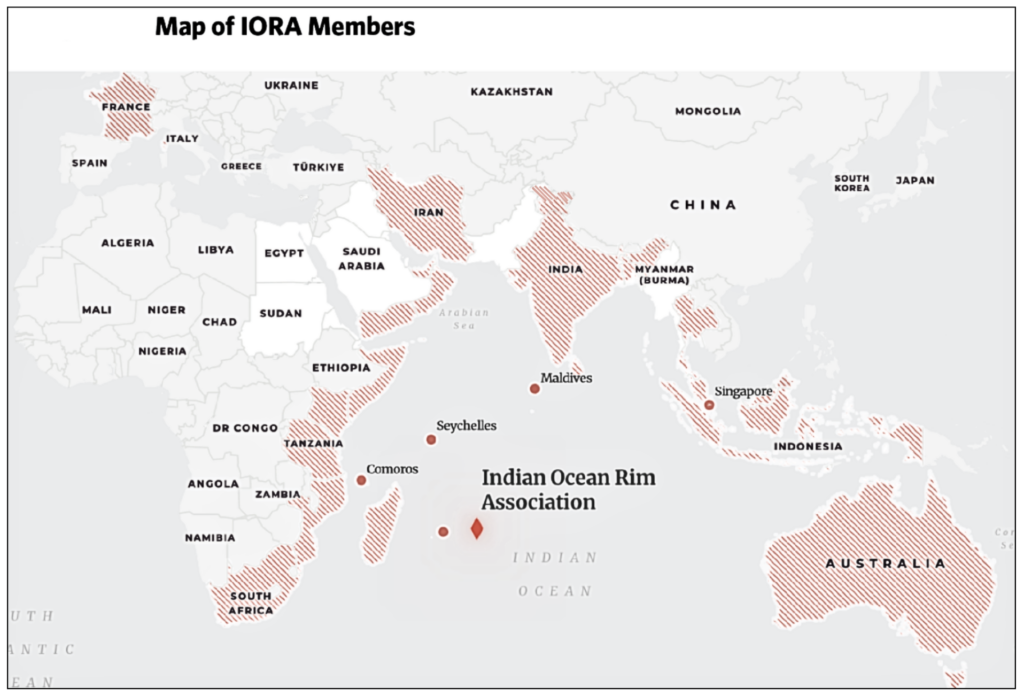
IORA is the principal pan-Indian Ocean grouping — 23 member states spanning Asia, Africa, the Middle East and Oceania — in which India is a founding member and lead player.
- Canada has sought entry as a dialogue partner; the headline framing of an ‘observer’ role tracks this request.
- Ranjan flagged Canada’s maritime safety, security and connectivity expertise and its ‘huge coastal zones’ as a benefit to members.
- He welcomed a possible Iran-US peace deal to end over 100 days of hostilities affecting the Strait of Hormuz.
- Disaster response and mitigation, and a ‘disproportionate’ climate-change impact in the Indian Ocean were named as IORA priorities.
The development matters in the context of:
- Why it matters for India: the Indian Ocean carries the bulk of India’s trade and energy, making IORA a core platform for India’s SAGAR and Indo-Pacific outreach.
- A new Western maritime power inside the IOR architecture reshapes the balance of dialogue partners alongside China, the US, the UK, Japan and the EU.
UPSC Relevance
Prelims Relevance
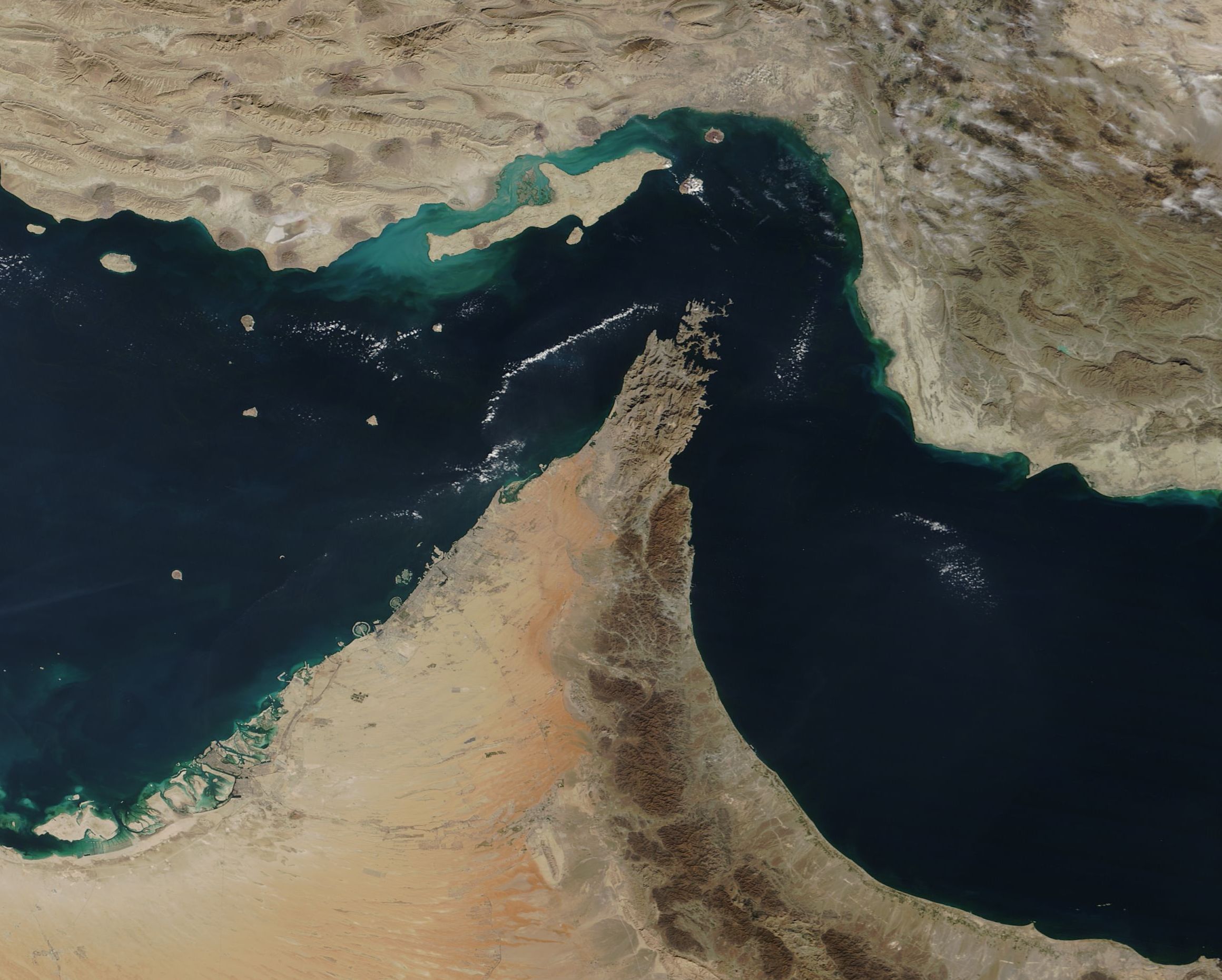
- IORA launched in 1997; Coordinating Secretariat at Ebene, Mauritius.
- 23 member states across the Indian Ocean rim; India is a founding member.
- Origin: Indian Ocean Rim Initiative seeded by South Africa and India (1995).
- Six priority areas, including Maritime Safety & Security and Disaster Risk Management.
- Two cross-cutting issues: Blue Economy and Women’s Economic Empowerment.
- Dialogue Partners include China, the US, the UK, Japan, Germany, France’s status as a member.
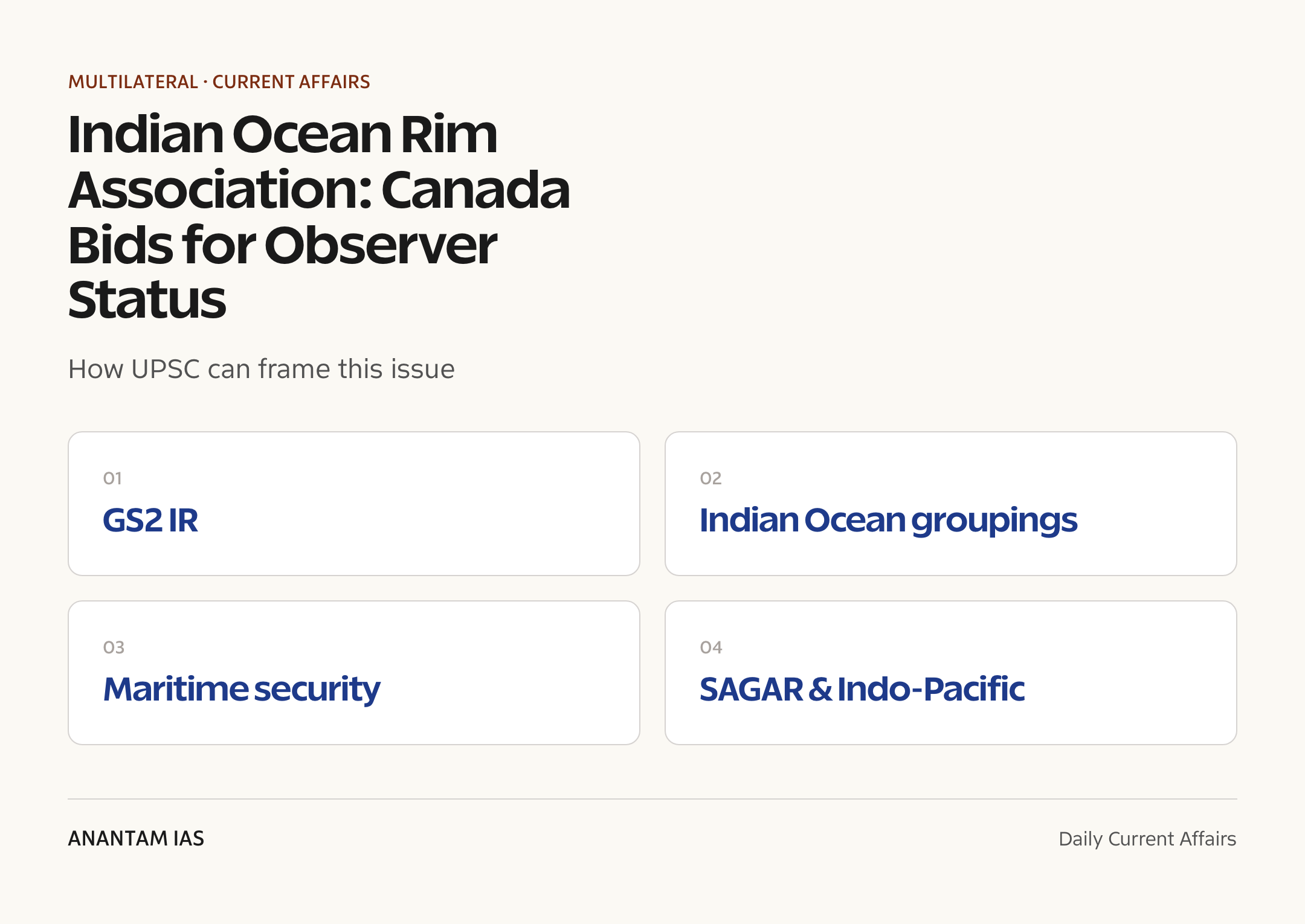
- Strait of Hormuz — a chokepoint linking the Persian Gulf to the Gulf of Oman.
- Indian Ocean Dialogue (IOD) — IORA’s flagship track-1.5 forum.
Mains Relevance
GS Paper 2
- India’s role in regional groupings of the Indian Ocean and its bearing on national interest.
- Effect of expanding dialogue partnerships on the strategic balance within IORA.
GS Paper 3
- Maritime security, sea-lane protection and disaster-risk management in the Indian Ocean.
Essay
- The Indian Ocean is the strategic centre of gravity of the 21st century.
- Regionalism and the pursuit of a rules-based maritime order.
Background and Context
What IORA Is
IORA is the only ministerial-level grouping uniting all littoral states of the Indian Ocean.
- Formally launched on 6-7 March 1997 through the Charter of the Indian Ocean Rim Association for Regional Co-operation.
- Grew out of the Indian Ocean Rim Initiative, an idea floated during Nelson Mandela’s 1995 India visit and championed by India and South Africa.
- Coordinating Secretariat sits at Ebene, Mauritius; the chair rotates among members on a biennial basis.
- Works by consensus and an open-regionalism principle — economic cooperation without binding obligations.
Membership and Partners
Membership spans four continents, touching the ocean, with non-littoral powers attached as partners.
- 23 member states: India, Australia, Bangladesh, Indonesia, Iran, Kenya, Madagascar, Malaysia, Maldives, Mauritius, Mozambique, Oman, Seychelles, Singapore, Somalia, South Africa, Sri Lanka, Tanzania, Thailand, the UAE, Yemen, the Comoros and France (via its Indian Ocean territories).
- Dialogue Partners include China, Egypt, Germany, Italy, Japan, the Republic of Korea, Russia, Saudi Arabia, Turkiye, the UK, the US and the European Union.
- Canada’s pending application would make it the newest external partner brought into the IORA fold.
- India was both an originator and remains a lead player, having chaired the grouping in 2011-13 and pressed a maritime-security agenda.
The Six Priority Areas
IORA structures its work around six pillars plus two cross-cutting themes.
- Maritime Safety & Security — anti-piracy, sea-lane protection and counter-trafficking.
- Trade & Investment Facilitation and Fisheries Management.
- Disaster Risk Management — flagged this week as a standing priority given the ocean’s exposure to cyclones and tsunamis.
- Tourism & Cultural Exchanges and Academic, Science & Technology Cooperation.
- Cross-cutting: the Blue Economy and Women’s Economic Empowerment.
Why the Indian Ocean Matters
The Indian Ocean is the world’s busiest energy and trade highway and India’s strategic backyard.
- Carries a large share of the global seaborne oil trade and container traffic between Asia, Africa and Europe.
- Hosts critical chokepoints — the Strait of Hormuz, Bab-el-Mandeb and the Strait of Malacca.
- Faces a ‘disproportionate’ climate-change burden, Ranjan noted, raising the stakes on disaster preparedness.
- Underpins India’s SAGAR (Security and Growth for All in the Region) vision and its Indo-Pacific posture.
Canada’s Pitch and the Hormuz Crisis
Canada offers maritime capability just as a West Asia disruption tests the region’s resilience.
- Canada brings expertise in maritime safety, security and connectivity drawn from its long coastlines.
- Ranjan welcomed a reported Iran-US peace deal that could end 100-plus days of hostilities in the Strait of Hormuz.
- He urged members to build alternate supply routes and capacities to weather such ‘existential’ shocks.
- Seafarer safety and attacks on shipping featured on the agenda of the senior officials’ meeting.
Way Forward
Deepen the security mandate
- Convert IORA’s Maritime Safety & Security pillar into operational mechanisms — information-sharing, joint exercises and a coordinated response to seafarer attacks.
- Use new partners like Canada to plug capability gaps without diluting the consensus, member-led character of the grouping.
Build resilience to shocks
- Develop alternate trade and energy routes so a Hormuz-style disruption does not paralyse member economies.
- Strengthen disaster-risk management and climate-adaptation cooperation across the rim.
India should leverage its founding role to keep IORA the premier inclusive IOR platform, anchoring it to the SAGAR and Indo-Pacific frameworks while keeping it open and non-bloc.
Conclusion
Canada’s bid signals the rising pull of the Indian Ocean for external maritime powers and the growing weight of IORA as a regional convening platform. For India, a wider partner base is welcome only if it reinforces an open, rules-based and member-driven order rather than importing great-power rivalry into the rim.
With chokepoint volatility, climate stress and seafarer security converging, IORA’s task is to move from a dialogue forum to a delivery mechanism — and India, as a founding member hosting the senior officials’ meeting, is well placed to steer that shift.
UPSC Practice Questions
Prelims MCQ 1
With reference to the Indian Ocean Rim Association (IORA), consider the following statements:
- It was launched in 1997, and its Coordinating Secretariat is located in Mauritius.
- India is a founding member of the grouping.
- Maritime Safety & Security is one of its priority areas of cooperation.
How many of the above statements are correct?
(a) Only one (b) Only two (c) All three (d) None
Answer: (c) All three
Explanation:
IORA was launched in March 1997 with its secretariat at Ebene, Mauritius. India is a founding member, and Maritime Safety & Security is one of its six priority areas. All three are correct.
Prelims MCQ 2
The Strait of Hormuz, often in the news, connects the Persian Gulf to which water body?
(a) Red Sea
(b) Gulf of Oman
(c) Arabian Sea directly
(d) Bay of Bengal
Answer: (b) Gulf of Oman
Explanation:
The Strait of Hormuz links the Persian Gulf with the Gulf of Oman, which opens into the Arabian Sea. It is a critical oil-shipping chokepoint.
UPSC Mains Questions
- The Indian Ocean Rim Association is evolving from an economic dialogue forum into a maritime-security platform. Examine the drivers of this shift and India’s stake in steering it.
- Critically assess how the entry of external dialogue partners shapes the strategic character of regional groupings in the Indian Ocean, with reference to India’s interests.
Sources: The Hindu and IORA Secretariat.
Frequently Asked Questions
What is the Indian Ocean Rim Association?
IORA is an inter-governmental organisation launched in 1997 that brings together 23 member states of the Indian Ocean rim for cooperation on trade, maritime security, fisheries, the blue economy and disaster management. Its Coordinating Secretariat is at Ebene, Mauritius, and it works by consensus on the principle of open regionalism.
Is Canada becoming a member of IORA?
No. Canada has applied to become a dialogue partner, not a full member. Full membership is reserved for littoral states of the Indian Ocean. The application is being examined at the 28th Committee of Senior Officials meeting in New Delhi, with a decision to follow the grouping’s consensus process.
What is India’s role in IORA?
India is a founding member and a lead player. It helped seed the original Indian Ocean Rim Initiative alongside South Africa, chaired the grouping in 2011-13, and has pushed maritime security up the agenda. IORA aligns closely with India’s SAGAR vision and Indo-Pacific outreach.
What are IORA’s priority areas?
IORA works across six pillars: maritime safety and security, trade and investment facilitation, fisheries management, disaster risk management, tourism and cultural exchanges, and academic, science and technology cooperation. It also has two cross-cutting themes — the blue economy and women’s economic empowerment.
Why is the Strait of Hormuz important to IORA?
The Strait of Hormuz is a major oil-shipping chokepoint at the mouth of the Persian Gulf. Disruptions there, such as the recent West Asia hostilities, threaten the trade and energy security of IORA members, which is why the grouping stresses alternate routes and resilience.
What is the difference between a member and a dialogue partner?
A member is a littoral state of the Indian Ocean with full participation rights. A dialogue partner is an external country or body that engages with IORA on cooperation but does not have full membership. Existing dialogue partners include China, the US, the UK, Japan and the European Union.