Rural Water Workforce: Linking Repairs With Water-Quality Surveillance
Why in News?
On 21 September 2026, the Department of Drinking Water and Sanitation set a state-level rollout roadmap for Nal Jal Mitra and Sujalam Shakti under Jal Jeevan Mission 2.0.
- States were asked to adopt the existing Nal Jal Mitra qualification or develop a state-specific course, alongside district assessments of actual water-system workforce gaps.
- The two Nal Jal Mitra pathways are 510-hour Short-Term Training for new entrants and 120-hour Recognition of Prior Learning for personnel already working in rural water systems.
- Sujalam Shakti focuses on women-led water sampling, field testing and basic disinfection, while the rollout also requires arrangements for deployment, remuneration and performance monitoring.
- A household connection remains useful only when water service continues after construction: equipment needs maintenance, failures need repairs and water quality needs checking.
- The announcement establishes implementation actions, not proof that every village already has trained personnel or that projected employment has materialised.
UPSC Relevance
Prelims Relevance
- Nal Jal Mitra: routine operation, preventive maintenance and first-level repairs.
- Short-Term Training and Recognition of Prior Learning: distinct entry pathways.
- Sujalam Shakti: women-led water-quality surveillance and basic disinfection.
- Field Test Kits: tools within community water-quality monitoring.
- State Water and Sanitation Missions and Gram Panchayats: workforce planning and candidate nomination.
Mains Relevance
GS Paper 2
- Local institutions, skilled personnel and accountability in rural public-service delivery.
- Women’s participation in water governance through recognised and supported technical roles.
GS Paper 3
- Maintenance of public infrastructure and the link between occupational skills and local livelihoods.
Essay
- Public infrastructure succeeds when institutions keep it working.
Background and Context
Nal Jal Mitra: keeping water infrastructure working
The maintenance role links the physical water system to a locally available technician, instead of treating the installation of a connection as the final outcome.
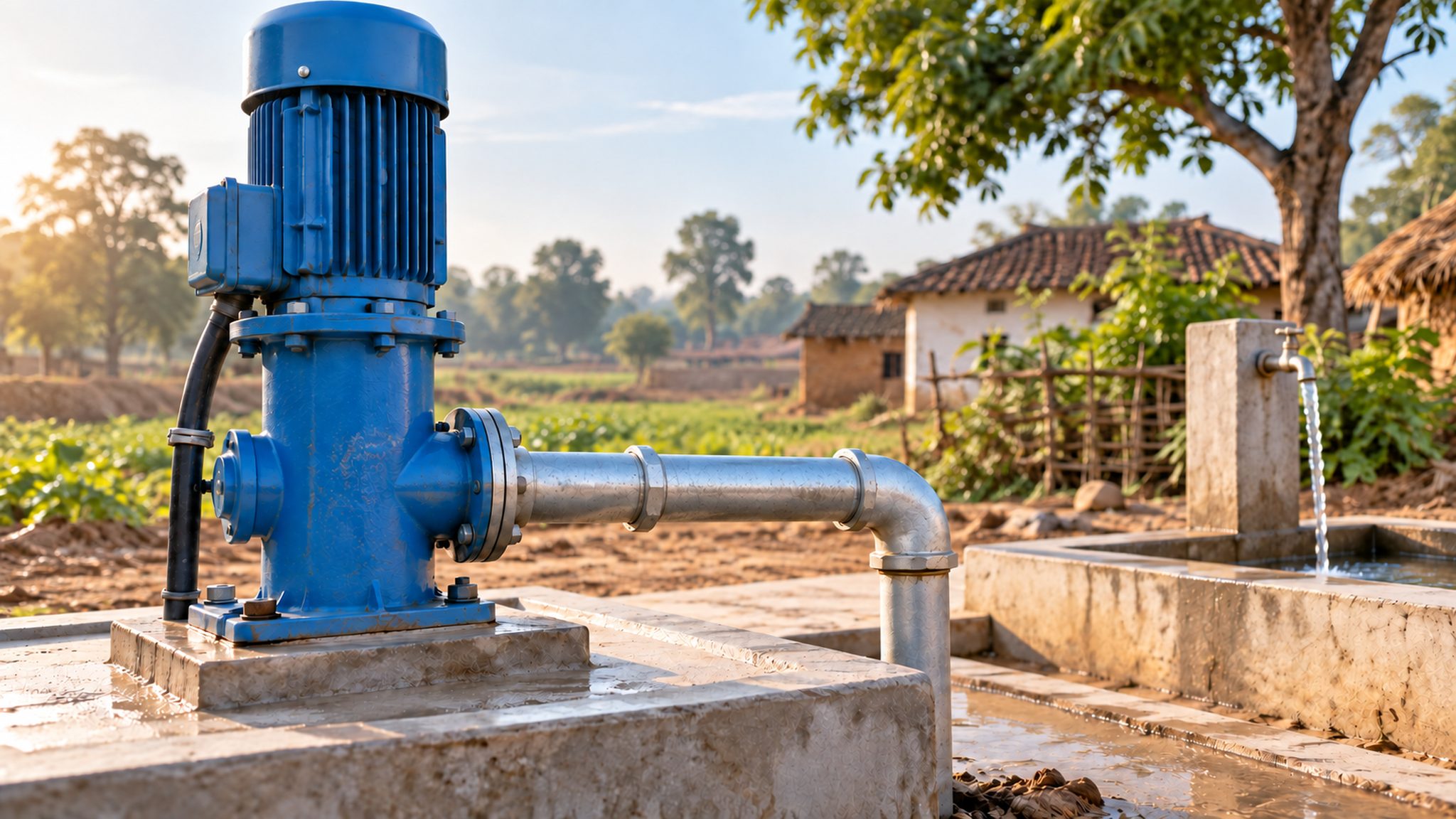
- Nal Jal Mitra is designed as a village-level, multi-skilled technical role covering pumps, pipelines, treatment systems and electrical installations; its scope includes routine operation, preventive maintenance and first-level repairs across rural water supply infrastructure.
- Preventive maintenance means attending to equipment before breakdown, while first-level repair addresses an identified fault; a service plan should distinguish these tasks so workers do not merely respond after households lose supply.
- Short-Term Training provides a structured entry route for newcomers, whereas Recognition of Prior Learning is intended for existing operators, plumbers, electricians and pump attendants whose experience can enter a formal qualification pathway.
- The distinction matters for workforce planning: a district with experienced pump operators needs a different training mix from one lacking personnel; counting course enrolments alone cannot establish whether its practical skills gaps are filled.
- States were advised to prioritise local youth and use training institutions such as ITIs and polytechnics; local availability matters because a certified worker must be reachable when a village system needs attention or repair.
Sujalam Shakti: checking water quality near the household
A working pump answers whether water can move; quality surveillance asks whether the supply requires investigation or corrective action before people can depend on it.
- Sujalam Shakti seeks a trained, women-led village workforce for sampling, testing and basic disinfection; the roadmap prioritises women already involved in water testing, Self-Help Group members and other community representatives for participation.
- Representative sampling and Field Test Kits are part of the proposed skills package, alongside sanitary inspections and source protection; these activities look beyond whether water appears clear when it reaches a tap.
- Basic chlorination and disinfection form another part of the qualification, but this does not make each community worker a specialist responsible for every treatment problem; technical support must match the problem identified.
- Record maintenance and digital reporting connect an observation to follow-up: a test result needs its sampling context and an accountable recipient, rather than becoming a number collected without a route to corrective action.
- The key comparison is maintenance versus surveillance: repairing a pump restores its function, while sampling investigates quality; both support the same drinking-water service, but neither activity alone proves that the other requirement is satisfied.
From a certificate to an accountable service
The rollout makes human-resource planning consequential: a trained person needs an assigned role, working arrangements and an institution that responds when problems are reported.
- District-wise assessments are to reflect actual assets and operational needs, including pumping stations, treatment plants, reservoirs, distribution networks and laboratories; a uniform training quota would miss differences between the systems that workers must maintain.
- Gram Panchayats are to route candidate nominations, while state missions coordinate training choices and district missions verify institutional infrastructure; this connects selection and training capacity to the places where personnel will actually work.
- Deployment and remuneration need explicit arrangements after certification: who assigns the worker, who pays and which area is covered are service-design questions, rather than automatic consequences of successfully completing a recognised training course.
- Performance monitoring should examine whether faults and quality alerts receive follow-up, alongside training completion; a useful accountability chain connects the village worker, supervisory staff and responsible institutions without leaving unresolved problems between their roles.
- The official roadmap calls for state human-resource policies and coordinated implementation; its projected future staffing requirements must not be described as jobs already created or evidence that the full workforce is operational nationwide.
Way Forward
Make the service obligation explicit
- Match training intake to asset inventories and workforce gaps, then verify that candidates can access practical equipment and competent assessment.
- Publish clear work assignments and payment arrangements, with a named supervisor and a route for faults beyond the village worker’s competence.
- Connect quality alerts to documented follow-up, technical support and communication with affected households; participation should include authority and support to act.
- Track service outcomes, such as resolution of reported faults, alongside certification, without presenting projected staffing needs as completed appointments.
Conclusion
- Reliable rural water service depends on both functioning infrastructure and monitored quality; Nal Jal Mitra and Sujalam Shakti address distinct operational needs within that shared objective.
- For an answer on implementation, connect skills, deployment, remuneration and accountability: the new roadmap supplies a practical example, while actual service improvements remain outcomes to establish through implementation evidence.
UPSC Practice Questions
Prelims MCQ 1
With reference to the rural water workforce roadmap, consider the following statements:
- Nal Jal Mitra includes preventive maintenance and first-level repairs.
- Recognition of Prior Learning is intended only for entrants without previous water-sector experience.
- Sujalam Shakti includes representative water sampling and basic disinfection.
How many of the above statements are correct?
(a) Only one (b) Only two (c) All three (d) None
Answer: (b) Only two
Explanation:
Statements 1 and 3 are correct. Recognition of Prior Learning is intended for existing workers, including operators, plumbers and pump attendants.
Prelims MCQ 2
Which measure most directly connects training certification with sustained rural water-service delivery?
(a) Reporting enrolment numbers without worker assignments (b) Replacing all experienced workers with new trainees (c) Establishing deployment, remuneration and performance-monitoring arrangements (d) Treating a working pump as sufficient proof of water quality
Answer: (c) Establishing deployment, remuneration and performance-monitoring arrangements
Explanation:
A certificate establishes a training outcome. Assigned responsibilities, payment and monitoring connect that qualification to an ongoing service obligation.
UPSC Mains Questions
- Why must rural drinking-water policy move beyond infrastructure creation? Explain using the complementary roles of maintenance technicians and community water-quality workers.
- Examine how deployment, remuneration and accountability determine whether decentralised skilling initiatives improve public-service delivery.
Source: PIB, Ministry of Jal Shakti.
Frequently Asked Questions
What is Nal Jal Mitra?
Nal Jal Mitra is a village-level technical workforce initiative for rural water systems. Its intended tasks include routine operation, preventive maintenance and first-level repairs involving pumps, pipelines, treatment systems and associated infrastructure.
How do Short-Term Training and Recognition of Prior Learning differ?
Short-Term Training is the entry pathway for new trainees. Recognition of Prior Learning serves personnel already working in rural water systems, including operators, plumbers, electricians and pump attendants, through a separate qualification pathway.
What does Sujalam Shakti focus on?
Sujalam Shakti seeks women-led village water-quality surveillance. Its skills package includes representative sampling, Field Test Kits, basic disinfection, sanitary inspections, source protection, record maintenance and reporting, rather than replacing the infrastructure-maintenance role.
Does the roadmap mean the workforce is already deployed?
No. The announcement sets implementation actions involving qualifications, training plans, staffing assessments and human-resource policies. Projected workforce requirements are future estimates, while deployment and service improvements require separate evidence.