J&K Assembly passes Statehood Resolution
Why in News?
In a resolution passed on September 28, the Jammu and Kashmir Assembly called upon the Government of India for the “immediate and urgent restoration of full Statehood” to the nearly seven-year-old Union Territory of Jammu and Kashmir.
| UPSC Relevance: GS-2 Polity and Governance: Federalism, Centre-State relations, Parliament and State Legislatures. Prelims: Articles 2, 3 and 4; Union Territories; Jammu and Kashmir Reorganisation Act, 2019 |
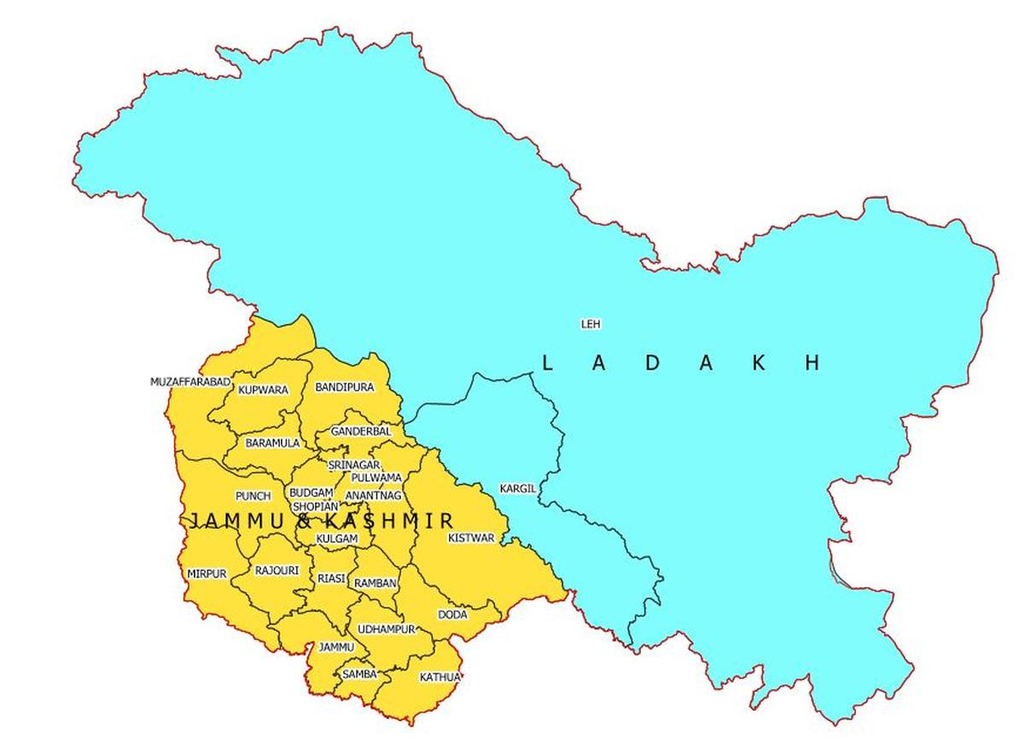
J&K Background: From State to Union Territory:
- In 2019, the constitutional changes concerning Article 370 removed J&K’s special constitutional status.
- The Jammu and Kashmir Reorganisation Act, 2019, reorganised the erstwhile State into:
- Jammu and Kashmir: Union Territory with a Legislative Assembly.
- Ladakh: Union Territory without a Legislative Assembly.
- In its 2023 judgment on Article 370, the Supreme Court upheld the constitutional validity of the changes. It also directed that Assembly elections be held and recorded the Union government’s submission that statehood for J&K would be restored. The Court directed that restoration should take place at the earliest and as soon as possible.
- Assembly elections were subsequently held in 2024, leading to the formation of an elected government.
The present resolution therefore seeks to place the demand for statehood before the Union Government through the elected legislature.
Note: Restoring statehood would not automatically revive Article 370, the former J&K Constitution or the pre-1953 arrangement.
Constitutional Framework for Statehood and Reorganisation:
- Article 2 (Admission or Establishment): Governs the admission of foreign territories into the Union or the establishment of entirely new States. It does not apply to the reorganisation of existing Indian Union Territories or States.
- Article 3 (Formation and Alteration): Empowers Parliament to alter boundaries, change names, or create new States from existing territories. Any bill for this purpose requires the prior recommendation of the President before introduction.
- Article 4: Allows Parliament to make necessary updates to the First Schedule (territories) and Fourth Schedule (Council of States allocation). It explicitly mandates that such laws can be passed via a simple majority (ordinary legislative process), bypassing the stringent amendment procedure of Article 368.
- Role of the Legislative Assembly: A resolution passed by a Union Territory Assembly (such as Jammu & Kashmir) serves as a formal expression of political intent. However, it possesses no binding legal authority over Parliament, which retains ultimate constitutional supremacy regarding statehood.
Why is Statehood Significant?
- Federalism and democratic decentralisation: Statehood would restore J&K to the State-level position within India’s federal structure, giving the elected government greater constitutional and political space in governance.
- Greater democratic accountability: A UT with a legislature differs from a full-fledged State because the Lieutenant Governor has a substantially greater role, particularly in matters assigned to the Union under the J&K constitutional framework. Restoration of statehood would therefore strengthen the principle that elected representatives should have greater responsibility for day-to-day governance.
- Fulfilment of the Supreme Court’s 2023 framework: The SC explicitly recorded the Union’s submission that statehood would be restored and directed that restoration take place at the earliest. It reinforces the separation of powers by complying with the SC’s directions.
- Cooperative Federalism: Restoring statehood can facilitate a more conventional relationship between the Union and an elected State government, potentially reducing friction over administrative powers, allocation of responsibilities, policing and public order, development priorities, and institutional accountability.
- Political integration and public confidence: For J&K, constitutional status also has a strong political and symbolic dimension. A stable federal arrangement with representative institutions can contribute to greater political participation, institutional trust and integration.
Why is the Issue Contentious?
- Security considerations: J&K has distinctive national-security and cross-border challenges. The Union has historically exercised a strong role because of these concerns. Any restoration of statehood therefore has to balance federal autonomy with national-security requirements.
- Powers of the elected government vs Lieutenant Governor: The J&K model has already generated debates over the distribution of powers between the elected government and the Lieutenant Governor. Restoration of statehood would require greater clarity regarding the institutional division of responsibilities.
- Need for an inclusive federal settlement: The debate should not be reduced to a confrontation between the Union and the J&K government. It also involves the interests of Jammu, Kashmir and Ladakh, as well as questions concerning representation, security and administrative viability.
Way Forward:
- Implement the constitutional roadmap: The Union should address restoration of statehood within the framework laid down by the Supreme Court and the commitments placed on record before it.
- Clarify the division of powers: Before restoration, the Union and J&K government should work out a clear institutional framework for matters involving the elected government and the Lieutenant Governor, particularly in areas where administrative overlap can arise.
- Separate distinct constitutional questions: The debate on statehood should be addressed independently from the separate and settled judicial question concerning Article 370, avoiding conflation of the two issues.
- Strengthen cooperative federalism: Regular institutional dialogue between the Union and the elected J&K government can prevent constitutional disagreements from becoming governance disputes.
- Maintain security-democracy balance: Restoration of statehood should be accompanied by mechanisms that preserve necessary national-security coordination while ensuring meaningful democratic accountability.
Restoration of statehood can strengthen democratic accountability, federal balance and public trust. The issue should therefore be examined not merely as a political demand but through the lenses of Article 3, federalism, representative democracy, cooperative federalism and the Supreme Court’s 2023 judgment.
Practice Prelims MCQ:
Q. Consider the following statements:
- A J&K Assembly resolution can independently restore statehood.
- Restoration of statehood would automatically revive Article 370’s former provisions.
- The Supreme Court’s 2023 judgment left open the broader question of converting an entire State into Union Territories.
Which is/are correct?
(a) 1 only
(b) 3 only
(c) 2 and 3 only
(d) 1, 2 and 3
Answer: (b) Parliamentary legislation is required; ordinary statehood does not automatically restore special status. Statement 3 correctly reflects the judgment.
Mains Practice Question:
Q. The restoration of statehood to Jammu and Kashmir involves not merely a change in administrative status but questions of federalism, democratic accountability and constitutional trust. Discuss.