JOSH Teams: Defining Volunteers’ Role in TB Care
Why in News?
On October 8, 2026, the government launched JOSH teams under TB Mukt Bharat Abhiyaan, creating a structured role for youth volunteers in community outreach and patient support.
- Each Joint Squad for Health team comprises five MY Bharat volunteers and five NCC cadets.
- A designated Class-I officer leads each team at block or ward level.
- The first phase covers 55 districts across 11 States and Union Territories; remaining districts will undertake orientation and mobilisation.
- The initiative brings together the health, youth affairs and defence ministries to support community engagement.
- Youth networks can extend community reach, but participation requires supervision and a clear division of responsibilities.
- Trust and dignity matter when outreach workers discuss a condition associated with fear and discrimination.
UPSC Relevance
Prelims Relevance
- JOSH: Joint Squad for Health.
- Team composition: MY Bharat volunteers and National Cadet Corps cadets.
- Local leadership: designated Class-I officer at block or ward level.
- Implementation: phased deployment under TB Mukt Bharat Abhiyaan.
Mains Relevance
GS Paper 2
- Health governance: coordinating volunteers, local administration and professional services.
- Social justice: consent, confidentiality and protection against disease-related discrimination.
Essay
- Public participation strengthens institutions when responsibility accompanies enthusiasm.
Background and Context
How Are JOSH Teams Organised?
The new institutional feature is an organised youth team linked to local administrative leadership, rather than an independent clinical service.
- The team composition combines MY Bharat volunteers with National Cadet Corps cadets. Bringing these networks into a common unit gives community outreach an identifiable structure instead of leaving participation entirely to separate local campaigns.
- A designated Class-I officer leads the team at block or ward level. This identifies administrative leadership; the announcement does not make the officer a medical specialist or transfer clinical decisions to youth volunteers.
- The health ministry implements the initiative with the youth affairs and defence ministries. This arrangement connects the health programme with youth networks, while local work still requires coordination with health workers and community institutions.
- Teams are envisaged as a community interface: explaining TB-related messages, addressing misconceptions, encouraging care-seeking and supporting treatment completion. Their practical contribution lies in helping people remain connected with services rather than replacing those services.
- The first-phase deployment is limited to the announced districts. Participation in the national launch and a plan for wider mobilisation are different from having trained, supervised teams already operating in every district across India.
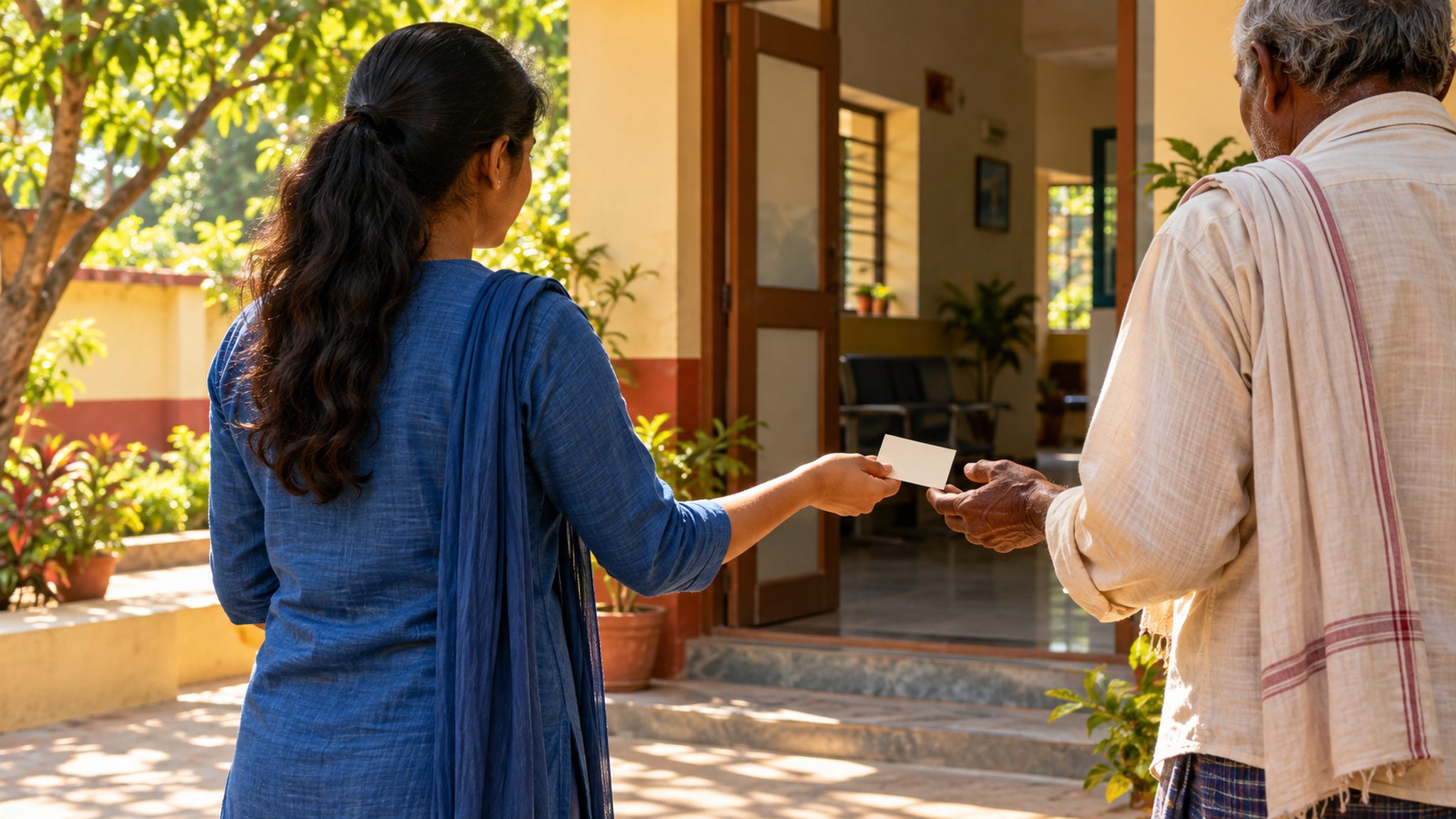
Where Does Volunteer Authority End?
An outreach role can support care without creating independent authority to diagnose, prescribe or compel participation.
- The launch announcement assigns awareness and support functions, not independent diagnostic or prescribing powers. A volunteer’s participation in a government programme should never be presented as proof of professional medical qualification or clinical authority.
- Treatment support means helping people follow prescribed care and raising difficulties with the health team. It should not become permission to alter medicines, interpret clinical findings independently or assure someone that professional advice is unnecessary.
- For effective officer accountability, local arrangements should specify whom volunteers contact when families raise medical concerns, service complaints or privacy problems. These are recommended implementation safeguards, not detailed powers already established by the launch release.
- Training and supervision should cover communication, respectful household contact and escalation of concerns. Clear role descriptions help volunteers recognise when a question exceeds their competence and when a qualified health professional must take responsibility.
- The WHO community-engagement guidance treats community and health systems as complementary. The useful governance principle is partnership: affected people help shape services, while public institutions retain responsibility for providing accessible, competent care.
How Should Local Teams Protect Trust?
The same neighbourhood familiarity that helps outreach can expose people to stigma unless teams handle information and participation carefully.
- Confidentiality should guide household conversations and reporting. Volunteers should avoid identifying affected people in public gatherings or informal messaging groups; administrative convenience is not a sufficient reason to circulate someone’s private health information unnecessarily.
- Informed participation requires an understandable explanation of the activity and a genuine opportunity to ask questions. WHO guidance requires consent for screening and respect for refusal, so outreach should encourage engagement without threats or humiliation.
- The announced digital reporting feature supports team activity, but its existence does not establish that all privacy safeguards are operational. Local implementation should clarify authorised access, necessary information and responsibility for correcting mistakes in reports.
- Community feedback should influence outreach plans, including where and how conversations take place. People affected by TB can identify language, timing or behaviour that makes a well-intended visit intrusive, discouraging or difficult to participate in.
- Phased expansion offers an opportunity to correct training and coordination problems before wider deployment. Recognition of TB-Mukt Panchayats is a separate programme achievement; it should not be read as proof of zero cases or national elimination.
Way Forward
Turn Team Leadership Into Practical Accountability
- Give each team a clear role sheet, a named health-service contact and a route for escalating concerns beyond volunteer competence.
- Train members in confidential communication and consent, using realistic household situations rather than relying only on publicity material.
- Review supervision and community feedback during phased expansion, fixing coordination failures before increasing the number of operational teams.
Conclusion
- JOSH’s contribution is an organised partnership between youth networks and local administration. Its value will depend on whether leadership, training and health-service coordination make volunteer support dependable while keeping clinical responsibility with qualified personnel.
- Community trust is part of effective public-health delivery. Clear authority limits, respectful participation and protected information can help teams strengthen access to care without turning neighbourhood outreach into an intrusive or coercive exercise.
UPSC Practice Questions
Prelims MCQ 1
With reference to JOSH teams, consider the following statements:
- A team includes MY Bharat volunteers and NCC cadets.
- A designated Class-I officer leads the team at block or ward level.
- The first-phase announcement establishes completed operational deployment in every Indian district.
How many of the above statements are correct?
(a) Only one (b) Only two (c) All three (d) None
Answer: (b) Only two
Explanation:
Statements 1 and 2 reflect the announced team design. Statement 3 is incorrect: first-phase deployment covers 55 districts across 11 States and Union Territories, with wider orientation and mobilisation to follow.
Prelims MCQ 2
Which arrangement best preserves the role boundary of a JOSH volunteer?
(a) Independently changing prescribed medicines when a patient reports difficulty. (b) Publishing household health information to increase community participation. (c) Supporting prescribed care and referring medical concerns to the responsible health team. (d) Treating attendance at a national launch as authority to issue medical certificates.
Answer: (c) Supporting prescribed care and referring medical concerns to the responsible health team.
Explanation:
The announced functions concern community outreach and support. These do not create independent clinical powers. Competent care and privacy require supervision, appropriate escalation and protection of personal information.
UPSC Mains Questions
- How can JOSH teams strengthen community participation in TB care while preserving professional accountability? Discuss with reference to their institutional design. (150 words)
- Youth participation in public health requires clear authority limits and protection of dignity. Examine the safeguards needed when expanding volunteer-led outreach. (250 words)
Sources: PIB, Ministry of Health and Family Welfare and World Health Organization.
Frequently Asked Questions
What does JOSH stand for?
JOSH stands for Joint Squad for Health. The teams bring MY Bharat volunteers and NCC cadets into community TB outreach under designated local officers, linking youth participation with the TB Mukt Bharat Abhiyaan.
Who leads a JOSH team?
The announced structure places each team under a designated Class-I officer at block or ward level. Administrative leadership supports coordination, but it does not give volunteers independent authority to diagnose disease or prescribe treatment.
Have JOSH teams already been deployed nationwide?
No. The first phase covers 55 districts across 11 States and Union Territories. Other districts will undertake orientation and mobilisation. A national launch should not be confused with completed operational deployment everywhere.
Can JOSH volunteers make medical decisions?
The launch assigns outreach, awareness and patient-support functions, not independent clinical powers. Volunteers can help people stay connected with prescribed care and raise concerns with health personnel, while qualified professionals retain responsibility for medical decisions.