Kalai-II Hydel Project: Location and Concerns
Why in News?
The 1200 MW Kalai-II Hydroelectric Project in Arunachal Pradesh has come under scrutiny for allegedly omitting the presence of the critically endangered White-Bellied Heron from project documents submitted for forest clearance.
| UPSC Relevance: GS-3 Environment and Biodiversity: Conservation; GS-3 Economy: Infrastructure Prelims: Kalai-II Hydroelectric Project (location); White-Bellied Heron; Lohit River. |
Kalai-II Hydroelectric Project:
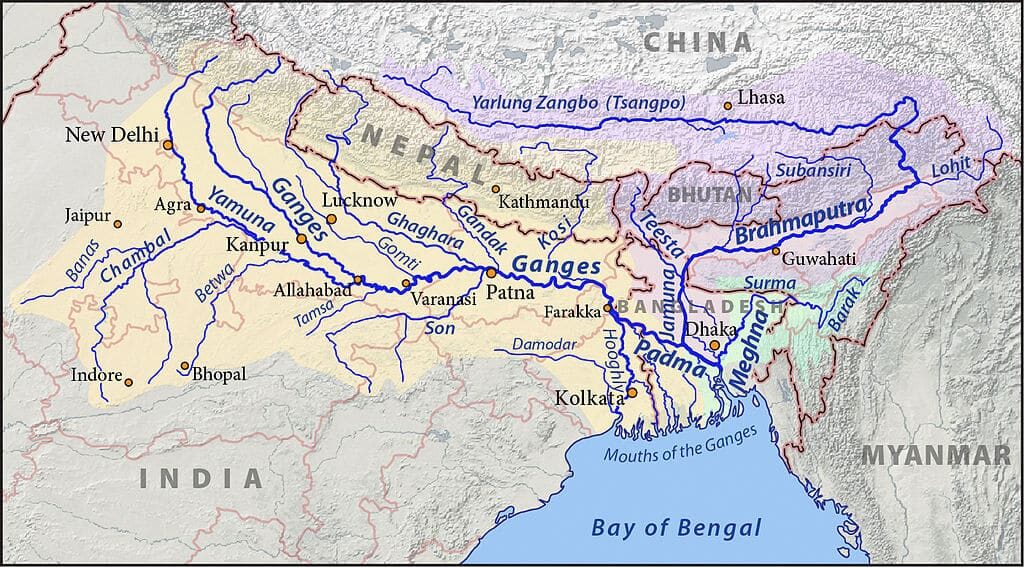
- The run-of-the-river project is proposed on the Lohit River (tributary of the Brahmaputra) in Anjaw district, in Arunachal Pradesh, near the India-China border.
- It will involve the construction of a 128.5 m concrete gravity dam and an underground powerhouse.
- The Rs 14,176.26 crore project is being implemented by THDC India Ltd.
Significance of the Project:
- Renewable Energy Boost: The 1200 MW project will annually generate 4852 million units (MU) of clean electricity. It aims to meet rising peak power demand and contribute to overall regional grid stability.
- Accelerate development in the Lohit basin, stimulating local economic growth and supporting strategic infrastructure development.
| Run-of-the-River project: Run-of-the-river (RoR) hydroelectric projects generate electricity by harnessing the natural flow and elevation drop of a river, typically using little to no reservoir storage. Their operation involves diverting a portion of the river water to turbines for electricity generation. Environmental Impact: Lower impact than conventional hydroelectric dams due to reduced land submergence and fewer displacement issues compared to large reservoir projects. |
The project has received a recommendation for environmental clearance from the Environment Ministry’s expert appraisal committee on river valley and hydroelectric projects.
What are the Concerns?
- Omission of White-Bellied Heron in the EIA: The Environmental Impact Assessment (EIA) report for the project did not mention the presence of White-Bellied Heron, despite records of the species in the Lohit River basin.
- Forest Diversion: The project requires diversion of 869.35 hectares of semi-evergreen forest land. This may lead to habitat fragmentation, biodiversity loss, and increased human activity in ecologically sensitive zones.
- Compensatory Afforestation outside Arunachal Pradesh: Compensatory afforestation has reportedly been proposed in Madhya Pradesh instead of Arunachal Pradesh because Arunachal already has more than two-thirds forest cover. Issues with this Approach:
- Ecological characteristics cannot be replicated elsewhere
- Riverine ecosystems are location-specific
- Loss of biodiversity in the Northeast may not be offset by plantations elsewhere.
About White-Bellied Heron:
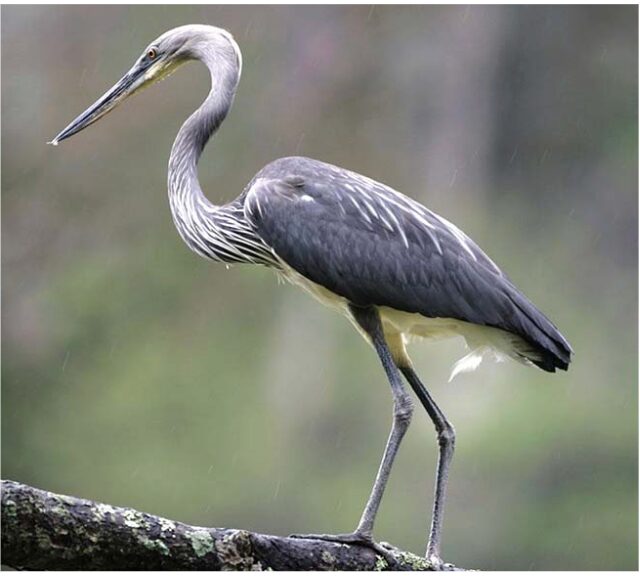
- The White-bellied Heron is considered the world’s second-largest heron (~127 cm), and is found in the Eastern Himalayan foothills.
- Primarily inhabits: undisturbed, free-flowing rivers and wetlands in Bhutan, Myanmar, and Northeast India (Arunachal Pradesh- Namdapha National Park and Assam).
- Habitat: It inhabits quiet riverine systems, undisturbed forests, and wetlands in tropical/subtropical environments.
- They are solitary birds highly sensitive to human disturbance, feeding on fish in rapids. The species is considered a bio-indicator of healthy river ecosystems.
- Key Threats: Habitat loss due to dam construction, logging of nesting trees, hunting, and disturbance along riverine ecosystems.
- Conservation Status:
- IUCN status: Critically Endangered (with fewer than 300 mature individuals estimated globally).
- Protection Status in India: Schedule I of the Wildlife (Protection) Act, 1972
- CITES: Appendix I
About Lohit River:
- Lohit is a major left-bank tributary of the Brahmaputra River, and flows for approximately 200 kms within India before joining the main river.
- Origin: Zayal Chu range of eastern Tibet. It enters India in Arunachal Pradesh and merges into the Brahmaputra in Assam.
- The river is highly dynamic, with significant changes in its banklines and path reported over the last few decades.
UPSC PYQ 2022:
Q. Consider the following pairs:
| Wetland/Lake | Location |
| Hokera Wetland | Punjab |
| Renuka Wetland | Himachal Pradesh |
| Rudrasagar Lake | Tripura |
| Sasthamkotta Lake | Tamil Nadu |
How many pairs given above are correctly matched?
(a) Only one pair
(b) Only two pairs
(c) Only three pairs
(d) All four pairs
Answer: (b) (2 & 3 are correctly matched)