Malaria

Context
The U.S. Centres for Disease Control and Prevention (CDC) calls mosquitoes the “world’s
deadliest animals.” They have good reason. Small, annoying but dangerous: this disease carrying insect helps kill more than a million people in the world every year. Now, as the world becomes warmer, their domain could be expanding. Previously, mosquitoes were only a concern in the warmer, tropical areas of the world. But now, malaria cases in the U.S. are on the rise, as are the number of warm and humid days when the insects can thrive.
UPSC Relevance:
Examination has tested our knowledge with respect to critical and emrging disease frequetly in Prelims as can be seen by the following questions:
UPSC PYQ:
Prelims 2013
Q: Which of the following diseases can be transmitted from one person to another through tattooing?
- Chikungunya
- Hepatitis B
- NW-AIDS
Select the correct answer using the codes given below.
A 1 only
B 2 and 3 only
C 1 and 3 only
D 1, 2 and 3
Prelims 2010:
Q. Widespread resistance of malarial parasite to drugs like chloroquine has prompted attempts to develop a malarial vaccine to combat malaria. Why is it difficult to develop an effective malaria vaccine?
(a) Malaria is caused by several species of Plasmodium
(b) Man does not develop immunity to malaria during natural infection
(c) Vaccines can be developed only against bacteria
(d) Man is only an intermediate host and not the definitive host
About Malaria:
Key facts according to WHO:
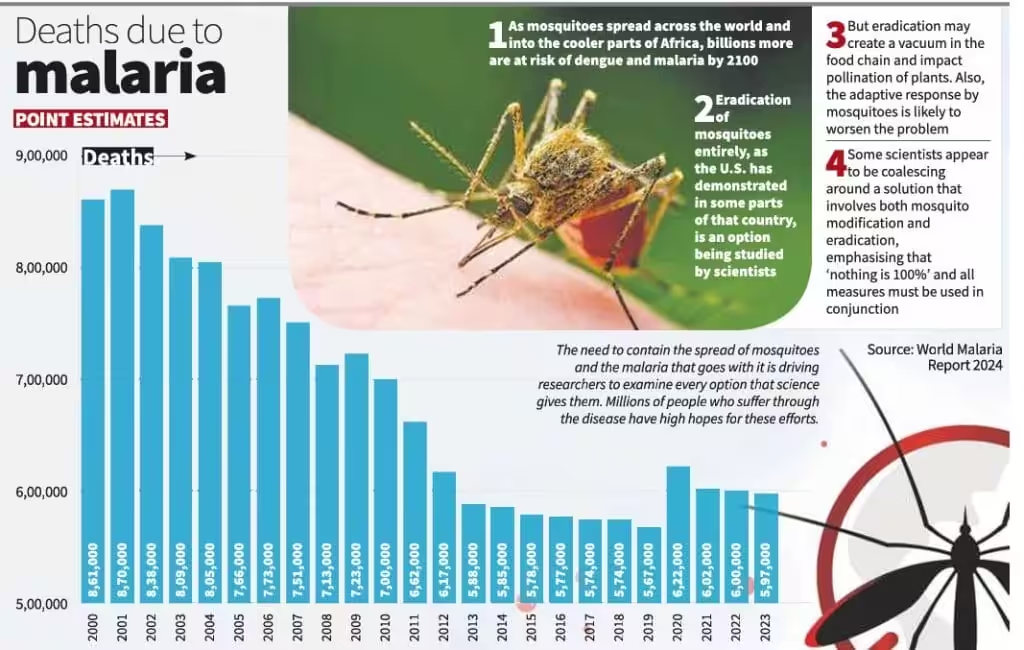
- Globally in 2023, there were an estimated 263 million malaria cases and 597 000 malaria deaths in 83 countries.
- The WHO African Region carries a disproportionately high share of the global malaria burden.
- In 2023, the WHO African Region was home to 94% of malaria cases (246 million) and 95% (569 000) of malaria deaths.
- Children under 5 accounted for about 76% of all malaria deaths in the Region.
Malaria:
- Malaria is a life-threatening disease spread to humans by some types of mosquitoes. It is mostly found in tropical countries. It is preventable and curable.
- The infection is caused by a parasite and does not spread from person to person.
- Symptoms: fever, chills and headache. Severe symptoms include fatigue, confusion, seizures, and difficulty breathing.
- Malaria mostly spreads to people through the bites of some infected female Anopheles mosquitoes.
There are 5 Plasmodium parasite species that cause malaria in humans and 2 of these species – P. falciparum and P. vivax – pose the greatest threat. P. falciparum is the deadliest malaria parasite and the most prevalent on the African continent.
Prevention:
- Vector control is a vital component of malaria control and elimination strategies as it is highly effective in preventing infection and reducing disease transmission.
- Since October 2021, WHO has recommended broad use of the RTS,S/AS01 malaria vaccine among children living in regions with moderate to high P. falciparum malaria transmission.
- In October 2023, WHO recommended a second safe and effective malaria vaccine, R21/Matrix-M. Vaccines are now being rolled out in routine childhood immunization programmes across Africa.