MSDC Port Rules: Coordinating Coastal States and Common Processes
Why in News?
On 13 October 2026, the Maritime State Development Council concluded its first meeting since receiving statutory recognition, approving draft instruments and a shared programme for port coordination.
- The Council approved draft regulations and guidelines covering its functioning, port data and tariff transparency.
- It resolved to implement One Nation One Port Process reforms and single-window integration across ports by March 2027.
- Electronic publication of port tariffs was mandated to improve transparency for port users.
- States were urged to align port master plans and connectivity projects with a national perspective.
- A port expansion can underperform when land transport links, cargo-handling capacity and regulatory processes develop separately.
- Cooperative federalism matters because coordinated infrastructure planning requires central institutions, coastal governments and port bodies to work together.
UPSC Relevance
Prelims Relevance
- MSDC: a statutory consultative body under the Indian Ports Act, 2025.
- Other Than Major Ports: included in the coordinated planning agenda alongside Major Ports.
- ONOP: common documentation, port-process redesign and inter-ministerial reforms.
- Tariff transparency: publication of charges, distinct from uniform charges.
- Multimodal connectivity: integrating ports with different freight transport modes.
Mains Relevance
GS Paper 2
- Centre–State coordination through a statutory consultative institution.
- Distinguishing policy resolutions from enforceable rules and completed implementation.
GS Paper 3
- Port-led development, logistics bottlenecks and transparent user charges.
Essay
- Institutions create economic value when they coordinate interdependent public decisions.
Background and Context
What Statutory Port Coordination Changes
The Council provides a formal meeting point for institutions whose decisions shape the same maritime economy, even when their administrative responsibilities differ.
- The Indian Ports Act, 2025 gives MSDC a statutory consultative basis. According to the ministry, its mandate covers coordinated policy formulation, integrated maritime growth and planned infrastructure development across the sector.
- Consultation brings coastal governments, State Maritime Boards, Major Ports and central ministries into a shared planning forum. This helps reveal dependencies that an individual port authority may not be able to resolve alone.
- A statutory foundation establishes the institutional basis for coordination. It does not mean every Council announcement automatically becomes an operational rule, or that all agreed measures already apply uniformly to port users.
- The meeting approved draft regulations and guidelines and called for subordinate rule-making by States and Union Territories. Draft approval, formal notification and practical enforcement are separate stages when assessing a reform’s legal effect.
- The announcement describes joint Centre–State action, including State-led port planning. It does not announce a takeover of all state ports by the Centre; cooperation should not be confused with a transfer of ownership.
Common Processes and Visible Tariffs
Process harmonisation aims to make port procedures more consistent, while tariff transparency makes the charges associated with those services easier to examine.
- One Nation One Port Process includes common documentation, port-process re-engineering and inter-ministerial changes. The practical issue is whether traders encounter repeated information requests and inconsistent procedures when cargo moves through different ports.
- The Council set March 2027 for nationwide implementation and single-window integration. This is a future implementation commitment; the release does not establish that every port already operates under a fully harmonised system.
- A single-window arrangement can provide a common digital interface for port-related processes. Its value depends on participating agencies coordinating requirements behind that interface, rather than merely moving existing forms onto a screen.
- Electronic tariff publication lets users inspect the charges a port advertises before choosing services. Better visibility can help firms compare costs and question discrepancies, but publication by itself does not guarantee lower charges.
- Transparent tariffs and identical tariffs are different concepts. The Council’s publication decision concerns access to pricing information; it should not be read as imposing one nationally uniform price for every port service.
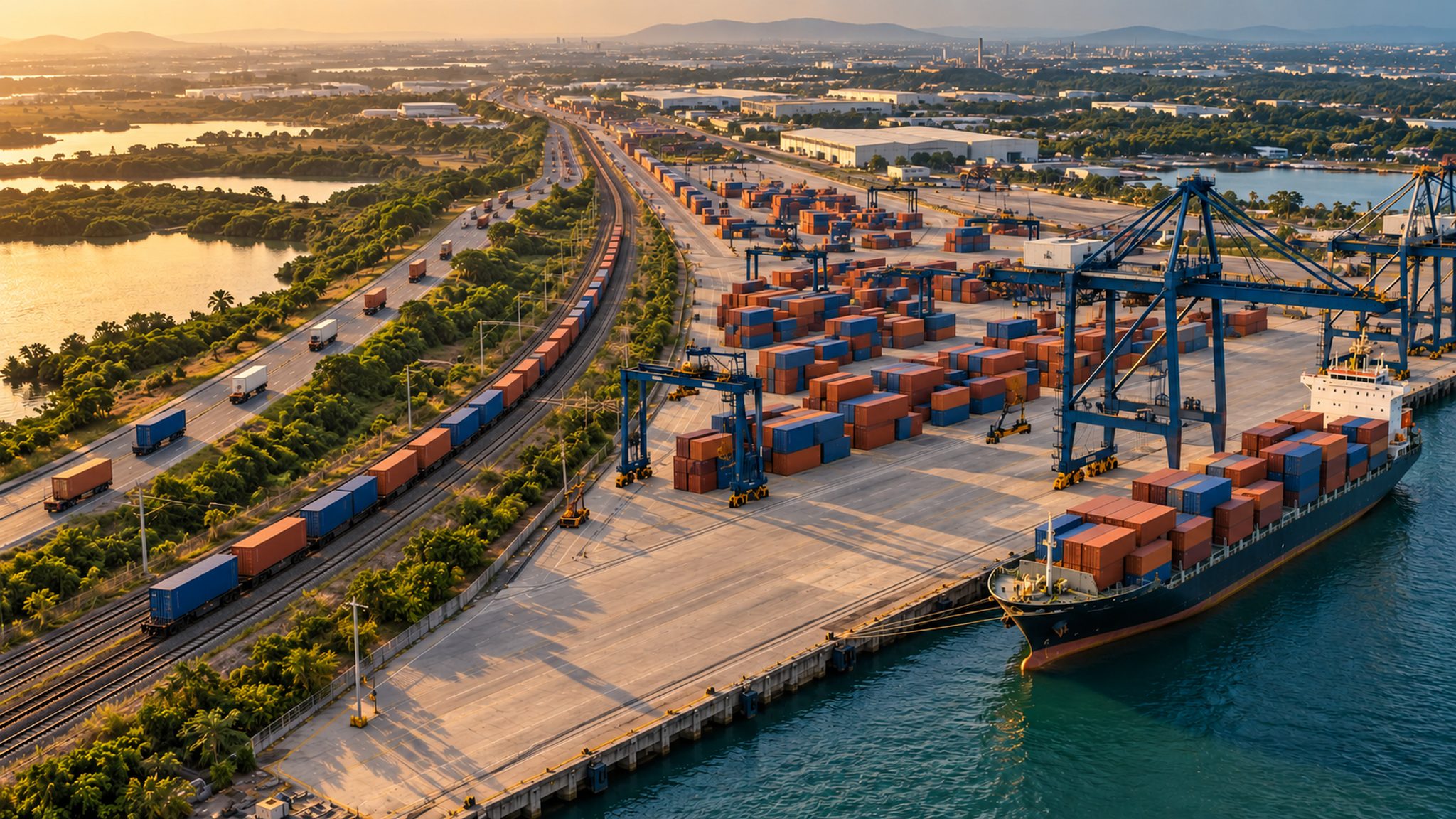
Why Connectivity Must Accompany Port Expansion
The planning agenda connects harbour capacity with the transport links and industrial locations that generate cargo and carry it inland.
- States were urged to prepare Port Master Plans for Other Than Major Ports using a standardised template. A common planning framework can make proposals easier to compare while retaining their local infrastructure context.
- Multimodal connectivity links ports with road, rail, inland waterways, pipelines and conveyors. Each mode serves different cargo needs; choosing connections requires matching the transport system to cargo characteristics and the surrounding industrial geography.
- The Council sought port-linked industrial clusters with land, ready infrastructure and coordinated approvals. Linking industrial locations to port expansion can help align expected cargo demand with the capacity being planned to handle it.
- A larger berth cannot by itself resolve an inland freight bottleneck. If road or rail access remains constrained, cargo can accumulate beyond the waterfront; assessing the complete journey is essential to diagnosing delays.
- Implementation quality should be judged through actual process changes, accessible tariff information and completed connectivity links. A shared plan is a starting point for coordination, rather than evidence that congestion or compliance burdens have disappeared.
Way Forward
Measure Implementation Across the Cargo Journey
- Publish clear implementation responsibilities for each agreed measure, distinguishing draft instruments from notified rules and operational processes.
- Check whether port users can find current tariffs, identify applicable charges and resolve discrepancies through a usable grievance route.
- Sequence connectivity investments alongside port capacity so that unfinished inland links do not become the next bottleneck.
- Track duplicate documentation and processing delays before and after reforms to assess benefits beyond the availability of a digital interface.
Conclusion
- The MSDC decisions illustrate cooperative federalism applied to interdependent infrastructure: common processes and information standards require coordinated action across institutions, while port development must remain connected to inland freight needs.
- For analysis, separate the statutory institution, the Council’s decisions and completed implementation. Transparent charges, coordinated planning and a future deadline are meaningful developments, but do not prove nationwide operational uniformity.
UPSC Practice Questions
Prelims MCQ 1
With reference to the October 2026 MSDC decisions, consider the following statements:
- MSDC functions as a statutory consultative body under the Indian Ports Act, 2025.
- Electronic publication of port tariffs necessarily establishes identical tariffs at every port.
- The Council set a future deadline for nationwide ONOP implementation.
How many of the above statements are correct?
(a) Only one (b) Only two (c) All three (d) None
Answer: (b) Only two
Explanation:
Statements 1 and 3 are correct. Publication makes tariffs visible; the release does not prescribe identical charges across ports.
Prelims MCQ 2
Which situation best illustrates the need for integrated port connectivity planning?
(a) A new berth opens while its inland rail connection remains a cargo bottleneck. (b) A port publishes a clear list of service charges. (c) A trader compares the published charges of two ports. (d) A port replaces one redundant form with a common document.
Answer: (a) A new berth opens while its inland rail connection remains a cargo bottleneck.
Explanation:
Port capacity and inland evacuation capacity are interdependent. Expanding the waterfront alone cannot remove a bottleneck elsewhere in the freight journey.
UPSC Mains Questions
- Explain how a statutory consultative institution can strengthen cooperative federalism in port development without centralising every operational responsibility.
- Common digital processes cannot substitute for physical connectivity in port-led development. Discuss with reference to the MSDC reform agenda.
Source: PIB, Ministry of Ports, Shipping and Waterways.
Frequently Asked Questions
What is the Maritime State Development Council?
MSDC is a statutory consultative body under the Indian Ports Act, 2025. It brings central and coastal-state institutions together for coordinated maritime policy and planned infrastructure development.
Have common port processes already been implemented nationwide?
The October meeting resolved to implement ONOP reforms and single-window integration across ports by March 2027. That is an implementation commitment, not confirmation that harmonisation is already complete at every port.
Does electronic tariff publication mean identical port charges?
No. Publication improves access to information about charges. Uniform tariffs would require a separate pricing decision; the Council’s transparency announcement should not be interpreted as establishing identical charges for every port service.
Did the Council announce a takeover of state ports?
No such takeover is announced in the release. Its focus is coordinated planning involving States, State Maritime Boards, Major Ports and central ministries, including State preparation of port master plans.
Why does port reform require inland connectivity?
Cargo must move between the waterfront and inland producers or users. Berth expansion can deliver limited benefits if road, rail or other freight connections remain constrained, making coordinated investment essential.