Neurotechnology

Why in news:
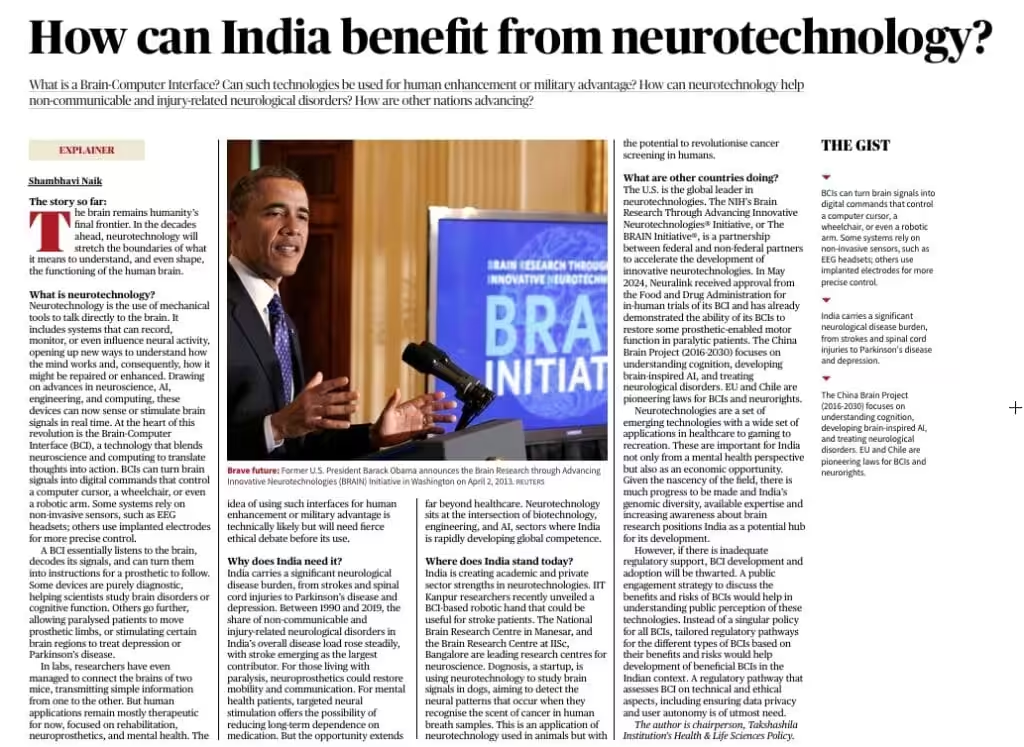
Elon Musk’s company Neuralink received regulatory approval to conduct human brain implant trials.
UPSC Relevance:
Science and Technology
UPSC PYQ:
Q. What do you understand by nanotechnology and how is it helping in the health sector? (2020)
About Neurotechnology:
Neurotechnology encompasses all technologies developed to understand the brain, visualise its processes and even control, repair or improve its functions.
- Neurotechnology refers to technologies that:
- Directly interact with the human brain and nervous system
- Can record, interpret, stimulate, or modify neural activity
- Combine neuroscience + AI + computing + bioengine
Example:
- Brain-Computer Interface (BCI):
- A direct communication pathway between the brain and an external device
- Converts brain signals into digital commands
Applications:
- Neuronal biofeedback:
- Using real-time EEG (Electroencephalogram) or fMRI,(Functional magnetic resonance imaging ) someone can be taught to control their central nervous functions, such as heartbeat.
- Next generation neuropharmacology:
- Behavioural and molecular neuropharmacology are benefiting from a better understanding of the nervous system to develop more effective drugs.
- Neuroprostheses:
- These devices are able to replace motor, sensory or cognitive abilities damaged as a result of injury or disease.
- Neural interfaces:
- Brain-computer interfaces are fundamental in the development of new sensors and prostheses, allowing signals to be sent and received in real time.
Why Neurotechnology Matters for India:
India faces a triple challenge:
- High neurological disease burden
- Rising ageing population
- Growing digital + defence ambitions
India’s Neurological Burden:
- Stroke, epilepsy, spinal cord injury, Parkinson’s, depression
- Rising mental health disorders
- High cost of long-term rehabilitation
BCIs can enable:
- Stroke and spinal injury patients to recover motor function
- Paralysed patients to move robotic or prosthetic limbs
- Locked-in patients to communicate using thought
- Parkinson’s patients to receive deep brain stimulation
Economic and Industrial Benefits for India:
- High-Value Industry Creation:
- Indigenous medical device manufacturing
- Neuro-AI startups
- Brain-inspired computing (neuromorphic chips)
- Employment Generation:
- Neuroscientists
- Biomedical engineers
- AI researchers
- Data scientists
- Rehabilitation specialists
- Global Market Leadership Opportunity:
- Global neurotech market is expanding rapidly
- India can replicate its success in:
- IT services
- Space (ISRO)
- Generic pharmaceuticals
- Military and Strategic Applications:
- Enhanced battlefield communication
- Faster response systems using neural control
- Fatigue monitoring of soldiers
- Neuro-rehabilitation of injured soldiers
International Level initiative:
- Human Trials of Brain–Computer Interface (BCI) by Neuralink:
- In 2024, Elon Musk’s company Neuralink received regulatory approval to conduct human brain implant trials.
- A paralysed patient successfully used a BCI implant to control a computer with thoughts.
- Global Neurotechnology Race: USA vs China
- USA is advancing under its BRAIN Initiative (NIH, DARPA).
- China is aggressively funding its China Brain Project (2016–2030)
India:
- India’s Deep Tech Startup Policy, BioE3 Policy, and Startup India are encouraging:
- Medical devices
- AI in healthcare
- Brain–machine technologies
- IITs, IISc, AIIMS, NIMHANS are scaling neuro-AI and brain research.
- Neurotechnology is now seen as a “sunrise sector” for India.
Concerns related to Neurotechnology:
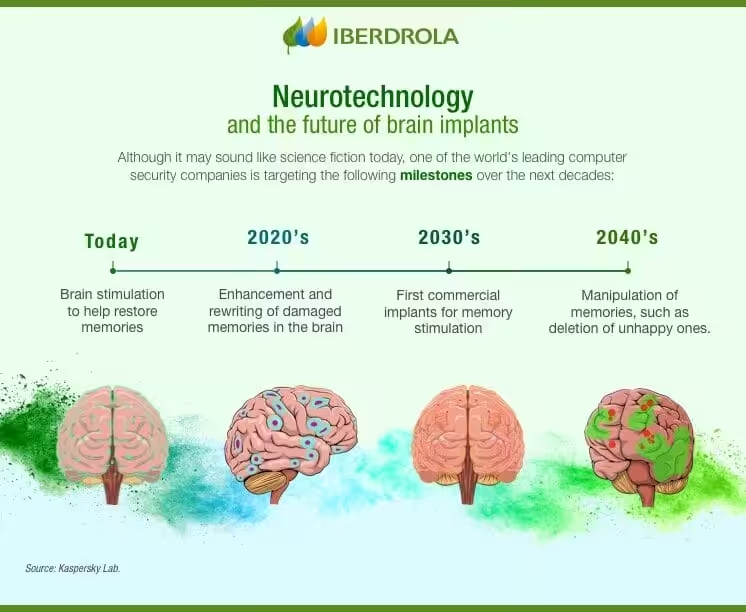
- Mental Integrity: Unlike many other frontier technologies, it can directly access, manipulate and emulate the structure of the brain.
- Personal Identity & Psychological Continuity: Protection of one’s sense of self (compromises freedom of thought) and memory including autonomy and privacy from Memory modification or manipulation changing “who a person is”.
- Use of Neural Data: Corporations might exploit neural data collected through neurotech devices for targeted marketing or commercial gain.
- Social Inequalities: Unequal deployment of neurotechnology could intensify existing social divides, potentially leading to greater social tension and conflict.
UNESCO Recommendations:
- Legal Protection and Regulation: Enact laws to control neurotechnology use, especially beyond scientific, medical, or judicial purposes.
- Data Policy: Develop robust, fair and agile regulatory and legal frameworks to govern the collection, processing, sharing and all other uses of neural data.
- Equitable Access: Promote equitable access to science- and evidence-based, safe and reliable neurotechnology.