New method to increase nitrogen use efficiency can support sustainable crop yields
Why in News?
A new biological strategy to raise Nitrogen Use Efficiency (NUE) in crops by modulating plant nitric oxide (NO) levels was reported by NIPGR on 07 Jan 2025. The method could reduce dependence on inorganic nitrogen fertilisers and lower agricultural greenhouse gas emissions.
- Novel approach: Study shows systemic NO modulation upregulates high-affinity nitrate transporters (HATs) to improve NUE.
- Policy relevance: Potential to reduce inorganic fertiliser demand, lowering input costs and fertilizer-linked emissions.
- Scalable options: Work combines genetic (phytoglobin overexpression) and pharmacological (NO scavengers) routes, offering multiple deployment paths.
- Food security: Improved NUE helps sustain crop yields on limited N inputs, relevant for low-fertility soils and resource-poor farmers.
- Research to product path: Team is exploring soil bacteria and formulations that act as NO scavengers for field deployment.
The development matters in the context of:
- Nitrogen Use Efficiency (NUE) measures biomass or yield produced per unit of nitrogen input. Low NUE means more fertiliser needed and greater environmental impact.
- Global problem: Inorganic N fertiliser manufacture and over-application contribute substantial greenhouse gases and reactive nitrogen emissions (NOx, N2O).
- Existing solutions: Agronomic measures include split-dose application, slow-release fertilisers and precision fertigation; these reduce losses but raise costs and have operational limits.
- Biological route: Manipulating plant physiology and microbiome to improve uptake and assimilation offers an alternative to increasing fertiliser volumes.
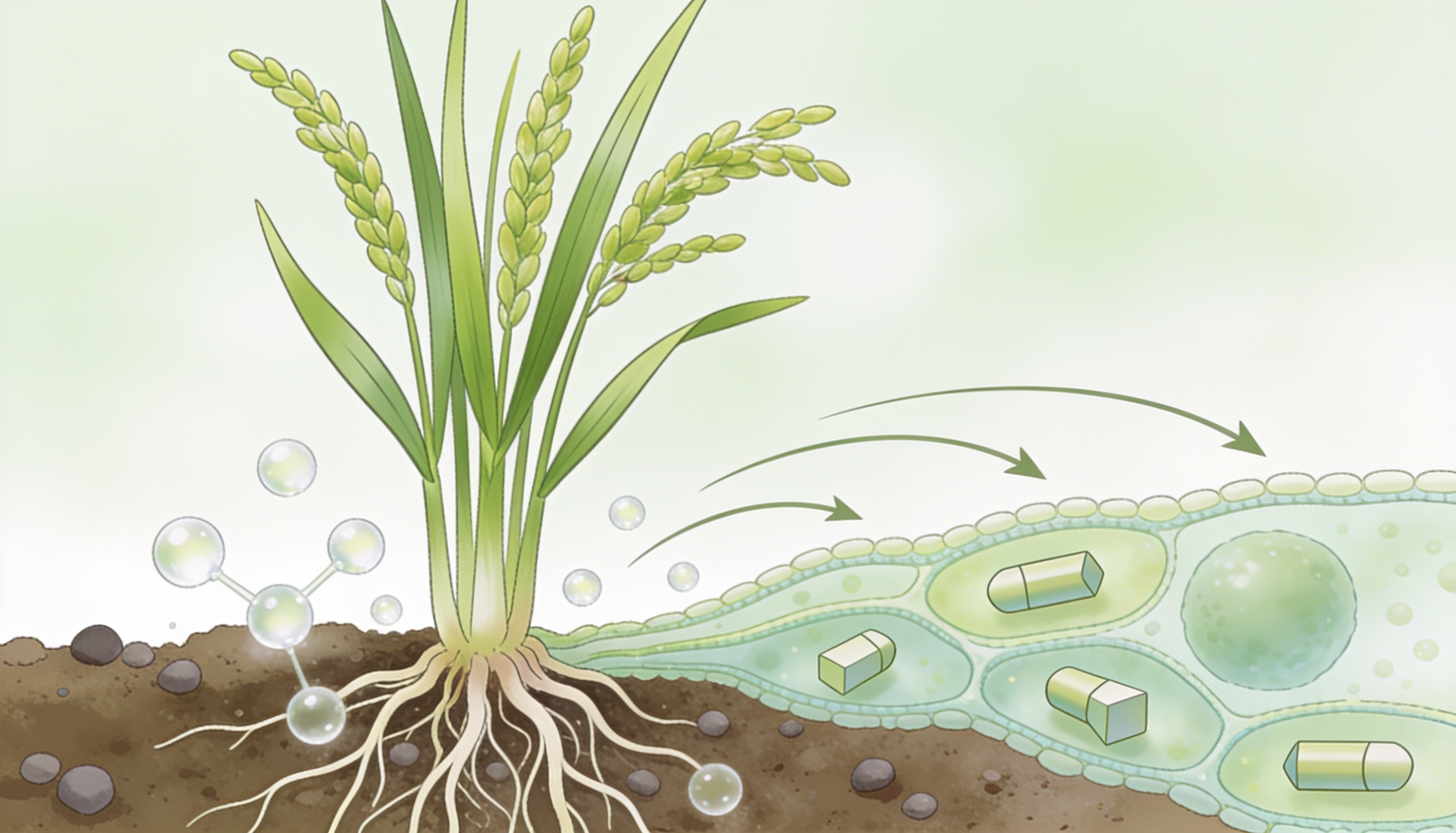
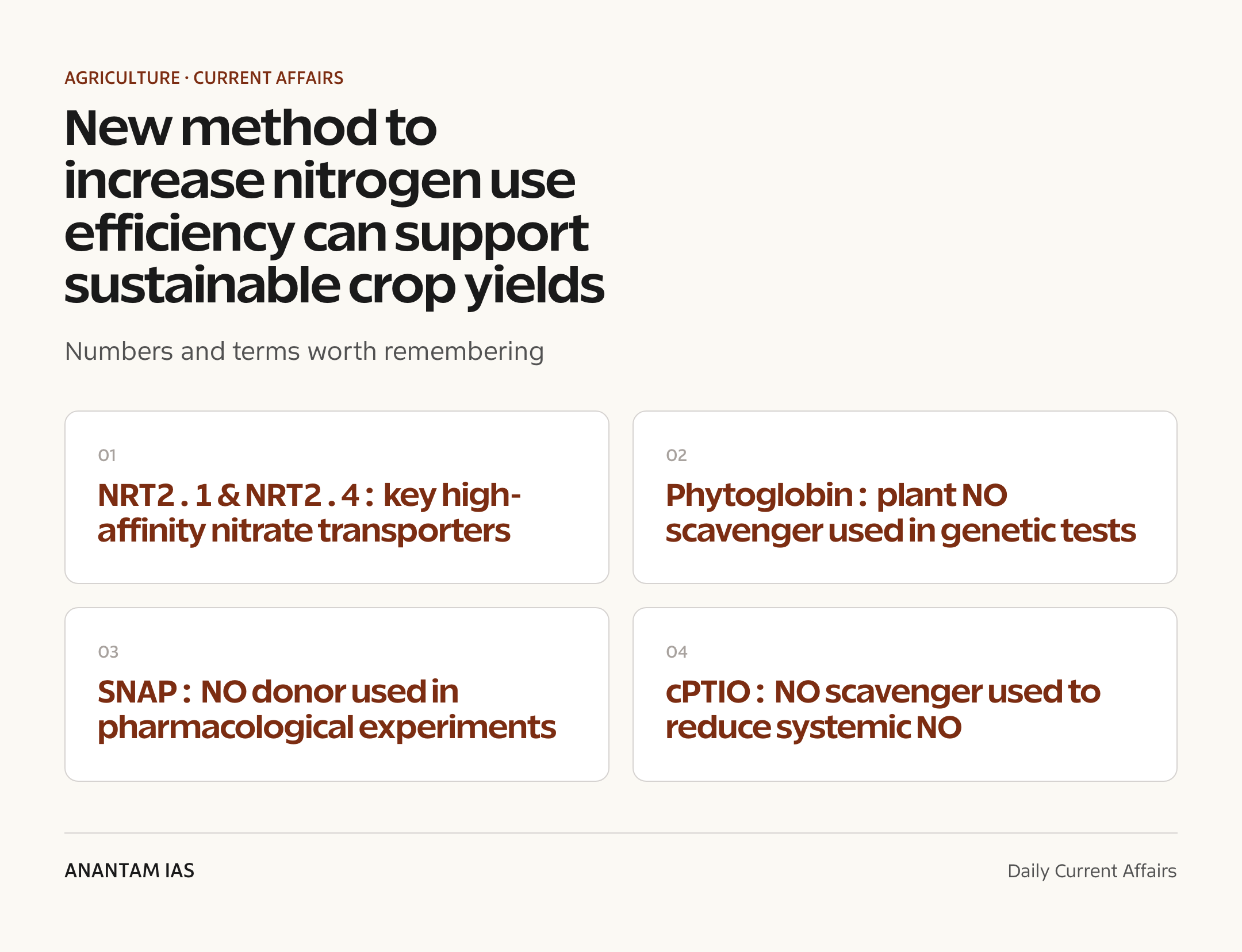
- High-affinity nitrate transporters (HATs) like NRT2.1 and NRT2.4 are activated under low external N and are critical for uptake when soil nitrate is scarce.
- Nitric oxide (NO) is a signalling molecule in plants that can modify proteins via nitrosylation and alter transporter expression and activity.
UPSC Relevance
Prelims Relevance
- Definition and meaning of Nitrogen Use Efficiency and its environmental significance.
- Role of high-affinity nitrate transporters (NRT2 family) in plant nitrogen uptake.
- Biological function of nitric oxide (NO) in plants and concept of NO scavengers like phytoglobin.
Mains Relevance
GS3 Science, Agriculture and Environment
- Discuss strategies to raise agricultural productivity sustainably by reducing chemical fertiliser dependence; link to NUE innovations.
- Analyse the role of plant signalling molecules in nutrient use and how biotechnology can contribute to climate-friendly agriculture.
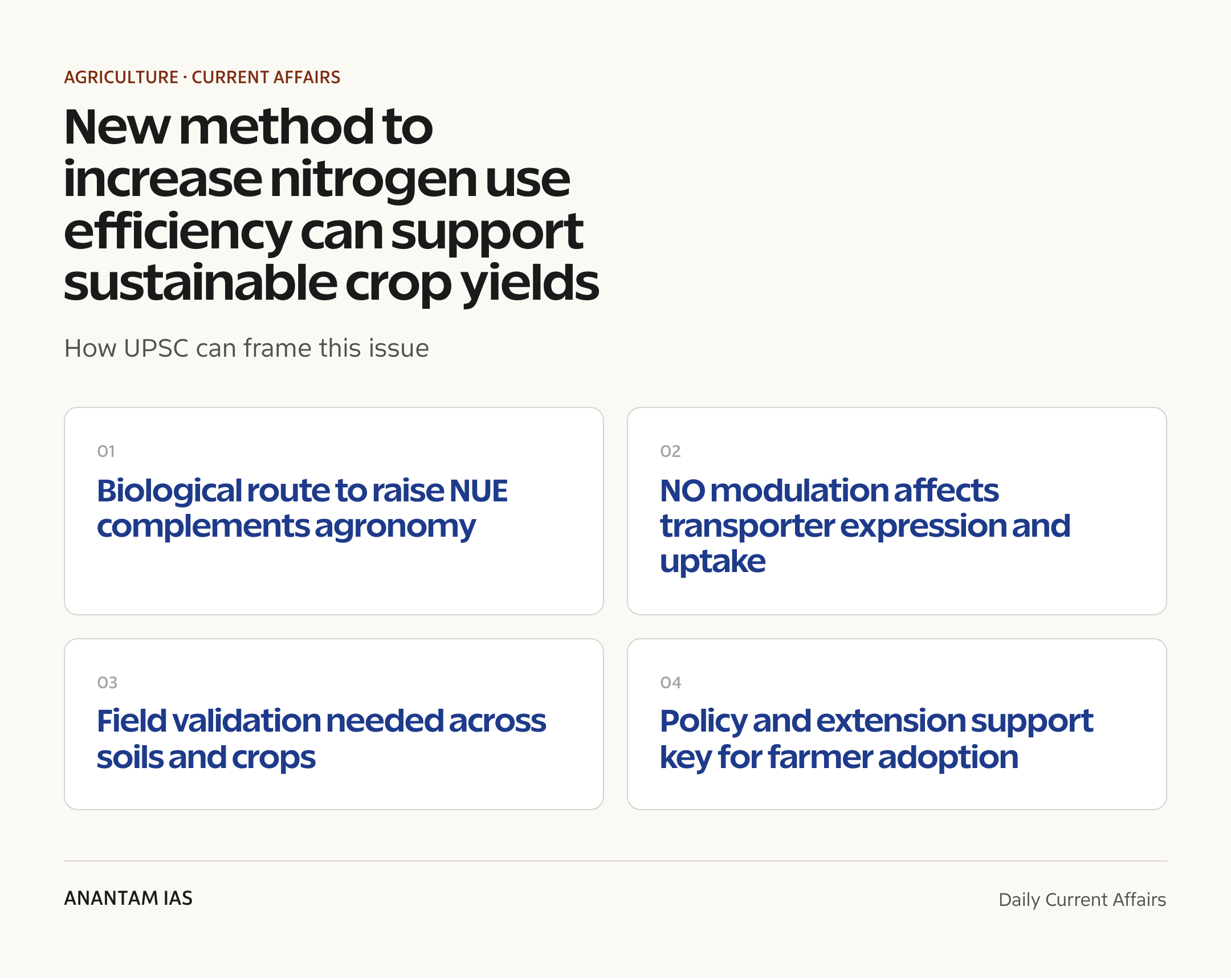
- Evaluate policy implications and implementation challenges in scaling biological NUE solutions across India.
Essay
- Sustainable Agriculture: Integrating biological solutions such as NO modulation to reduce fertiliser use and greenhouse gas emissions.
- Science and Technology in Indian Agriculture: Role of plant molecular biology research in addressing food security and environmental goals.
Background and Context
Why nitrogen matters for crops
Nitrogen is the primary limiting nutrient for crop growth and yield in most major cropping systems.
- Nitrogen forms: Plants take up nitrogen mostly as nitrate (NO3-) and ammonium (NH4+).
- Yield driver: Adequate N supports leaf area, photosynthetic capacity and grain protein content.
- Soil pools: Mineral N in soil is dynamic and affected by mineralisation, leaching and denitrification.
- Trade-offs: High N rates boost yields but increase risk of leaching, runoff, NOx and N2O emissions, and water pollution.
Nitrogen Use Efficiency (NUE) — concept and indicators
NUE quantifies how effectively plants convert applied nitrogen into harvestable product.
- Common metrics: Agronomic efficiency (kg yield per kg N applied), recovery efficiency and internal NUE.
- Determinants: Soil type, water availability, fertiliser timing, crop genetics and microbial activity.
- Targeting NUE: Improving uptake (root traits, transporters), assimilation (enzyme activity) and partitioning to grain.
- Policy targets: Higher NUE cuts fertiliser imports, farmer costs and national emissions footprints.
Role of nitrate transporters
Nitrate uptake is mediated by transporter families with distinct affinities and regulatory controls.
- Dual systems: Low-affinity transporters operate at high soil N; high-affinity transporters (HATs) function under low N.
- NRT2 family: Members like NRT2.1 and NRT2.4 are critical HATs that support uptake when soil nitrate is scarce.
- Regulation: Transporter expression is finely tuned by N status, root signalling and systemic cues including signalling molecules.
- Breeding target: Enhancing HAT expression/function is a strategy to improve uptake on low-input soils.
Nitric oxide in plant physiology
NO is a gaseous signalling molecule that influences growth, stress responses and nutrient signalling.
- Signalling roles: NO modulates stomatal movement, root development, pathogen response and protein activity via nitrosylation.
- Interaction with N: NO influences nitrate transporter regulation and nitrogen assimilation pathways.
- NO levels: Both endogenous production and scavenging determine steady-state NO available for signalling.
- Negative effects: Excess NO can lead to inappropriate protein modification and regulatory disruption.
Phytoglobin and NO scavenging
Phytoglobins are plant hemoglobins that bind and scavenge NO, affecting NO-mediated signalling.
- Molecular function: Phytoglobin catalyses NO oxidation or sequestration, lowering free NO levels in plant tissues.
- Genetic route: Overexpression of phytoglobin decreases systemic NO and shifts regulatory networks.
- Observed effect: In the reported study, phytoglobin overexpression increased HAT expression and improved NUE under low N.
- Translational potential: Genetic or microbial strategies that increase phytoglobin activity or mimic its effect may be used in crops.
Limitations of agronomic NUE measures
Current agronomic practices reduce losses but have cost, operational and environmental limits.
- Split dosing and slow-release fertilisers reduce leaching but raise input costs and management complexity.
- Precision tools need capital, technical skills and supply chains not always present for smallholders.
- Manufacturing footprint of synthetic fertilisers contributes CO2 and other emissions upstream.
- Need for alternatives: Biological and genetic innovations can complement agronomy to push NUE higher.
Way Forward
Translational research and field validation
- Pilot multi-location field trials in major cereal zones to validate NO-scavenging strategies under realistic agronomic conditions.
- Evaluate yield response and grain quality, not only plant N metrics, across soil types and seasons.
- Assess economic trade-offs for farmers: input savings versus costs of new treatments or seed varieties.
- Set monitoring protocols for environmental outcomes: soil N, nitrate leaching and greenhouse gas fluxes.
Biological formulations and microbiome routes
- Develop and screen soil bacterial strains that act as NO scavengers or modulate plant NO metabolism.
- Formulate seed coatings, soil amendments or foliar sprays with safe NO-scavenging agents for easy farmer use.
- Test compatibility with existing fertiliser practices and beneficial microbes such as rhizobia and mycorrhizae.
- Design regulatory and biosafety testing pathways for microbial products under national norms.
Genetic approaches and breeding
- Introduce phytoglobin overexpression into elite varieties using breeding or targeted gene-editing with clear regulatory pathways.
- Screen diverse germplasm for natural variation in NO metabolism and HAT expression for marker-assisted selection.
- Ensure trait stacks preserve yield, stress tolerance and grain quality under farmer conditions.
- Plan containment and stewardship strategies for any transgenic or edited lines deployed.
Policy, incentives and farmer adoption
- Provide incentives or subsidies for validated low-N technologies that demonstrably reduce fertiliser use and emissions.
- Deploy extension modules to train farmers on integrating biological NUE solutions with best agronomy.
- Create public-private partnerships to scale production and distribution of NO-scavenging formulations and improved seeds.
- Incorporate NUE metrics into national soil fertility and climate-smart agriculture programs.
Conclusion
Modulating plant nitric oxide to boost Nitrogen Use Efficiency offers a promising biological complement to agronomic measures. Genetic and microbial NO-scavenging routes could reduce fertiliser demand, cut emissions and maintain yields, but success will depend on rigorous field validation, cost-effective productisation, regulatory clarity and farmer-centric deployment.
UPSC Practice Questions
Prelims MCQ 1
Which of the following statements about high-affinity nitrate transporters (HATs) is/are correct? 1. HATs operate primarily when soil nitrate concentrations are low. 2. NRT2.1 and NRT2.4 are examples of HAT genes. 3. Their expression is not influenced by plant signalling molecules. Choose the correct answer using the code given below.
(a) 1 and 2 only (b) 2 and 3 only (c) 1 and 3 only (d) 1, 2 and 3
Answer: (a) 1 and 2 only
Explanation:
Statements 1 and 2 are correct: HATs function under low soil nitrate and NRT2.1 and NRT2.4 are HATs. Statement 3 is incorrect because expression of HATs is regulated by plant signalling molecules including nitric oxide.
Prelims MCQ 2
Phytoglobin improves Nitrogen Use Efficiency in plants primarily by which mechanism? A. Increasing nitrate fertiliser uptake from soil by acting as a carrier. B. Scavenging nitric oxide, thereby altering transporter expression. C. Fixing atmospheric nitrogen in root nodules. D. Converting ammonium to nitrate in soil.
(a) A (b) B (c) C (d) D
Answer: (b) B
Explanation:
Phytoglobin acts as a plant NO scavenger. Lowering NO levels changes regulatory networks and increases expression of high-affinity nitrate transporters, improving N uptake and NUE. It does not fix atmospheric N or act in soil conversions.
UPSC Mains Questions
- {‘question’: ‘Explain how modulation of plant nitric oxide (NO) levels can change Nitrogen Use Efficiency (NUE). Discuss the potential benefits and risks of deploying NO-scavenging strategies in Indian agriculture.’, ‘model_answer’: ‘Modulating NO levels alters plant signalling pathways that regulate nitrate uptake and assimilation. NO can nitrosylate proteins involved in nutrient sensing and transporter regulation. Reduced NO, achieved by phytoglobin overexpression or pharmacological scavengers, upregulates high-affinity nitrate transporters (NRT2 family), improving uptake under low soil N and increasing internal N status, amino acid levels and growth. Benefits include lower fertiliser requirements, reduced emissions from fertiliser manufacture and application, cost savings for farmers and improved yields on marginal soils. Risks include off-target effects on NO-dependent stress responses, potential impacts on beneficial soil microbes, agronomic variability across soils and climates, biosafety and regulatory issues for genetic or microbial products, and the need to ensure grain quality is maintained. Any deployment requires multi-location field validation, environmental impact assessment, economic analysis and extension support.’}
- {‘question’: ‘What policy measures should the government consider to facilitate adoption of biological approaches that improve NUE, such as NO-scavenging formulations or phytoglobin-enhanced varieties?’, ‘model_answer’: ‘Policy measures could include: funding for translational research and large-scale field trials; fast-track evaluation and registration pathways for low-risk microbial and biochemical formulations; incentives or subsidies tied to verified reductions in fertiliser use or emissions; integrating NUE targets into national soil health and climate-smart agriculture programs; capacity building for extension services to train farmers; public-private partnerships for manufacturing and distribution; and clear biosafety regulations and stewardship plans for genetically modified or gene-edited varieties. Monitoring frameworks to track agronomic performance, environmental outcomes and socio-economic impacts should be mandated to guide scaling and course corrections.’}
Source: PIB, Ministry of Science & Technology.
Frequently Asked Questions
q
a
q
a
q
a
q
a
q
a
q
a