Paneer Draft Rules: Product Names and Informed Food Choices
Why in News?
On September 24, 2026, the Health Ministry announced FSSAI’s draft amendment restricting the use of the name paneer for products made with constituents not derived from milk.
- The proposal would amend the Prohibition and Restrictions on Sales Regulations, rather than announce a completed change in the law.
- Products licensed or registered as Analogue in Dairy Context would have to stop using paneer in their names, labels or marketing under the proposal.
- The 60-day consultation period runs from public availability of the relevant Gazette copies, not automatically from the ministry’s announcement.
- A familiar food name can influence purchasing before a consumer reads the ingredient list. Product identity is part of informed choice.
- The regulatory question concerns truthful representation; the announcement does not establish that every analogue product is unsafe.
UPSC Relevance
Prelims Relevance
- FSSAI: Food Safety and Standards Authority of India.
- Draft regulation: a proposed legal change subject to consultation.
- Dairy analogue: the category expressly identified in the proposal.
- Food identity and food safety: distinct questions requiring different evidence.
Mains Relevance
GS Paper 2
- Public consultation and delegated regulation.
- Consumer protection through accurate food descriptions.
GS Paper 3
- Information asymmetry and fair competition in food markets.
Essay
- Trust in markets depends on what product names allow consumers to infer.
Background and Context
What the proposed naming restriction means
The proposal addresses the identity conveyed by a familiar food name, covering how the product is presented as well as what it contains.
- The draft notification proposes adding paneer made of constituents not derived from milk to the sales restrictions. Its stated purpose is preventing misleading descriptions of a product’s nature and composition.
- Existing registration under the analogue category would not preserve the right to use the paneer name under the proposed amendment. Registration and the permitted description of a food answer different regulatory questions.
- The announcement expressly covers nomenclature, labelling and marketing. The concern is broader than one ingredient panel: a prominent product name or sales claim can create an expectation that smaller disclosures do not remove.
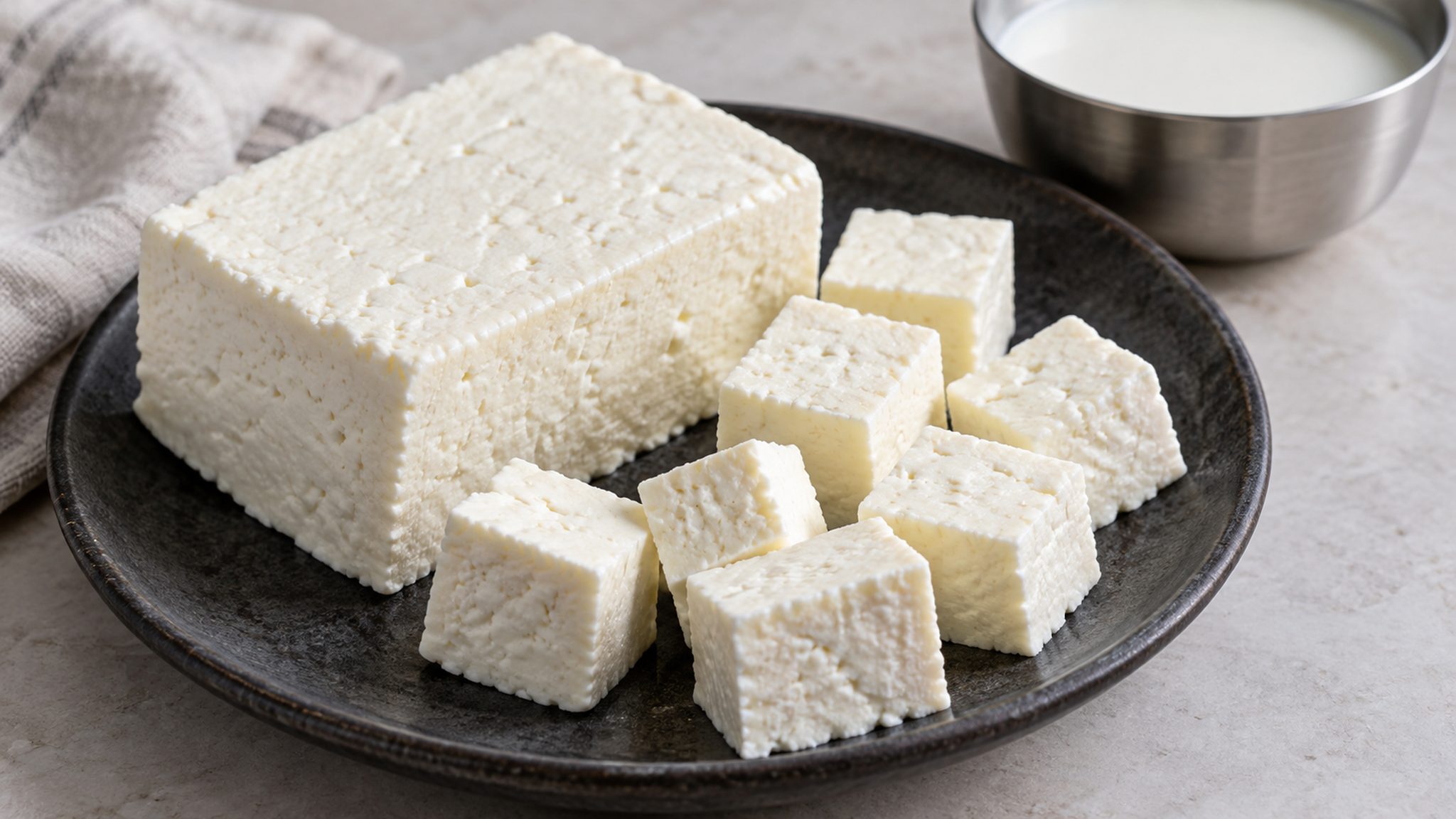
- A useful comparison is between accurately identified milk-derived paneer and an analogue represented as paneer. The issue is whether the description matches composition, rather than whether two products look similar on a plate.
- The draft should not be paraphrased as a universal prohibition on analogue foods. Its stated target is manufacturing and selling analogue products as paneer; wider claims about every substitute exceed the announced proposal.
How a draft becomes a regulatory decision
The Gazette is the primary legal source; the ministry’s release explains the proposal but does not turn consultation into an operative final rule.
- FSSAI issued the proposal with the Central Government’s previous approval under the Food Safety and Standards Act. The notification invokes its regulation-making authority; it is not a separate new Act passed by Parliament.
- Public consultation allows people likely to be affected to submit objections or suggestions. Manufacturers, consumers and other stakeholders can challenge ambiguous language, explain implementation problems or support a clearer restriction with reasons.
- The stated 60-day period begins when copies of the Gazette containing the notification become publicly available. A news report’s publication date is not a substitute for that specified legal trigger when calculating deadlines.
- The notification says timely objections and suggestions will be considered by FSSAI. Consideration does not mean every suggestion must be accepted, or that the proposal necessarily takes effect unchanged once consultation time expires.
- For examination answers, preserve the distinction between proposed and final regulation. A draft shows the direction of policy, but claims about enforceable new duties require checking the subsequent final notification and applicable commencement terms.
Why accurate names protect consumer choice
Naming rules respond to unequal information between sellers and buyers, while safety claims still require evidence about the actual food and its handling.
- Information asymmetry arises when a seller knows composition that a buyer cannot readily verify. A familiar name reduces search effort, but a misleading name can make that shortcut unreliable during an ordinary purchase.
- Informed choice requires understanding what is being bought before comparing price or suitability. Consumers may accept a substitute when clearly identified; their willingness to buy it does not justify concealing its distinct composition.
- Safety and identity must be assessed separately. Calling an analogue unsafe without evidence confuses a naming dispute with a hazard finding; a milk-derived product also needs safe production, storage and handling.
- Fair competition is another policy rationale: accurate descriptions help buyers compare products on relevant terms. Regulatory analysis should examine whether compliance guidance prevents misleading claims without needlessly excluding honestly described alternatives from the market.
- Practical enforcement clarity would require explanations that businesses and inspectors interpret consistently. For this proposal, useful consultation asks which descriptions create confusion and how compliant names can communicate a product’s actual identity to buyers.
Way Forward
Make the final rule clear and proportionate
- Publish clear naming examples with any final rule so businesses can distinguish compliant descriptions from misleading uses.
- Assess consultation evidence on ambiguity and implementation before fixing the final wording and applicable transition arrangements.
- Keep safety enforcement evidence-based while addressing identity claims; do not encourage unsupported claims that all alternatives are hazardous.
Conclusion
- The paneer proposal illustrates how product identity supports consumer protection: a name should communicate composition reliably, allowing buyers to judge alternatives without being misled by familiar terminology.
- Use this example to connect information asymmetry with consultative regulation. Keep its draft status explicit, and separate the proposed naming restriction from unsupported claims of a blanket analogue ban or automatic safety risk.
UPSC Practice Questions
Prelims MCQ 1
With reference to FSSAI’s paneer draft amendment, consider the following statements:
- The proposal addresses use of the paneer name in marketing as well as labelling.
- The proposal establishes that every dairy analogue is unsafe.
- The consultation period is linked to public availability of the relevant Gazette copies.
How many of the above statements are correct?
(a) Only one (b) Only two (c) All three (d) None
Answer: (b) Only two
Explanation:
Statements 1 and 3 are correct. The proposal concerns misleading product identity; it does not establish that all analogue products are unsafe.
Prelims MCQ 2
Which best explains the consumer-protection rationale for accurate food names?
(a) Every cheaper substitute is unsafe. (b) Registration makes all marketing claims permissible. (c) Buyers need reliable information about product identity. (d) Consultation automatically creates an enforceable final rule.
Answer: (c) Buyers need reliable information about product identity.
Explanation:
Accurate names reduce information asymmetry and help buyers make informed choices about composition and suitability.
UPSC Mains Questions
- Explain how truthful food labelling can address information asymmetry. Discuss with reference to FSSAI’s proposed paneer naming restriction.
- Why must consumer-protection regulation distinguish product identity from product safety? Examine the role of public consultation in designing proportionate rules.
Sources: PIB, Ministry of Health and Family Welfare and Gazette of India, FSSAI draft notification.
Frequently Asked Questions
Has the paneer naming restriction already become a final rule?
No. The September announcement concerns a draft amendment inviting objections and suggestions. It should not be described as an implemented new restriction without checking a subsequent final notification and its terms.
Does the proposal ban every dairy analogue?
The stated proposal targets manufacturing and selling analogue products as paneer, including use of that name in labels and marketing. It does not justify claiming that all analogue foods are universally prohibited.
Are analogue products automatically unsafe?
No such conclusion follows from this proposal. Product identity and safety are distinct questions: a misleading name concerns representation, while a safety finding requires evidence about hazards in the actual food.
When does the consultation period begin?
The notification specifies sixty days from public availability of the Gazette copies containing it. The ministry’s announcement date should not automatically be treated as the start date for calculating a deadline.