Parrot Bornavirus (PaBV-4) Detected in India for the First Time
Why in News?
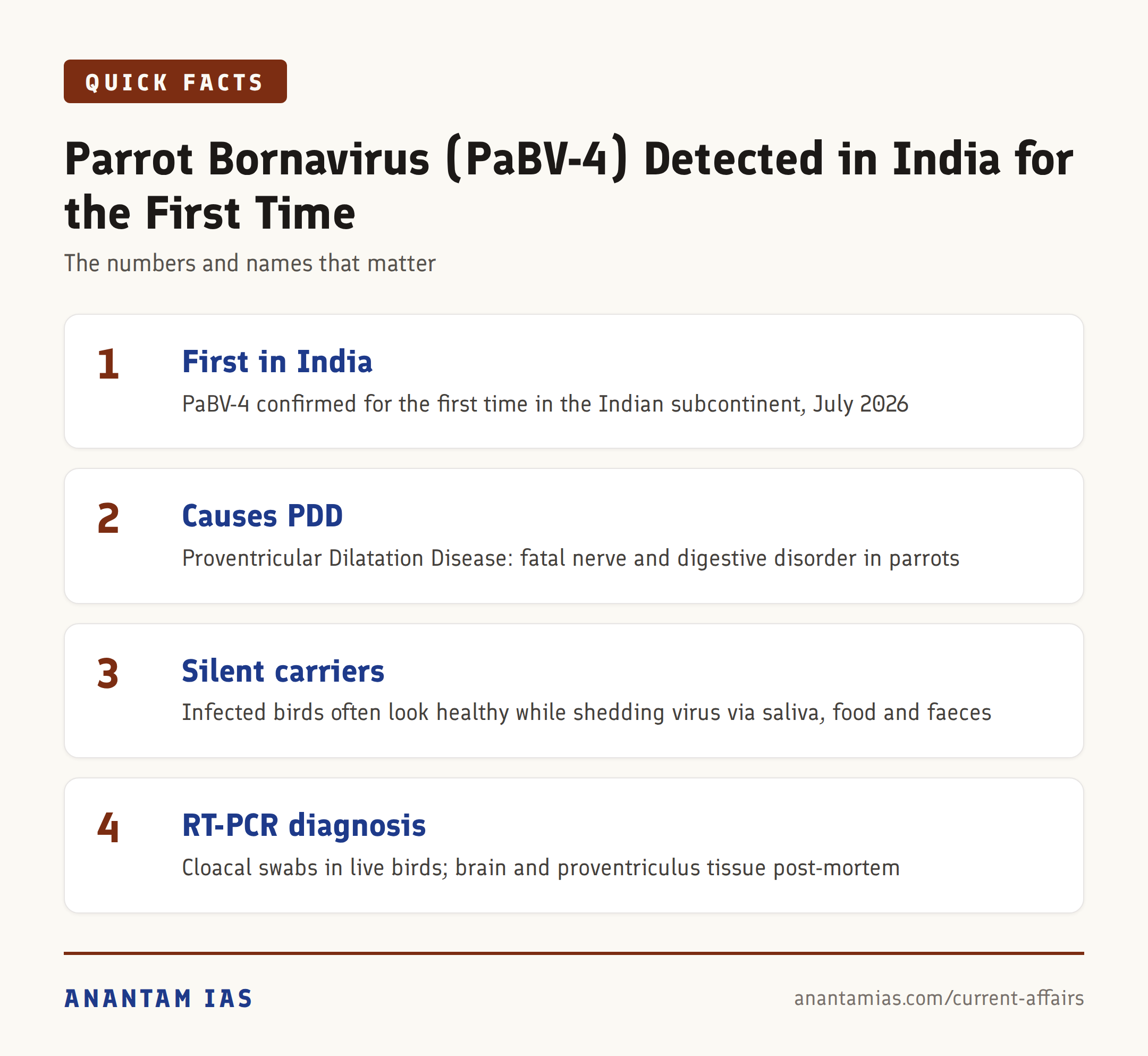
A July 2026 study has reported the first confirmed detection of Parrot Bornavirus (PaBV-4) circulating in India, the first official record of the virus in the Indian subcontinent. The pathogen causes Proventricular Dilatation Disease (PDD), a fatal neurological and digestive disorder in psittacine birds (parrots, parakeets, macaws, cockatoos and related species).
The finding matters for India’s large captive-bird and aviculture ecosystem, since infected birds can appear healthy while silently shedding the virus, spreading it through aviaries without visible symptoms.
- Parrot Bornavirus (PaBV) is an avian bornavirus and the causative agent of Proventricular Dilatation Disease (PDD) in psittacine (parrot-family) birds.
- The disease damages the nerves controlling the digestive tract, enlarging the proventriculus (the glandular stomach), causing poor digestion, undigested food in droppings, weight loss and eventual death.
- Damage is largely immune-driven inflammation of nerves rather than direct destruction of infected cells, a non-cytolytic infection that persists in the bird.
- Many infected birds are asymptomatic carriers, appearing healthy while shedding the virus through saliva, droppings and contaminated food and water; it can also pass from parent birds to eggs.
- Diagnosis relies on RT-PCR, best from cloacal swabs in live birds and from brain and proventriculus tissue in dead birds.
The development matters in the context of:
- It is a biosecurity and conservation concern for India’s captive parrots, breeding aviaries and zoos, and for pet-trade birds.
- It illustrates how emerging animal pathogens enter new geographies through trade and movement of species, a recurring UPSC theme in health and environment.
- It tests India’s animal-disease surveillance and the need for screening in the exotic-bird trade.
UPSC Relevance
Prelims Relevance
- Parrot Bornavirus (PaBV-4): an avian bornavirus causing Proventricular Dilatation Disease (PDD) in psittacine (parrot-family) birds; first detected in India in July 2026.
- Proventriculus: the glandular stomach of birds; PDD causes its dilation, hence the disease name.
- The infection is non-cytolytic: harm comes from immune-mediated inflammation of nerves, not direct cell destruction; infection is persistent.
- Transmission: contaminated food, water, saliva and faeces, and vertically from infected parents to eggs; many carriers are asymptomatic.
- Diagnosis: RT-PCR from cloacal swabs (live birds) and brain/proventriculus tissue (dead birds).
- Psittacine birds include parrots, parakeets, macaws, cockatoos, lovebirds and budgerigars; India hosts native parakeets and a large captive/pet population.
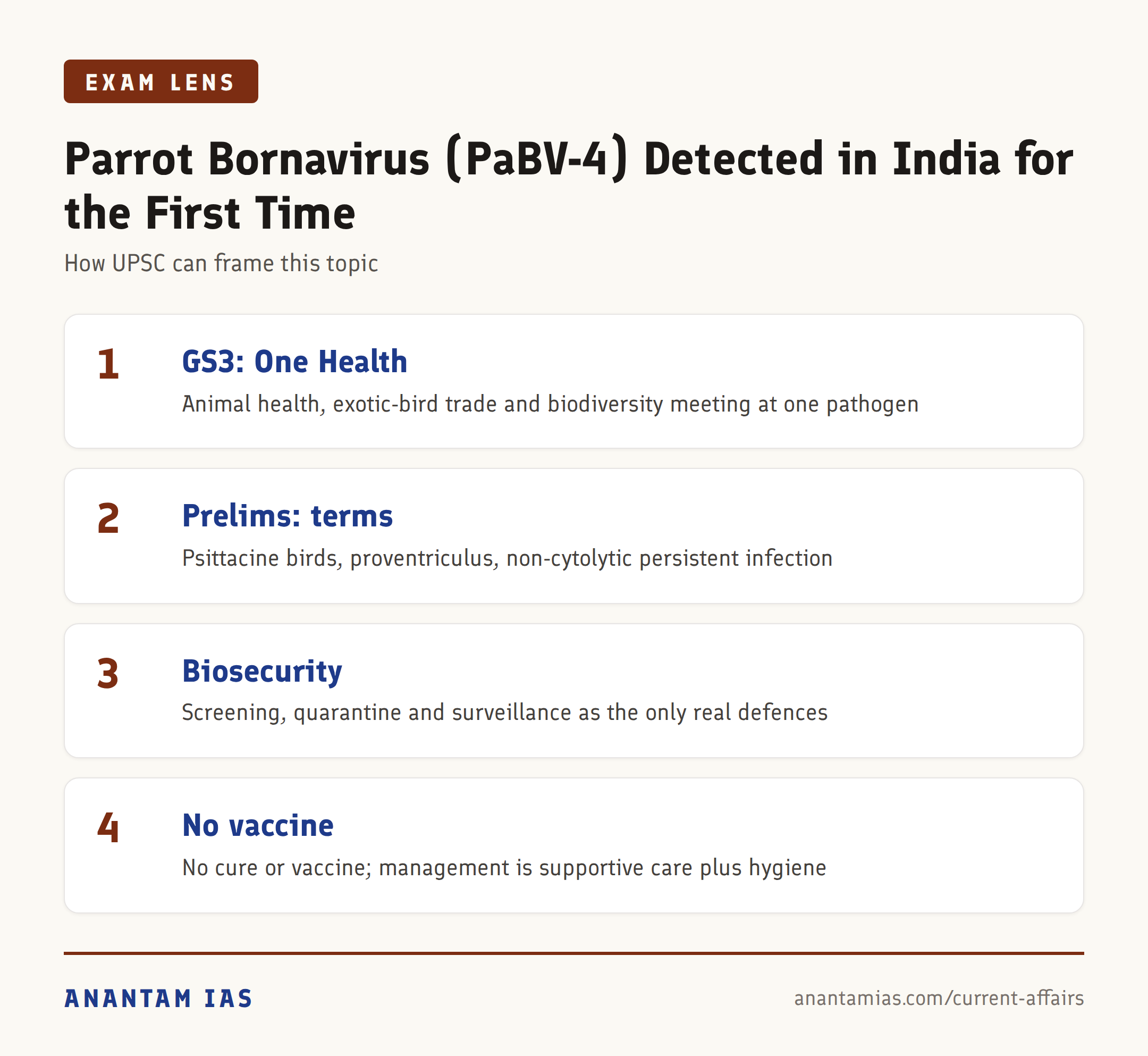
- There is no specific cure or vaccine; management is supportive, making biosecurity and screening the main defences.
Mains Relevance
GS Paper 3
- Emerging and transboundary animal diseases: pathways of introduction through wildlife and pet trade, and the surveillance gaps they expose.
- Biosecurity in aviculture and zoos: screening, quarantine and the role of diagnostics like RT-PCR in containment.
- One Health framing: the interface of animal health, trade regulation and biodiversity conservation.
GS Paper 2
- Regulation of the exotic-species and pet trade: the governance challenge of screening imported and captive birds for novel pathogens.
Essay
- Invisible passengers: how trade in living things moves disease across borders faster than regulation can follow.
- The healthy-looking carrier: why the hardest diseases to control are the ones that hide.
Background and Context
What PaBV and PDD Are
The virus and the disease it causes are well known in global aviculture, now confirmed in India.
- Parrot Bornavirus belongs to the bornavirus family and is the accepted cause of PDD, first described in captive parrots decades ago and reported across many countries.
- PDD attacks the nerves of the gastrointestinal tract, so the bird cannot move food properly; the proventriculus dilates and the bird slowly starves despite eating.
- Some birds also show neurological signs, tremors, weakness and coordination loss, when the virus affects the central nervous system.
- The infection is persistent and non-cytolytic: the immune response to the virus, rather than the virus itself, drives much of the nerve damage.
Why the India Detection Is Significant
A first record changes the risk picture for the country’s captive-bird populations.
- India has a large captive and pet-bird population and active aviculture, plus native parakeet species, all potentially susceptible.
- Because carriers can be asymptomatic, the virus can spread silently through breeding aviaries and the trade before disease appears.
- Confirmation in India signals the need for screening in the exotic-bird trade and in zoo and rescue-centre collections.
- It also raises questions about the route of entry, typically the movement and trade of infected birds across borders.
How It Spreads and Is Detected
Transmission routes and diagnostics shape any containment strategy.
- Spread occurs through contaminated food, water, saliva and faeces, and vertically from parent to egg.
- The virus is shed intermittently, which makes a single negative test unreliable and complicates screening.
- RT-PCR is the mainstay diagnostic: cloacal swabs in live birds, and brain and proventriculus tissue post-mortem.
- There is no licensed vaccine or specific antiviral; management is supportive care plus strict biosecurity.
The Wider One Health and Trade Angle
PaBV joins a list of pathogens that ride the global movement of animals.
- The detection fits the One Health lens linking animal health, trade and biodiversity that India increasingly adopts.
- Regulating the exotic-pet and bird trade, including screening and quarantine, is the practical lever to limit introduction of such pathogens.
- For conservation breeding of threatened psittacines, an undetected carrier can jeopardise an entire programme.
- Strengthening veterinary diagnostic capacity for novel avian viruses is the systemic lesson.
Way Forward
For Biosecurity
- Introduce RT-PCR screening and quarantine for captive parrots in breeding centres, zoos and the regulated trade.
- Build awareness among aviculturists and pet owners about asymptomatic carriage and hygiene practices.
- Map the likely route of introduction and tighten checks at the points of entry for exotic birds.
For the System
- Fold avian bornavirus into national animal-disease surveillance and veterinary lab networks.
- Apply a One Health approach linking wildlife, veterinary and trade authorities.
- Protect conservation-breeding programmes for native and endangered psittacines through routine testing.
Conclusion
The first Indian detection of Parrot Bornavirus is a warning rather than an emergency: the disease it causes is untreatable and often invisible until late, so the country’s defence lies in surveillance, screening and biosecurity across the captive-bird trade. Catching a silent carrier early is far cheaper than losing an aviary or a breeding programme.
For UPSC, the case is a clean illustration of the One Health idea, where trade in living animals, veterinary diagnostics and biodiversity protection meet at a single pathogen.
UPSC Practice Questions
Prelims MCQ 1
With reference to Parrot Bornavirus (PaBV) and Proventricular Dilatation Disease (PDD), consider the following statements:
- The disease primarily affects psittacine birds such as parrots, parakeets and macaws.
- Infected birds can be asymptomatic carriers that shed the virus while appearing healthy.
- A licensed vaccine is widely used to prevent the disease in captive birds.
How many of the above statements are correct?
(a) Only one (b) Only two (c) All three (d) None
Answer: (b) Only two
Explanation:
Statements 1 and 2 are correct: PaBV causes PDD in psittacine birds, and asymptomatic carriage with silent shedding is a defining feature that complicates control. Statement 3 is incorrect: there is no licensed vaccine or specific antiviral; management is supportive care combined with biosecurity, quarantine and RT-PCR screening.
Prelims MCQ 2
The term ‘proventriculus’, which gives Proventricular Dilatation Disease its name, refers to which of the following?
(a) The glandular stomach of birds (b) A part of the avian respiratory system (c) The nerve controlling flight muscles (d) A gland that produces egg shells
Answer: (a) The glandular stomach of birds
Explanation:
The proventriculus is the glandular stomach in birds, which secretes digestive enzymes before food passes to the muscular gizzard. In PDD, damage to the nerves supplying the digestive tract causes the proventriculus to dilate, impairing digestion and leading to weight loss and death, hence the disease’s name.
UPSC Mains Questions
- The first detection of Parrot Bornavirus in India highlights the biosecurity risks embedded in the trade and movement of animals. Discuss the challenges of surveillance for emerging animal pathogens and the relevance of the One Health approach. (250 words)
- Asymptomatic carriage makes certain animal diseases exceptionally hard to control. Examine this proposition and suggest measures to protect captive and conservation-bred bird populations in India. (150 words)
Frequently Asked Questions
What is Parrot Bornavirus?
It is an avian bornavirus and the accepted cause of Proventricular Dilatation Disease (PDD), a fatal disorder of psittacine birds such as parrots, parakeets, macaws and cockatoos. A July 2026 study reported its first confirmed detection in India, the first record in the subcontinent.
What does the disease do to birds?
PaBV damages the nerves controlling the digestive tract, causing the proventriculus, the glandular stomach, to dilate. Affected birds cannot digest food properly, pass undigested food in droppings, lose weight and eventually die. Some also show neurological signs such as tremors and weakness when the nervous system is affected.
Why is the India detection concerning?
India has a large captive and pet-bird population and active aviculture, along with native parakeet species. Because infected birds can be asymptomatic carriers, the virus can spread silently through aviaries and the trade before disease appears, threatening breeding centres, zoos and conservation programmes.
How does the virus spread?
Through contaminated food, water, saliva and faeces, and vertically from infected parent birds to their eggs. Shedding is intermittent, which is why a single negative test is unreliable and why silent carriers are central to the disease’s spread.
How is it diagnosed and treated?
Diagnosis relies on RT-PCR, best from cloacal swabs in live birds and from brain and proventriculus tissue in dead birds. There is no licensed vaccine or specific antiviral; management is supportive care combined with strict biosecurity, quarantine and screening.
What is the policy takeaway?
The case underlines the need for RT-PCR screening and quarantine in the captive-bird trade, integration of avian bornavirus into national animal-disease surveillance, and a One Health approach linking veterinary, wildlife and trade authorities to limit the introduction and spread of such pathogens.