Price Support Scheme: Pulses and oilseeds procurement in four states
Why in News?
Union Agriculture Minister Shivraj Singh Chouhan announced that the Centre has approved procurement of pulses and oilseeds in four states under the Price Support Scheme (PSS), a step framed as protecting farmer incomes and stabilising prices during the marketing season.
The move sits inside the wider PM-AASHA umbrella and the government’s twin goals of aatmanirbharta in pulses and reduced dependence on imported edible oils, making it a useful peg for the agriculture and economy sections of the syllabus.
- Centre sanctioned PSS procurement of pulses and oilseeds in four states, as announced by Minister Shivraj Singh Chouhan via PIB.
- Procurement happens at the notified Minimum Support Price (MSP) through central nodal agencies NAFED and NCCF.
- PSS is a sub-scheme of the PM-AASHA framework covering oilseeds, pulses and copra.
- Action ties into the push for pulses self-sufficiency by around 2027-28 and lower edible-oil import reliance.
- Procurement ceilings for tur, urad and masur have been relaxed to encourage acreage and assure farmers of an exit at MSP.
The development matters in the context of:
- India imports roughly 57-60% of its edible oil, one of the largest food-import bills in the economy.
- Pulses output has risen but domestic demand still leaves a recurring gap met partly through imports.
UPSC Relevance
Prelims Relevance
- PSS is a component of the PM-AASHA umbrella scheme for oilseeds, pulses and copra.
- NAFED and NCCF are the central nodal agencies for PSS procurement.
- MSP is recommended by the Commission for Agricultural Costs and Prices (CACP), an attached office of the Agriculture Ministry.
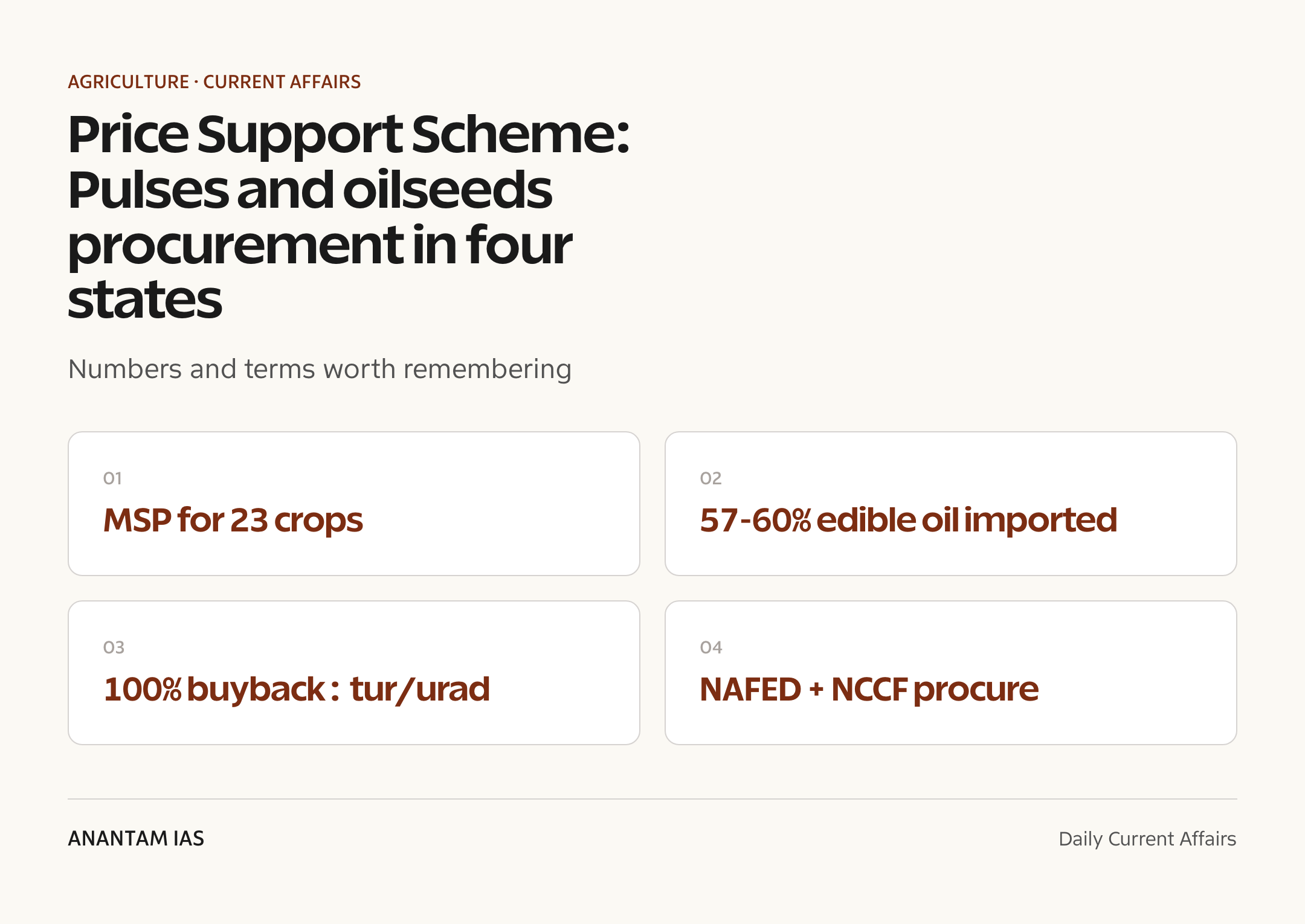
- MSP is announced for 23 crops each season.
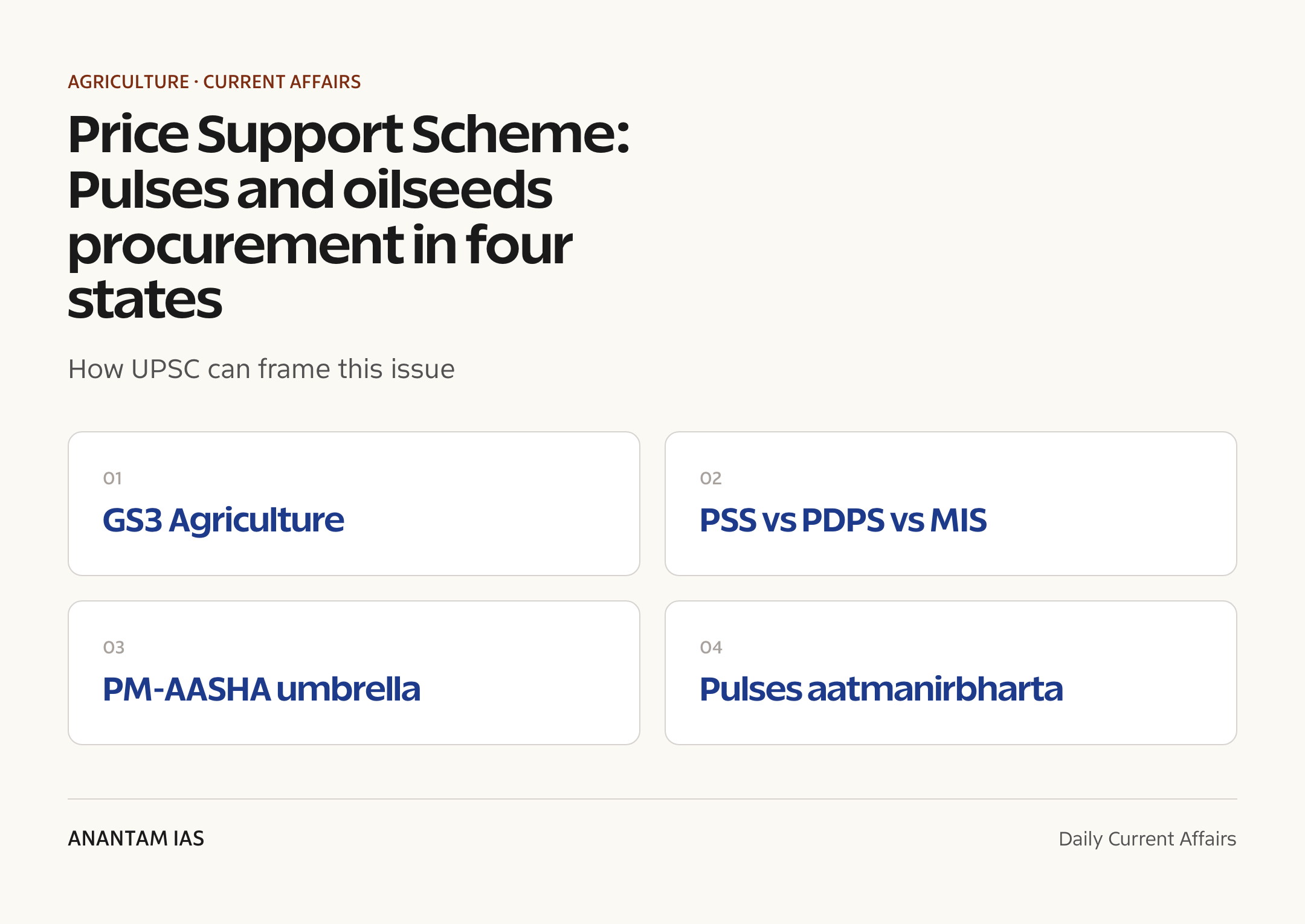
- PM-AASHA has three legs: PSS, Price Deficiency Payment Scheme (PDPS) and a private procurement pilot.
- Market Intervention Scheme (MIS) covers perishable horticultural and other commodities outside MSP.
- Standard PSS procurement ceiling is 25% of state production, since relaxed to 100% for tur, urad and masur.
- NMEO-Oilseeds targets higher domestic oilseed output to cut edible-oil imports.
- India imports about 57-60% of edible oil needs.
Mains Relevance
GS Paper 3
- MSP-linked procurement as an instrument of farmer income support and price stabilisation, and its fiscal and market-distortion trade-offs.
- Strategies for aatmanirbharta in pulses and edible oils, linking PSS, NMEO-Oilseeds and crop diversification.
- Role of buffer stocking and nodal agencies (NAFED, NCCF) in stabilising volatile pulse and oilseed prices.
Essay
- Food security and the farmer: balancing assured prices with market efficiency.
- Self-reliance in a globalised food economy.
Background and Context
What the Price Support Scheme is
PSS is the government’s instrument to buy notified crops directly from farmers when market prices slide toward or below the MSP.
- PSS covers oilseeds, pulses and copra, with procurement at the announced MSP when market prices fall below it.
- Procurement is carried out by central nodal agencies NAFED and NCCF, on behalf of the Department of Agriculture and Farmers Welfare.
- States must request PSS and share part of the operational responsibility, which is why approvals are issued state by state and crop by crop.
- The aim is to give farmers an assured floor price, discourage distress sales, and keep growers planting pulses and oilseeds.
Where PSS sits in PM-AASHA
PSS is one leg of the broader PM-AASHA architecture rolled out to make MSP support more effective for non-cereal crops.
- PM-AASHA (Pradhan Mantri Annadata Aay SanraksHan Abhiyan) is the umbrella for protecting producer incomes in oilseeds, pulses and copra.
- It has three components: PSS (physical procurement), PDPS (cash payment of the price gap without buying the crop), and a private procurement and stockist pilot.
- Under PDPS, the farmer sells in the open market and the government pays the difference between MSP and the sale price, so no physical stock is built.
- A state typically opts for either PSS or PDPS for a given oilseed in a season, not both.
MSP and the CACP framework
All these schemes rest on the MSP, the announced floor price that anchors farmer expectations each season.
- MSP is recommended by the Commission for Agricultural Costs and Prices (CACP) and notified by the government for 23 crops.
- The crop basket spans cereals, pulses, oilseeds and commercial crops across the kharif and rabi seasons.
- MSP is announced before sowing to guide cropping choices, but it becomes meaningful only when backed by actual procurement.
- For pulses and oilseeds, market prices often dip below MSP, which is exactly where PSS procurement steps in.
The relaxed procurement ceiling for pulses
A recent design change sharply raised how much of a state’s pulse crop the Centre will buy.
- The usual PSS limit was about 25% of a state’s production of the notified crop in a season.
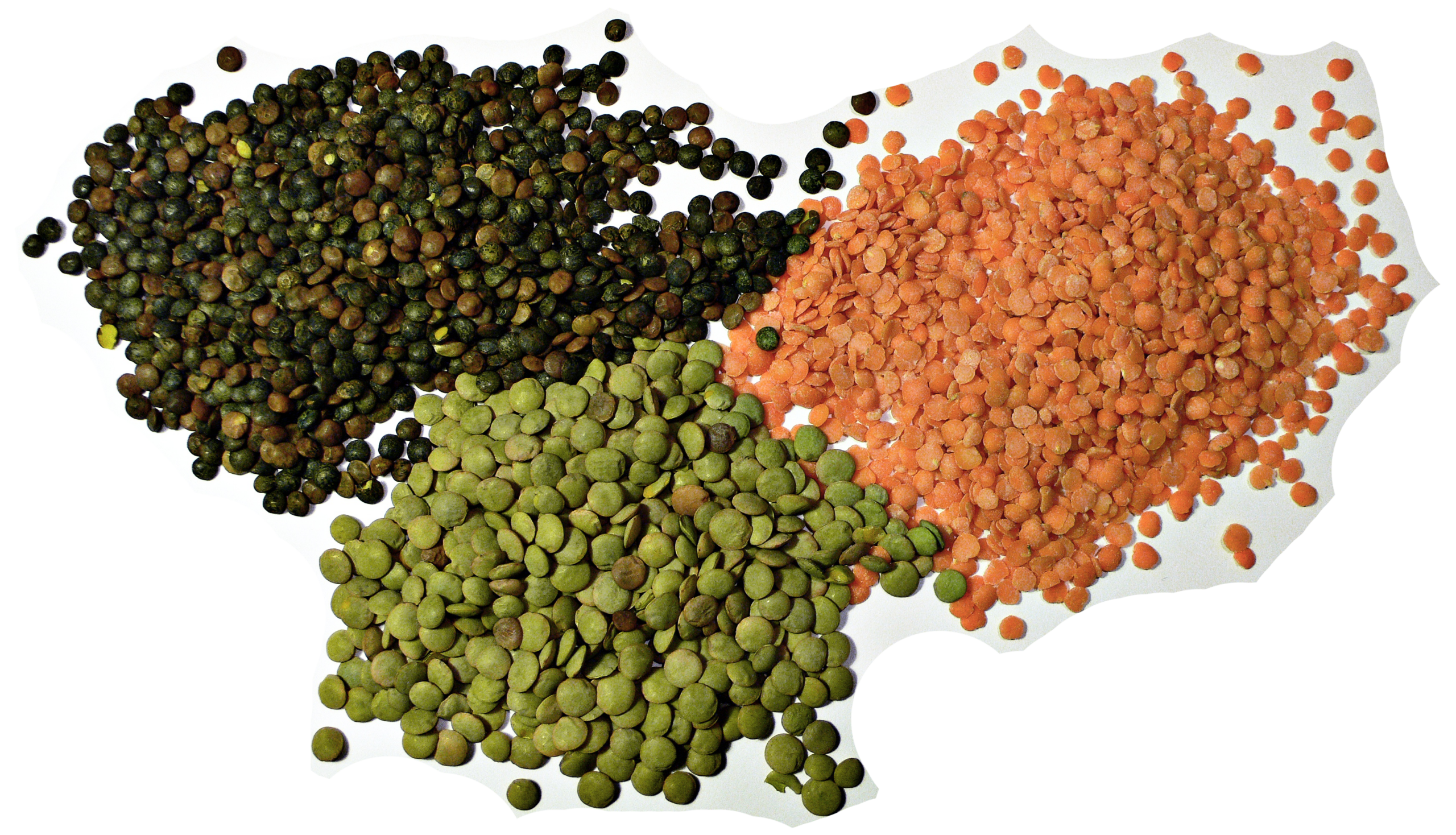
- For tur (arhar), urad and masur, the government has relaxed this to 100% procurement to push self-sufficiency.
- Assured full buyback signals farmers that expanded acreage in these pulses will not be punished by a price crash.
- The relaxation is a clear policy nudge toward aatmanirbharta in pulses, targeted around 2027-28.
Edible-oil dependence and NMEO-Oilseeds
The oilseeds half of the announcement matters because India’s edible-oil import bill is among its largest food vulnerabilities.
- India imports an estimated 57-60% of its edible oil, leaving consumers exposed to global price swings.
- The National Mission on Edible Oils-Oilseeds (NMEO-Oilseeds) aims to lift domestic oilseed output and crushing capacity.
- PSS procurement of oilseeds at MSP complements NMEO by assuring growers a market, encouraging a shift toward soybean, mustard, groundnut and sunflower.
- Reducing import dependence is framed as both a food-security and a current-account concern.
PSS versus PDPS versus MIS
Aspirants frequently confuse the three intervention tools, so it helps to keep their scope distinct.
- PSS: physical procurement of pulses, oilseeds and copra at MSP by NAFED and NCCF.
- PDPS: no procurement; the government pays farmers the gap between MSP and the actual sale price for select oilseeds.
- MIS (Market Intervention Scheme): covers perishable and horticultural commodities outside MSP, such as onion, potato and certain fruits, when prices crash.
- All three protect farmer incomes but differ in commodity coverage and method of support.
Way Forward
Make procurement reach the small farmer
- Expand registration and procurement centres so smallholders, not just large growers, can sell at MSP.
- Use digital portals and direct benefit transfer to cut delays in payment and reduce middleman leakage.
Pair price support with productivity
- Combine PSS with quality seed, irrigation and crop-diversification incentives so support raises output, not just prices.
- Strengthen buffer-stock management by NAFED and NCCF to release pulses during price spikes and stabilise consumer markets.
Sustain the self-sufficiency drive
- Keep the 100% buyback for key pulses credible season after season to anchor farmer confidence.
- Align NMEO-Oilseeds with PSS so the edible-oil import bill falls without distorting cropping patterns.
Conclusion
PSS procurement of pulses and oilseeds in four states is a routine-sounding administrative step that carries real strategic weight. It connects the day-to-day assurance of MSP to the larger objectives of farmer income protection, pulses self-sufficiency and a smaller edible-oil import bill.
For the exam, the value lies in placing this news inside its durable framework: PSS as a leg of PM-AASHA, the role of NAFED and NCCF, the distinction from PDPS and MIS, and the policy logic of relaxed procurement ceilings. Whether the scheme delivers will depend on how widely procurement actually reaches the small farmer and how well it is paired with productivity gains.
UPSC Practice Questions
Prelims MCQ 1
With reference to the Price Support Scheme (PSS) and PM-AASHA, consider the following statements:
- PSS provides for physical procurement of pulses, oilseeds and copra at the Minimum Support Price.
- The Price Deficiency Payment Scheme (PDPS) involves direct procurement of crops by central agencies.
- NAFED and NCCF act as central nodal agencies for PSS procurement.
How many of the above statements are correct?
(a) Only one (b) Only two (c) All three (d) None
Answer: (b) Only two
Explanation:
Statements 1 and 3 are correct. PSS is physical procurement of pulses, oilseeds and copra at MSP, with NAFED and NCCF as nodal agencies. Statement 2 is wrong: under PDPS there is no procurement; the government pays farmers the gap between MSP and the actual sale price.
Prelims MCQ 2
Which of the following commodities is typically supported through the Market Intervention Scheme (MIS) rather than the Price Support Scheme?
(a) Tur (arhar) (b) Mustard (c) Onion (d) Copra
Answer: (c) Onion
Explanation:
MIS covers perishable and horticultural commodities outside the MSP framework, such as onion and potato, when prices crash. Tur, mustard and copra are pulses/oilseeds/copra supported under PSS at MSP.
UPSC Mains Questions
- Examine how the Price Support Scheme, as a component of PM-AASHA, advances India’s goals of farmer income protection and self-sufficiency in pulses and edible oils. What are its key limitations? (250 words)
- Distinguish between the Price Support Scheme, the Price Deficiency Payment Scheme and the Market Intervention Scheme, and assess which model best protects small and marginal farmers. (250 words)
Sources: PIB, Ministry of Agriculture & Farmers Welfare and Ministry of Agriculture & Farmers Welfare.
Frequently Asked Questions
What is the Price Support Scheme?
The Price Support Scheme (PSS) is a government programme under which central agencies such as NAFED and NCCF buy notified pulses, oilseeds and copra directly from farmers at the Minimum Support Price when market prices fall below it, giving growers an assured floor price.
Under which umbrella does PSS fall?
PSS is one component of the PM-AASHA (Pradhan Mantri Annadata Aay SanraksHan Abhiyan) umbrella, which also includes the Price Deficiency Payment Scheme and a private procurement pilot, all aimed at protecting producer incomes in oilseeds, pulses and copra.
Which agencies carry out PSS procurement?
Procurement under PSS is handled by central nodal agencies, mainly NAFED (National Agricultural Cooperative Marketing Federation) and NCCF (National Cooperative Consumers’ Federation), acting on behalf of the Department of Agriculture and Farmers Welfare.
How does PSS differ from PDPS?
Under PSS the government physically procures the crop at MSP and builds stock. Under PDPS there is no procurement: the farmer sells in the open market and the government simply pays the difference between MSP and the actual sale price for select oilseeds.
Why does pulses and oilseeds procurement matter?
It supports farmer incomes, stabilises prices and advances self-sufficiency. India imports about 57-60% of its edible oil and still faces a pulses gap, so assured MSP procurement encourages farmers to expand acreage and reduces import dependence.
What is the procurement ceiling for pulses?
The usual PSS ceiling is about 25% of a state’s production, but for tur, urad and masur the government has relaxed it to 100% procurement to push self-sufficiency in pulses, targeted around 2027-28.