Redrawing Representation: Delimitation and the Politics of Federalism
Why in News?
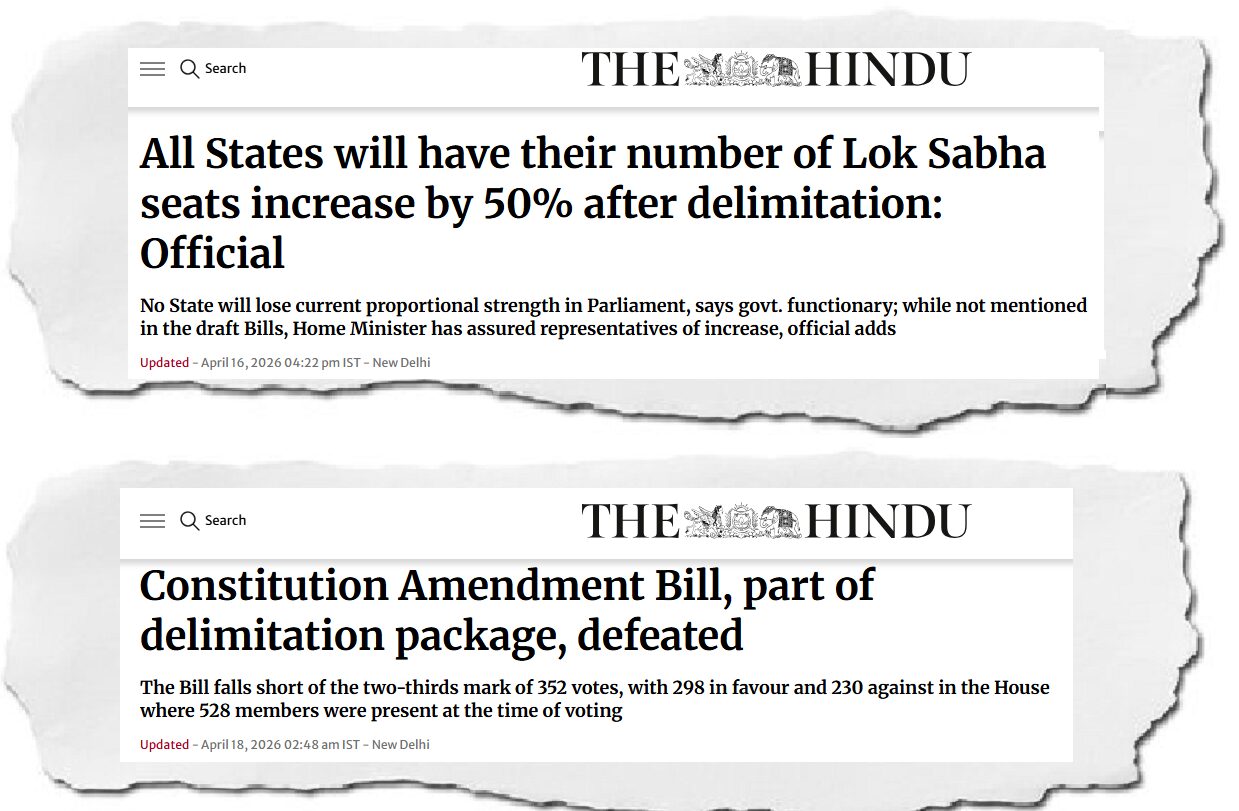
The Government introduced a delimitation-linked legislative package, including the Constitution (131st Amendment) Bill, 2026, to redistribute Lok Sabha seats and enable women’s reservation before the 2029 elections. However, the Bill was defeated in Parliament, leading to the withdrawal of the entire package.
UPSC Relevance
GS-II: Parliament, Federalism, Representation, Delimitation, Constitutional Amendments, Women’s Reservation
Background: Delimitation & Current Context
Delimitation refers to the readjustment of Lok Sabha and Assembly constituencies based on population data.
- The number of Lok Sabha seats has been frozen since 1976 (42nd Amendment), later extended till post-2026 Census (84th Amendment).
- India’s population has increased from ~55 crore (1971) to ~140 crore (2026), creating huge disparities in constituency size.
- Example: Some constituencies like Malkajgiri (Telangana) have extremely large electorates (~48 lakh voters), raising concerns about representation quality.
What Did the Government Propose?
1. Increase in Lok Sabha Seats
- Proposal to increase Lok Sabha strength by ~50% (from ~550 to ~850 seats).
- Government’s assurance:
- All States will get a 50% increase in seats.
- Existing proportional representation of States will be maintained.
Example:
- Tamil Nadu: 39 → ~58 seats
- Kerala: 20 → ~30 seats
2. Link with Women’s Reservation
- Delimitation was linked to the implementation of women’s reservation.
- Objective: Ensure fresh seat allocation and reservation structure before the 2029 elections.
3. Principle Behind Delimitation
Government justified delimitation using the principle of:
“One Person, One Vote, One Value”
- Current freeze leads to unequal representation across constituencies.
- Larger population States currently have under-representation per capita.
Why Did the Bill Fail?
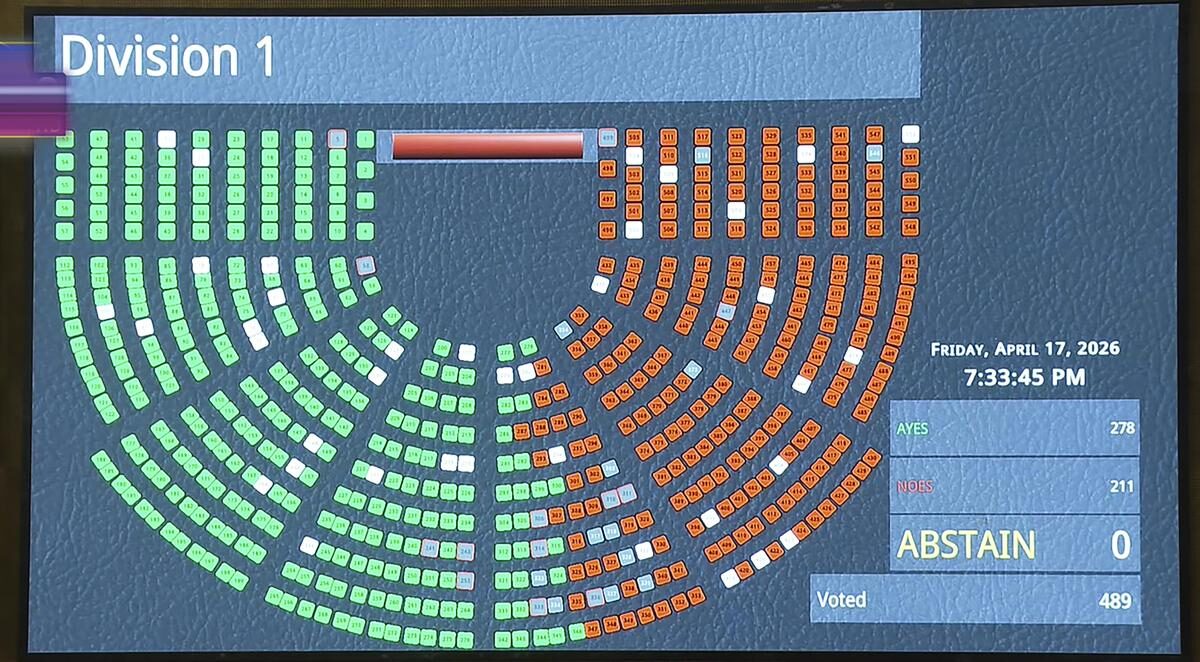
The Constitution Amendment Bill failed because it did not secure the required two-thirds majority.
| Aspect | Details |
| Votes in favour | 298 |
| Votes against | 230 |
| Required majority | 352 (2/3rd) |
| Outcome | Bill defeated |
As a result Government withdrew:
- Delimitation Bill, 2026
- Union Territories Laws (Amendment) Bill, 2026
What are the Core Issues involved?
1. Lack of Clarity on Seat Distribution
- Government gave verbal assurance of uniform 50% increase.
- But Bills did not explicitly guarantee this.
- Opposition demanded written provision, which became a key sticking point.
2. Fear of North-South Imbalance
- Concern: Population-based redistribution may:
- Benefit high-growth northern States
- Reduce relative share of southern States
Government response:
- Denied any reduction in southern representation.
- Called it a “manufactured narrative”.
3. Linking Women’s Reservation with Delimitation
This became the most contentious issue.
Opposition’s argument:
- Women’s reservation should be implemented independently.
- Linking it with delimitation may delay or politicise implementation.
Government’s stance:
- Both are structurally linked (seat reallocation needed).
- Refused to delink, calling Opposition demand a “trap”.
4. Federalism Concerns
- States that controlled population fear penalisation.
- Raises question:
Should representation be based purely on population, or also governance performance?
5. Political Dimension
- Government accused Opposition of:
- Blocking women’s reservation
- Creating regional divide
- Opposition accused Government of:
- Using women’s reservation as a political tool
- Attempting to redraw electoral map strategically
Key Constitutional Principles
| Principle | Explanation |
| One person, one vote, one value | Ensures equal weight of each vote |
| Federalism | Protects balance between States |
| Representative democracy | Fair distribution of political power |
| Social justice | Includes women, SC/ST representation |
Important Observations
- Delimitation is no longer just a technical exercise, but a deep political and federal issue.
- The debate reflects a clash between:
- Demographic reality (population-based fairness)
- Federal equity (state-wise balance)
- The linkage with women’s reservation adds a new constitutional layer to the debate.
Way Forward
A balanced approach is required:
- Provide explicit constitutional guarantees to prevent regional imbalance.
- Consider hybrid models (population + performance criteria).
- Decouple or carefully sequence women’s reservation implementation.
- Ensure consensus-based reform, as delimitation affects the core of democracy.
Conclusion
The failure of the Constitution (131st Amendment) Bill highlights the complex intersection of representation, federalism, and electoral reform in India. While delimitation is necessary to uphold democratic equality, its design must ensure that it does not undermine federal balance or become a source of political distrust. A transparent, consensus-driven approach will be crucial to implementing reforms that strengthen both democracy and unity.
Practice Questions
- “Delimitation in India is no longer a mere administrative exercise but a deeply political issue.” Examine.
- Discuss the challenges in linking women’s reservation with delimitation of constituencies.
- “One person, one vote, one value must be balanced with federal principles.” Analyse in the context of delimitation.