Regulating Purse-Seine Fishing
Context:
The Supreme Court has directed Tamil Nadu to notify a specified navigation channel under the Tamil Nadu Marine Fishing Regulation Rules, 2020. This would allow vessels carrying purse-seine nets to transit through the State’s territorial waters and reach the Exclusive Economic Zone (EEZ), where such fishing is regulated by the Union government.
| UPSC Relevance: GS-2 Polity and Governance: Centre-State relations, Cooperative federalism; GS-3 Economy: Fisheries, Blue Economy Prelims: EEZ, Territorial waters, UNCLOS, Purse-seine fishing |
What is Purse-Seine Fishing?
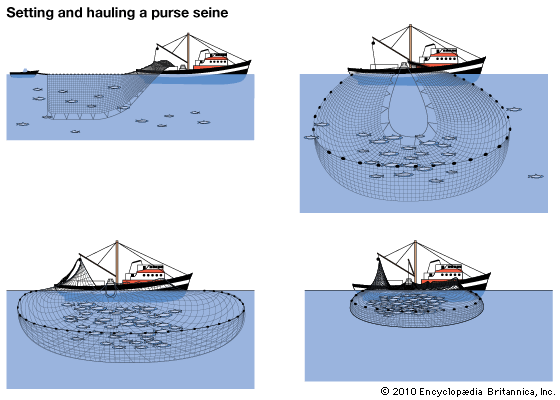
- A purse seine is a large vertical net used to encircle schools of pelagic fish, such as tuna, sardines and mackerel. The bottom of the net is then drawn together like a purse.
- Unlike bottom trawling, it normally does not scrape the seabed. However, poorly regulated purse-seine fishing can result in:
- Large and rapid extraction of fish stocks
- Capture of juvenile fish and non-target species
- Competition with artisanal and small-scale fishermen
- Conflicts over access to common marine resources
- Localised depletion of schooling fish.
Therefore, the issue is not simply whether the gear should be permitted, but where, when and under what ecological safeguards it may be used.
Constitutional and Maritime Framework:
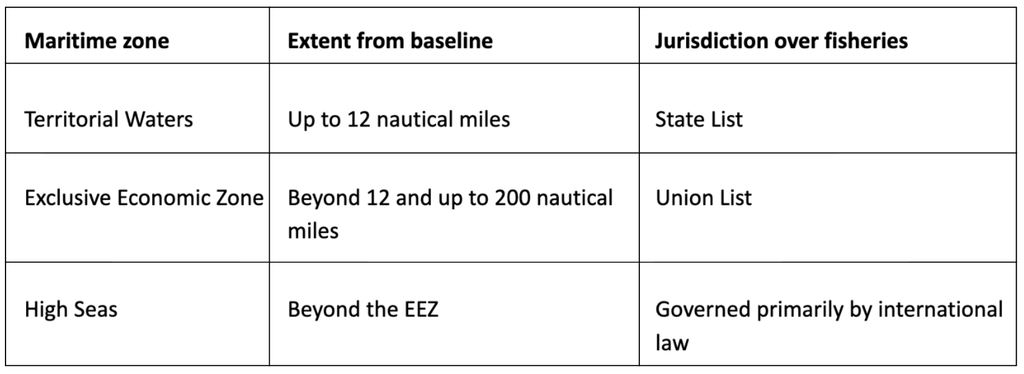
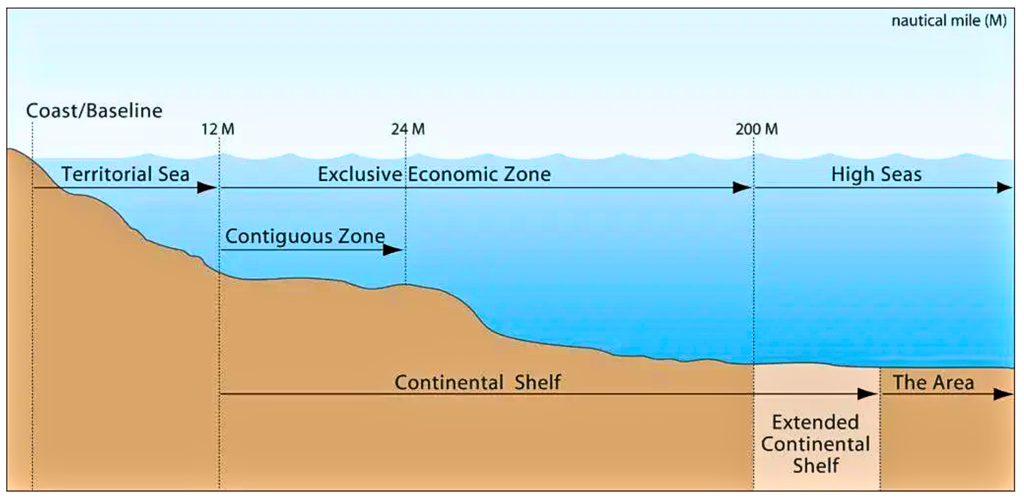
- Tamil Nadu-controlled territorial waters (0-12 nautical miles): Purse-seine fishing is prohibited under Tamil Nadu’s rules.
- Union-controlled EEZ (beyond 12 and up to 200 nautical miles): Purse-seine fishing is permitted but regulated, not automatically allowed. A vessel needs an Access Pass and must comply with the Union’s EEZ Rules, 2025.
The Union regulates fishing beyond territorial waters under the Territorial Waters, Continental Shelf, Exclusive Economic Zone and Other Maritime Zones Act, 1976 and the Sustainable Harnessing of Fisheries in the EEZ Rules, 2025.
The Dispute:
- Tamil Nadu has prohibited purse-seine fishing within its territorial waters since 2000. The prohibition is presently enforced through the Tamil Nadu Marine Fishing Regulation Rules, 2020. The state argued that fishermen could carry purse-seine nets on their vessels and use them illegally within territorial waters while claiming that they were travelling to the EEZ. Monitoring such vessels would be difficult.
- Fishermen argued that Tamil Nadu was preventing them from even transporting the nets through territorial waters. Since fishing harbours are situated on the coast, vessels cannot reach the EEZ without first crossing the State-regulated 12-nautical-mile zone.
Consequently, the State’s prohibition was allegedly operating as a de facto ban on purse-seine fishing even in the Union-regulated EEZ.
Supreme Court’s Ruling:
- The Court upheld both regulatory regimes:
- Tamil Nadu’s prohibition on purse-seine fishing within territorial waters; and
- The Union’s framework permitting regulated fishing in the EEZ. It held that there was no conflict between them as they operated in different maritime zones.
- The Court directed Tamil Nadu to designate an official navigation corridor through which vessels carrying purse-seine nets could pass to the EEZ.
- Fishing in the EEZ would require an Access Pass under the Union rules. Applications for Access Passes must be processed efficiently and within a reasonable period. The Centre and Tamil Nadu must coordinate through the principle of cooperative federalism.
How the Transit System Would Work?
The Access Pass under the EEZ Rules, 2025 is a digital authorisation that enables vessel tracking, catch traceability, sustainable stock management and action against illegal, unreported and unregulated fishing.
Tamil Nadu is yet to frame the detailed rules. A workable arrangement could follow:
- Before Departure: The vessel must obtain an Access Pass, possess valid registration and provide details of its crew, gear and intended voyage. State officials would verify the documents, inspect the vessel and ensure that the tracking equipment is operational.
- Transit Through Territorial Waters: Within Tamil Nadu’s 12-nautical-mile zone, the vessel must follow the notified corridor with its purse-seine nets secured and tracking system active. Fishing, unauthorised stops or deviation from the corridor would attract regulatory action.
- Fishing in the EEZ: After crossing 12 nautical miles, purse-seine fishing may be undertaken subject to the Access Pass, permitted zones and seasons, and rules concerning catch limits, juvenile fish, mesh size and bycatch.
- Return and Catch Reporting: The vessel must secure its nets before re-entering territorial waters, return through the specified corridor and submit catch and fishing-location details. Tracking and catch records would help detect illegal fishing within State waters.
The Supreme Court’s judgment is jurisdictionally balanced: Tamil Nadu’s prohibition remains valid within 12 nautical miles, while regulated purse-seine fishing may continue in the Union-governed EEZ.