Revving up Immune Cells may help Fight HIV: study
Why in News?
A new study has shown that a modified form of CAR-T cell therapy, widely used in cancer treatment, may help suppress HIV infection for long periods without regular antiretroviral drugs.
Researchers reported that two HIV patients maintained strong viral suppression for nearly one to two years after receiving a single dose of engineered immune cells.
| UPSC Relevance: GS-3 Science and Technology: Biology and Biotechnology Prelims: HIV, CAR-T cell therapy, T-cells |
What is HIV?
- Human Immunodeficiency Virus Infection and Acquired Immunodeficiency Syndrome is caused by the Human Immunodeficiency Virus (HIV), an RNA virus belonging to the retrovirus family.
- HIV attacks the immune system, especially CD4 T-cells, which are crucial for fighting infections. Over time, untreated HIV weakens immunity and can lead to AIDS (Acquired Immunodeficiency Syndrome).
- AIDS is the advanced stage of HIV infection, where the body becomes highly vulnerable to infections and cancers.
Nature of the HIV Virus:
- HIV is a retrovirus because its genetic material is RNA instead of DNA. It uses an enzyme called reverse transcriptase to convert viral RNA into DNA inside host cells.
- The viral DNA integrates into the host genome, making the infection persistent and difficult to eliminate.
Transmission of HIV:
HIV spreads through contact with infected bodily fluids, such as blood, semen, vaginal fluids and breast milk.
- Major Modes of Transmission:
- Unprotected sexual contact
- Sharing contaminated needles or syringes
- Mother-to-child transmission during pregnancy, childbirth, or breastfeeding
- Unsafe blood transfusions
- HIV is not spread through casual contact. Mosquitoes and insects cannot transmit HIV because the virus survives only in human cells and blood.
According to global estimates, nearly 40 million people live with HIV worldwide.
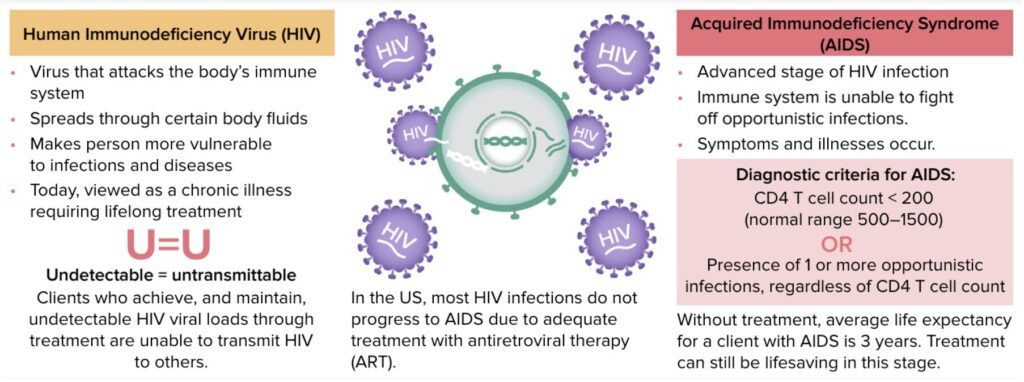
Current Treatment for HIV:
- Antiretroviral Therapy (ART) is the standard treatment for HIV.
- Features of ART: Suppresses viral replication, maintains low or undetectable viral load and prevents progression to AIDS.
- ART is not a cure. HIV remains hidden in viral reservoirs inside the body. If treatment stops, the virus can rebound rapidly.
Why is HIV so difficult to cure?
- HIV hides inside resting immune cells, in lymph nodes and certain tissues and organs. These hidden reservoirs remain invisible to many drugs and immune responses.
- Even when ART reduces HIV to undetectable levels, the dormant virus can reactivate later.
What is CAR-T Cell Therapy?
- Originally developed for cancer treatment, CAR-T therapy modifies a patient’s own immune cells to better attack diseased cells.
- How CAR-T Therapy Works?
- T-cells are removed from the patient’s blood.
- Scientists genetically engineer these T-cells in the laboratory.
- The modified cells are equipped with special receptors called Chimeric Antigen Receptors (CARs). These engineered cells are infused back into the patient.
- The CAR-T cells identify and destroy infected or cancerous cells.
How was CAR-T Modified for HIV?
Scientists created CAR-T cells with dual features:
- Enhanced HIV Detection: The modified cells were programmed to better identify and kill HIV-infected cells.
- Resistance to HIV Infection: The CAR-T cells were engineered to resist infection by HIV itself. This protective armour allows the engineered immune cells to survive longer and continue fighting the virus.
Findings of the New Study:
- A single dose of modified CAR-T cells strongly suppressed HIV in two patients. One patient maintained suppression for nearly one year. Another maintained suppression for almost two years. These patients remained off conventional HIV medication during this period.
- No serious side effects were reported. Patients who had begun HIV treatment early after infection showed better responses. Early treatment likely reduced viral reservoirs and preserved immune function.
Significance of the Study:
- Researchers are exploring whether CAR-T therapy could become a “one-and-done” treatment. The therapy may move HIV treatment closer to a functional cure where the virus can be controlled without lifelong medicines. Patients maintain normal immune function.
Challenges and Limitations:
Despite promising results, several challenges remain.
- Limited Study Size: Only a small number of patients were studied.
- High Cost: CAR-T therapies are currently extremely expensive and technologically complex.
- Scalability Issues: Developing personalised immune-cell therapies for millions of HIV patients remains difficult.
- Long-Term Safety: Scientists still need to assess the durability of response, long-term immune effects and the risk of relapse.
The new CAR-T cell therapy study represents an important breakthrough in long-term HIV control and possible functional cures. By genetically enhancing the body’s own immune cells, scientists are attempting to overcome hidden viral reservoirs, one of the greatest challenges in HIV treatment.
Practice MCQ:
Q. With reference to Human Immunodeficiency Virus (HIV), consider the following statements:
1. CAR-T therapy involves genetically engineering T-cells to target specific diseased cells.
2. In the recent HIV study, engineered CAR-T cells were modified to resist HIV infection themselves.
3. Antiretroviral Therapy (ART) completely eliminates latent HIV reservoirs from the body.
4. HIV is classified as a retrovirus because it uses reverse transcriptase to convert RNA into DNA.
Which of the statements given above are correct?
(a) 1, 2 and 4 only
(b) 1 and 3 only
(c) 2, 3 and 4 only
(d) 1, 2, 3 and 4
Answer: (a)