Rise of the Herbicides

Why in news:
India’s pesticide market is witnessing a shift, with herbicides emerging as the fastest-growing segment due to:
- Expansion of mechanized and timely farming
- Labour shortages for manual weeding
- A growing preference for pre-emergent herbicide use
UPSC CSE UPSC CSE Relevance:
UPSC CSE in mains examination has focused on herbicides, Pesticides, types of pesticides ,impacts of herbicide overuse and regulatory aspects.
UPSC Mains PYQ 2017:
Q: What are the major reasons for declining rice and wheat yield in the cropping system? How crop diversification is helpful to stabilize the yield of the crop in the system?
UPSC Pre PYQ 2019:
Q. In India, the use of carbofuran, methyl parathion, phorate and triazophos is viewed with apprehension. These chemicals are used as
(a) pesticides in agriculture
(b) preservatives in processed foods
(c) fruit-ripening agents
(d) moisturising agents in cosmetics
What is Herbicides:
Herbicides are potent chemicals designed to manage or eradicate unwanted plant growth, commonly known as weeds. Herbicide chemical methods are used to kill plants or weeds. They are crucial in agricultural settings, landscapes, and gardens, allowing for the controlled growth of desirable plants and efficient production of crops.
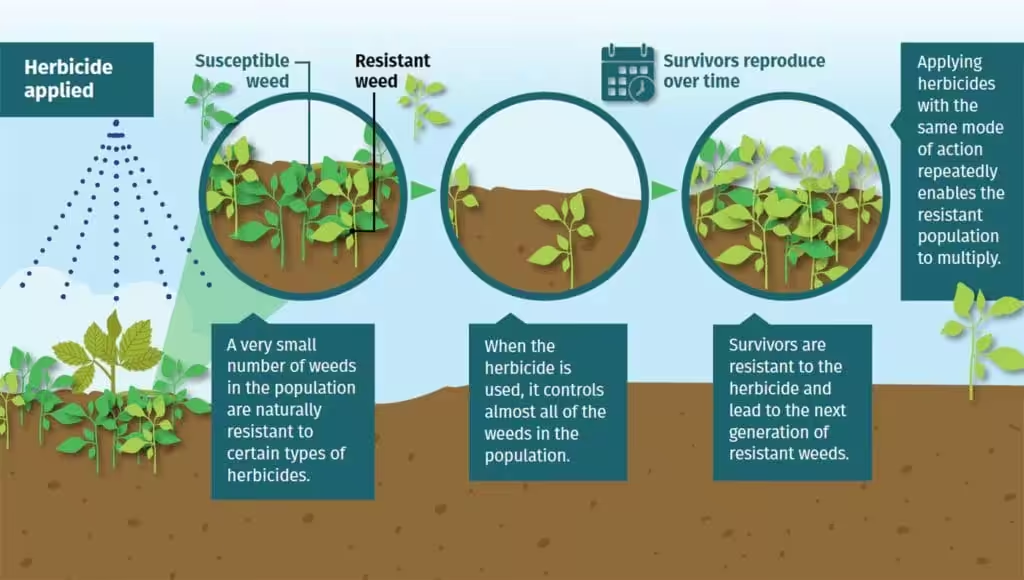
How it work:
Types of Herbicides:
Types of Herbicides Based on Specificity:
- Selective Herbicides- Selective herbicides can prevent the growth of some specific species of plants without having an impact on crops. These are the types of herbicides that are most commonly used in agriculture as they can be used without affecting crops.
- Non-Selective Herbicides- These herbicides are broad-spectrum and will affect any plant it is applied to. Non-selective herbicides are mostly used in pre and post-sowing burn down, chemical follows, plantations and also for industrial applications that require clearing a wide area of land of all plants.
Herbicides Market:
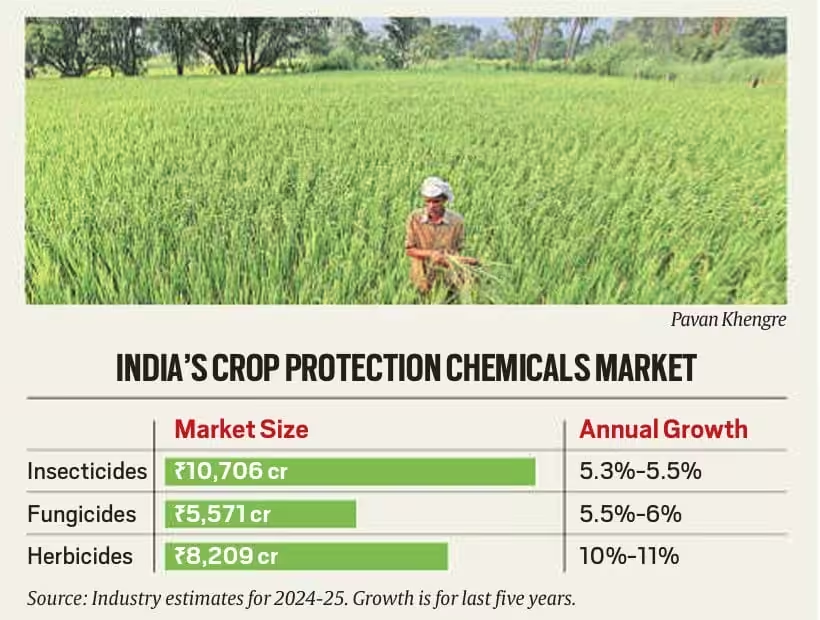
Herbicides now account for ~33% of India’s ₹24,500 crore crop protection market, growing at twice the rate of insecticides/fungicides.
Reasons for Herbicide Growth
a. Labour shortage:
- Manual weeding takes 8–10 hours/acre and is labour-intensive.
- Labour is often unavailable during peak crop cycles.
- Herbicides offer a cost-effective, faster, and repeatable solution.
b. Pre-emergent weed control:
- Farmers now use pre-emergent herbicides (before weeds appear), not just post-emergent (after weeds show).
- Paddy cultivation alone has a sub-segment worth ₹550 crore for pre-emergent herbicides.
c. Crop economics:
- More farmers weigh cost of labour vs chemical costs.
- Mechanized and input-intensive farming makes herbicides more viable.
Concern related to herbicides market:
- Dependence on imports: Most active ingredients are not developed in India(foreign MNCs: Bayer (46%), Syngenta, Sumitomo, Corteva, Crystal Crop, UPL.)
- Labour displacement: Mechanization of weed removal may affect rural employment.
- New molecules are developed globally (Battelle, Nissan, Sikosa), but Indian companies lack indigenous R&D in this area.
Impact of Herbicides use:
- Hazardous pesticides are a global problem because of its tendency to bioaccumulate in human cell membranes and disrupt the body’s functioning system.
- These include cancer, reproductive and developmental toxicity, damage to the nervous system (neurotoxicity), and harm to the immune system (immunotoxicity). Common symptoms of exposure may involve skin irritation, swelling, burning sensations, discomfort in the mouth and nose, an unpleasant taste, and blurred vision.(Glyphosate herbicide)
- Causes groundwater pollution and harms non-target plants and animals.
- Lack of training, protective gear, and awareness worsens the risks. Common in low-literacy rural areas
GOI Steps:
- Good Agricultural Practices (GAP): Good Agricultural Practices (GAP) focus on sustainability across environmental, economic, and social aspects of farming, ensuring safe and quality agricultural products. GAP covers four key pillars: economic viability, environmental sustainability, social acceptability, and food safety and quality.
- Promoting Usage of Bio-pesticides: To effectively reduce pesticide use, it is essential not only to strengthen laws but also to promote sustainable farming practices. The government recognizes the importance of chemical-free farming and has introduced several initiatives to encourage using biopesticides and organic farming.
- On 17th December, Union Minister Dr. Jitendra Singh unveiled Kisan Kavach, Bharat’s first anti-pesticide bodysuit, designed to protect farmers from the harmful effects of pesticide exposure.
- Ministry of Agriculture and Farmers Welfare has restricted the use of glyphosate, a widely used herbicide, citing health hazards for humans and animals.