SCO Trade Plan: Ministerial Agreement and the Next Approval Stage
Why in News?
At their Dushanbe meeting on 17 September 2026, SCO trade ministers agreed a 2026–2030 economic cooperation action plan for further approval by the Council of Heads of Government.
- The Ministry of Commerce and Industry reported the meeting on 18 September; the action plan still required the next stated institutional approval.
- Ministers separately approved regulations for a special working group on the creative economy and adopted their ministerial statement.
- India advocated simplified customs procedures, paperless trade, electronic documents and stronger multimodal connectivity to reduce trade costs.
- India also highlighted trade finance and cross-border payments for smaller firms; these were policy priorities, not an announcement of a newly operational common payment system.
- Regional cooperation becomes commercially useful when agreed priorities lead to specific administrative changes that traders can actually use.
- Institutional status matters: an agreed plan, an approved working-group regulation and a functioning customs procedure represent different stages and kinds of action.
UPSC Relevance
Prelims Relevance
- Shanghai Cooperation Organization economic cooperation
- Council of Heads of Government and the pending approval stage
- Trade facilitation versus tariff preferences
- Multimodal connectivity and transit costs
- Creative-economy working-group regulations
Mains Relevance
GS Paper 2
- Regional institutions and implementation of cooperative commitments
- India’s economic engagement through the SCO
GS Paper 3
- Trade costs, supply-chain reliability and smaller exporters
Essay
- International cooperation earns credibility when commitments become usable public systems.
Background and Context
Read Each Decision at Its Actual Stage
The meeting produced distinct outcomes, and their verbs identify what was completed and what remained pending under the reported approval sequence.
- Ministers agreed the action plan for implementing the SCO programme of multilateral trade and economic cooperation. The release expressly sends it for further approval by the Council of Heads of Government, comprising prime ministers.
- The separately adopted ministerial statement records a collective meeting outcome. It should not be confused with final approval of the action plan, because the release assigns that document a further institutional step.
- Ministers approved working-group regulations concerning the creative economy. This organisational decision is distinct from the pending action-plan approval; neither wording establishes that new commercial facilities or funding arrangements are already available to businesses.
- The 2026–2030 period defines the proposed plan’s timeframe. It does not demonstrate that every activity has started, that budgets are committed or that national implementing agencies have completed the required administrative changes.
- The earlier Bishkek declaration provided broader summit context. This development concerns an economic ministerial process; its analytical value lies in tracking approvals and implementation rather than repeating summit positions.
Trade Facilitation Is Not a New Free-Trade Agreement
India’s proposals focus on the practical burden of moving goods and documents, which can fall without changing the tariff payable on a product.
- Trade facilitation, as explained by the WTO, improves import and export procedures. Simpler customs processing can reduce administrative friction while applicable duties, product standards and other substantive border requirements continue to operate.
- Paperless trade can replace repeated document handling with usable electronic exchanges. Its benefit depends on authorities accepting and processing the information, not merely on a trader scanning documents into a digital format.
- Multimodal connectivity joins transport modes across a shipment’s journey. A rail terminal, road connection or cargo transfer can improve movement, but gains depend on coordination with border procedures and reliable onward services.
- Tariff preferences require their own applicable legal arrangements. The reported meeting does not announce a new SCO free-trade agreement, common external tariff or automatic duty reduction for goods traded among its members.
- The India–MERCOSUR origin-protocol development illustrates why procedure and preference must be separated. Here, ministerial cooperation cannot by itself be treated as a new entitlement to preferential market access for exporters.
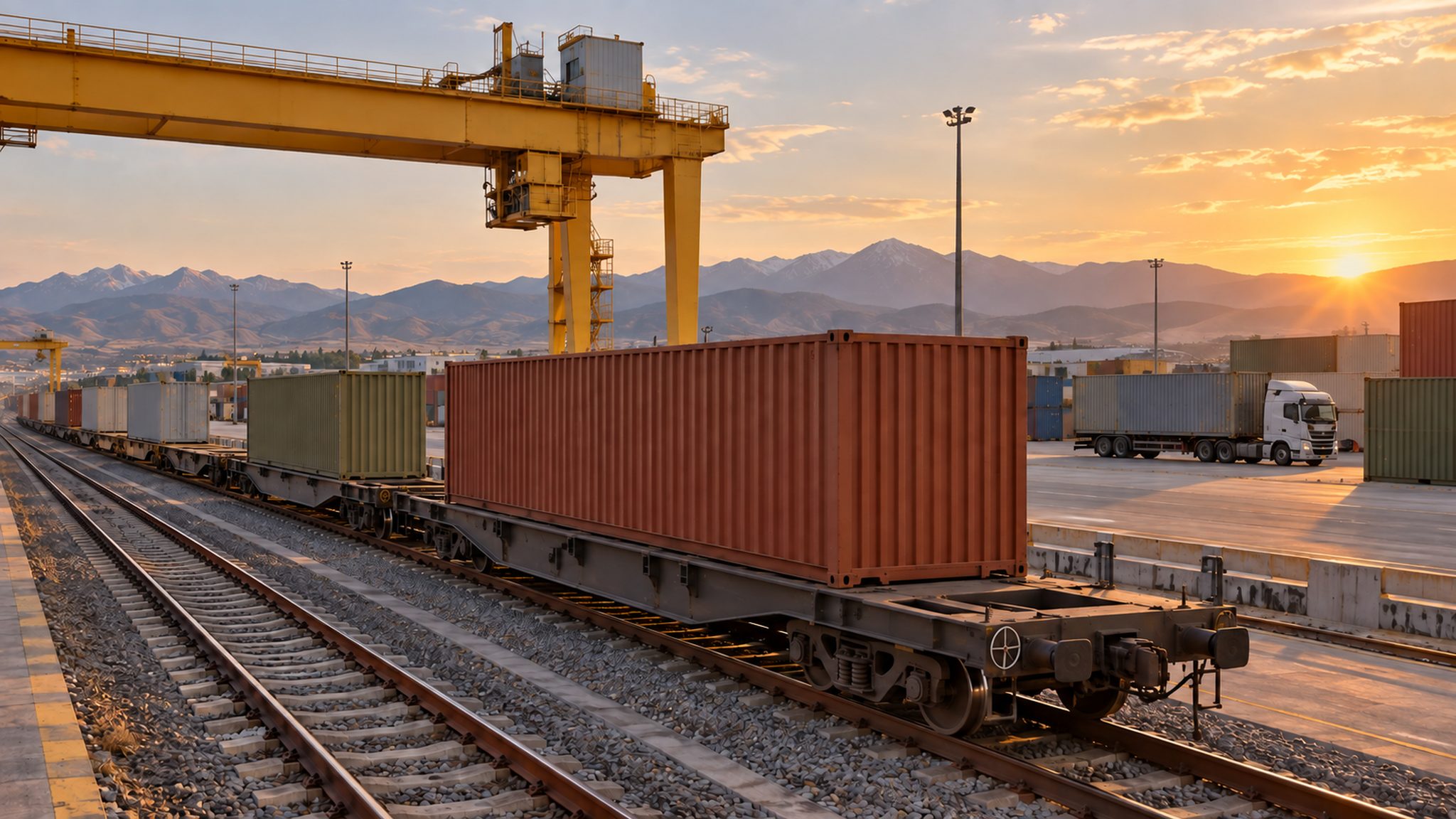
What Would Turn Priorities into Usable Trade Links?
Implementation should be assessed through specific institutional responsibilities and traders’ experience; the following tests are analytical recommendations, not completed outcomes announced at Dushanbe.
- Assigned responsibility is the first test: each proposed activity should identify the responsible agencies and the approval or administrative step they control. A regional aspiration alone cannot tell a trader whom to approach.
- Interoperable procedures are the next test. If customs, transport and other border agencies still require incompatible submissions, a digital exchange between only some participants may leave much of the original delay unchanged.
- Small-firm access requires attention to transaction costs, documentation and finance. India raised accessible trade finance and payments, but usefulness must be judged by whether eligible smaller businesses can obtain and use those services.
- Supply-chain resilience means being able to manage disruption, rather than simply announcing cooperation across several sectors. Diversified sourcing and dependable logistics are relevant tests; the release does not establish that such networks already exist.
- Outcome monitoring should distinguish a meeting held, a procedure introduced and a shipment moving more predictably. Reporting each stage separately makes it harder to present institutional activity as proof of lower costs for businesses.
Way Forward
Track Approval, Responsibility and Actual Use
- Publish the approval status of the action plan and separate it clearly from working-group regulations already approved at the ministerial meeting.
- For each activity, identify implementing agencies, the procedure to change and a realistic review point, avoiding claims of completion based on announcements alone.
- Measure trade costs and reliability from users’ experience, including smaller firms, while distinguishing administrative improvements from any separately negotiated tariff concessions.
Conclusion
- The SCO meeting advanced an economic cooperation process, with the action plan awaiting further approval and creative-economy working-group regulations already approved. These are different institutional outcomes, not interchangeable evidence of completed implementation.
- For Mains, separate trade facilitation from tariff liberalisation and assess the path from approval to agency action to business use. Announced cooperation becomes meaningful when border and logistics procedures become more predictable.
UPSC Practice Questions
Prelims MCQ 1
With reference to the September 2026 SCO trade ministerial meeting, consider the following statements:
- The action plan was agreed for further approval by the Council of Heads of Government.
- Regulations for a special working group on the creative economy were separately approved.
- The meeting established a new SCO free-trade agreement with automatic tariff preferences.
How many of the above statements are correct?
(a) Only one (b) Only two (c) All three (d) None
Answer: (b) Only two
Explanation:
Statements 1 and 2 match the official release. Statement 3 is incorrect: it reports economic cooperation and trade-facilitation priorities, not a new free-trade agreement or automatic tariff preferences.
Prelims MCQ 2
Which is the clearest example of trade facilitation without a tariff concession?
(a) Reducing an import duty only for goods from a preferential partner. (b) Introducing a common external tariff across several countries. (c) Simplifying customs document processing while retaining the applicable import duty. (d) Exempting all goods from every product-safety requirement.
Answer: (c) Simplifying customs document processing while retaining the applicable import duty.
Explanation:
Trade facilitation improves procedures for moving and clearing goods. It need not reduce tariffs, form a customs union or remove substantive safety requirements.
UPSC Mains Questions
- Distinguish trade facilitation from tariff liberalisation in the context of India’s priorities at the SCO trade ministerial meeting.
- How should regional economic cooperation plans be evaluated between political agreement and implementation? Discuss institutional responsibilities and business-level outcomes.
Sources: PIB, Ministry of Commerce and Industry and WTO, Trade Facilitation.
Frequently Asked Questions
Was the SCO action plan finally approved at Dushanbe?
The ministers agreed the 2026–2030 action plan for further approval by the Council of Heads of Government. The official release identifies that additional step, so the ministerial agreement should not be described as completed final approval.
What was separately approved at the meeting?
Ministers approved regulations on the special working group for development of the creative economy. This organisational decision was separate from the action plan and does not establish that new funding or commercial services were already operational.
Does paperless trade automatically reduce import duties?
No. Paperless trade changes how documents and information are exchanged and processed. Applicable import duties continue unless a separate legal arrangement changes them; an administrative improvement is not itself a tariff preference.
Why do smaller firms matter in this agenda?
Smaller firms can face significant burdens from documentation, delays and limited access to finance. India highlighted payments and accessible trade finance, but these priorities require usable implementation before they improve firms’ actual trading conditions.