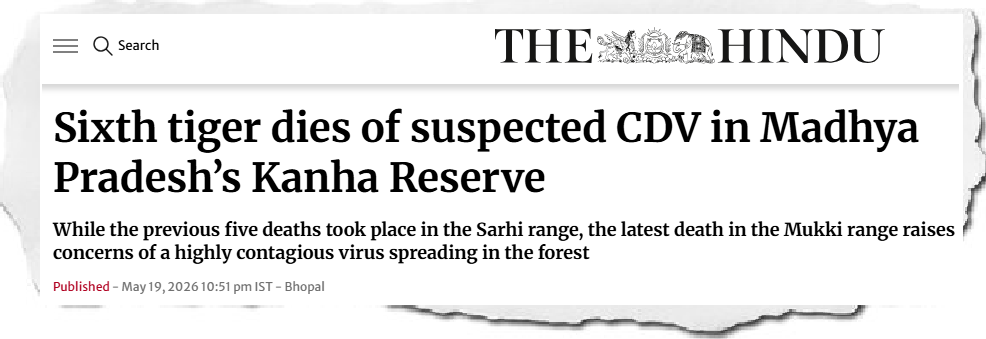
Sixth tiger dies of suspected CDV in Madhya Pradesh’s Kanha Reserve
Sixth Tiger Death in Kanha Raises Concern over Canine Distemper Virus (CDV)
Why in News?
A six-year-old male tiger was found dead in Kanha Tiger Reserve, with authorities suspecting infection by Canine Distemper (CDV). This is suspected to be the sixth tiger death within a month linked to the virus, after a tigress and four cubs had earlier died in the reserve.
UPSC Relevance
Prelims:
Canine Distemper Virus (CDV), Tiger Reserves, National Tiger Conservation Authority (NTCA), Wildlife Protection Act 1972, zoonotic diseases.
Mains:
GS III (Environment and biodiversity conservation, wildlife protection, human–wildlife interface, disease management in wildlife populations).
Background/Context
India hosts the world’s largest tiger population and has made significant progress in tiger conservation through initiatives such as National Tiger Conservation Authority and Project Tiger.
However, conservation challenges have evolved beyond poaching and habitat loss. Infectious diseases increasingly threaten wildlife populations, particularly where domestic animals interact with protected ecosystems.
The recent deaths in Kanha indicate the possibility of disease transmission from domestic dogs to wild carnivores.
What is Canine Distemper Virus (CDV)?
CDV is a highly contagious viral disease affecting carnivorous mammals. It belongs to the Morbillivirus group, which also includes viruses affecting humans and livestock.
Characteristics of CDV
CDV primarily affects:
- Respiratory system
- Nervous system
- Gastrointestinal system
- Immune system
The disease can infect several species including: Dogs, Tigers, Lions, Leopards, Foxes, Wolves, Other wild carnivores
Transmission generally occurs through:
- Direct contact with infected animals
- Body fluids and secretions
- Contaminated surroundings
Why is CDV Dangerous for Tigers?
High Transmission Potential
Domestic and stray dogs in buffer and surrounding forest areas can act as reservoirs for the virus. Frequent interaction with wildlife increases transmission risks.
Reduced Immunity
CDV weakens the immune system, making infected animals vulnerable to secondary infections.
Threat to Small or Isolated Populations
Disease outbreaks can become serious where wildlife populations are geographically restricted, potentially affecting breeding populations and genetic diversity.
Difficulty of Detection
Wild animals often show symptoms only after the disease has significantly progressed, limiting opportunities for intervention.
Factors Contributing to Disease Spread in Kanha
Growing Stray Dog Population
Increasing stray dog populations in buffer regions raise the likelihood of contact between domestic and wild animals.
Human Activities Around Protected Areas
Movement of local communities and domestic animals near reserve boundaries can facilitate disease transmission pathways.
Wildlife Mobility
Tigers and other carnivores frequently move across habitats and ranges, increasing the possibility of wider spread.
Measures Taken by Authorities
Containment and Sanitation Measures
Authorities have:
- Isolated and disinfected affected sites using bleach and lime.
- Burnt scat and food remains to prevent contact by other animals.
Sample Testing and Monitoring
Forensic and biological samples have been sent for laboratory confirmation and disease surveillance.
Vaccination Drive
Officials have initiated vaccination campaigns for domestic dogs in affected buffer and surrounding regions against rabies and CDV.
Challenges
Human–Wildlife–Livestock Interface
Growing interaction between wildlife and domestic animals near protected areas creates pathways for disease transmission.
Limited Wildlife Disease Surveillance
India’s wildlife conservation systems have historically focused more on habitat and anti-poaching measures than disease monitoring.
Difficulty in Vaccinating Wildlife
Direct vaccination of free-ranging wild carnivores remains operationally difficult.
Ecological Consequences
Disease outbreaks can undermine long-term conservation gains achieved through decades of tiger protection efforts.
Way Forward
Strengthen Wildlife Health Surveillance
Regular disease monitoring systems should be integrated into wildlife conservation programmes.
Vaccinate Domestic Animal Populations
Systematic vaccination and sterilisation of stray dogs around protected areas can reduce transmission risks.
Adopt One Health Approach
Coordination among veterinary services, forest departments, public health agencies and local communities is necessary because human, animal and environmental health are interconnected.
Improve Buffer Zone Management
Managing human activities and reducing domestic animal intrusion around reserves can minimise contact with wildlife.
Expand Research and Monitoring
Scientific studies on disease transmission patterns and wildlife epidemiology should be strengthened.
Conclusion
The suspected CDV-linked tiger deaths in Kanha highlight an emerging dimension of wildlife conservation in India. Protecting endangered species now requires not only preserving habitats and preventing poaching, but also strengthening disease surveillance and managing the interface between wildlife, domestic animals and human populations.
Practice Questions
1. With reference to Canine Distemper Virus (CDV), consider the following statements:
- It primarily affects respiratory, nervous and immune systems.
- It affects only domestic dogs.
- It can spread through direct contact and body secretions.
Which of the statements given above is/are correct?
(a) 1 and 2 only
(b) 1 and 3 only
(c) 2 and 3 only
(d) 1, 2 and 3
Correct Answer: (b)
Explanation: CDV affects several carnivorous animals including tigers and other wild species. It primarily attacks respiratory, nervous and immune systems and spreads through contact and secretions.
2. Consider the following statements regarding tiger conservation in India:
- Project Tiger is implemented under the National Tiger Conservation Authority.
- Tiger reserves are notified under the Wildlife Protection Act, 1972.
Which of the statements given above is/are correct?
(a) 1 only
(b) 2 only
(c) Both 1 and 2
(d) Neither 1 nor 2
Correct Answer: (c)
Explanation: Project Tiger functions through NTCA and tiger reserves derive legal backing under provisions of the Wildlife Protection Act.
Mains Questions
- Discuss the significance of adopting a “One Health” approach in biodiversity conservation and wildlife management.
- Emerging infectious diseases are becoming a major challenge for wildlife conservation in India. Examine.