Snow Leopards

Context:
The snow leopard, the agile “ghost of the mountains” that inhabits the rugged ranges of 12
Asian countries, including India, has the lowest genetic diversity of any big cat species in the world, even lower than that of the dwindling cheetah.
UPSC Relevance:
Species in news
UPSC PYQ:
Q. Which one of the following National Parks lies completely in the temperate alpine zone? (2019)
(a) Manas National Park
(b) Namdapha National Park
(c) Neora Valley National Park
(d) Valley of Flowers National Park
About Snow Leopard
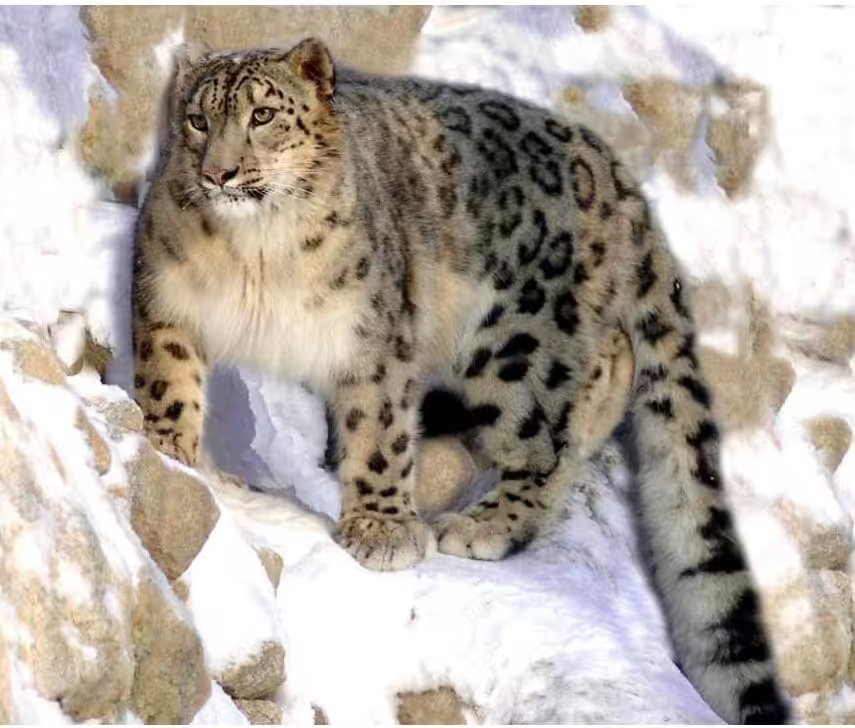
About Snow Leopard:
- The strikingly beautiful snow leopard remains one of the most mysterious cats in the world. Very rarely seen by humans, it has come to be known as the ‘ghost of the mountains.
- Range: including in Afghanistan, Bhutan, China, India, Kazakhstan, Kyrgyzstan, Mongolia, Nepal, Pakistan, the Russian Federation, Tajikistan and Uzbekistan.
- Habitat in India: Snow leopards live in the mountainous regions of Central and Southern Asia. In India, their geographical range encompasses a large part of the western Himalayas, including the Union Territories of Jammu and Kashmir and Ladakh, Himachal Pradesh, Uttarakhand and Sikkim and Arunachal Pradesh in the eastern Himalayas.

- The snow leopard has been listed in appendix I to the Convention on International Trade in Endangered Species of Wild Fauna and Flora (CITES) since 1975, and in appendix I to the Convention on the Conservation of Migratory Species of Wild Animals since 1986.
- In 2024, the General Assembly proclaimed 23 October as International Day of the Snow Leopard
- The species usually mate between January and March, a time when both sexes mark their territories intensively leaving signs such as scrapes, faeces, urine and scent-spray in prominent locations along their travel routes.
- The breeding pattern of the animal itself also makes it a highly vulnerable species, as a female snow leopard generally gives birth to only one or two cubs once in two years.
Snow leopards are active at night