Special Economic Zone(SEZ)

Context:
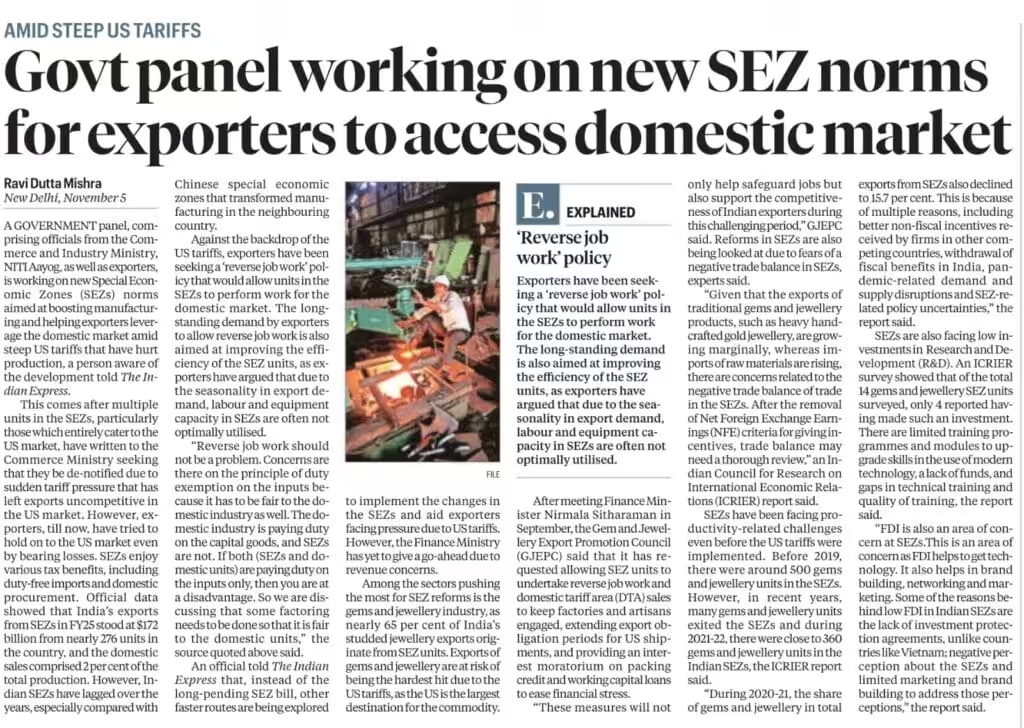
The Government of India has constituted a panel under the Ministry of Commerce and Industry (with members from NITI Aayog and others) to reform the Special Economic Zones (SEZ) framework. The move comes amid steep U.S. tariffs and a slowdown in global exports, which have hurt Indian exporters operating from SEZs.
UPSC Relevance:
Q. Justify the need for FDI for the development of the Indian economy. Why is there a gap between MOUs signed and actual FDIs? Suggest remedial steps to be taken for increasing actual FDIs in India. (2016).
About SEZ:
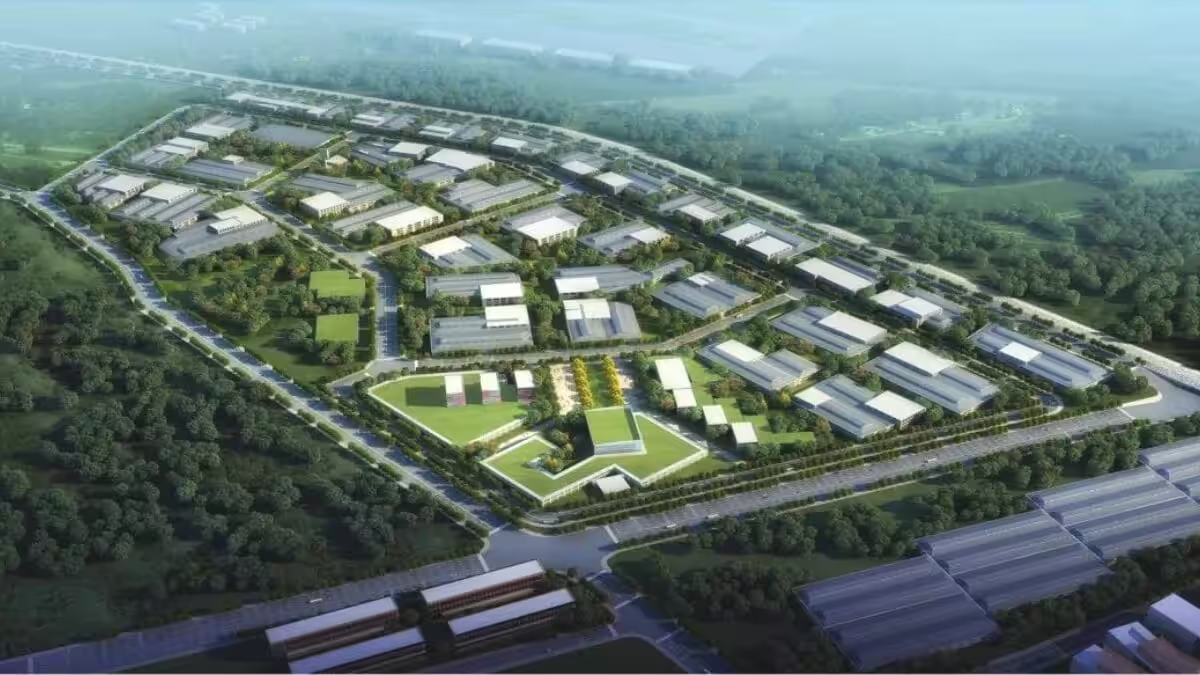
Special economic zones (SEZs) in India are areas that offer incentives to resident businesses. SEZs typically offer competitive infrastructure, duty free exports, tax incentives, and other measures designed to make it easier to conduct business. Accordingly, SEZs in India are a popular investment destination for many multinationals, particularly exporters.
- Currently, India has 276 operational SEZs with total employment of 3.19 million people as of March 31, 2024.
- Goods exports from Indian SEZs reached US$143.34 billion till January 31, 2025.
Objectives of the SEZ Act are:
- Generation of additional economic activity
- Promotion of exports of goods and services
- Promotion of investment from domestic and foreign sources
- Creation of employment opportunities
- Development of infrastructure facilities
Special Economic Zones (Amendment) Rules, 2025:
- One of the major revisions is the amendment to Rule 5 of SEZ Rules, 2006, which reduces the minimum land requirement for SEZs dedicated exclusively to semiconductors or electronic components from 50 hectares to 10 hectares.
- Additionally, Rule 18 has been amended to allow these SEZ units to sell their products in the domestic market, subject to payment of applicable duties. This marks a departure from the traditional export-only model for the manufacturers.
- Further, an amendment to Rule 7 empowers the SEZ Board of Approval to waive the requirement for land to be encumbrance-free in specific cases. This provision applies when the land is mortgaged or leased to central or state governments or their authorized agencies, offering greater flexibility in land acquisition and development.
Approval granted for two new high-tech SEZs:
Following the notification of these amendments, the SEZ Board of Approval sanctioned two critical proposals:
- Micron Semiconductor Technology India will set up an SEZ in Sanand, Gujarat, with an estimated investment of INR 130 billion (US$1.5 billion).
- Hubballi Durable Goods Cluster Private Ltd (part of the Aequs Group) received approval to establish an SEZ in Dharwad, Karnataka, involving an investment of INR 1 billion (US$11.61 million).
SEZ in India:
India was one of the first in Asia to recognize the effectiveness of the Export Processing Zone (EPZ) model in promoting exports, with Asia’s first EPZ set up in Kandla in 1965.
- The Special Economic Zone Act, 2005 amended India’s SEZ policy.
- Many EPZs have converted to SEZs, with notable zones in Noida (Uttar Pradesh state), Falta (West Bengal state), Visakhapatnam (Andhra Pradesh state), Chennai (Tamil Nadu state), Cochin (Kerala state), Santa Cruz (Maharashtra state), Indore (Madhya Pradesh), as well as Kandla and Surat (Gujarat).
- Consequently, the SEZ category encompasses various multiple zone types, such as free trade zones (FTZs), EPZs, industrial estates (IEs), free ports, free trade warehousing zones (FTWZz), and urban enterprise zones, among others.
Incentives for setting up in an Indian SEZ:
- Duty free import and domestic procurement of goods.
- 100 percent income tax exemption on export income for SEZ units under Section 10AA of the Income Tax Act for first five years.
- Income tax exemption on income derived from the business of development of the SEZ in a block of 10 years in 15 years under Section 80-IAB of the Income Tax Act.
- Dividend Distribution Tax abolished in February 2020.
Outcome:
According to the Ministry of Commerce and Industry:
- SEZ exports increased from INR 228.40 billion (US$3.07 billion) in 2005-06 to INR 7595.24 billion (US$102.24 billion) in 2020-21.
- Investment in SEZs increased from INR 40.355 billion (US$0.54 billion) in 2005-06 to INR 6174.99 billion (US$83.12 billion) (cumulative basis) by 2020-21.
- Operations in SEZ units provided jobs to 134,704 persons in 2005-06 – which increased to 2,358,136 persons (cumulative basis) by 2020-21.
Challenges:
Baba Kalyani Committee – Key Issues Identified in India’s SEZ Policy
- Global Competitiveness and Skill Gaps:
- Competing ASEAN nations have modernized their SEZ frameworks, offering more attractive incentives, simplified regulations, and robust skilling initiatives to attract global investors. India needs to recalibrate its SEZ policy to remain competitive.
- Withdrawal of Fiscal Incentives:
- The removal of tax incentives such as Minimum Alternate Tax (MAT) exemptions and the imposition of Income Tax on SEZ units have reduced their overall attractiveness for investors.
- Restrictions on Domestic Job Work:
- Current SEZ regulations prohibit units from undertaking job work for Domestic Tariff Area (DTA) entities. This limits the operational flexibility and optimal utilization of installed capacity within SEZs.
- Underutilization of Land Resources:
- Large tracts of land within SEZs remain unutilized as land parcels are often earmarked for specific sectors. The Committee suggested liberalizing land use norms to allow for diversified activities and multi-sectoral operations.
- Multiplicity of Economic Zone Models:
- There is significant overlap among various industrial and economic zone models — such as SEZs, Coastal Economic Zones (CEZs), the Delhi-Mumbai Industrial Corridor (DMIC), National Investment and Manufacturing Zones (NIMZs), Food Parks, and Textile Parks — leading to policy confusion and inefficiency. A unified and coordinated framework was recommended.
- High Duty on Domestic Sales:
- When SEZ units sell products in the domestic market, they are required to pay full import customs duty, which discourages domestic linkages and limits integration with the national manufacturing ecosystem.
- Environmental Concerns:
- SEZs have contributed to pollution through the discharge of untreated effluents, causing significant damage to mangroves and adversely affecting the fisheries and dairy sectors, particularly in Gujarat.
Recommendations by Baba Kalyani Committee:
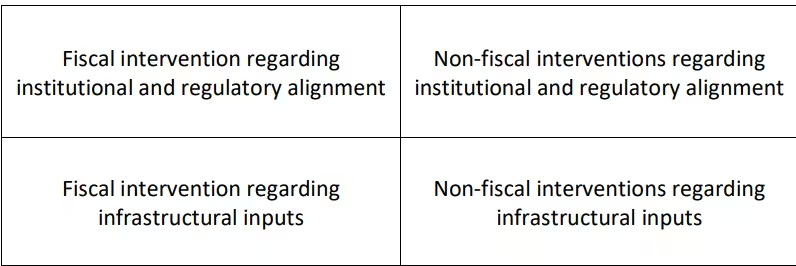
The key recommendations of the Committee based on the above mentioned objectives and the inputs from various industry stakeholders can be categorised into the following maxtrix:
- The committee has proposed to rename SEZs in India as 3Es- Employment and Economic Enclave, with the objective of moving from island of exports to catalyst of economic and employment growth. The 3Es aims to bring together all categories of investors that enable economic activity or job creation and investment targeted towards leveraging domestic demand.
- Another key highlight of the recommendations was the review of requirements of manufacturing and services separately.
- Delink from Net Foreign Exchange (NFE) Performance: Allow domestic supplies and payments in Rupees
- Infrastructure Development: Develop high-quality infrastructure including high-speed rail, expressways, ports, warehouses, and airports.
- Ease of Doing Business (EoDB): Establish one integrated online portal for investment, operations, and exits
The establishment of SEZs in India has been a policy applied by the government to increase the country’s global competitiveness. These zones played a key role in drawing foreign direct investment, boosting exports, developing strong infrastructure and creating employment opportunities. The dominance of the IT/ITeS sector and geographical concentration of SEZs in a few industrialized states highlight the success of this policy in leveraging India’s strengths and catering to the needs of specific industries.