Stem Cell Therapy for Autism only in approved Clinical Trials: Centre
Why in News?
The Union Health Ministry has directed States and Union Territories to ensure that stem cell therapy is offered as standard clinical care only for the approved disease conditions and indications.
- Therapeutic use of any type of stem cell must remain confined to duly approved clinical trials in accordance with the National Guidelines for Stem Cell Research, 2017, issued by the Indian Council of Medical Research (ICMR) and the Department of Biotechnology (DBT).
- The move comes against the backdrop of the continuing use of stem-cell interventions for Autism despite the lack of established evidence supporting them as a standard treatment.
| UPSC Relevance: GS-3 Science and Technology: Biotechnology Prelims: Types of Stem Cells, Stem Cell Therapy Mains: Stem Cell Therapy: Applications & Concerns |
What are Stem Cells?
- Stem cells are unspecialised cells possessing two distinctive properties:
- Self-renewal: They can repeatedly divide to produce more stem cells.
- Differentiation: They can develop into specialised cells such as blood, nerve or muscle cells.
- Sources of Stem Cells:
- Embryonic stem cells
- Adult or somatic stem cells
- Umbilical-cord blood
- Bone marrow
- Peripheral blood
- Induced pluripotent stem cells, created by reprogramming mature cells.
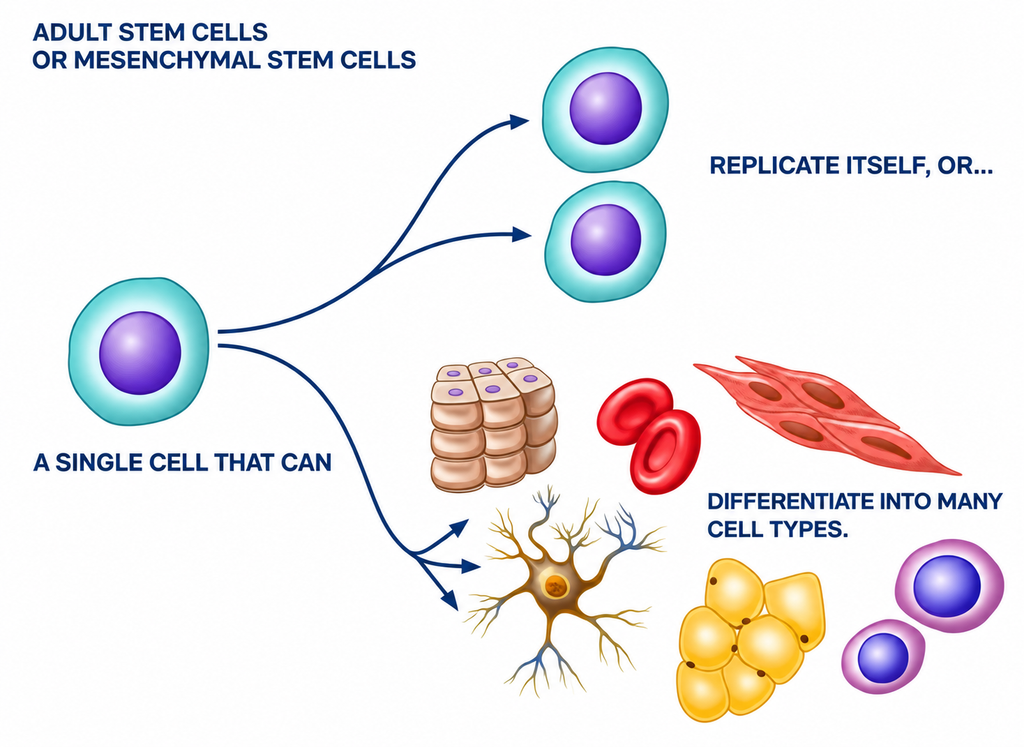
Types of Stem Cells:
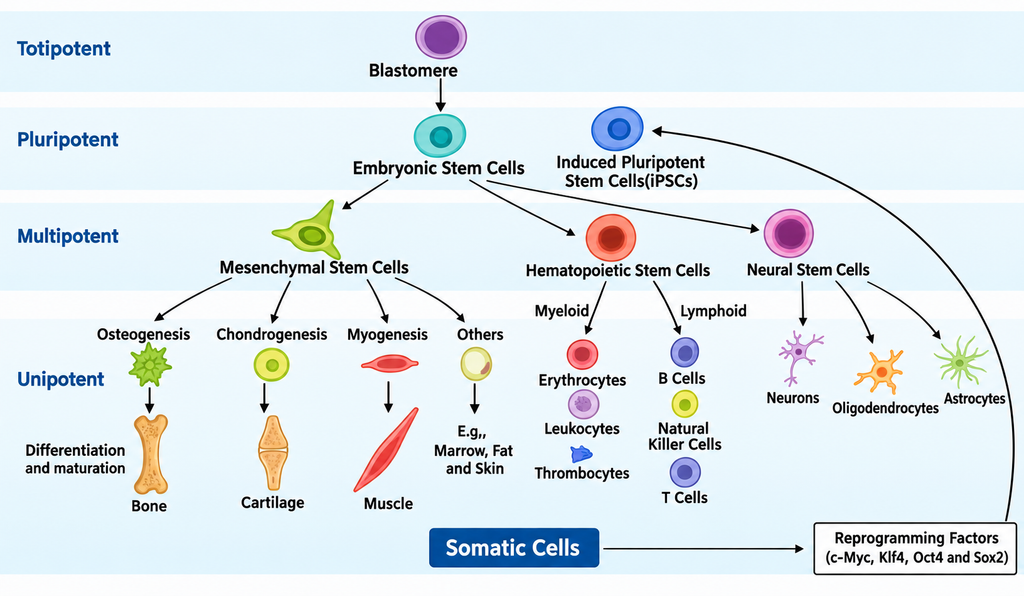
- Totipotent Stem Cells are the most versatile stem cells. They can give rise to all cell types of the body as well as extra-embryonic tissues such as the placenta. E.g., Zygote and very early embryonic cells.
- Pluripotent Stem Cells can give rise to almost all cell types of the body but generally not extra-embryonic tissues. E.g., embryonic stem cells and induced pluripotent stem cells.
- Multipotent Stem Cells can differentiate into a limited range of related cell types. E.g., hematopoietic stem cells, which form blood cells, and mesenchymal stem cells, which can form bone, cartilage and fat cells.
- Unipotent Stem Cells: Unipotent stem cells can renew themselves and differentiate into only one specific cell type. E.g., some skin stem cells generate only skin cells.
- Induced Pluripotent Stem Cells, or iPS cells, are adult body cells that are genetically reprogrammed into a pluripotent state. They are important because they reduce dependence on embryos and can be used for disease modelling, drug testing and future personalised therapies.
What is Stem Cell Therapy?
- Stem-cell therapy involves administering stem cells or stem-cell-derived products to replace, repair or regenerate damaged or dysfunctional tissues.
- The best-established application is haematopoietic stem-cell transplantation (commonly called bone-marrow transplantation) for certain blood cancers, bone-marrow failure syndromes, immunodeficiencies and inherited blood disorders.
Under the ICMR-DBT National Guidelines for Stem Cell Research, 2017, only haematopoietic stem-cell transplantation/reconstitution for approved indications is recognised as established clinical use.
Other uses of stem cells in patients are considered investigational and must be undertaken only within duly approved and monitored clinical trials. Thus, stem-cell treatment as standard care is not authorised for Autism Spectrum Disorder at present.
What is Autism Spectrum Disorder?
- ASD is a neurodevelopmental condition characterised by varying degrees of:
- Difficulty in social communication and interaction
- Restricted or repetitive behaviour and interests
- Sensory sensitivities
- Differences in language, learning and adaptive functioning
- The term “spectrum” indicates substantial variation in symptoms, support needs and abilities. Autism is not a single damaged tissue that can simply be replaced by new cells.
- There is currently no established medicine or biological procedure that cures autism.
Why has Stem Cell Therapy been proposed for Autism?
- Experimental approaches generally claim that stem cells may:
- Modulate inflammation or immune responses
- Secrete growth factors supporting neuronal functioning
- Promote repair of neural networks; or
- Improve cerebral blood flow and connectivity.
However, these remain hypothesised mechanisms. Improvements reported in small or uncontrolled studies may arise from natural development, concurrent behavioural therapy, placebo effects, observer bias or inappropriate outcome measurement.
The advisory does not prohibit scientific research into stem-cell interventions for autism. It draws the essential line between responsible experimentation and unproven commercial treatment.
Applications of Stem Cell Therapy in India:
- Established clinical applications in India: Haematopoietic stem-cell transplantation (HSCT) for specified indications and suitable patients:
- Blood cancers: Selected leukaemias, lymphomas and multiple myeloma.
- Inherited blood disorders: Thalassaemia and selected cases of sickle-cell disease.
- Bone-marrow failure: Severe aplastic anaemia.
- Other approved indications: Certain primary immunodeficiencies and inherited metabolic disorders.
- Emerging or Experimental therapeutic applications: These are at different research stages:
- Type-1 diabetes: Generating insulin-producing pancreatic beta/islet cells to restore insulin secretion.
- Parkinson’s disease: Developing dopamine-producing neurons to replace cells lost through degeneration.
- Spinal-cord injury: Investigating cell-based approaches to neural repair and functional recovery.
- Heart damage: Exploring stem-cell-derived cardiac cells and tissue patches to repair injured heart muscle.
- Burns and wound healing: Investigating stem-cell-based skin substitutes and regenerative approaches.
- Research and biotechnology applications:
- Tissue and organ engineering: Developing tissue constructs and organoids; laboratory-grown whole replacement organs remain a research goal.
- Disease modelling: Using patient-derived induced pluripotent stem cells to study disease mechanisms.
- Drug screening: Testing drug effectiveness and toxicity on stem-cell-derived human cells and tissues.
Associated Challenges:
- Difficulty in controlling stem cell differentiation into fully functional mature cells.
- Risk of tumour formation or uncontrolled cell growth.
- Immune rejection of transplanted cells.
- Need for long-term immunosuppression in some therapies.
- Ethical concerns around embryonic stem cells.
- High cost and technical complexity.
- Risk of misuse by clinics offering unproven stem cell treatments.
- Need for strict regulation, informed consent and long-term follow-up.
Stem cell therapy has great potential in regenerative medicine, personalised medicine and treatment of blood disorders. India needs to encourage genuine research while preventing commercial misuse of unproven stem cell therapies.
UPSC Mains PYQ 2017:
Q. Stem cell therapy is gaining popularity in India to treat a wide variety of medical conditions including Leukaemia, Thalassemia, damaged cornea and several burns. Describe briefly what stem cell therapy is and what advantages it has over other treatments.
Practice Prelims MCQ:
Q. With reference to stem cells and their therapeutic use, consider the following statements:
- All adult stem cells are pluripotent.
- Haematopoietic stem cells can generate different types of blood cells.
- Stem-cell therapy for Autism Spectrum Disorder is approved in India as routine clinical care.
- An unproven stem-cell intervention may be studied within a duly approved and monitored clinical trial.
Which of the statements given above are correct?
(a) 1 and 3 only
(b) 2 and 4 only
(c) 1, 2 and 4 only
(d) 2, 3 and 4 only
Answer: (b)
Adult stem cells are generally multipotent rather than pluripotent. Stem-cell therapy for ASD is not approved as routine care, but regulated clinical research may continue.