STEM Potential of India
Context:
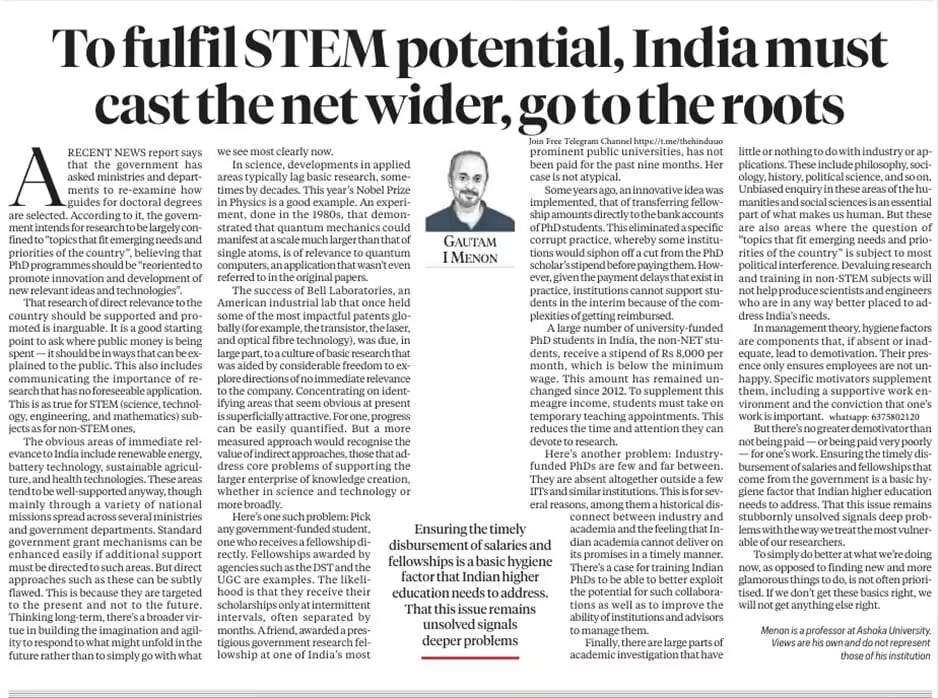
To fulfil STEM potential, India must cast the net wider, go to the roots because it comes amid government directions to re-examine national research priorities and funding patterns. Debate on India’s R&D spending (~0.65% of GDP) — far below global leaders.
UPSC Relevance:
S&T, IPR and Innovation ecosystem
UPSC PYQ:
Q: What is the present world scenario of intellectual property rights with respect to life materials? Although India is second in the world to file patents, still only a few have been commercialised. Explain the reasons behind this less commercialization.(2024)
About STEM:
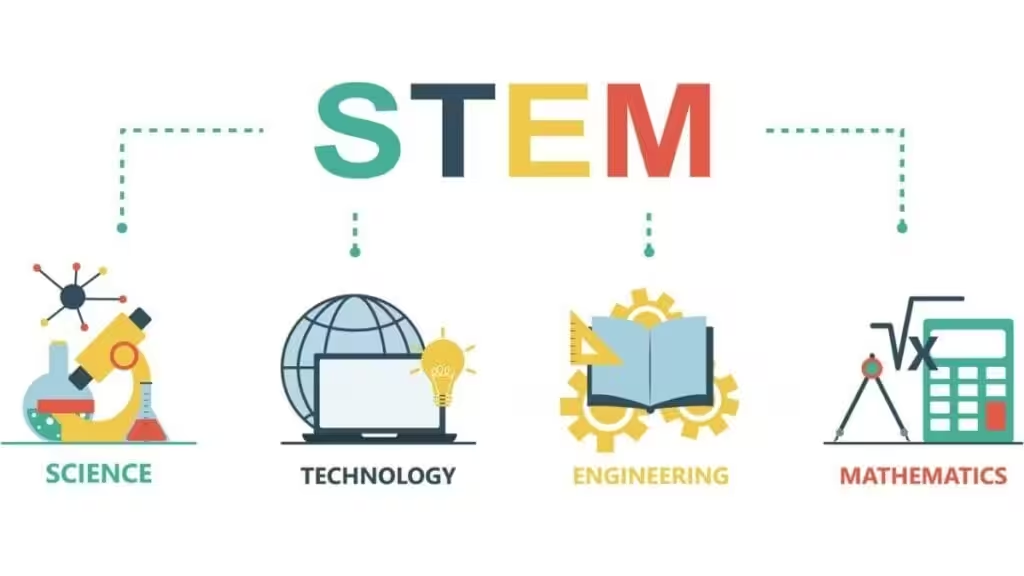
According to UNESCO: STEM stands for Science, Technology, Engineering and Mathematics, encompassing disciplines that drive innovation and address global challenges. It fosters critical thinking, problem-solving and creativity, equipping individuals to tackle complex issues and contribute to sustainable development.
Major areas of study:
 Natural, physical, and life sciences (sometimes including medicine)
Computer, electronics, and other technology-related disciplines
All types of engineering
Mathematics, or any field involving a heavy application of mathematical principles
Why Is STEM Important?
- As society innovates and technology advances, the need for professionals who understand how these technologies work and who can propose practical solutions continues to grow. The U.S. Bureau of Labor Statistics (BLS) calls STEM careers “tomorrow’s jobs,” emphasizing the importance of these unique industries.
- Today, STEM jobs are in high demand, and many are projected to stay in demand for several years. At the same time, STEM professionals are in short supply, which is why so many colleges — as well as the U.S. government — are imploring students to study STEM.
- In 2019, the Trump administration invested $578 million in STEM education. More recently, President Biden’s 2022 education budget promised to prioritize STEM.
- Ensuring students have access to a quality STEM education is essential for keeping the U.S. competitive in the global market. Students are actively encouraged to study STEM through statewide initiatives, many of which encourage women and people of color to enter the predominantly white, male industry.
Key Issues:
- Over-Focus on Applied Research:
- Government prioritises “emerging areas” and mission-mode projects.
- But breakthrough technologies always originate from basic science, not targeted missions.
- Example cited:
- Quantum Mechanics → Today’s semiconductors and lasers.
- Bell Labs → Success due to freedom in research, not rigid targets.
- Debate on India’s R&D spending (~0.65% of GDP) — far below global leaders.
- Concerns over delayed fellowships for PhD and research scholars.
- Fellowship Crisis in India:
- PhD scholars receive very low and delayed stipends.
- This:
- Discourages bright students.
- Forces scholars to take up part-time work.
- Kills research focus.
- Mentor and Faculty Shortage:
- India lacks:
- Trained PhD supervisors.
- Research advisors.
- Without this, even funding cannot create quality research.
- India lacks:
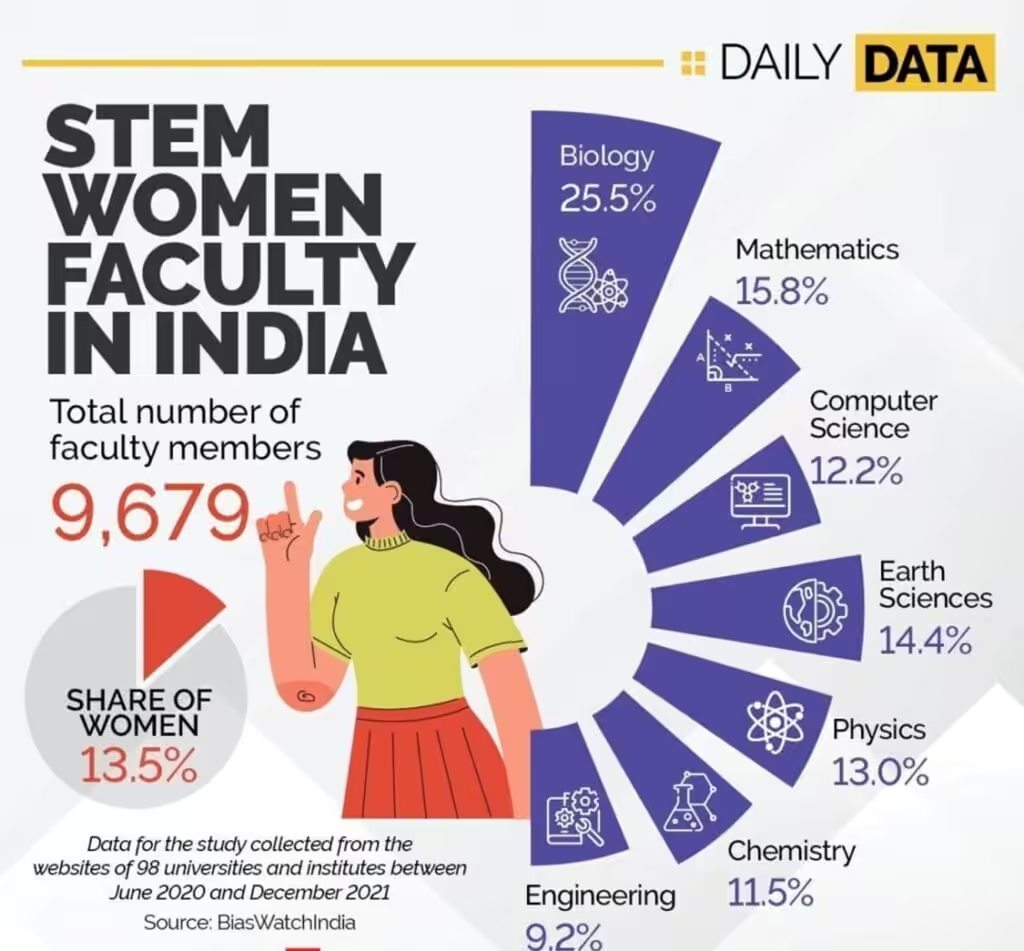
- Women Participation is less:
Steps by GOI:
- Indian Science Technology and Engineering facilities Map (I-STEM) initiative called “Women in Engineering, Science, and Technology (WEST)” was launched.
- Women may join the WEST program and explore opportunities to become stakeholders in various domains and pursue careers in R&D at various levels: technicians, technologists, scientists, and entrepreneurs.
- Vigyan Jyoti: Inspires girls in STEM.
- WISE-KIRAN, GATI, CURIE, SERB-POWER: Schemes to boost women’s participation in S&T.
- National Education Policy (NEP) 2020: Promotes interdisciplinary learning, critical thinking, holistic education, and integrating vocational training, aligning education with industry needs.
- Research Parks: Established in IITs to link R&D with industry.
- Uchhatar Avishkar Yojana (UAY): Promotes academia-industry collaboration for innovation.
- Anusandhan National Research Foundation (ANRF) (PAIR Program): Fosters research collaboration between academia and industry.
- Teacher Training & Resources:
- NISHTHA: World’s largest teacher training program to foster critical thinking.
- Diksha & SWAYAM: Digital platforms for online teacher training, especially in rural areas.
India cannot create world-class science simply by choosing priority topics or pushing for innovation slogans. It must first build a healthy, stable, supportive ecosystem for researchers.
Strong roots → strong STEM.
Weak roots → no progress.