Supreme Court allows for euthanasia of ‘rabid dogs’, refuses to recall directives to remove strays from public spaces
Why in News?
The Supreme Court of India refused to modify its earlier directions requiring States and Union Territories to remove stray dogs from high-footfall public institutions. The Court also clarified that rabid, incurably ill, or demonstrably dangerous dogs may be euthanised under legally permissible conditions and directed States to strengthen sterilisation and vaccination infrastructure.
UPSC Relevance
Prelims:
Animal Birth Control (ABC) Rules 2023, Prevention of Cruelty to Animals Act 1960, Article 21, rabies, animal welfare framework.
Mains:
GS II (Judiciary, governance, public health, constitutional rights, urban governance),
GS III (animal welfare, human–animal conflict).
Background/Context
India has witnessed increasing concern over stray dog populations and rising dog-bite incidents in urban and semi-urban areas. The issue involves balancing two competing concerns:
- Public safety and public health.
- Animal welfare and protection.
The judiciary has increasingly intervened due to rising dog-bite cases and implementation gaps in sterilisation and vaccination programmes.
Supreme Court Observations
Right to Life and Public Safety
The Court observed that the right to life with dignity under Article 21 includes the right of citizens to freely access public spaces without fear of physical harm.
The Court stated that the State cannot remain passive when preventable threats to human life continue despite available statutory mechanisms.
No Absolute Right of Stray Dogs to Occupy Public Spaces
The Court clarified that a combined reading of the Animal Birth Control Rules and the parent legislation does not create an absolute right for stray dogs to remain in every category of public space.
Even after sterilisation and vaccination, dogs removed from high-footfall institutions such as hospitals and schools cannot automatically be re-released into those spaces.
Major Directions Issued by the Court
ABC Centres in Every District
Infrastructure Expansion
States and Union Territories were directed to establish at least one fully functional Animal Birth Control (ABC) centre in every district with:
- Veterinary facilities
- Trained personnel
- Sterilisation infrastructure
- Vaccination facilities
The Court also directed expansion based on population and local requirements.
Public Health Measures
Authorities were directed to:
- Ensure adequate anti-rabies vaccines.
- Maintain immunoglobulin availability.
- Develop rapid response systems for dog-bite incidents.
About Rabies:
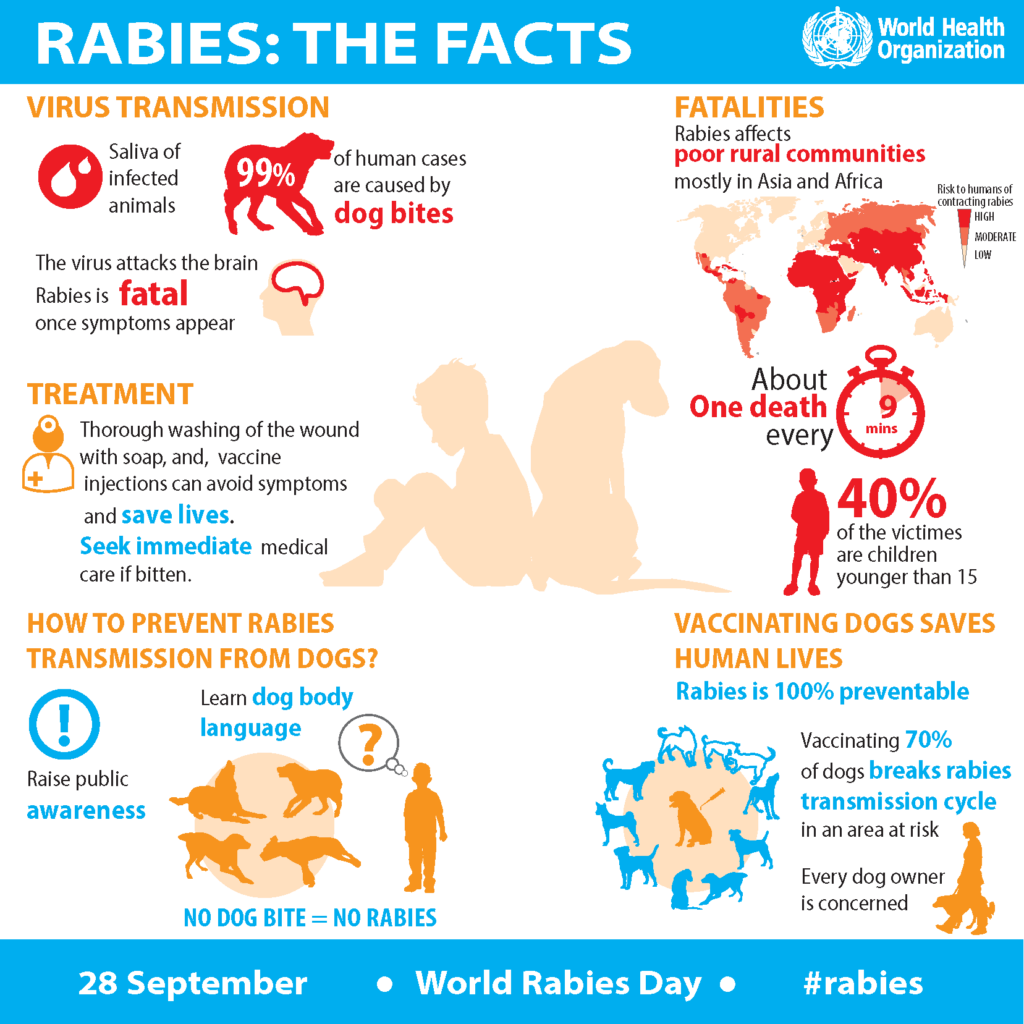
Rabies is a viral zoonotic disease that causes progressive and fatal inflammation of the brain and spinal cord. Clinically, it has two forms:
- Furious rabies – characterized by hyperactivity and hallucinations.
- Paralytic rabies – characterized by paralysis and coma.
Although fatal once clinical signs appear, rabies is entirely avoidable; vaccines, medicines and technologies have long been available to prevent death from rabies. Nevertheless, rabies still kills tens of thousands of people each year. Of these cases, approximately 99% are acquired from the bite of an infected dog.
Dog-mediated human rabies can be eliminated by tackling the disease at its source: infected dogs. Making people aware of how to avoid the bites of rabid dogs, to seek treatment when bitten and to vaccinate animals can successfully disrupt the rabies transmission cycle.
Euthanasia for Specific Cases
Conditions for Euthanasia
The Court permitted legally permissible euthanasia only for:
- Rabid dogs
- Incurably ill dogs
- Demonstrably dangerous or aggressive dogs
The decision requires assessment by qualified veterinary experts.
Liability of Animal Welfare Groups
The Court directed that organisations or groups feeding and maintaining stray dogs in educational institutions must file affidavits accepting liability.
Failure to do so would prohibit such activities within institutional premises.
Legal Framework
Animal Birth Control Rules 2023
The Rules aim to regulate:
- Sterilisation of stray dogs
- Vaccination programmes
- Population control measures
- Humane management practices
Prevention of Cruelty to Animals Act 1960
The Act provides legal safeguards against unnecessary cruelty to animals while enabling regulation of animal management.
Article 21 of the Constitution
The Court interpreted Article 21 to include:
- Right to life
- Personal security
- Freedom of movement in public spaces
Challenges
Rising Stray Dog Population
Population growth of stray dogs in many urban areas has outpaced sterilisation and vaccination efforts.
Weak Implementation of ABC Programmes
Despite the policy framework existing for years, implementation has often remained inadequate due to limited infrastructure and funding.
Public Health Concerns
Rising dog-bite incidents create serious concerns regarding rabies and public safety.
Human–Animal Conflict
Balancing animal rights with public safety continues to generate social and legal debate.
Way Forward
Strengthen Sterilisation and Vaccination Programmes
Large-scale implementation of sterilisation and vaccination initiatives is necessary for sustainable population control.
Improve Municipal Capacity
Local bodies require adequate funding, veterinary facilities and trained personnel.
Adopt a One Health Approach
Human health, animal health and environmental health should be addressed through integrated planning.
Promote Responsible Pet Ownership
Abandonment of pets and poor regulation of breeding practices contribute significantly to stray populations.
Increase Public Awareness
Community awareness programmes on animal behaviour, rabies prevention and responsible interaction with animals should be expanded.
Conclusion
The Supreme Court judgment attempts to strike a balance between public safety and animal welfare by recognising that constitutional rights of citizens and humane treatment of animals must coexist. Long-term solutions, however, require systematic implementation of sterilisation, vaccination and public health measures rather than relying solely on judicial interventions.
Practice Questions
1. With reference to the Animal Birth Control (ABC) Rules, consider the following statements:
- They aim to regulate sterilisation and vaccination of stray dogs.
- They are framed under the Prevention of Cruelty to Animals Act, 1960.
- They exclusively focus on euthanasia of stray animals.
Which of the statements given above is/are correct?
(a) 1 and 2 only
(b) 2 only
(c) 1 and 3 only
(d) 1, 2 and 3
Correct Answer: (a)
Explanation: ABC Rules focus on sterilisation and humane management of stray animals and are framed under the Prevention of Cruelty to Animals Act. They do not exclusively deal with euthanasia.
2. Consider the following statements regarding rabies:
- Rabies is a viral disease affecting the nervous system.
- Vaccination after exposure can help prevent the disease.
- Rabies affects only animals and not humans.
Which of the statements given above is/are correct?
(a) 1 only
(b) 1 and 2 only
(c) 2 and 3 only
(d) 1, 2 and 3
Correct Answer: (b)
Explanation: Rabies is a viral disease affecting the nervous system and post-exposure vaccination is effective. Humans can also be infected.
Mains Questions
- Examine the role of judicial intervention in addressing public health concerns related to stray animal management in India.
- Discuss the challenges associated with balancing public safety and animal welfare in India’s urban governance framework.