The Environment Protection (Management of Contaminated Sites) Rules, 2025

Why in news:
The Union Environment Ministry has notified new rules under the Environment Protection Act, 1986 that lays out a process to address sites that are chemically contaminated.
UPSC CSE Relevance:
UPSC CSE in mains and prelims examination has focused on environmental issues and laws related to them. A case in point is a following PYQ.
UPSC 2020 mains PYQ:
How does the draft Environment Impact Assessment (EIA) Notification, 2020 differ from the existing EIA Notification, 2006?
Contaminated Sites:
- According to the Central Pollution Control Board, contaminated sites are those, where hazardous and other waste had been dumped historically.
- These sites may include landfills, dumps, waste storage and treatment sites, spill sites, and chemical waste handling and storage sites.
Why a problem?
- Polluters have either shut their operations or the cost of remediation is beyond their capacity. Thus the sites remain a threat to the environment.
- Remedial operation has commenced only in 7 of the 103 such sites in the country.
RULES:
Identification of contaminated sites:
- The local body or District Administration, on its own or on receipt of a complaint from the public, shall identify an area affected with contaminants and list all such areas as suspected contaminated sites in its jurisdiction on a centralized online portal.
- a) The local body or District Administration shall furnish the list to the State Pollution Control Board or the Pollution Control Committee periodically on a half-yearly basis.
- The State Pollution Control Board or the Pollution Control Committee, or a reference organisation, would examine these sites and provide a preliminary assessment within 90 days of being informed.
- Following these, it would have another three months to make a detailed survey and finalise if these sites were indeed “contaminated”.
Remediation and Liabilities:
- A “reference organisation” – basically a body of experts – would be tasked with specifying a remediation plan.
- The State Board would also have 90 days to identify the person(s) responsible for the contamination. Those deemed responsible would have to pay for the cost of remediation of the site, else the Centre and the State under a prescribed arrangement would arrange for the costs of clean-up.
- Any criminal liability, if it is proved that contamination such caused loss of life or damage would be under the provisions of the Bharatiya Nyaya Sanhita (2023),”
Application – These Rules shall not apply to a contaminated site affected by –
- solid waste from dump site
- radioactive waste
- mining operations
- pollution of the sea by oil or oily substance
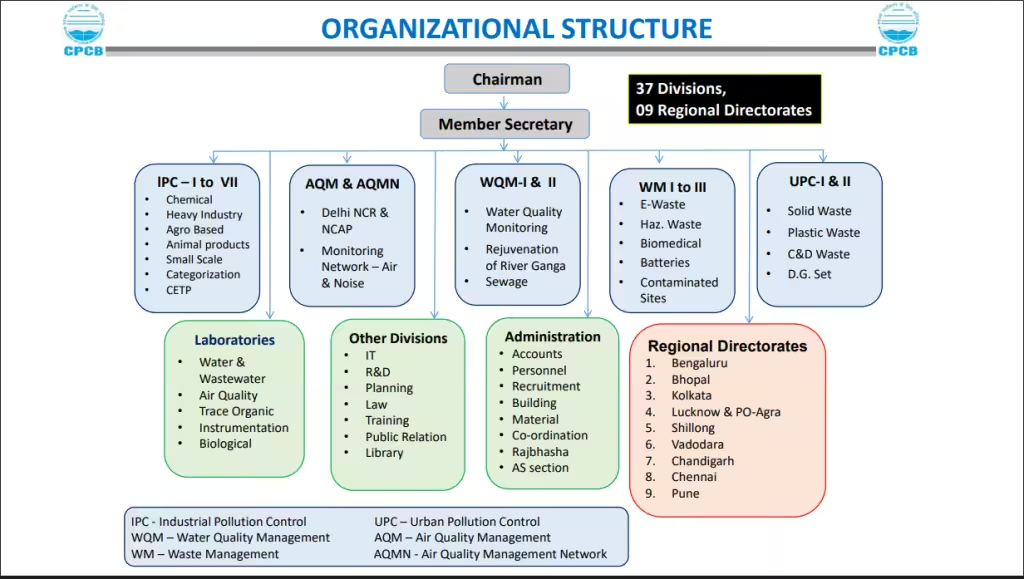
About Central Pollution Control Board:
- Statutory organisation, was constituted in September, 1974 under the Water (Prevention and Control of Pollution) Act, 1974.
- CPCB was entrusted with the powers and functions under the Air (Prevention and Control of Pollution) Act, 1981.
- It serves as a field formation and also provides technical services to the Ministry of Environment and Forests of the provisions of the Environment (Protection) Act, 1986.
- H.Q- New Delhi