The Gulf is Calling, and New Delhi Must Listen
Context
India’s engagement with West Asia has traditionally rested on energy imports, trade, migrant labour and remittances. New Delhi followed a cautious multi-alignment strategy: maintaining simultaneous relations with Saudi Arabia, the UAE, Iran and Israel without joining competing regional blocs.
This transactional but balanced approach worked while the United States remained the principal external guarantor of Gulf security. However, regional wars, drone and missile attacks, disruption of maritime routes and the perceived unpredictability of American engagement are now reshaping West Asia’s security architecture.
A changing West Asia requires a more assertive Indian role in pursuing real, hard-power security partnerships.
| UPSC Relevance: GS-2 International Relations: India and its Neighbourhood, West Asia Mains: Emerging security alignments in West Asia and their implications for India. |
A Region Vital to India:
The Gulf cannot be treated merely as an economic hinterland:
- India-GCC trade reached approximately $178 billion in 2024-25.
- The region remains a major source of India’s crude oil and LNG.
- Around one crore Indians live in GCC countries, making their security and welfare a major national concern.
- The Strait of Hormuz and Bab-el-Mandeb connect India with its energy suppliers and European markets.
- Initiatives such as the India-Middle East-Europe Economic Corridor (IMEC) depend upon regional stability.
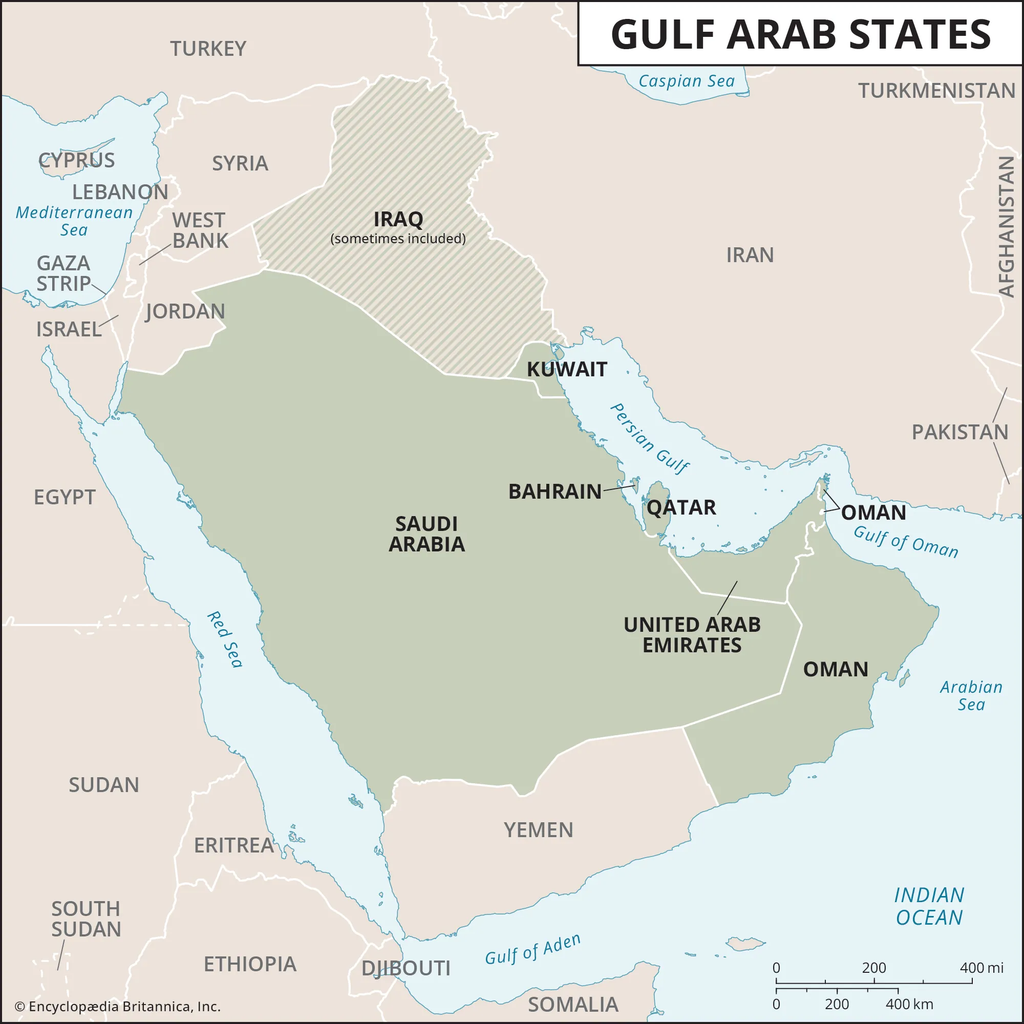
Mecca Defence Agreement: A Structural Signal:
- The Mecca Joint Defence Agreement, signed by Saudi Arabia, Türkiye and Pakistan in August 2026, treats an armed attack on one member as an attack on all. It seeks to combine Saudi financial resources, Türkiye’s defence technology and military capabilities, and Pakistan’s operational experience.
- For India, the agreement is significant because it creates an institutionalised security arrangement near its western maritime approaches and gives Pakistan a larger role in Gulf security. It does not automatically make Saudi Arabia hostile to India (the pact has been presented as defensive), but its operational ambiguity requires close monitoring.
- More broadly, it indicates that West Asian countries no longer seek only trade and investment partners; they increasingly require air and missile defence, intelligence, maritime security, counter-drone systems and defence-industrial cooperation.
Limits of Economic Engagement:
- The recent regional conflicts have demonstrated that even advanced ports, refineries, logistics corridors and financial centres remain vulnerable to inexpensive drones, missiles, sabotage and cyberattacks. Disruption at a single maritime chokepoint can raise energy prices and interrupt global supply chains.
- The Gulf’s development model also depends heavily on expatriate labour and foreign investment. Prolonged insecurity could lead to capital flight, labour evacuation and interruptions in remittance flows. Thus, trade ties and diaspora diplomacy alone cannot preserve India’s influence or interests.
Way Forward:
- Expand maritime partnerships:
- India should deepen naval coordination with the UAE, Oman and Saudi Arabia across the Gulf of Oman, Strait of Hormuz, Arabian Sea and Gulf of Aden. Joint patrols, logistics arrangements, exercises and interoperable maritime-surveillance networks can protect commercial shipping.
- India is not starting from zero. Under Operation Sankalp, the Indian Navy has escorted shipping, responded to piracy and drone-related incidents and maintained deployments in the western Indian Ocean. Its Information Fusion Centre-Indian Ocean Region also enables maritime information-sharing.
- Build defence-industrial partnerships: India can offer Gulf countries co-development and joint production of naval systems, drones, counter-drone technologies, electronic warfare equipment and cybersecurity solutions. Defence relations must progress from buyer-seller arrangements towards long-term technology and manufacturing partnerships.
- Strengthen bilateral and minilateral cooperation: Flexible security arrangements with the UAE, Oman, Saudi Arabia, Israel and other willing partners would allow India to address particular challenges without entering a rigid military alliance. Platforms such as the India-GCC Strategic Dialogue and I2U2 should acquire stronger security and technology dimensions.
- Protect people and economic assets: India needs coordinated evacuation plans, consular databases and contingency mechanisms for its Gulf diaspora. Strategic petroleum reserves, diversified energy imports and resilience planning for IMEC and other trade corridors are equally necessary.
- Strategic Caution: India should aim to become a credible security contributor, rather than claiming to be the Gulf’s unilateral security guarantor. Excessive military commitments could entangle it in conflicts involving Iran, Israel, Türkiye and Arab states, strain naval resources and undermine strategic autonomy.
Its approach must therefore combine a stronger maritime presence with continued engagement with Iran, support for peaceful dispute settlement and avoidance of sectarian or bloc-based alignments.
The era of a largely passive and transactional Indian presence in West Asia is ending. India must supplement energy, trade and diaspora ties with maritime security, intelligence and defence-industrial cooperation.
The objective should be neither withdrawal nor military entanglement, but an evolution from multi-alignment to issue-based, capability-backed partnerships that protect India’s interests while contributing to regional stability.