Tuna Parasites: Geography, Evidence and Food-Safety Risk
Why in News?
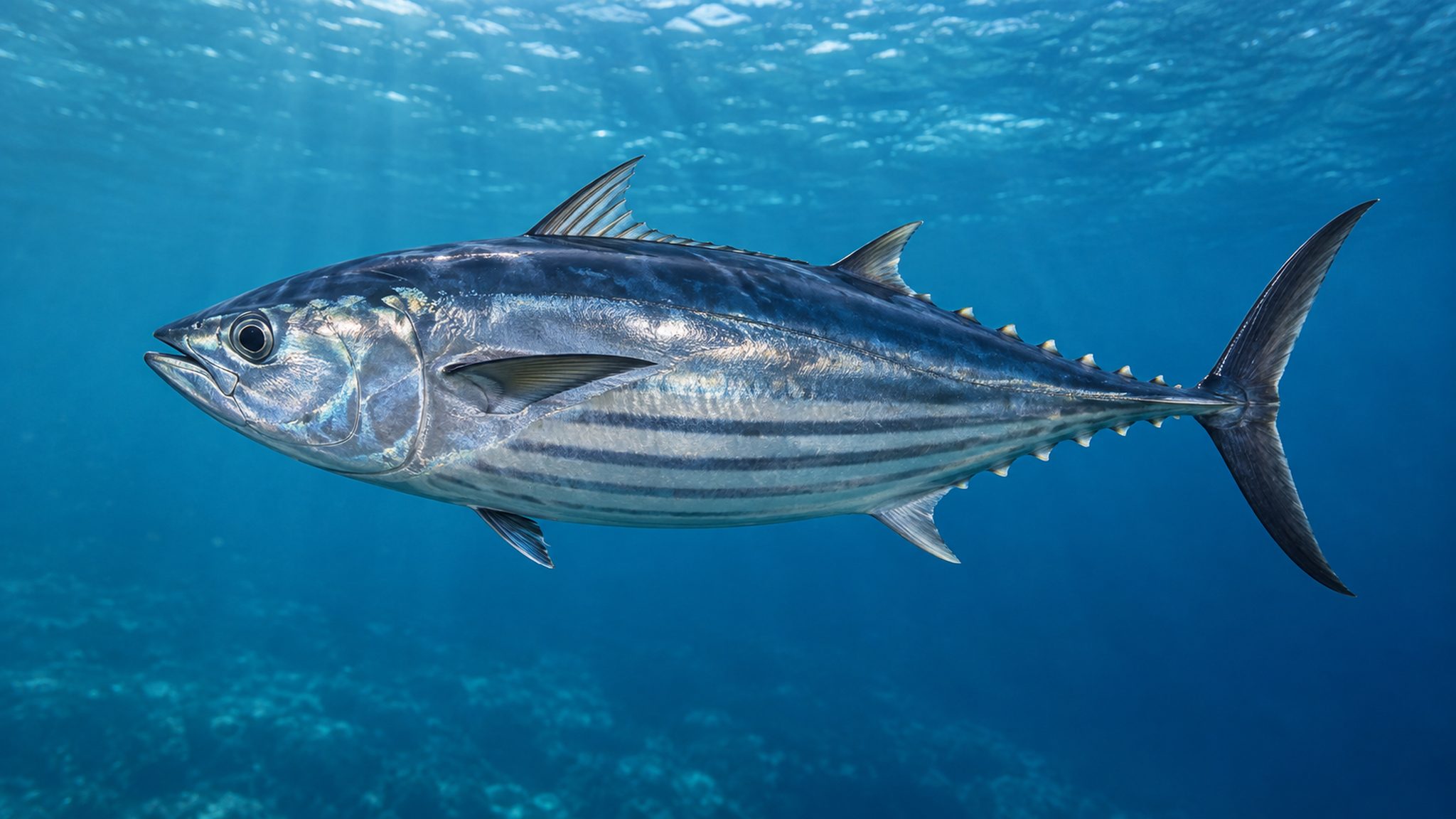
On September 24, 2026, ICAR-CMFRI advised consumers against avoiding tuna solely because parasites were reported in fish studied in the Atlantic Ocean off Brazil.
- The advisory concerned reports about skipjack tuna from a specific geographical region, rather than a finding covering tuna everywhere.
- CMFRI reported no external manifestations of harmful parasitic infestation in the Indian fish it examined; that is not a nationwide parasite-free certification.
- The institute advised prompt evisceration and proper cooking as precautions to reduce associated food-safety risk.
- A study’s geographical scope matters when deciding whether its findings apply to another fish population.
- Useful risk communication avoids both unnecessary food avoidance and an unsupported promise of zero risk.
UPSC Relevance
Prelims Relevance
- ICAR-CMFRI: Central Marine Fisheries Research Institute, Kochi.
- Skipjack tuna: the fish discussed in the regional parasite reports.
- Intermediate hosts: organisms that can support stages of a parasite’s life cycle.
- Evisceration: removal of intestines and other viscera during processing.
- Fish stocks: populations that may differ in their ecological exposure.
Mains Relevance
GS Paper 3
- Ecological variation and the limits of generalising biological studies.
- Evidence-based food-safety precautions across fisheries supply chains.
GS Paper 2
- Clear public communication of scientific uncertainty.
Essay
- Public trust requires scientific findings to retain their limits when translated into advice.
Background and Context
Why a parasite report needs a location
Fish of the same species can encounter different ecological conditions, so a finding from one region is not automatically a finding about another.
- The advisory responds to reports of parasites in skipjack tuna studied off Brazil. Its central correction concerns the geographical reach of that evidence, rather than denying that parasites can occur in marine fish.
- Parasite presence and abundance can vary between individual fish as well as regions. A species name identifies the fish but does not describe every habitat, exposure or interaction affecting the parasites it may carry.
- The availability of intermediate or secondary hosts, including copepods mentioned by CMFRI, helps explain this variation. Different local ecological conditions can support different opportunities for a parasite to circulate among organisms in that environment.
- The useful comparison is between evidence collected from Brazilian Atlantic fish and the Indian fish discussed by CMFRI. Treating these as interchangeable removes the geographical context needed to interpret either observation responsibly.
- Parasite patterns have also been used as indicators for differentiating fish stocks or populations. That research use shows why differences matter; it does not mean this advisory has identified or mapped every tuna stock.
What CMFRI's observations do and do not show
The institute’s statement is narrower than a guarantee about every fish, and preserving that distinction is essential to an accurate reading of the advisory.
- CMFRI says scientists regularly examine fish, including skipjack tuna, during fish biology studies. They observe abnormalities and parasites when necessary; the release does not describe a comprehensive negative laboratory survey covering all Indian seafood.
- The reported finding is absence of external manifestations of harmful parasitic infestation in examined fish. External appearance is the stated observation, not proof that every possible parasite is absent from every tissue or specimen.
- Scope of inference asks which population a finding can support claims about. An observation on examined fish should not become a universal statement about all fish sold in markets, all coastal areas or future catches.
- The advisory’s consumer message is conditional: do not avoid fish solely because of a report from another region. It does not ask consumers to ignore local evidence or abandon appropriate handling and cooking precautions.
- Scientific uncertainty should be expressed without reversing the burden of evidence. Neither a foreign report nor reassuring external observations alone establish the parasite status of an unexamined fish from a different population or location.
How handling and preparation reduce risk
The advisory links practical precautions to exposure, rather than treating the fish’s name or place of origin as a substitute for appropriate food preparation.
- Prompt and proper evisceration means removing intestines and other viscera during cleaning and processing. CMFRI identifies this as an additional food-safety precaution; cleaning should not be presented as a guarantee that cooking becomes unnecessary.
- Proper cooking kills parasites and significantly reduces associated food-safety risk, according to the institute. Its advisory gives general precautions, rather than a specific temperature-and-time protocol for preparing fish.
- The institute flags raw or lightly cooked seafood as potentially higher risk where local parasite prevalence is high and inadequately assessed. The preparation method and local evidence must be considered together when interpreting this caution.
- Cooking practices can add protection, but a general description of how seafood is commonly prepared is not verification of every serving. The relevant precaution remains appropriate handling, cleaning and cooking for the food actually consumed.
- Good public communication should retain both parts of the advice: avoid unsupported generalisation and follow practical precautions. Removing either part can turn a measured advisory into alarm about an entire food or unjustified reassurance.
Way Forward
Communicate the finding with its limits
- Pair parasite reports with their sampling location and observation method, so readers can see what the study actually supports.
- Explain evisceration and cooking in clear handling guidance without implying that visual inspection alone guarantees safety.
- Update advice when local evidence changes; distinguish a new observation from claims copied from a different population.
Conclusion
- This advisory connects ecology with evidence appraisal: the same fish species can face different parasite exposure across regions, and observations must remain attached to the fish and methods actually examined.
- For a balanced answer, combine geographical limits with practical risk reduction. Do not convert absence of external signs into a parasite-free guarantee, or a regional report into a reason to reject all tuna.
UPSC Practice Questions
Prelims MCQ 1
With reference to CMFRI’s tuna advisory, consider the following statements:
- Parasite occurrence can vary between geographical regions.
- Absence of external manifestations proves that all Indian fish are parasite-free.
- Parasite patterns can help differentiate fish stocks.
How many of the above statements are correct?
(a) Only one (b) Only two (c) All three (d) None
Answer: (b) Only two
Explanation:
Statements 1 and 3 are correct. The institute’s observation about external manifestations in examined fish is narrower than a universal parasite-free claim.
Prelims MCQ 2
Evisceration during fish processing refers to:
(a) Removing intestines and other viscera. (b) Identifying all parasites by external appearance. (c) Classifying every fish into a distinct stock. (d) Replacing cooking with visual inspection.
Answer: (a) Removing intestines and other viscera.
Explanation:
CMFRI recommends prompt, proper removal of viscera as an additional food-safety precaution, alongside appropriate handling and cooking.
UPSC Mains Questions
- Why should findings about parasites in one fish population not automatically be generalised to another? Discuss the ecological and evidentiary considerations.
- How can public agencies communicate food-safety uncertainty without creating either unnecessary alarm or false reassurance? Illustrate with CMFRI’s tuna advisory.
Source: PIB, Ministry of Agriculture and Farmers Welfare.
Frequently Asked Questions
Why did CMFRI issue the tuna advisory?
It responded to reports of parasites in skipjack tuna studied off Brazil. The institute cautioned against generalising findings from one geographical region to Indian fish and advised appropriate handling, cleaning and cooking.
Did CMFRI certify all Indian tuna as parasite-free?
No. It reported that examined fish had not shown external manifestations of harmful parasitic infestation. That limited observation is not a universal guarantee about every fish or a comprehensive negative laboratory result.
Why can parasite occurrence differ between regions?
Local ecological conditions and the availability of intermediate or secondary hosts can differ. CMFRI notes that parasite occurrence varies between individual fish and geographical regions, making location important when interpreting a study.
What precautions does the advisory recommend?
CMFRI recommends proper, prompt evisceration and appropriate handling, cleaning and cooking. It states that proper cooking kills parasites and significantly reduces associated risk, without supplying a numerical cooking protocol in this release.