Value of Water

Context:
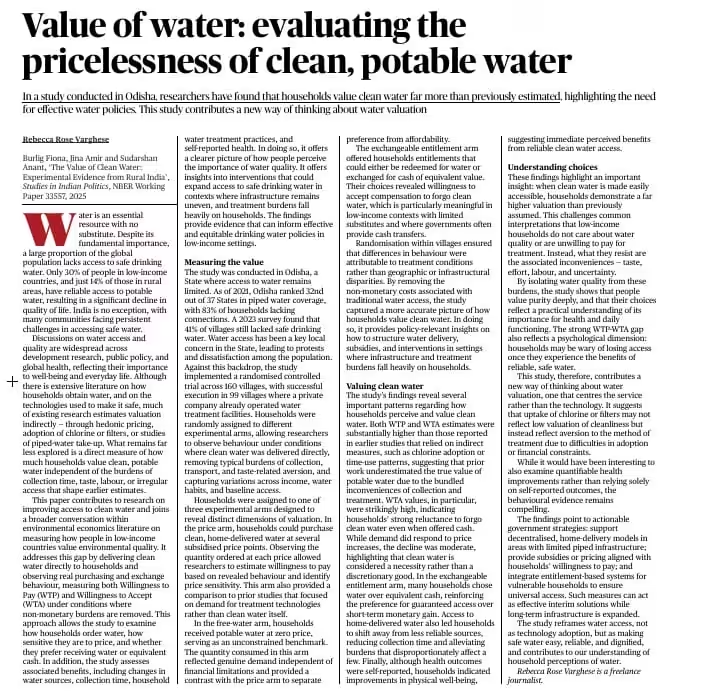
A recent field study conducted in Odisha, published in the American Economic Review, which reassesses how rural households value clean drinking water. Clean drinking water is not just a free public good — it is a highly valued life-enhancing resource that poor households are willing to pay for when the service is reliable and safe.
UPSC Relevance:
Environment
UPSC PYQ:
Q.1 What are the salient features of the Jal Shakti Abhiyan launched by the Government of India for water conservation and water security? (2020)
Q.2 Suggest measures to improve water storage and irrigation system to make its judicious use under the depleting scenario. (2020)
About Water Scarcity in India:
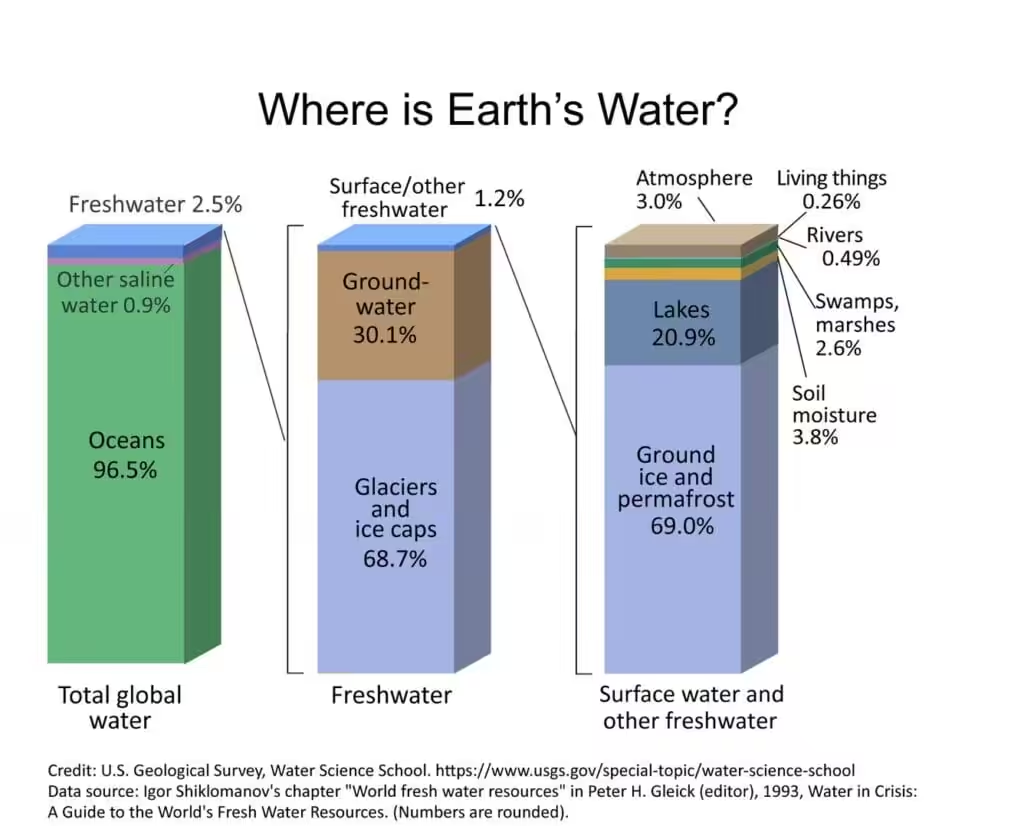
- Out of its population of 1.4 billion people, 35 million people lack access to safe water and 678 million people lack access to a safe toilet.
- The Indian population is expected to rise to 1.7 billion by 2050 will struggle for more safe drinking water for its population.
- With nearly half of
- India’s population that is near about 600 million population is facing extreme water stress and out of the total availability 70% is contaminated. This is a serious threat to India’s GDP as India owns 17% of the total world’s population but India has only 4% of freshwater resources.
Even,
- Delhi’s groundwater contamination is a significant environmental issue, with high levels of uranium, lead, nitrate, fluoride, and salinity-related indicators.
- Uranium levels in Delhi are high, with 13-15% of samples surpassing permissible limits- CWC Report
Key Findings of the Study
- Poor Households Value Clean Water More Than Previously Estimated:
- Clean water is seen as a necessity, not a luxury.
- Families showed a high willingness to pay for safe and reliable water.
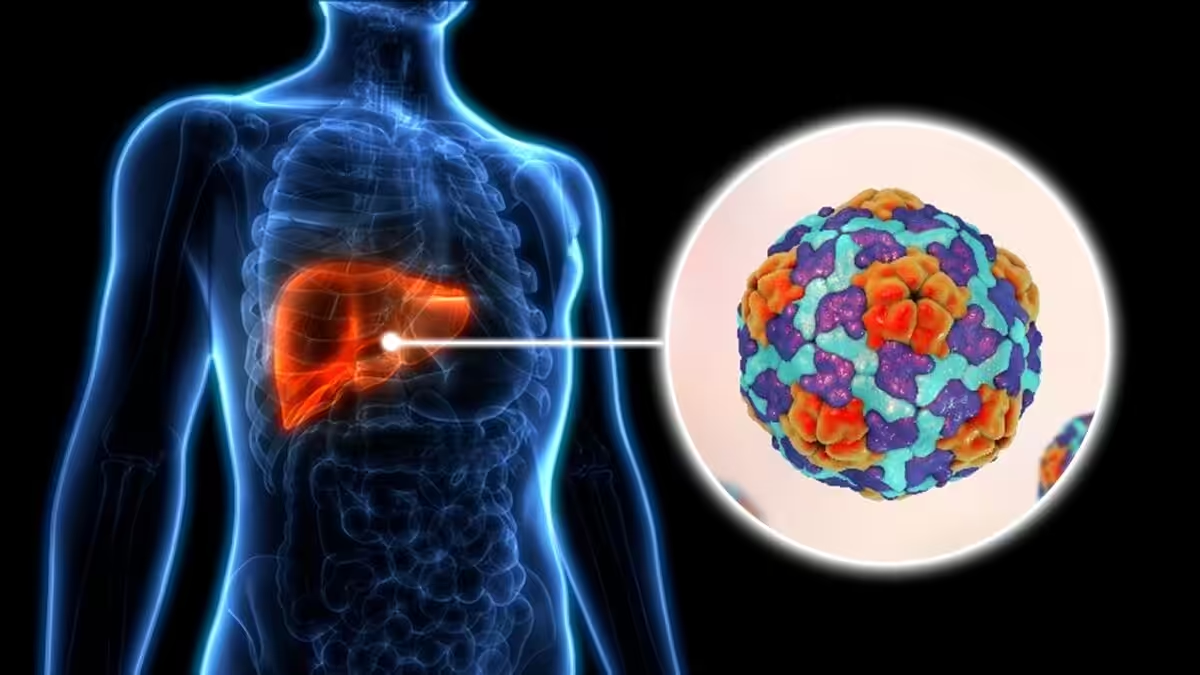
- Major Public Health Benefits
- Sharp decline in:
- Diarrhoea
- Water-borne infections
- Improved:
- Child health
- Work productivity
- Attendance at school and work
- Sharp decline in:
- Huge Reduction in Women’s Drudgery
- Before piped water:
- Women walked long distances
- Lost productive hours
- After access:
- Time savings
- Reduced physical stress
- Better participation in economic and educational activities
- Before piped water:
- Free Water ≠ Sustainable Water
- When water is entirely free:
- Overuse increases
- Maintenance suffers
- Affordable but meaningful pricing improves:
- Accountability
- Service quality
- Long-term sustainability
- When water is entirely free:
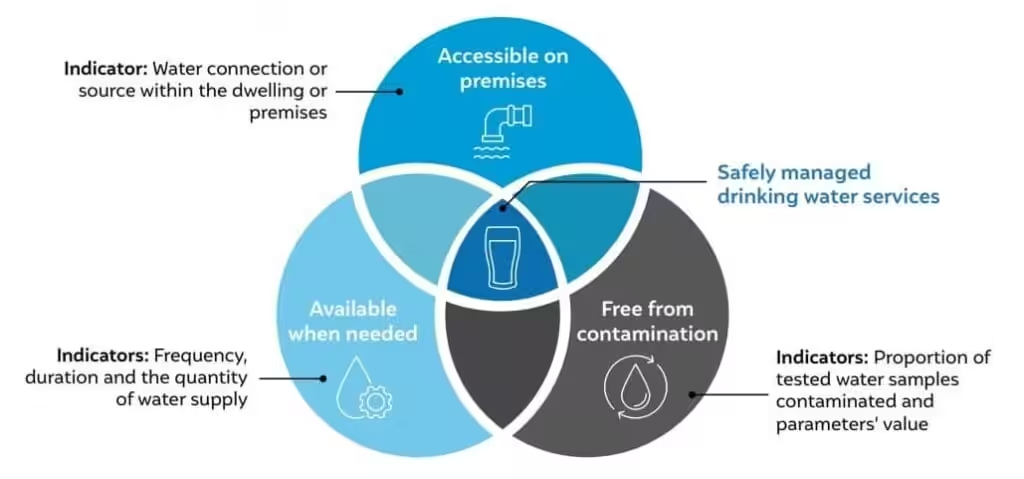
Water Should be:
Govt. Steps:
Mission Amrit Sarovar:
- Launched under Azadi Ka Amrit Mahotsav to promote the conservation, restoration and rejuvenation of water bodies.
- Targets the development of 75 water bodies in each district across the country.
- Focuses on strengthening local water security, groundwater recharge and community participation.
Jal Jeevan Mission (JJM):
- Seeks to provide functional household tap water connections (FHTCs) to every rural household.
- Emphasises safe, adequate and potable drinking water on a regular basis.
- Gives special priority to water-deficient, drought-prone and quality-affected areas.
- Incorporates bulk water transfer and regional water supply schemes to ensure long-term sustainability.
Jal Shakti Abhiyan (JSA):
- A nationwide initiative targeted at water-stressed districts for water conservation and efficient water management.
- Implemented through the mass movement “Catch the Rain”, covering rural as well as urban areas.
- Based on the principle: “Catch rain where it falls, when it falls.”
- Promotes rainwater harvesting, watershed development and reuse of treated wastewater.
Atal Bhujal Yojana (ABY):
- A central sector groundwater management scheme implemented in 8,774 gram panchayats across 81 districts in Haryana, Gujarat, Karnataka, Madhya Pradesh, Maharashtra, Rajasthan and Uttar Pradesh.
- Aims at sustainable groundwater management through:
- Community participation
- Demand-side interventions
- Water-use efficiency
- Encourages behavioural change and local ownership of groun
Clean drinking water is not merely a basic utility but a high-value developmental investment with massive health, economic, and social returns.