Wildlife Trail leads to Prehistoric Past in the Aravalli
Why in News?
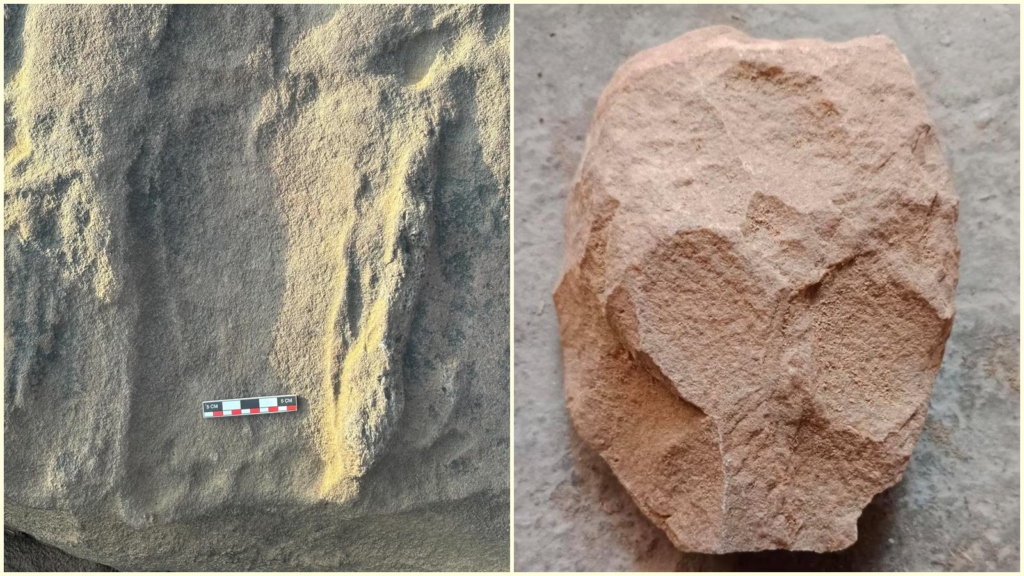
A wildlife trail in the Bhondsi stretch of the Aravalli forests in Gurugram has led to the identification of ancient rock markings, cup-shaped depressions known as cupules, geometric engravings, possible stone game boards, a foot-shaped engraving and stone tools.
| UPSC Relevance: GS-1 Indian History: Archaeological sites, Ancient human settlements Prelims: Bhondsi stretch of the Aravalli forests: Location & key findings. |
Prehistoric Past in the Aravalli: Recent Findings
The site is located near the Bhuvneshwari Mata Mandir complex and forms part of the wider Delhi-Gurugram-Faridabad Aravalli landscape. The Bhondsi cluster reportedly contains:
- Petroglyphs: Images or designs carved, engraved or pecked onto rock surfaces.
- Cupules: Cup-shaped depressions carved into stone, often associated with ritual, symbolic or repeated human activity.
- Geometric engravings: Grid-like patterns that may indicate symbolic communication, counting, ritual use or recreational activity.
- Possible stone game boards: Engraved patterns that may point towards later social and leisure practices.
- Foot-shaped engraving: A large foot-like mark, possibly carrying ritual, symbolic or ceremonial significance.
- Stone tools: Artefacts such as hand axes, cleavers or flakes that may belong to different prehistoric phases.
Archaeological Significance:
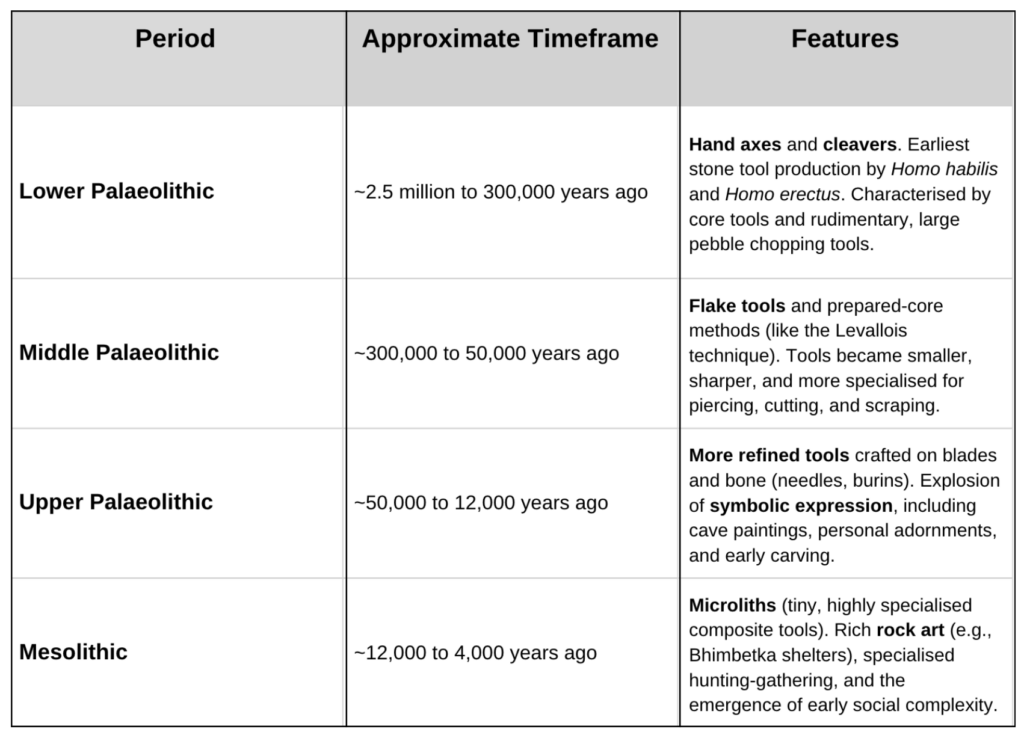
- Evidence of Long Human Presence: The site may indicate continuity of human activity across different prehistoric phases. Stone tools such as hand axes and cleavers are usually associated with early Palaeolithic traditions, while finer tools and symbolic engravings may belong to later phases such as the Middle Palaeolithic, Upper Palaeolithic or Mesolithic.
- Link between Tool-Making and Symbolic Life: Prehistoric studies often distinguish between utilitarian activity and symbolic activity. Stone tools indicate survival-related skills such as cutting, scraping, hunting or processing food. Rock engravings, cupules and foot marks, on the other hand, may indicate ritual behaviour, group identity, memory-making or social communication.
- Aravalli as a Prehistoric Cultural Corridor: The Bhondsi finding is not isolated. Similar prehistoric markers have been reported from the wider Aravalli landscape, including Mangar Bani, Sanjay Van, JNU Ridge, Surajkund, Dhauj, Kot, Mohabatabad and stretches towards Alwar. This suggests that the Aravalli hills may have functioned as a prehistoric cultural corridor, offering early humans raw material, water sources, rock shelters, forest resources and vantage points.
The team has been using LiDAR (Light Detection and Ranging) scanning – a laser-based remote-sensing technique that captures the shape and depth of surfaces in high detail – to create detailed digital records of the petroglyphs.
If confirmed, the Bhondsi evidence may help scholars understand how early humans in the Aravalli region moved from basic tool-making to more complex forms of symbolic expression. However, these findings require systematic dating, stratigraphic study, tool analysis and peer-reviewed publication before firm chronological claims can be made.